




EPA Proposing Plan to Save Truckers $12 Billion by Revising Biden-Era Rule & Eliminating DEF Deratements
A U.S. Environmental Protection Agency proposal seeks to revise emissions compliance requirements enacted under the previous administration and eliminate DEF-related deratements completely. The public comment period is open now.

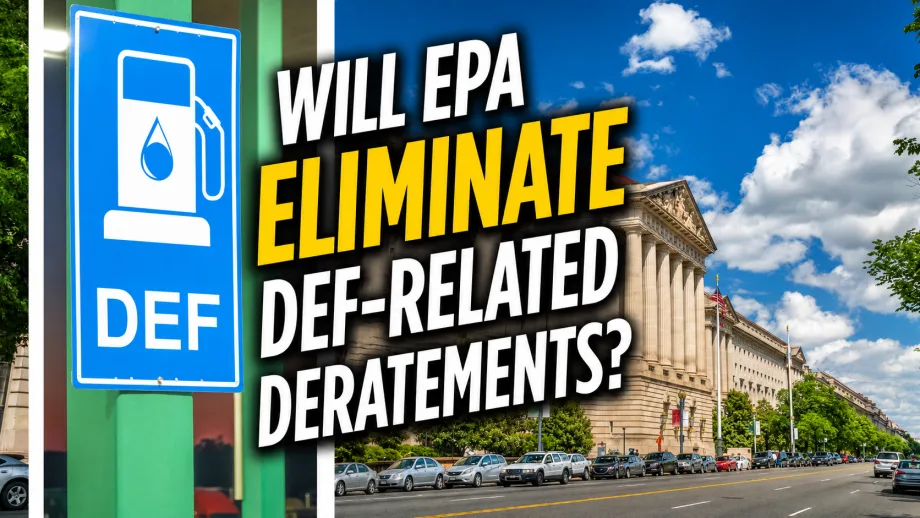
Work Truck | Edited with OpenAI
U.S. Environmental Protection Agency (EPA) Administrator Lee Zeldin announced a proposal estimated to save American truckers $12 billion through what he called commonsense revisions to Biden-era compliance requirements. The reimagined approach also heeds calls from American truckers and diesel operators to eliminate deratements entirely, a burdensome problem often caused by diesel exhaust fluid (DEF) system failures.
Savings on New Truck Purchase Prices
If finalized, the savings could reach up to $6,000 per vehicle on new truck purchases, on top of the increased productivity operators are currently losing when deratements cause sudden speed loss on the road. Collectively, these savings will be passed on to American families through lower costs for food, household goods, and other products trucks deliver, while still maintaining strong environmental protections and ensuring clean air.
“Americans depend on reliable trucks to move essential goods across the country. If finalized, these changes will help manufacturers keep improving their vehicles without being forced to rush products to market before they’re ready. Combined with the Trump EPA’s first proposed deregulatory action to address ongoing DEF problems, this will ease real burdens for operators,” said EPA Administrator Zeldin. “The Trump EPA is committed to making trucking safe and reliable again while protecting human health and the environment.”
Scaling Back Emissions Warranty Requirements
EPA is also specifically proposing to scale back the emissions warranty requirements that added the largest single cost to the trucking industry.
Under the proposal, the Trump EPA would maintain the underlying emission standards, including nearly 90% of the nitrogen oxide (NOx) reductions, while sparing Americans from unnecessary warranty costs. The EPA, in a statement, said the Trump EPA is demonstrating that environmental protection and economic prosperity do not need to be a binary choice.
Useful Life Requirement Rule Delay
EPA is also proposing additional lead time before the longer regulatory useful life requirements from the 2023 rule take effect. This will allow manufacturers to ensure new technologies perform reliably under real-world conditions, rather than rushing unproven products to market.
NOx Emission-Reduction Provisions
Truck and engine manufacturers, suppliers, trucking fleets, and dealerships have repeatedly warned that the NOx emission-reduction provisions of the Biden-era 2023 rule were unattainable within the given timeframe and would create compliance challenges.
In response, EPA is proposing nonconformance penalties for certain heavy-duty diesel engines that temporarily cannot meet the new NOx standards.
This will provide flexibility to comply and allow sales to continue, helping prevent supply disruptions and supporting a stable transition to new technologies. The EPA said that consumer choice will be preserved and companies already meeting the standards will not be put at a disadvantage. EPA still expects companies to work expeditiously to meet requirements within a reasonable timeframe.
Continuing EPA’s Efforts to Fix DEF Regulations
EPA understands that sudden speed losses and shutdowns caused by DEF system failures compromise safety and productivity and are unacceptable.
In August 2025, EPA issued new, clear guidance calling on engine and equipment manufacturers to revise DEF system software in existing vehicles and equipment to massively reverse deratements that were harming farmers and truckers.
Today, the agency is taking a historic step to provide a commonsense solution to deratements for American operators.
Complete Removal of Deratements
EPA is proposing to completely remove deratements and vehicle speed restrictions for newly manufactured highway engines and vehicles, and for new nonroad engines and equipment, including those used in agriculture. Instead of trucks and tractors lurching to a halt when DEF systems fail, under EPA’s proposal, operators would receive visible and/or audible alerts that allow them to continue operating until they can safely address the problem.
EPA is also taking public comment on whether guidance should be developed to allow manufacturers to implement this change for in-use on-road and non-road engines and equipment. If finalized, American operators will be able to drive America forward without worry.
EPA will hold a 45-day public comment period as well as a public hearing. For more information on the proposed rule, visit EPA’s website.
Background on EPA’s Addressing DEF Issues
EPA said it has taken many steps to address DEF issues as quickly as possible, including:
- In addition to the August 2025 guidance, EPA also demanded critical data, in February 2026, on DEF system failures from the 14 manufacturers that account for over 80% of all products used in DEF systems. EPA has received all the data and is reviewing it to help inform future steps.
- In February, EPA reaffirmed American farmers and operators have the right to repair their own equipment, including faulty DEF systems.
- The agency also announced new guidance in March 2026 that clarified manufacturers can stop inaccurate DEF system failures by removing traditional emission sensors and switching to NOX sensors.
- In July 2026, the agency issued guidance advancing the freedom to fix for all Americans regardless of vehicle or equipment type in response to President Trump’s “Lowering the Cost of Living by Promoting the Freedom to Fix” presidential memorandum.
“This proposal to eliminate engine deratements and reform the Biden-era DEF requirements will lower costs, increase safety, and keep our nation’s food supply moving,” said U.S. Secretary of Agriculture Brooke L. Rollins. “Our rural communities rely on diesel-powered engines to deliver their food, families, electricity, and so much more to where it needs to go. The billions in savings will directly benefit those who feed, fuel, and clothe our nation.”
More Operations

How to Build a Lasting Fleet Career by Staying Curious and Connected
Tina Kourakos never planned on a career in fleet. More than 30 years later, she says curiosity, strong relationships, and a willingness to keep learning helped turn an unexpected assignment into a career spanning fleet management and OEM leadership.
Read More →
Think You Know Trucks? Take Our 19-Question Fleet Trivia Challenge
From chicken lights to diesel engines and trucking history, test your knowledge with 19 questions from the 2026 Work Truck Exchange and Heavy Duty Trucking Exchange.
Read More →
Where’s My Truck: Inside the Fleet Logistics Work Nobody Sees
Shades of Fleet video thumbnail featuring Lauren Fletcher beside the text “The People Behind the Process, Keeping Fleets Moving,” with fleet vehicles and logistics imagery in the background.
Read More →From Our Partners
Basic Tracking vs Next Generation Fleet Technology
Sponsored by AT&T Business

5 Facts Every Fleet Manager Should Know About Embedded Telematics
Sponsored by Stellantis/Mobilisights
How AI Video Telematics Boosts Driver Safety and Helps to Avoid Unnecessary Costs
Sponsored by Verizon Connect

Charting the 8 Bottom-Line Benefits of Workforce Optimization
Sponsored by Verizon Connect


Work Truck Seeks Fleet and Industry Insights on 2026 Trends and 2027 Forecasts
Work Truck is seeking insights from fleet leaders and industry partners on the trends that shaped 2026 and what commercial fleets should prepare for in 2027. Participate today!
Read More →
It's 10 p.m... Do You Know Who Has Access to Your Fleet?
Preventing cargo theft requires investment in technology, operational processes, and employee training. In an industry with tight margins, it can be difficult to justify investments whose value is measured by incidents that might never occur.
Read More →
GeoFencing Adds to Your Truck Security Arsenal
Geofencing is a familiar fleet tool today, but its early adoption marked a major shift in vehicle tracking, route monitoring, and the debate over employee privacy.
Read More →
Truckers’ Strike Rumors, New GM Engines, and Hidden Idling Costs Lead This Week’s News
Truckers’ strike rumors, GM’s new 2027 engines, hidden idling costs, racing lessons, IRP rules, and more headline this week’s Truck Chat Weekly Cheat Sheet.
Read More →
Shades of Fleet Wants to Hear From You About Building a Culture of Care
Fleet leaders, we want to hear from you. Share how empathy, trust, and creating space for people can strengthen your team, improve performance, and support retention.
Read More →
What Racing Can Teach Work Truck Fleets About the Work Nobody Sees
Race car driver and mechanical engineer Isaac Johnson shares practical lessons on preparation, relationships, setbacks, and building teams that perform when it counts.
Read More →
New Fleet Guides, Hidden Truck Wear, and Driver Fit Lead This Month
Our latest Truck Chat recap covers new Fleet Guides, hidden idling costs, driver fit, lighter-truck registration rules, and year-round technician appreciation.
Read More →