




It's 10 p.m... Do You Know Who Has Access to Your Fleet?
Preventing cargo theft requires investment in technology, operational processes, and employee training. In an industry with tight margins, it can be difficult to justify investments whose value is measured by incidents that might never occur.
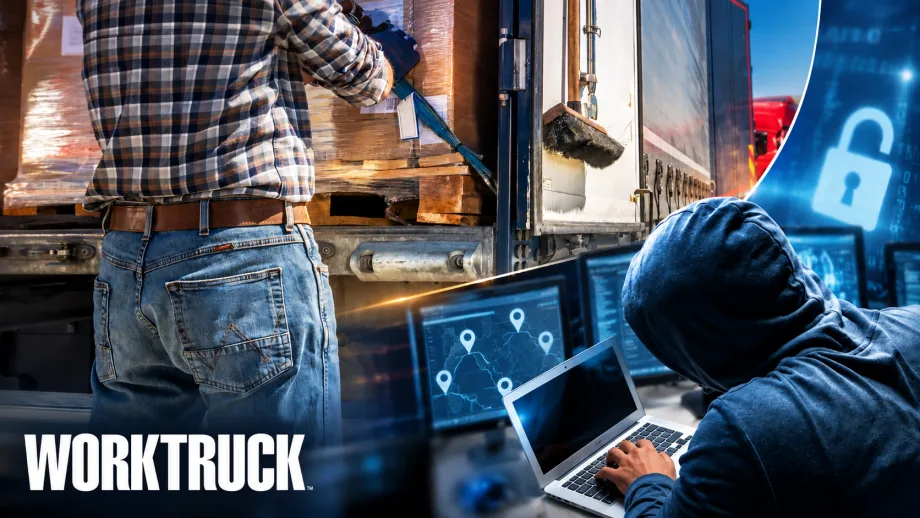
Cargo theft is rising, so what can fleets do to reduce the risk?
Work Truck | Edited with OpenAI
- Preventing cargo theft involves investing in technology, refining operational processes, and enhancing employee training.
- Companies face challenges in justifying these investments due to the industry's tight profit margins.
- The value of preventive measures is often difficult to quantify, as it relates to deterring incidents that may never happen.
*Summarized by AI
Theft is the trucking industry's elephant in the room. Too often it is treated as an unavoidable cost of doing business, but the numbers tell a different story. The American Transportation Research Institute (ATRI) estimates cargo theft costs the industry roughly $18 million every day, adding up to as much as $6.6 billion annually.
Motor carriers lose an average of more than $520,000 each year, while logistics providers average more than $1.84 million in annual losses. Around three-quarters of stolen goods are never recovered.
The financial impact is significant, and in most cases the losses are permanent. So why does the industry continue to accept theft as inevitable?
Cargo Theft Gets Smarter
The threat changed shape, not just scale
The real story is not simply that cargo theft is increasing. The threat itself has become smarter.
According to Verisk CargoNet, 3,594 supply chain crime events were recorded across the United States and Canada in 2025, virtually unchanged from the previous year. Yet estimated losses increased by nearly 60%, reaching almost $725 million, while the average loss per theft climbed 36% to approximately $274,000.
The volume of thefts has remained relatively stable, but the value of what is being stolen has increased significantly, reflecting a more strategic and sophisticated criminal approach.
Organized criminal groups have become far more selective. Rather than taking whatever is easiest to reach, they conduct reconnaissance, target higher-value shipments, and increasingly operate in regions with weaker defenses. Commodity preferences are evolving as well. Food and beverage theft increased by 47%, metals by 77%, while enterprise computing hardware and cryptocurrency mining equipment have emerged as attractive, high-value targets.
Criminals are also exploiting entirely new attack surfaces. BSI Consulting and TT Club report that rail cargo theft in the United States rose from 4% of reported incidents in 2024 to 10% in 2025, including coordinated attacks involving advance planning, deliberate system sabotage and armed confrontations with law enforcement.
The numbers point to a broader shift. Cargo theft is becoming more organized, more targeted and more profitable.
Theft has become an information problem
For decades, fleet and cargo security meant stronger locks, secured yards, cameras, and GPS tracking. Those measures remain essential, but they no longer define the full threat. Increasingly, theft does not require forcing open a trailer at all.
Today's attackers often begin long before a shipment leaves the warehouse. They impersonate licensed carriers, manipulate load boards, forge pickup documentation, or exploit stolen business credentials. Everything appears legitimate until the freight simply never arrives. Once cargo is voluntarily released to a fraudulent "authorized" carrier, recovery becomes significantly more difficult than after a traditional hijacking.
Strategic Theft & Fraud is Growing
ATRI's research illustrates just how dramatically the threat has shifted. Strategic theft built on fraudulent identities, impersonation, and double brokering accounts for 20.3% of incidents experienced by motor carriers, but 62.5% of incidents affect brokers and logistics providers. The closer an organization operates to the information layer of the supply chain, the more likely its losses are to stem from deception rather than force.
CargoNet expects that trend to accelerate as criminal groups increasingly target shipments after they have already been tendered to legitimate carriers, bypassing the compliance checks concentrated at the start of the transaction. The industry has traditionally focused its security efforts at the beginning of the journey, while the risk has steadily shifted further downstream.
Why the Industry Stays Reactive
This is not a case of the industry ignoring the problem. It is a case of competing priorities.
Preventing cargo theft requires investment in technology, operational processes, and employee training. In an industry with tight margins, it can be difficult to justify investments whose value is measured by incidents that never occur.
There is also a perception challenge. Theft has long been viewed as an unavoidable cost rather than a preventable operational risk, making it difficult to justify investment before losses occur. Underreporting only reinforces that perception.
Many thefts are never reported because recovery is considered unlikely or because organizations see little value in navigating lengthy reporting processes. As a result, the industry continues to underestimate the scale of the problem.
Perhaps most importantly, there is a misconception that modern cargo theft is too sophisticated to prevent. In reality, many successful thefts still exploit surprisingly basic weaknesses, including unsecured trailers, unattended yards, poorly managed credentials and limited visibility into who actually accessed vehicles or cargo.
Visibility Isn't the Same as Trust
GPS and telematics can tell operators where a truck is. They cannot confirm whether the shipment is still under the control of an authorized driver, whether credentials have been compromised or whether a fraudulent carrier has inserted itself into the process. Visibility without trust leaves some of the most expensive risks unresolved.
Many fleets still manage physical access much as they did decades ago through metal keys, padlocks, shared combinations, and seal numbers recorded on paper. Each of these methods shares the same weakness. The credential is permanent, anonymous, and transferable. A copied key remains copied forever, and a shared combination can still unlock the same asset months later without any record of who used it.
That permanence is precisely what organized criminals exploit. No matter how sophisticated the planning becomes, every theft ultimately depends on gaining access to a vehicle or its cargo. Solving that problem requires more than replacing one credential with another. It requires rethinking how access is granted, verified, and managed throughout the journey.
When access is tied to a verified individual, a specific vehicle, defined permissions, and a limited timeframe, organizations gain something they have historically lacked: accountability and traceability.
Every access event becomes part of a verifiable chain of custody, strengthening investigations, supporting insurance claims, and making insider collusion significantly more difficult to conceal. If suspicious activity is detected while a shipment is in transit, access permissions can be revoked immediately, allowing organizations to respond in seconds instead of waiting until after the cargo has been compromised.
Access control complements journey monitoring, driver verification, and supply chain intelligence by providing accountability where physical and digital security intersect. It is at that point of trust that many cargo theft attempts ultimately succeed or fail.
Turning Security into Financial Protection
The most resilient fleets are not necessarily the ones spending the most on security. They are the ones treating security as a measurable business investment rather than an unavoidable operating expense.
Reducing theft is about far more than protecting freight. It means reducing operational disruption, accelerating investigations, strengthening insurance claims, improving customer confidence, and lowering the overall cost of risk. With average losses now exceeding $270,000 per incident, it takes only a few prevented occurrences for security investments to deliver measurable financial returns.
The last decade transformed how the industry tracks vehicles and cargo. The next decade will be defined by how the industry establishes trust across increasingly connected supply chains.
As supply chains become more connected, competitive advantage will depend not only on moving cargo efficiently, but on proving that every movement, every credential and every access event can be authorized, verified and audited.
Organizations that embrace that shift will be better positioned to reduce losses, strengthen customer confidence and build more resilient supply chains.
Todd Offer is the Business Line Director at Keystone by Irdeto. Irdeto, a CANAL+ company, is the world leader in digital platform cybersecurity. With over 55 years of expertise, it protects revenue, enables growth, and combats cybercrime across video entertainment, video games, and smart mobility.
More Operations
Truckers’ Strike Rumors, New GM Engines, and Hidden Idling Costs Lead This Week’s News
Truckers’ strike rumors, GM’s new 2027 engines, hidden idling costs, racing lessons, IRP rules, and more headline this week’s Truck Chat Weekly Cheat Sheet.
Read More →
Shades of Fleet Wants to Hear From You About Building a Culture of Care
Fleet leaders, we want to hear from you. Share how empathy, trust, and creating space for people can strengthen your team, improve performance, and support retention.
Read More →
What Racing Can Teach Work Truck Fleets About the Work Nobody Sees
Race car driver and mechanical engineer Isaac Johnson shares practical lessons on preparation, relationships, setbacks, and building teams that perform when it counts.
Read More →From Our Partners
Basic Tracking vs Next Generation Fleet Technology
Sponsored by AT&T Business

5 Facts Every Fleet Manager Should Know About Embedded Telematics
Sponsored by Stellantis/Mobilisights

How AI Video Telematics Boosts Driver Safety and Helps to Avoid Unnecessary Costs
Sponsored by Verizon Connect

Charting the 8 Bottom-Line Benefits of Workforce Optimization
Sponsored by Verizon Connect

New Fleet Guides, Hidden Truck Wear, and Driver Fit Lead This Month
Our latest Truck Chat recap covers new Fleet Guides, hidden idling costs, driver fit, lighter-truck registration rules, and year-round technician appreciation.
Read More →
Work Truck Takes Fleet Rivalry Downhill to Support Skilled Trades
Team Fletcher claimed a head-to-head win and second overall as Work Truck and Automotive Fleet helped raise $22,000 for the Hourglass Foundation.
Read More →
From Ledger Books to AI Patti Earley Shares 40 Years of Fleet Lessons
Patti Earley, CAFM, shares what four decades in fleet have taught her about using data, building relationships, and listening to the people behind the vehicles.
Read More →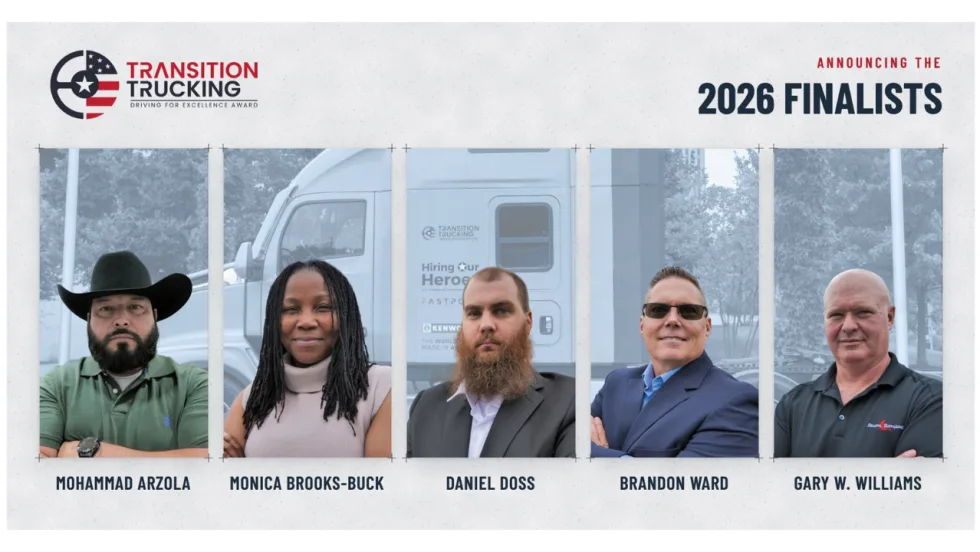
Finalists Announced for 2026 Transition Trucking: Driving for Excellence Award
Kenworth Truck Company, Fastport, and the U.S. Chamber of Commerce Foundation's Hiring Our Heroes program have announced the five finalists for the 2026 Transition Trucking: Driving for Excellence Award.
Read More →
Toyota West Virginia Celebrates Three Decades of Manufacturing in the Mountain State
Toyota West Virginia celebrated 30 years of manufacturing. Toyota assembles both engines and drivetrain components in West Virginia to support its North American operations.
Read More →
The Hidden Cost of Idling
A low-mileage truck can still be one of the fleet’s hardest-working and most worn assets. Engine hours, idle time, and duty cycle reveal what the odometer misses.
Read More →
Teletrac Navman Hires SVP of Operations & Enterprise Transformation
Teletrac Navman has appointed Alan Wiessbrod to its senior leadership team as senior vice president, operations and enterprise transformation. The company said he has a strong track record of delivering profitable growth and operational excellence.
Read More →