




About the Author: Brett Carlson is co-founder and CEO of ServiceUp, the agentic repair platform for modern fleets.
The Repair Took Four Hours. Where Did the Other Six Days Go?
How fleets can find, measure and shrink administrative downtime with nothing more than their last 20 repair orders
by Brett Carlson, ServiceUp
October 27, 2026
A four-hour repair can keep a vehicle off the road for days when approvals, shop communication, and pickup stall. Tracking repair milestones helps fleets identify where that time goes.
Credit:
ServiceUp
10 min to read
- Fleets can analyze and reduce administrative downtime by reviewing their last 20 repair orders.
- Understanding time spent beyond actual repairs can highlight inefficiencies in vehicle management.
- Focusing on data from existing records enables fleets to streamline operations and minimize delays.
*Summarized by AI
A service van goes into a shop on Monday morning for a brake job and a sensor calibration. The mechanical work takes four hours. The van leaves the lot the following Monday.
For six of those days, the van was just waiting.
When you ask where the time went, the answers tend to sound alike. The estimate sat in an inbox for a day. The service advisor called the fleet manager and got voicemail. A supplement needed a second approval from someone who was traveling, and when the work was finally done on Friday afternoon, nobody came to get the van until Monday. No one person dropped the ball. The van simply had nobody whose job it was to keep it moving.
That kind of downtime rarely shows up in a budget, because from the office it looks like a busy inbox rather than a van off the road.
Why Parts Get Blamed for Fleet Downtime
The working definition I use is simple: administrative downtime is every hour a vehicle is out of service while nobody is working on it. Total time out of service splits into the hours someone had a wrench on the vehicle and everything else.
Most fleets know the total, but very few can split it into those two parts.
Our research at ServiceUp found that roughly 72% of fleet operators hit maintenance and repair problems weekly or monthly. When we asked what frustrates them most, half named parts availability. I'd push back a little on our own survey here. My read is that parts get named so often because they're the easiest delay to see.
A parts delay comes with a tracking number, a supplier, an ETA and someone to call, so it leaves a record. Most of the other waiting doesn't. Think about the van that sat for a day and a half before it reached a shop, the estimate that went back for a second approval once the shop opened things up, or the truck that was finished and then sat in the lot because nobody was told. None of that gets written down anywhere. When someone reconstructs a bad repair after the fact, they count what left a trace, so parts end up taking the blame even though much of the waiting was within the fleet's control.
Fleets have spent a decade building visibility into their vehicles. A manager can tell you how long a truck idled on Tuesday and how hard the driver braked coming off a specific ramp. The record of a $4,200 repair that took nine days is a phone call, three emails and a PDF on someone's laptop. Closing that gap starts with writing down a handful of times.
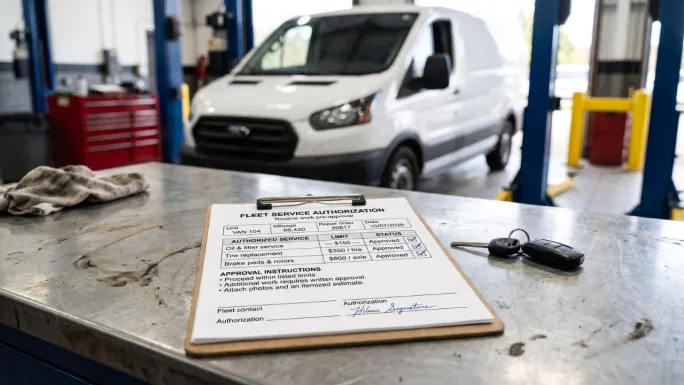
Pre-approved maintenance services and clear spending limits can help fleets reduce approval delays, allowing shops to move forward with routine repairs without waiting for additional authorization.
Credit:
ServiceUp
10 Repair Timestamps Every Fleet Should Track
Most fleets record two moments in a repair: when the vehicle went out of service and when it came back. Many add a third by accident, the invoice date, which tells you when the shop got around to billing and very little else. The useful information lives in between.
These are the timestamps I'd capture on every repair, in order:
# | Timestamp | What the gap before it tells you |
1 | Vehicle reported down | Starts the clock. Use the driver's report, not the day someone opened a ticket. |
2 | Vehicle arrives at shop | Towing, scheduling and shop availability. |
3 | Estimate submitted | How long the shop takes to diagnose and write it up. |
4 | Estimate approved | Your approval speed. Log every round, including supplements. |
5 | Parts ordered | Whether the shop waits for approval to order, or orders on day one. |
6 | Parts received | The delay everyone already blames. |
7 | Repair started | Shop queue time once everything is in hand. |
8 | Repair completed | Wrench time is the gap between 7 and 8. |
9 | Fleet notified vehicle is ready | How long a finished vehicle sits before anyone hears about it. |
10 | Vehicle back in service | Pickup, driver logistics and whether anyone owned the last step. |
Add a timestamp for every supplement: when the shop asked, and when you answered. Supplements restart the approval clock in the middle of a repair, and fleets almost never measure them.
You don't need software to start. A shared spreadsheet with ten date columns will do, as long as one person owns keeping it current and your shops know you're tracking it. In my experience, shops move faster once they know someone is watching the clock.
Where Fleet Approvals Stall
Once fleets start recording these times, the same five choke points show up. The first is the initial estimate. It usually lands in a shared inbox, or on the phone of a manager who's out in the field all day, and the shop can't order parts or start work until somebody answers. Every hour it waits is an hour added to downtime.
Supplements come next. A shop opens up a brake job and finds a seized caliper, or pulls a bumper and finds a cracked bracket, and now there's a second estimate sitting at the back of the same queue the first one waited in. That's how a four-hour job turns into a three-day one.
Then there's the second signature. Plenty of fleets route approvals through a fleet management company and an internal manager, or send anything over a dollar limit to finance. Each handoff adds another queue, and the people involved usually can't see each other's.
The calendar matters more than most people expect. An estimate that shows up at 4:30 on a Friday will usually wait until Monday, which adds two days to a repair that hasn't changed at all.
Finally, there's pickup. The shop finishes, leaves a voicemail, and the vehicle sits in the lot. Strictly speaking that isn't an approval problem, but it's administrative downtime all the same, and it's the gap fleets most often forget to measure.
Warranty and manufacturer authorizations belong on the list too. They run on someone else's schedule, so the best you can do is start them on day one.
How to Speed Up Fleet Repair Approvals
A lot of approval delay comes from making the same decision from scratch every time an estimate arrives. It's faster to make it once, in writing, ahead of time.
A pre-approved menu is the easiest place to start. Oil changes, tires, brakes and other routine work with predictable pricing shouldn't need anyone's signature below a set dollar amount, so give shops the list and the limit and let them proceed.
Above that, set dollar tiers. One common setup has a fleet coordinator approving up to a mid-range figure and a manager approving anything above it. The right numbers depend on your vehicles and margins, but every estimate should have exactly one owner the moment it arrives.
Each tier also needs a clock. If an estimate goes unanswered for a set number of business hours (four is a reasonable starting point), it should move to the next person automatically. Without that, a tier system mostly tells you whose inbox the estimate is stuck in.
Every approver should have a named backup, too. Vacations, field days and flights are predictable, and a process that stops whenever one person is out was built wrong.
It also helps to write a supplement rule. For example, you might approve any supplement under a set percentage of the original estimate automatically, as long as the shop documents it with photos, and send bigger ones through the normal tiers.
Review all of it once a quarter. Look at what got approved under each threshold and whether anything went wrong. If nothing did, raise the limit, and if something did, you'll know which rule to tighten. Nobody should wave through a $14,000 collision estimate, but routine decisions shouldn't be eating a manager's week either. Clearing them off the pile is how the dozen or so estimates a month that need judgment finally get it.
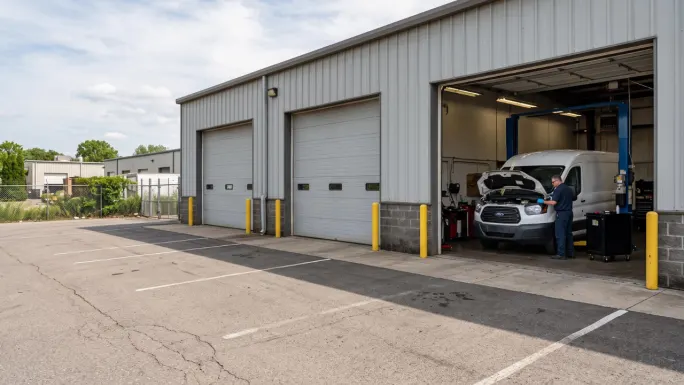
The time a fleet vehicle spends in the shop is only part of the downtime equation. Delays in scheduling, repair approvals, parts availability, and vehicle pickup can keep trucks and vans off the road long after the actual work is complete.
Credit:
ServiceUp
Grading Shops on More than Wrench Time
Most shop reviews come down to price and workmanship. Those matter, but they won't tell you why one shop returns vehicles in two days and another takes six for the same job.
The timestamps above give you a better scorecard:
Metric | How to calculate it | What it tells you |
Days out of service per repair | Timestamp 10 minus timestamp 1, averaged by shop | The number the business feels |
Estimate turnaround | Timestamp 3 minus timestamp 2 | How fast the shop diagnoses and communicates |
Estimated completion date hit rate | Share of repairs finished on or before the shop's promised date | Whether the shop's promises mean anything |
Supplement rate | Share of repairs with at least one supplement | Diagnosis quality, or a habit of low first estimates |
Ready-to-notify lag | Timestamp 9 minus timestamp 8 | Whether a finished vehicle sits unannounced |
Comeback rate | Share of repairs back in the same shop for the same issue within 30 days | Whether fast was also right |
When you run these by shop, the rankings often flip. A shop with excellent technicians and a slow front desk can cost you more days than an average shop that answers its phone, and that's fixable once you can show the shop its own numbers.
Run them on your own team too. The time between estimate submitted and estimate approved belongs to you, and shops will take your scorecard more seriously once they see you measure yourself the same way.
Try our calculator below and bookmark this page to use it again in the future. Or keep scrolling to keep reading!
The 20-Repair Fleet Downtime Audit
You can do all of this without waiting for a new system. Block out an afternoon and work backward from records you already have.
- Pull your last 20 completed unscheduled repairs. Leave out routine preventive maintenance, which tends to follow its own schedule and will flatter the results.
- For each repair, write down three dates: when the vehicle went out of service, when the shop finished the physical work, and when the vehicle returned to service. Add the billed labor hours from the invoice. It's an imperfect stand-in for wrench time, but it's one you already have.
- Calculate total days out of service and compare it with the labor hours. A repair with six billed hours and nine days out has a story worth finding.
- For each repair, write one line on where the biggest gap came from: waiting on approval, waiting on parts, waiting in the shop's queue, or waiting for pickup. If nobody can reconstruct it, write “unknown.” That's a finding too, and usually the most common one.
- Sort the list and look for patterns, such as a shop that's always late, an approver whose name keeps coming up, repairs that stall whenever they hit a weekend, or supplements that add two days apiece.
- Fix the biggest category first, then run the same audit on your next 20 repairs about 90 days later.
One Last-Mile Fleet's Numbers
We pulled these timestamps for a last-mile delivery operator we work with, a fleet of about 80 vans. We looked at the 1,221 repairs it sent to shops in the 12 months ending September 2026.
The typical repair kept a van off the road for four days. Nearly a third ran past a week, which pulled the average to 7.4 days.
Most of that time went to waiting that nobody owned. On average, a van spent about a day and a half between being reported down and getting to a shop. Almost half of the repairs (48%) needed more than one round of approval, and each extra round restarted the wait partway through the job. Where shops gave a completion date, they met it only about one time in four.
The longest stretch, from approval to finished work, averaged five and a half days. That stretch holds parts, the shop's queue and the repair itself, and the fleet's records didn't separate the three.
The first approval was the one step that moved quickly. The fleet answered a first estimate in under four hours on average, and the typical one cleared within minutes, which didn't do much good once everything after it slowed down.
For this fleet, the next steps have little to do with approval speed. It needs to hold shops to the dates they give, add parts-ordered and parts-received timestamps so that five-and-a-half-day stretch can be broken down, and cut the time it takes a van to get to a shop. Your own numbers will probably look different, which is the whole reason to measure them.
Where to Start Reducing Downtime
Everything here can run on a spreadsheet. The harder part is deciding that the time a vehicle spends waiting is as much your responsibility as the time it spends on a lift.
So pull your last 20 repairs this week and compare the day the shop finished the work with the day each vehicle went back on the road. If those dates line up, your process is in good shape. If they don't, and they usually don't, the gap between them is where your downtime is hiding.

Credit:
ServiceUp | Work Truck
Quick Answers
Administrative downtime refers to the period when a vehicle is not operational due to administrative tasks, such as paperwork, approvals, or waiting for parts, rather than the actual repair time.
*Summarized by AI
Subscribe to Our Newsletter
More Maintenance & Uptime

Entegral & GEICO Partner to Enhance Auto Claims Experience
GEICO is deploying Entegral technology to support more efficient claim routing, clearer appointment communications, and more informed repair-provider selection.
Read More →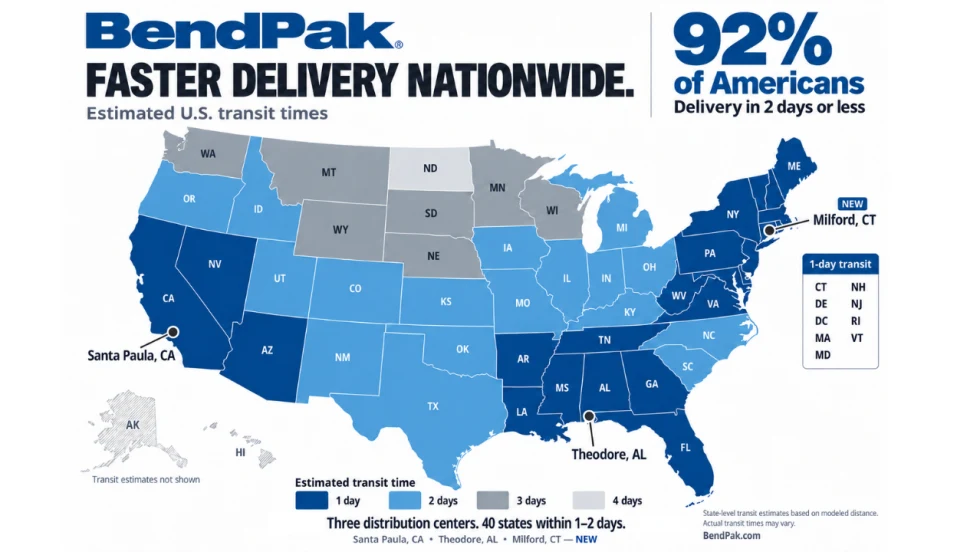
BendPak Opens Third Distribution Center to Accelerate Delivery
With the opening of a new distribution center in Milford, Connecticut, BendPak has expanded its network to deliver to 92% of Americans in two days or less. The company now operates three distribution centers.
Read More →
New STLE Special Report Examines Next-Generation Gear Lubricants for Electric Vehicles
Achieving the right balance of efficiency, durability, and electrical performance is critical in high-speed electric-vehicle drivetrains. The Society of Tribologists and Lubrication Engineers (STLE) released its new special report about EV lubrication.
Read More →From Our Partners
Basic Tracking vs Next Generation Fleet Technology
Sponsored by AT&T Business

5 Facts Every Fleet Manager Should Know About Embedded Telematics
Sponsored by Stellantis/Mobilisights

How AI Video Telematics Boosts Driver Safety and Helps to Avoid Unnecessary Costs
Sponsored by Verizon Connect

Charting the 8 Bottom-Line Benefits of Workforce Optimization
Sponsored by Verizon Connect

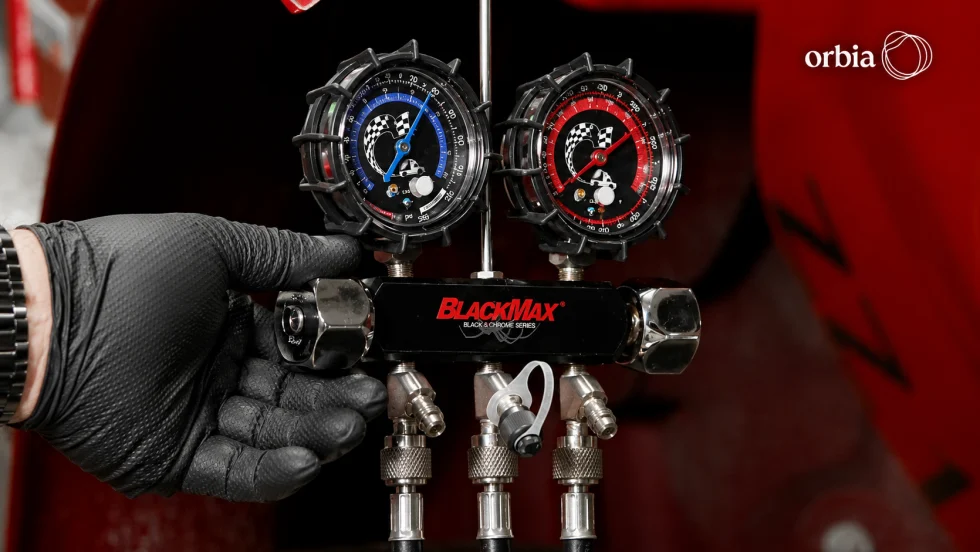
The Lost Art of Refrigerant Recovery
As new A/C refrigerants enter the market, fleet shops may already have many of the tools they need to service them. Here’s why revisiting basic refrigerant service skills could save equipment costs and get trucks back on the road faster.
Read More →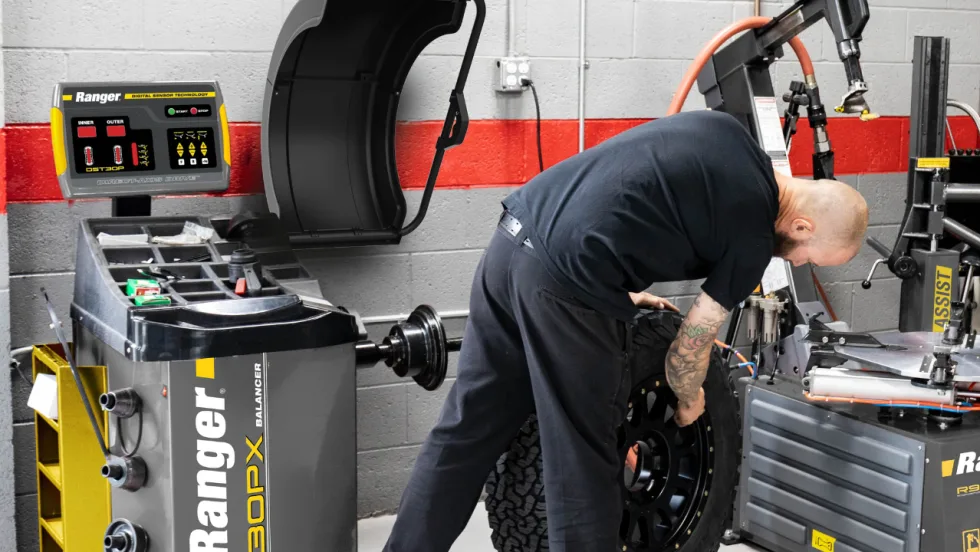
BendPak Launches Ranger DST30PX Balancer for Large Wheel Service
The new DST30PX Professional Wheel Balancer from Ranger Division of BendPak smoothly handles tires up to 43 inches with precision and accuracy.
Read More →
Kooner and Global Partners Connect Mobile Fleet Maintenance and Fueling Services
A new referral partnership connects on-site fueling and maintenance services, with a focus on reducing off-site trips and making better use of fleet downtime.
Read More →
Maintenance Failures That Sideline Work Trucks and the Inspection List That Catches Them Early
Unplanned downtime hurts efficiency and even profitability for work truck fleets, but catching potential problems early can help prevent it. Here is an inspection list that can help potentially prevent that downtime.
Read More →
Hunter Engineering Enters Collaborates with Bosch for Remote Diagnostics Service Through ADASLink
Hunter Engineering’s collaboration with Bosch enables ADASLink to connect directly with Bosch diagnostic experts through an integrated remote support platform, allowing shops to service more vehicles.
Read More →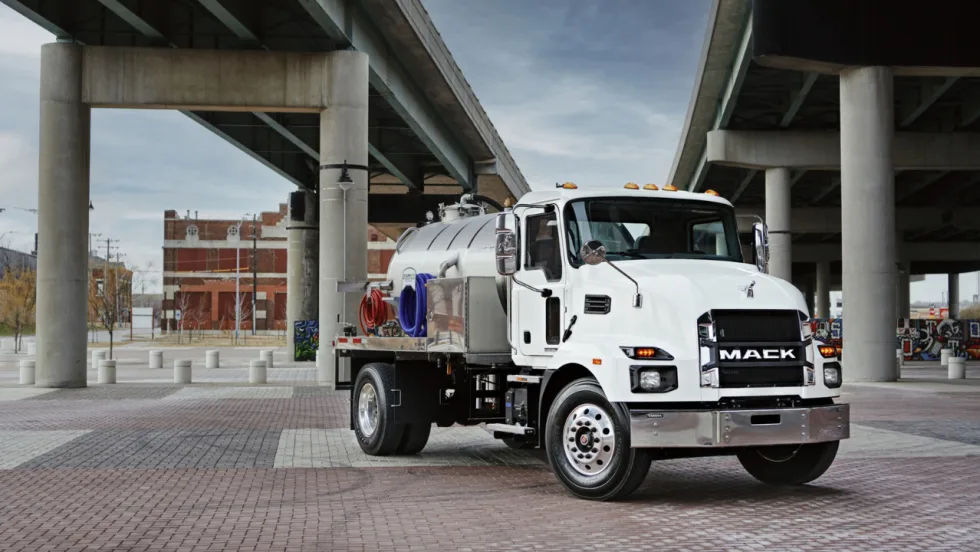
Mack Adds Chassis Coverage Options for Fleet Repair Costs
Mack Trucks introduced four system-specific chassis coverage plans, giving fleets more flexibility to manage repair costs for driveline, HVAC, electronics, safety systems, and other components.
Read More →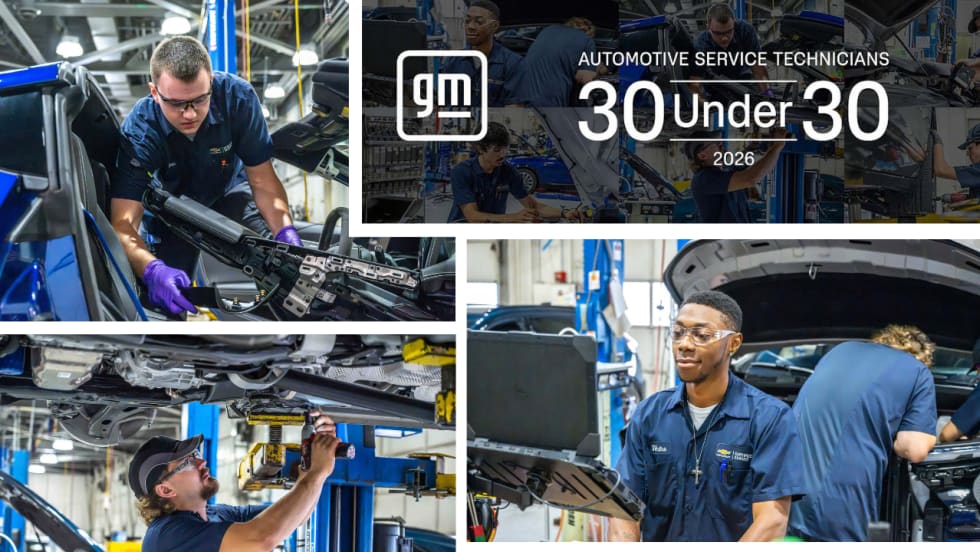
GM Launches ‘30 Under 30’ Program to Elevate Automotive Service Technicians and Inspire the Next Generation
The GM Automotive Service Technicians 30 Under 30 program honors GM service technicians under the age of 30 who demonstrate continuous technical training, exemplary customer service, mentorship, and leadership.
Read More →