





Disaster-Proofing Fleet Operations: How to Maintain Uptime When Conditions Are Anything but Normal
Proven Ways to Reduce Work Truck Downtime
The age-old problem of downtime will always be a reality, but with new strategies at hand, fleets have more ways to keep trucks on the road longer.
July 30, 2026

Reducing downtime starts with measuring how vehicle availability affects each operation, then using maintenance planning, driver accountability, and vehicle data to keep trucks working.
Credit:
Work Truck
12 min to read
- Fleets are exploring innovative strategies to reduce truck downtime.
- These new strategies aim to keep trucks operational for longer periods.
- Mitigating downtime remains a persistent challenge but new approaches offer potential solutions.
*Summarized by AI
Editor's note: This article was originally published in November 2013 and reviewed for continued relevance on July 31, 2026. The quotes and operational examples remain from the original reporting and reflect the roles, fleet practices, vehicle specifications, costs, and operating conditions in place at that time. Company affiliations have been updated, and additional context has been added around connected-vehicle data, mobile service, and downtime measurement.
Downtime is an old problem, but its impact has not changed. When a work truck is out of service, employees may be unable to complete their jobs, projects can fall behind, customers can be left waiting, and revenue can be lost.
Fleet managers now have more data, service options, and technology available to help identify problems earlier. But reducing downtime still begins with several fundamentals: measuring the right things, properly spec’ing vehicles, maintaining them proactively, holding drivers and departments accountable, and understanding when the cost of a repair is worth avoiding a much larger operational loss.
Measure the Right Downtime
A practical first step is to tailor the fleet’s downtime standard to the operating needs of each department or customer.
“The downtime clock for the police department (24/7) will be different from public works, which may operate a 40-hour per week schedule,” said Bob Stanton, retired fleet manager and former fleet manager for the City of San Antonio. “Make sure the downtime being measured is reflective of the duty cycles for each customer.”
A truck that is unavailable overnight may have little effect on one department but create a major operational disruption for another. Scheduling maintenance and repairs during off hours, when possible, can also reduce the amount of productive time lost.
Stanton recommended distinguishing between downtime the fleet controls and downtime caused by outside factors.
“Fleets should assure the downtime being measured is downtime under the control of the fleet,” he said. “Fleet doesn’t control, nor should its downtime measure include, downtime related to accidents, abuse, or other outside factors.”
That does not mean fleets should ignore those events. A modern downtime program may track total vehicle unavailability while separating it into categories such as maintenance, accidents, driver abuse, parts delays, outside vendor delays, and scheduled service.
This approach gives the organization a complete picture of how often vehicles are unavailable without holding the maintenance operation responsible for every hour a truck is out of service.
Make Downtime a Shared Responsibility
Separating controllable maintenance downtime from other causes can also help fleets hold operating departments and drivers accountable.
The way employees operate, inspect, and report problems with their trucks can directly affect reliability. A driver who skips an inspection, ignores a warning light, or fails to bring a vehicle in for scheduled service may turn a manageable issue into an unexpected breakdown.
Stanton recommended developing a partnership between the fleet team and its internal customers rather than treating downtime as a maintenance-only problem.
“Customers must be as invested in downtime reduction as fleet; it’s too easy to ‘blame’ fleet. When customers understand and partner with fleet in downtime reduction efforts, they will assure drivers exercise due care in vehicle operations, perform a proper pre- and post-trip inspection, and present their vehicles to fleet for scheduled service, downtime can be significantly reduced,” he said. “Driver accountability is a key factor that many customers ignore, unfortunately.”
Clear communication is important here. Drivers need to know what to inspect, which warning signs require immediate attention, how to report a problem, and where to take a truck when service is needed.
Stanton said downtime is not a one-way street but a shared responsibility.
“When the fleet and the customer understand this shared responsibility, they will both work together to assure downtime is minimized as they both recognize the potential rewards in doing so,” he said.
Use the Right Vehicle for the Job
Proper vehicle selection is another important part of preventing downtime. When trucks are consistently loaded beyond their intended capabilities or used for work they were not designed to perform, components may wear faster and failures can become more frequent.
Selecting a truck with the appropriate payload, gross vehicle weight rating, body, equipment, and operating configuration can help reduce stress on engines, transmissions, tires, suspension systems, and brakes.
Anthony Foster, who was corporate fleet manager for Pioneer Natural Resources when this article was originally reported, put the issue into simple terms.
“Would you ride on an elevator with a 4,000-pound capacity if it had 6,000 pounds of people on it? We all know eventually that elevator is going to break. So, where the accountant’s perspective may be to buy a less expensive truck with a lower payload and GVW than is needed, in the long run, that improper vehicle choice will cost you more because of downtime.”
Proper vehicle selection depends on fleet managers understanding the work being performed and having a consistent way to gather information from the departments requesting vehicles.
“It is critical for the fleet manager to have an effective communication method or tool to ensure proper vehicle selection,” Foster said. “Pioneer has accomplished this by creating a ‘Vehicle Request’ form and a ‘Specialty Body Request’ form, which shows payload availability with catalogs for each potential option to ensure proper GVW and maximum payload capacity.”
These comments reflect the vehicle-request process used by Pioneer at the time. The broader lesson still applies: Fleets need a structured method for documenting payload, towing, equipment, terrain, idling, storage, passenger, and duty-cycle requirements before selecting a vehicle.
Foster also recommended reviewing which vehicles could be assigned based on job function rather than employee status.
“For Pioneer, we’ve been able to utilize two basic vehicle specifications (Ford F-150 Crew Cab and F-250 Super Cab) for 80 percent of requests for our light-duty fleet,” he explained. “Of course, heavy-duty has a variety of job function requirements; however, we’re able to leverage through a single manufacturer (Peterbilt), which helps us better understand possible downtime for each vehicle.”
Although those specific models and sourcing decisions reflect Pioneer’s fleet at the time, thoughtful standardization can still help fleets simplify parts inventories, technician training, maintenance procedures, replacement planning, and vendor relationships.
Standardization should not come at the expense of proper vehicle selection. The goal is to standardize where the work allows it while creating specialized specifications where the job truly requires them.
Be Proactive About Service
Proper vehicle selection can reduce preventable failures, but every truck still requires regular maintenance.
Preventive maintenance briefly takes a vehicle out of service, yet delaying that work can result in a longer and less predictable interruption later. Fleets can reduce the impact by coordinating services, inspections, recalls, and known repairs during the same shop visit.
Foster recommended identifying everything a vehicle needs before sending it in and selecting service providers capable of completing multiple types of work.
“If you have a window that won’t roll up and down, and you need an oil change, go to an establishment where you can get the oil changed and the window fixed,” Foster suggested. “Lumping services together will reduce your downtime.”
This requires communication among drivers, fleet staff, technicians, and vendors. Small problems should be documented before the appointment so they do not result in another shop visit days or weeks later.
Maintenance planning should also account for seasonal demands, expected utilization, upcoming projects, and times when particular vehicles will be difficult to replace. Completing needed work before the fleet enters its busiest period can be more valuable than relying solely on a standard mileage or calendar interval.
Use Vehicle Data to Act Earlier
Connected-vehicle systems and telematics can give fleet managers more visibility into developing problems than they had when this article was first published.
Active diagnostic fault codes, engine data, mileage, engine hours, utilization, and maintenance records can help fleets prioritize repairs and identify vehicles that need attention before a small issue becomes a roadside failure. Fault-code reporting can also help technicians understand what may be wrong before the vehicle arrives at the shop.
The data still requires context. Not every fault code means a truck should immediately be removed from service, and alerts should not replace inspections, preventive maintenance, or technician judgment. The value comes from using the information to make faster and better-informed decisions.
Where available, mobile service can also reduce downtime by bringing technicians to the fleet’s location for routine maintenance, inspections, recalls, software updates, and certain repairs. That can eliminate the time required to transport a truck to a shop, wait for service, and return it to the operation.
These options may not work for every fleet, vehicle, or repair. But they give fleet managers more ways to schedule service around the work rather than scheduling the work around the shop.
Minimize Time in the Shop
Preventive and predictive maintenance cannot eliminate every breakdown. When a truck does go down, shop throughput becomes critical.
For fleets with internal maintenance facilities, Stanton recommended several ways to reduce delays:
- Maintain appropriate inventories of frequently used parts.
- Refine repair-order processes to eliminate unnecessary steps.
- Perform repairs after hours when vehicles are not needed.
- Establish vendor contracts with clear expectations for performance, turnaround time, and quality.
Parts planning should be based on the fleet’s actual vehicles, repair history, failure patterns, and lead times. Stocking every possible component is neither realistic nor cost-effective, but repeatedly waiting for the same high-use parts can add avoidable downtime.
Fleets should also document when a vehicle entered the shop, when diagnosis began, when parts were ordered, when repairs were completed, and when the vehicle was returned to service. Breaking the repair process into stages can reveal whether the biggest delay comes from diagnosis, approvals, parts, technician capacity, outside vendors, or communication.
The more clearly fleets understand where time is being lost, the better they can target the actual source of the delay.
Know When Expediting a Repair Pays Off
Fleets that rely on third-party repair facilities may have less control over technician availability, parts inventories, and repair queues. But they can still use the documented cost of downtime to decide when paying more for a faster repair makes financial sense.
As Foster noted, “If you can’t prevent downtime, attack it.”
The cost of downtime will be different for every fleet and every vehicle. It may include lost employee productivity, missed appointments, delayed projects, rental or replacement costs, towing, customer penalties, and lost revenue.
During his time managing vehicles in the oil field industry, Foster sometimes found that the cost of leaving a truck out of service was greater than the cost of expediting the repair. If too many vehicles were ahead of his trucks in the repair line, he would offer to pay additional labor costs. If the shop could not accommodate the request, he would look for another facility and have the truck towed there.
In another example from that period, a diesel truck equipped with a utility body and crane suffered a major engine failure. The truck was urgently needed in the field, but a warranty dispute was delaying the engine replacement.
“I went ahead and paid for the engine and finished the paperwork later — that way the truck wasn’t sitting there while the challenge was resolved,” he said. “I had the engine overnighted and paid extra to get it done within three days.”
Foster said outsourcing the work to another truck would have cost approximately $1,200 per hour at the time, making the expedited engine replacement the less expensive option.
He encountered another costly situation during his earlier role with Cox Communications. A production truck became inoperable because of malfunctioning brake lights and switches, but the replacement part was unavailable. With significant broadcast production at risk, Foster hired a tow truck to move the vehicle around the state so it could continue operating.
“It cost $10,000 in tow costs, but that was $7 million dollars in production that would have been lost. It would be crazy to say I couldn’t get the job done because I couldn’t get a $26 part,” he said.
These are extreme examples from specialized operations, not a prescription for every repair. The principle is to compare the added cost of expediting the work with the full cost of leaving the vehicle unavailable.
That same calculation should be made before automatically assigning a spare or rental unit.
“When a truck goes down, a lot of people just say put them in a spare vehicle,” Foster said. “What’s the cost of that vehicle? It’s usually more than what it takes to expedite a repair.”
A spare may still be the right answer, but it is not free. Fleets should consider acquisition, depreciation, insurance, registration, maintenance, storage, and the possibility that the spare may not be properly equipped for the job.
Replace Vehicles Before Reliability Falls Apart
Reducing downtime sometimes means recognizing when a truck has reached the end of its useful life. Replacement decisions should account for more than age or mileage. Maintenance and repair costs, frequency of breakdowns, time out of service, operating environment, utilization, parts availability, resale value, and the cost of lost productivity can all affect the optimal replacement point.
Foster encouraged fleets to ask a practical question: When does keeping the vehicle begin to cost more than replacing it?
“Knowing your lifecycle cost is key. As we like to say in the oil field industry, ‘when do the wheels fall off?’ ” he said. “For instance, we have found our optimal replacement time is at 90,000 miles for super-duty trucks. Beyond that, downtime occurs more frequently. By having this criterion, you’re able to remove a problem before it actually occurs.”
The 90,000-mile threshold reflected Pioneer’s Super Duty trucks, duty cycles, operating conditions, and cost experience at the time. It should not be treated as a universal replacement benchmark.
A lightly used truck operating on paved roads may have a very different lifecycle than a heavily loaded unit working in oil fields, construction sites, severe weather, or other demanding environments.
The more useful benchmark is the point at which repair frequency, downtime, and operating costs begin to increase beyond what the organization considers acceptable.
“I look at it this way: When your vehicle is down, it’s no different than if I shut the door to your office and don’t let you in. If that happens, you’re not going to be very productive,” Foster said.
Get the Foundation Right
Technology can help fleets identify problems earlier, schedule service more efficiently, and better understand where downtime occurs. But it cannot compensate for a truck that was improperly spec’d, a driver who ignores warning signs, or an organization that does not understand what an unavailable vehicle costs.
Reducing downtime requires a foundation built around proper vehicle selection, preventive maintenance, useful data, driver accountability, efficient repair processes, vendor performance, and lifecycle planning.
When those pieces are in place, fleets are better prepared to prevent avoidable downtime and respond quickly when a vehicle does go out of service.
Foster put it this way: “If you don’t get the foundation right, you’re always going to be in downtime mode.”
Quick Answers
Downtime refers to periods when trucks are not operational, often due to maintenance, repairs, or other issues that prevent them from being on the road and fulfilling delivery schedules.
*Summarized by AI
Subscribe to Our Newsletter
More Maintenance & Uptime
LaFontaine Partners With UVeye to Expand AI Vehicle Inspections in Michigan
LaFontaine is expanding UVeye AI vehicle inspections across Michigan, while UVeye tells Work Truck how the technology can support fleet maintenance and heavy-duty vehicle inspections.
Read More →
Les Schwab Expands Commercial Tire Footprint Into Arizona
Les Schwab Tires has expanded into Arizona with two commercial tire locations in Phoenix and Tucson, strengthening its fleet service footprint in the Southwest.
Read More →
Volvo Trucks’ 'Lock and Leave' Software Updates Go Live Across North America
Unattended over-the-air software updates are now available in Volvo trucks across the U.S. and Canada. The new capability lets trucks stay current with the latest software without interrupting operations or requiring a dealership visit.
Read More →From Our Partners




Why Technician Appreciation Can’t Be a Once-a-Year Thought
For fleets trying to keep skilled technicians, recognition cannot begin and end with Technician Appreciation Week. Learn what year-round appreciation really looks like and why the everyday technician experience matters just as much as pay when fleets are trying to keep good people.
Read More →
How Faster Driver Reporting Can Keep Small Truck Problems Small
When minor damage, warning lights, or equipment issues are reported late, small problems can quickly become bigger maintenance headaches. Conversational AI can help shorten the path from what a driver notices in the field to the person who can act on it.
Read More →
BendPak’s Ranger Wheel Service Equipment Achieves North American Safety Certification
BendPak’s full line of Ranger tire changers and wheel balancers has been ETL certified to UL and CSA standards to improve operator safety.
Read More →
Isuzu & U.S. Department of Labor Celebrate Milestone for Veterans Apprenticeship Program
The Isuzu Veterans Apprenticeship Program (IVAP) signing ceremony highlighted Isuzu’s long-term commitment to veterans, Isuzu dealers, and the skilled workforce supporting its customers and the commercial transportation industry.
Read More →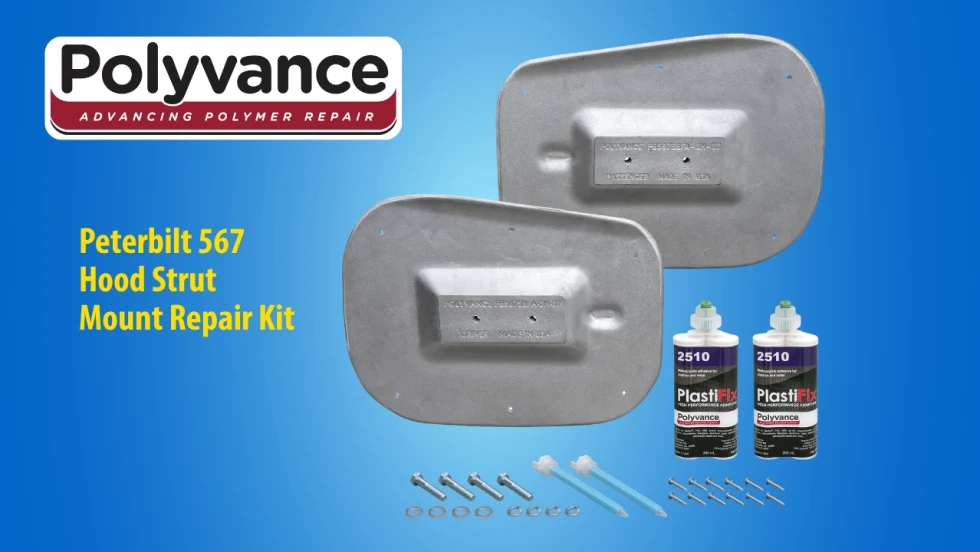
Polyvance Introduces New Peterbilt 567 Hood Strut Mount Repair Kit
Polyvance has launched a repair solution for Peterbilt 567 hood struts, helping truck owners and repair facilities avoid costly hood replacements.
Read More →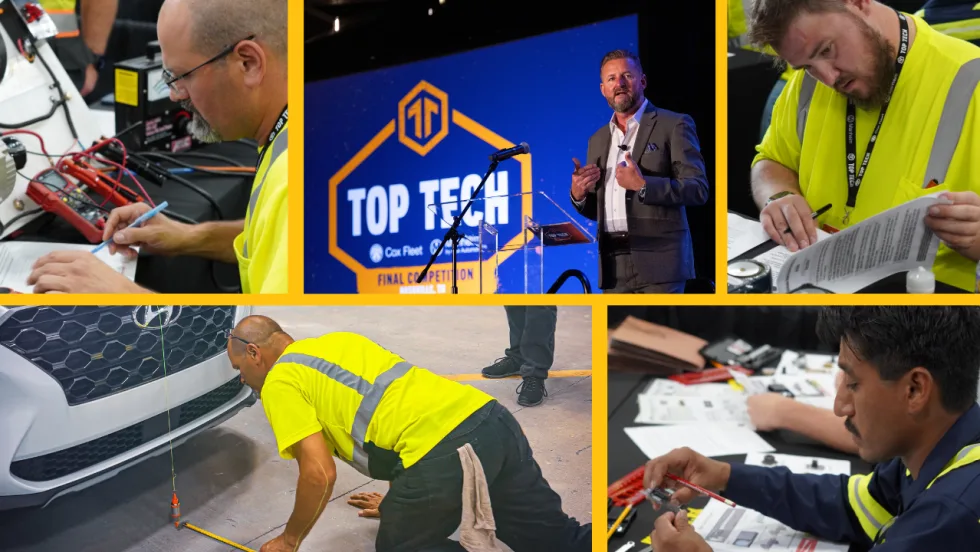
Cox Automotive Celebrates Technical Excellence at 2026 Top Tech Finals
The top technicians from Cox Fleet and Manheim tested their skills in Nashville, Tennessee, at Cox Automotive’s 2026 Top Tech Finals. The overall winners will advance to compete at the American Trucking Association’s TMC SuperTech competition.
Read More →
Grote Industries Appoints Vice President of North American Operations
Grote Industries has appointed Patrick Smith as vice president of North American operations as it celebrates 125 years of innovation and manufacturing excellence. He has more than 20 years of manufacturing leadership experience.
Read More →