




Operations
What Racing Can Teach Work Truck Fleets About the Work Nobody Sees
Race car driver and mechanical engineer Isaac Johnson shares practical lessons on preparation, relationships, setbacks, and building teams that perform when it counts.
 MENU
MENU SEARCH
Fleet’s most respected leaders share the hard-earned lessons they wish they had known sooner about trust, communication, mistakes, and leading people.
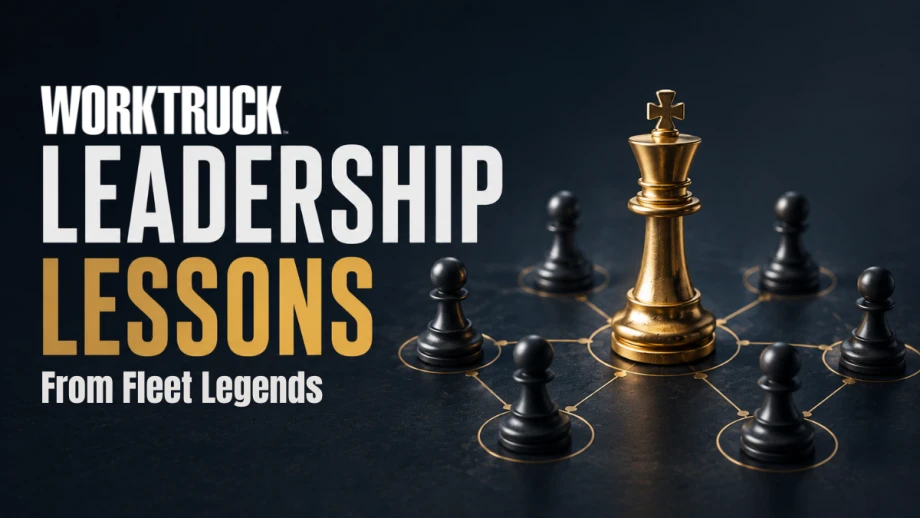
Fleet legends agree: leadership isn't about having all the answers. It's about listening, building relationships, and helping people succeed.
Work Truck | This image was edited by OpenAI. Please refer to our terms of use.
*Summarized by AI
Fleet managers spend a lot of time talking about vehicles. And that makes sense. Vehicles are the job, at least on paper. There are acquisition cycles to manage, utilization numbers to defend, maintenance schedules to protect, fuel costs to explain, drivers to support, and now, depending on the fleet, electrification, telematics, cameras, compliance, charging, and a whole lot of data coming in from every direction.
So yes, the trucks matter. But when you sit down with fleet leaders who have spent 30, 40, or even 50 years in this industry, something interesting happens.
They don’t usually start with the vehicles. They start with the people.
I’ve had the opportunity to interview some of fleet’s most respected leaders as part of the Legends of Fleet series. They came from public fleets, private fleets, utilities, corporate operations, consulting, technology, and just about every corner of the industry you can imagine.
Some started as technicians. Some came through finance, sales, HR, or operations. A few stumbled into fleet the way so many people do, with someone pointing at them and saying, “You’re good with vehicles, right?”
Their career paths were different. But their lessons were not.
Again and again, these leaders came back to the same ideas. Get out of the office. Listen before you decide. Explain the why. Know your numbers. Build relationships before you need them. Own the mistake. Trust your team. Don’t be afraid to ask for help.
Not exactly the stuff they put in the job description.
And that may be why these lessons often arrive late. Fleet leadership is one of those jobs where you can know the specs, understand the systems, and still get tripped up by the human side of the work. The part that isn’t on a dashboard. The part that happens in the shop, in the hallway, during a tough budget conversation, or after a decision didn’t land the way you hoped it would.
Looking back, these fleet legends didn’t spend much time talking about the software they wish they had implemented sooner or the exact vehicles they would have spec’d differently.
They talked about leadership. More specifically, they talked about the leadership lessons they learned the hard way.
One of the strongest themes that surfaced repeatedly was also one of the simplest: Get out of your office.
Steven Saltzgiver has spent more than four decades in fleet and has built a career around helping operations improve. Government Fleet magazine once referred to him as the “Fixer of Fleets,” a title that says a lot about the kinds of problems he has walked into and the results he has helped deliver.
But when Saltzgiver talked about mistakes new fleet managers make, he didn’t start with technology, budgets, or asset strategy.
“One mistake I see is fleet managers burying themselves in their office,” Saltzgiver said. “You need to be out there on the floor, talking to your team and being a resource.”
That sounds simple enough, but simple and easy are two very different things. Fleet managers are pulled into meetings, reports, budgets, emails, compliance questions, emergency calls, and about 72 things that weren't on the calendar that morning. It is very easy for the work to pull leaders away from the people doing the work slowly.
Scott Rood learned the value of staying visible throughout a career that spanned the Air Force, public fleets, consulting, and fleet technology. His leadership style was built around what he described as management by walking around.
“I spent time in the shop, talking to my techs and parts team,” Rood said. “I wanted them to feel comfortable coming to me with problems.”
That comfort matters. A technician is much more likely to raise a concern, a parts issue, a diagnostic challenge, or even an idea for improvement when the fleet manager is a familiar presence rather than a mysterious office creature who only appears when something has gone wrong.
Sam Lamerato took that same idea and made it part of his daily leadership rhythm. During his 37-year career leading fleet operations for the City of Troy, Michigan, he made a point of greeting technicians at the start of their shifts. He kept an open-door policy and treated conversations with confidentiality because he understood trust is built one interaction at a time.
The real lesson here is not just “walk the floor,” although that is a pretty good place to start.
The lesson is that leadership weakens the further it is from reality. Reports can tell you what happened, data can show you trends, and systems can flag exceptions. But people will often tell you what is really going on before the numbers catch up, if they trust you enough to say it.
If there was one leadership lesson that showed up across almost every conversation, it was this: People are far more likely to support a decision when they understand why it exists.
Lisa Kneggs learned that lesson while managing fleet programs that evolved from large sedan fleets into increasingly complex truck operations. She has spent much of her career as a one-person department, which means communication was not just helpful. It was survival.
“Just saying no doesn’t help,” Kneggs said. “You have to explain the why.”
That is such a simple line, but it carries a lot of weight. Drivers are not always resisting a policy because they are being difficult. Sometimes they do not understand the lease structure, the maintenance process, the cost impact, or the operational risk. Sometimes they need someone to connect the dots.
Kneggs described herself as less of a boss and more of an explainer-in-chief. And honestly, that may be one of the most underrated fleet leadership skills there is.
Rood reached a similar conclusion with his teams: “If they understand why we’re doing something, they’re more likely to get on board,” he said.
That applies whether the change is a new maintenance process, a safety requirement, a telematics rollout, a vehicle policy update, or a decision that drivers may not love at first glance. People do not need to agree with every decision immediately. But they do need to understand the reasoning behind it.
Amy McAdams has built much of her own leadership approach around that same principle. Whether she is rolling out a new process or asking someone to handle sensitive information, she wants her team to understand the purpose, the context, and how the task connects to the bigger picture.
That is where buy-in starts. Not with a memo, not with a rule, not with “because fleet said so,” which, let’s be honest, has probably never inspired anyone to leap joyfully into compliance.
It starts with clarity. Many managers assume communication happened because they delivered a message. Strong leaders understand communication only happens when understanding occurs.
Early in his career, Rick Longobart described himself as more dogmatic than collaborative.
“It was my way or the highway,” he admitted.
A lot of leaders can probably relate, even if they would never say it out loud. When you are new in a leadership role, especially in an operation that needs structure, it can feel like confidence means having the answer and pushing it through.
But Longobart learned that what he thought was best for the customer was not always what the customer believed was best for themselves.
“The biggest challenge I’ve faced is learning to admit when I’m wrong,” Longobart said.
That realization changed how he approached leadership. Instead of focusing on being right, he learned to slow down, listen, and look at the situation from another perspective. That shift helped him move away from creating “lose-win” outcomes and toward decisions that worked better for everyone involved.
Matthew Betz, who has spent more than 50 years in fleet, came to a similar conclusion from a different path.
“You can have the best system in the world, but if you’re not listening to your drivers, your vendors, and your team, you’re going to miss the real issues,” Betz said.
Betz does not treat listening as passive. He treats it as a leadership skill.
“Listening isn’t passive,” he said. “It’s hearing what’s unsaid, catching the small details that make the difference between a fleet running smoothly and one constantly putting out fires.”
That is the part that separates listening from simply waiting for your turn to talk.
For fleet leaders, listening can surface the underlying issue. Maybe the driver's complaint is not really about the truck. Maybe the technician’s frustration is not really about one repair. Maybe the customer department is not actually resisting fleet’s recommendation but reacting to an experience in which they felt ignored.
You will not catch that if you are only listening for the fastest answer.
And you definitely will not catch it if you have already decided you are right before the conversation starts.
Many new leaders feel pressure to have all the answers, and that pressure is understandable. Fleet is complex, and people expect fleet managers to know a little bit about everything. Vehicles, budgets, maintenance, safety, compliance, procurement, fuel, replacement planning, resale, drivers, technology, and occasionally, human behavior that makes you stare into the distance like you are in a documentary.
But the fleet legends interviewed for this series were pretty clear on this point: leadership is not about being the smartest person in the room.
In fact, the best leaders usually want smart people around them. Longobart encouraged fleet managers not to be threatened by employees who want to grow. He said leaders should hire people who are smarter than they are and create space for them to advance.
“It’s our fleet operation,” Longobart said. “It’s never mine.”
That one word shift from “my” to “our” matters. It changes the way people see their roles. It gives employees ownership. It also forces leaders to stop treating the operation like something they personally have to carry on their backs every single day.
John Dmochowsky built global fleet programs by focusing on people’s strengths rather than just their job descriptions. He looked at core competencies, worked with HR to redefine roles, and encouraged professional development, certifications, involvement in associations, and even public speaking opportunities.
“I always led with heart,” Dmochowsky said. For him, leadership was not just about building a stronger fleet strategy. It was about helping people feel valued and giving them room to grow into what came next.
Larry Campbell learned the same lesson through years of public fleet leadership. He warned new fleet managers about the danger of trying to handle everything alone.
“You’ll burn out, and your people won’t grow,” Campbell said. “Trust your team. Get to know them, not just on the job, but as people.”
That may be one of the clearest leadership lessons in the entire series: If everything depends on you, that is not a strength. That is a bottleneck wearing a badge. The strongest leaders are not trying to become indispensable. They are trying to build teams that are capable, confident, and ready for the future.
One lesson that separated many of these leaders from the rest wasn't intelligence, experience, or even technical expertise.
It was patience.
Fleet is one of the few professions where decisions made today can still be affecting operations five, 10, or even 20 years later. Vehicle replacement strategies, facility investments, staffing decisions, vendor relationships, and technology investments rarely reveal their full impact immediately.
Campbell understood that better than most. "Always think five to 10 years out," he advised. "You own that decision, so make sure it'll hold up."
That mindset helped him accomplish one of the goals he was most proud of: building a new fleet facility that first appeared on a planning document in 2003. The project wasn't completed until 2023. Twenty years. Most leaders would have abandoned the idea somewhere along the way. Campbell kept the plan alive.
Dmochowsky learned a similar lesson while managing global fleet operations. Early in his career, he came from sales, where success often feels immediate and measurable. Fleet taught him a different rhythm.
"Fleet success isn't about perfection. It's about progress," Dmochowsky said.
The lesson became learning to move the needle forward even when results weren't immediate, and circumstances weren't perfect.
Theresa Belding's career reinforced another version of long-term thinking: protecting future options. After navigating OEM disruptions, allocation challenges, and supply chain disruptions, she became a strong believer in maintaining relationships and staying flexible.
"Remain open to all your options," Belding said. "Don't close doors. Keep relationships open because you don't know what's going to happen."
Mark Petersen echoed that same philosophy through preparation. When his organization committed to a 100% diesel strategy, he quietly built an alternative plan because he wasn't convinced the future would cooperate with the assumption. When conditions changed, he was ready.
The common thread wasn't prediction. It was preparation. The best leaders weren't necessarily better at seeing the future. They were better at preparing for multiple versions of it.
Technology has changed almost everything about fleet, but not relationships. In fact, nearly every fleet legend interviewed pointed to relationships as one of the most valuable assets they built throughout their careers.
Petersen was perhaps the most direct about it. In more than four decades in fleet, not a single professional opportunity came from a blind application. Every one of them came through relationships.
"If someone wanted a few minutes of my time, I gave it to them," Petersen said. "You're missing a huge resource if you don't."
Belding built her career around a similar philosophy. Early on, she discovered that many of the answers she needed weren't inside her organization. They were inside industry associations, conferences, peer groups, and conversations with people who had already solved similar problems.
"Get involved," Belding said. "AFLA, NAFA, your fleet management company forums, just get out there and meet your peers."
Betz also encouraged leaders to think differently about vendor relationships.
"Sales calls aren't just about selling," Betz said. "If you're dealing with the right people and people you trust, there are great opportunities to learn something in every meeting."
Trust, he believes, remains the industry's most valuable currency.
"Trust will open more doors than any piece of technology or any contract negotiation," he added.
McAdams came to a similar realization from a different angle. Early in her fleet career, she attended one of her first industry conferences, feeling like many new fleet managers do: surrounded by people who seemed more experienced and more knowledgeable than she was.
During a workshop, another attendee shared a piece of advice that stayed with her for years: "No matter where fleet reports on the org chart, you touch every part of the organization."
That observation changed how McAdams viewed the profession. Fleet might report through finance, operations, procurement, or another department entirely, but fleet decisions affect drivers, technicians, safety teams, leadership, HR, IT, legal, and virtually every corner of the business.
McAdams stopped viewing fleet as a department and started viewing it as a connector.
It's a perspective that reinforces what so many fleet leaders eventually discover: success rarely comes from managing vehicles alone. It comes from understanding people, building relationships, and recognizing how decisions ripple across an organization.
Lamerato took that people-first philosophy even further. He understood that relationships weren't limited to peers and industry contacts. They existed inside the shop as well.
Birthdays were celebrated. Families were acknowledged. Employees were treated as people first and workers second.
"Fleet isn't 'I' or 'they.' It's 'we,'" Lamerato said.
That mindset built loyalty, trust, and a culture that lasted far longer than any individual initiative. Because at the end of the day, fleet may run on assets, but careers are built on people.
And if there was one thing every fleet legend seemed to agree on, it was this: the relationships you build will outlast the vehicles, the technology, the titles, and even the fleets themselves.
Fleet leaders today have access to more information than any previous generation. And according to several fleet legends, that creates both opportunity and risk.
Oleg Cytowicz has watched the industry evolve from paper records and manual calculations to telematics platforms that generate more information than most teams can reasonably process.
"The amount of information we get now is mind-blowing," Cytowicz said. "But it's easy to drown in it."
His advice is simple: understand the process behind the numbers: "If you're handed a report or a recommendation, ask how they got to that conclusion," Cytowicz said.
That philosophy extends to emerging tools like artificial intelligence. Technology can accelerate analysis, but leaders still need to understand the assumptions, context, and implications behind the results.
Betz expressed a similar concern about the growing volume of information fleet leaders face.
"The amount of data is only going to increase," he said.
The challenge isn't collecting data anymore. The challenge is knowing which data matters.
Kneggs raised a practical version of the same issue when discussing telematics. While she sees tremendous value in the technology, she also acknowledged the reality most fleet managers face.
"There is so much data in the telematics world that you don't have time to look at everything," she said.
And that's really the point. The best fleet leaders don't chase every metric, every alert, or every new dashboard. They focus on the information that helps them make better decisions, improve safety, support their people, and strengthen the operation.
Because data by itself isn't insight, and insight by itself isn't action. Leadership is what happens next.
After interviewing leaders whose combined careers span hundreds of years in fleet, one thing surprised me. It wasn't how different they were. It was how similar they were.
They came from different backgrounds. Some started as technicians. Others came from finance, sales, operations, HR, or the military. They managed different types of fleets, worked in different sectors, and built careers during entirely different eras of the industry.
Yet they kept arriving at the same conclusions:
· The best leaders don't hide in their offices.
· They listen more than they talk.
· They explain the why.
· They invest in people.
· They think further ahead than everyone else.
· And they never stop learning.
Not one of them suggested that success came from having all the answers. In fact, many openly admitted they learned their most important lessons through mistakes, difficult conversations, and moments when they realized they didn't know as much as they thought they did.
That's probably why their advice feels so timeless and will resonate for years to come. Because while vehicles have changed dramatically, leadership hasn't.
Over the course of these interviews, there were plenty of discussions about telematics, electrification, artificial intelligence, data, diagnostics, and the future of fleet. Those things matter, and they will continue to reshape the industry for years to come.
But beneath it all, the fundamentals remained remarkably consistent.
People still want to be heard. Teams still want leaders they trust. Drivers still want to understand why decisions are being made.
Organizations still need people who can build relationships, communicate clearly, and navigate change.
As McAdams discovered early in her fleet career, fleet touches every part of an organization. Whether it reports through operations, finance, procurement, or somewhere else entirely, fleet decisions ripple across every department. Drivers, technicians, executives, safety professionals, HR teams, and customers all feel the impact. It's one of the reasons leadership matters so much in this profession. Fleet managers aren't simply managing vehicles. They're connecting people, priorities, and business objectives every day.
That responsibility can feel overwhelming at times, but it is also what makes this profession meaningful. And, perhaps, that's why so many of these leaders stayed in fleet for decades.
Not because it was easy, not because every day was perfect, but because they found purpose in solving problems, helping people, building teams, and leaving things better than they found them.
McAdams put it best when she reflected on what she wishes she had known at the beginning of her career: She wishes she had known how much fun it would be.
After listening to these fleet legends, I think that's one lesson worth learning early: The vehicles may be what brings people into the fleet, but the people are what make them stay.
Many fleet managers initially underestimate the importance of building trust with their teams, which is crucial for effective leadership.
*Summarized by AI
Loading data...

Operations
Race car driver and mechanical engineer Isaac Johnson shares practical lessons on preparation, relationships, setbacks, and building teams that perform when it counts.



Operations
The automotive industry talks constantly about its workforce shortage. But before we can recruit the next generation, we may need to do a better job giving kids a reason to care about automotive in the first place.
Technology & AI
AI may guide the future of fleet, but drones and robots could carry out the work. See how work trucks may become hubs for a new mobile workforce.
Operations
Fleet’s most respected leaders share the hard-earned lessons they wish they had known sooner about trust, communication, mistakes, and leading people.
Operations
From oil changes to procurement decisions, fleet work is often underestimated by the very people who depend on it most. Bob Stanton makes the case for why communication, not just technical expertise, is one of the most important leadership skills in fleet.
Operations
New tools always change the process. They do not replace the instinct. From portrait painters adapting to photography to creators navigating AI, the people who matter most are still the ones who know how to see.
Operations
What are the key benefits of tire pressure monitoring systems (TPMS), and how can they not only increase fleet safety but also drive efficiency and cost savings?
Maintenance & Uptime
Winter may be winding down, but the breakdown patterns don’t disappear with the snow. Here’s what fleets keep seeing, and what to fix now before next season.
Operations
Work Truck’s 2026 forecast breaks down the biggest shifts in cost, tech, safety, powertrains, and yard ops so fleets can plan smarter.
Operations
Discover how 250 years of American progress shaped the evolution of work trucks, fleet operations, and the commercial vehicles powering today’s workforce.