April 1, 2026
TPMS: Driving Safety, Efficiency, and Cost-Savings for Fleets
What are the key benefits of tire pressure monitoring systems (TPMS), and how can they not only increase fleet safety but also drive efficiency and cost savings?
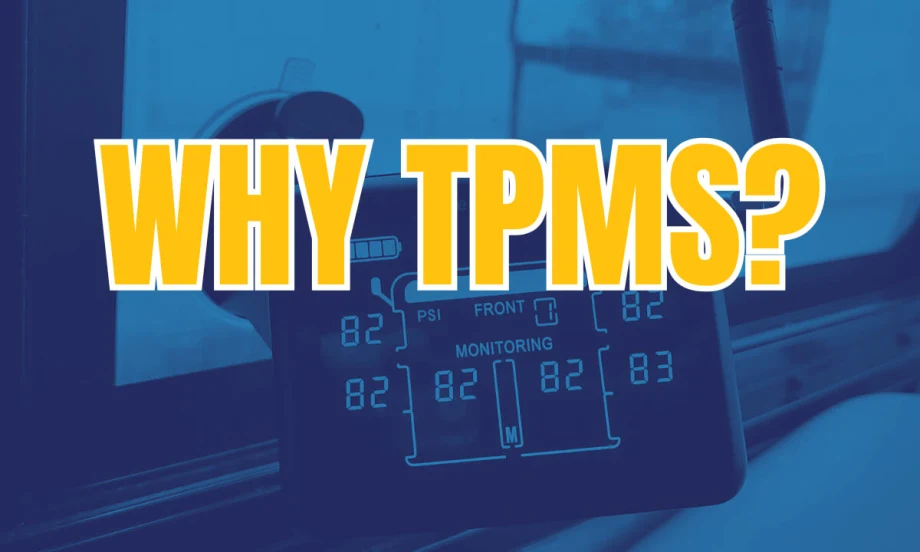
Several experts share insights about the value of fleets using TPMS.
Credit:
Wayne Parham
14 min to read
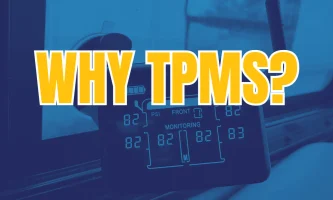
Tires are a fleet's direct link to the pavement and, as such, are a vital component to manage closely, whether the focus is on efficiency, cost savings, or safety. The best way to keep tabs on your fleet's tires is with a good tire pressure monitoring system (TPMS). It can do far more than just tell you the current air pressure.
So, let’s dig into the details of why fleets need TPMS on every vehicle.
Saving Money for Fleets
How will TPMS save money for a fleet, in particular, medium-duty or vocational fleets?
“So, the purpose of the TPMS is, in its name, tire pressure monitoring system,” said Jon Darab, director of operations and outreach for the Global Center for Automotive Performance Simulation within Virginia Tech Transportation Institute.
A TPMS displays each tire's inflation pressure, and tire inflation pressure affects tire performance in many ways.
“One is actually rolling resistance, which is the equivalent of how your fuel consumption is. So, if you're running low pressures, you usually get more rolling resistance,” Darab pointed out. “That could cause you to spend more money.”
But the potential savings extend far past just fuel consumption.
“In addition to that, the tire pressure also affects how the tire wears and the durability of the tire. So, typically with lower pressure, you get higher wear rates, and then lower pressure can cause the tire to be overloaded and cause a durability issue,” Darab shared. But he also pointed out that, on the flip side, higher pressure can sometimes cause durability issues if you’re driving in a hot environment.
“By knowing that your inflation pressure is within an acceptable range, you can minimize tread wear, you can minimize potential loss of the tire, and then also help your fuel economy by maintaining it, which all leads to cost savings,” he added.
“Tire-related issues often drive some of the most avoidable costs, including fuel waste, accelerated tire wear, roadside repairs, and unplanned downtime. A tire pressure monitoring system (TPMS) helps fleets address these issues proactively by continuously monitoring tire pressure and temperature in real time,” said Drew Kortyna, senior director of operations management at Cox Fleet.
Jason R. Hendrix, manager of training – TPMS, Autel North America, pointed to five significant areas where TPMS can save fleets money. Some are the same as those shared by Darab, but explained in a little more detail.
First, Hendrix pointed out lower tire replacement costs.
He said underinflation is one of the leading causes of premature tire wear and tire failure. Even a small pressure deviation increases heat buildup and accelerates tire casing degradation.
“By maintaining proper inflation, TPMS extends tire life and reduces the frequency of replacements, an especially meaningful savings for fleets running high‑cost commercial tires,” Hendrix said.
Next, he noted that TPMS can help improve fuel efficiency for fleets and that every PSI below the recommended pressure increases rolling resistance. For medium‑duty and vocational vehicles that spend long hours idling, hauling, or stop‑and‑go driving, this inefficiency compounds quickly.
TPMS helps ensure optimal pressure, improving fuel economy and lowering one of the fleet’s largest operating expenses, according to Hendrix.
Another cost-saving benefit is that TPMS can help prevent roadside breakdowns.
Hendrix explained that tire failures are a major source of unplanned downtime. Blowouts, slow leaks, and heat‑related failures often start as minor issues that go unnoticed. TPMS alerts drivers and fleet managers early, allowing repairs to be scheduled
Plus, TPMS can reduce maintenance labor costs. He said manual pressure checks are time‑consuming and inconsistent. TPMS automates monitoring, freeing technicians to focus on higher‑value tasks and reducing the labor hours required for routine tire inspections.
“Time is money, and a TPMS can reduce the cost of manually checking tire pressure regularly, which can entail significant labor,” said Daren Hansen, senior editor of transportation safety at J. J. Keller & Associates.
Hendrix also noted that using TPMS can enhance safety and liability protection, thereby also saving costs.
“Properly inflated tires improve vehicle handling, braking, and load stability,” Hendrix said. “By reducing the likelihood of tire‑related incidents, TPMS helps fleets mitigate risk exposure and avoid the downstream costs associated with accidents, claims, and equipment damage.”
Blowout Precursors
Which is more problematic, under- or over-inflation, when it comes to blowouts?
“Underinflation is the leading cause of tire blowouts. TPMS detects low pressure or rapid air loss early, giving drivers and fleet managers time to respond before a tire overheats, delaminates, or fails at highway speeds,” Hendrix said.
Darab also suggested that the greater problem potentially leading to a blowout is underinflation.
“I would say it's typically under-inflated,” Darab said. “The lower inflation has a broader application to causing that rapid air loss.”
He further explained the relationship between environmental temperatures and tire pressure.
“When you have a contained volume, and the temperature goes up, so does the pressure. So, if you happen to be starting with a higher pressure, and then you drive in Phoenix, that temperature rises pretty fast, and therefore the pressure rises fast, then you can get to a burst pressure that can lead to that rapid air loss,” Darab said.
OEM TPMS or Aftermarket TPMS?
If a fleet uses light-duty vehicles with an OEM-integrated TPMS designed for consumers, should it consider adding an aftermarket TPMS? The answer can vary depending on the situation, especially if the vehicle upfit is altered or the tires are changed to a different style.
“The sensors in the OEM vehicles are already designed and validated to be pretty robust and fairly accurate, so that's a big benefit to just utilizing them. Now, one of the things to consider is that those OEM requirements are based on how they originally designed the vehicle, and in conjunction with the tire,” Darab pointed out.
“If you happen to change to an aftermarket tire, which may have a higher load range, and you put in more pressure, then that may affect some of that original OEM validation. You could consider the aftermarket as a secondary sensor, but when you do have that secondary sensor, if the two sensors don't match, then you question, which one do I go with?” he suggested. “So, there's maybe a little bit of benefit to doing an aftermarket if you're substantially changing the tires and maybe the pressures that were developed around from the original OEM.”
However, Hendrix has a slightly different outlook on whether fleets should opt for an aftermarket TPMS. He sees it as a must-have.
“In many cases, yes, especially for commercial light‑duty fleets that operate at higher utilization rates, carry variable loads, or run in demanding environments. OEM‑integrated TPMS is designed primarily for consumer driving patterns, not the operational realities of fleet vehicles,” Hendrix said. “As a result, it often lacks data visibility, durability, and management tools that fleets need to control costs and prevent downtime.”
He pointed to several reasons, starting with consumer systems typically alert only the driver and provide no centralized visibility. Fleet managers can’t see tire status across the fleet, can’t track chronic underinflation, and can’t intervene before a vehicle experiences failure. He also added that the consumer-targeted TMPS offers limited data and slower alerts.
“Aftermarket systems provide real‑time pressure and temperature data, early‑warning thresholds, and more precise monitoring, critical for preventing heat buildup and sidewall damage,” Hendrix explained.
Plus, he elaborated, light‑duty fleet vehicles frequently tow, haul, or operate at higher loads than typical consumer use. OEM TPMS rarely adjusts for these conditions, while aftermarket systems can be configured for commercial load ranges and more aggressive alerting.
And, most OEM TPMS platforms don’t integrate with fleet management systems, he explained.
Hendrix also said another advantage of an aftermarket TPMS over an OEM one is that it can add sensors for things like spare tires, trailers, dual wheels, and upfitted or specialized equipment. Plus, he said, aftermarket TPMS sensors are often built to withstand harsher duty cycles than consumer‑grade sensors.
Cox Fleet’s Kortyna said an aftermarket TPMS designed for commercial fleets offers continuous, real-time pressure and temperature monitoring, along with alerts that can be shared with fleet managers, not just the driver. This additional visibility allows fleets to identify slow leaks, overheating tires, or recurring issues across vehicles and locations.
“For organizations focused on uptime, safety, and consistency, aftermarket TPMS helps bridge the gap between basic compliance systems and true preventive maintenance,” Kortyna said.
“Aftermarket systems can have added benefits like more granular readings from each tire, including spares and trailers, and customized alert thresholds so drivers are alerted to problems earlier than they might otherwise be,” said Daren Hansen, senior editor of transportation safety at J. J. Keller & Associates. “Aftermarket systems may be able to provide additional details like temperature. An aftermarket system can also standardize the system across the fleet, including vehicles that may not have an integrated system, and may be integrated into the telematics system for remote monitoring.”
Telematics Integration
When TPMS is integrated into telematics, what’s the significance?
“When TPMS is integrated into a telematics platform, tire data becomes part of the fleet’s broader operational view. Pressure and temperature readings flow into the same system fleets already use to track vehicle health, location, and performance,” explained Kortyna. “This integration is important because it enables more proactive, data-driven decision making. Fleet managers can receive alerts in real time, analyze tire trends over time, and schedule maintenance based on actual conditions rather than fixed intervals.”
Darab elaborated on the added value of using telematics to capture tire pressures over time, and in varied situations.
“By having data, you can start to look at things like trends, like when I go from point A to point B, and all these trailers are doing that, I see a significant rise in pressure, or I see a significant drop in pressure,” Darab said. “That can start to give you a better indication of maybe we need to set the pressures differently, or maybe something's happening on the truck or the road that we weren't aware of. So, the telematics just gives you more opportunity to understand the data.”
As J.J. Keller’s Hansen pointed out, the data can be analyzed and tracked over time and help identify trends related to specific vehicles, tire brands, drivers, locations, maintenance shops, and so on.
So that data provides a great overview, but Darab also points to how telematics can also spot problems like a load that has shifted, causing an imbalance in tire pressures.
“Tire pressures also can be related to how much vertical load you have on that, so if all of a sudden you're seeing a big spike in the pressure on one or two of the tires versus the others, that might indicate that your load actually shifted. And that could indicate then, all right, we need to rebalance the load, which causes a lot of other issues on vehicle dynamics,” Darab concluded.
TPMS Impact on Safety
What is the safety value of having TPMS in commercial vehicles?
Hendrix said TPMS delivers significant safety benefits for commercial fleets by turning tire pressure and temperature from a hidden risk into a continuously monitored safety‑critical data point.
“Because tires directly affect vehicle stability, braking, handling, and heat buildup, real‑time visibility into tire health materially reduces the likelihood of accidents and roadside emergencies,” Hendrix said.
“Knowing that your tire is in the right range for the inflation pressure gives you confidence that you can make it the eight hours you need to drive right, and also prevents any surprises,” Darab said.
Likewise, Kortyna said TPMS plays a critical role in commercial vehicle safety by helping prevent tire failure, one of the most common causes of roadside incidents. He explained that underinflated or overheated tires increase the risk of blowouts, reduced handling, and longer stopping distances, particularly on heavier vehicles.
Darab also pointed out that safety is much broader than just the safety of the load, vehicle, and driver.
“With your typical audience driving and having heavier loads, it's not necessarily always just about their safety, but also the people around them. Because if that load comes off, then you've got a lot of other people around it,” Darab emphasized. “So being able to be confident that you're not going to have a durability issue in the tire, either from high pressure or low pressure, gives you more confidence that you'll be able to maintain the safety of you and the people around you.”
Preventing Unplanned Downtime
What is the impact on maintenance and preventing downtime when a fleet uses TPMS?
Well, Darab sees several ways TPMS can prevent downtime. One is around tread wear: if you maintain the pressure, your tires are going to last longer and more predictably. That means tires can be serviced on the regular, intended schedule. That keeps trucks moving.
If you're driving around with underinflated tires and all of a sudden, a tire goes down or even blows, it interrupts your schedule.
“That’s unplanned maintenance, and all of a sudden you have to get a maintenance truck out there, which costs more than if you went back to the home base to get maintenance done,” Darab said.
Hansen sees it the same way. TPMS allows for proactive tire monitoring and maintenance. The longer a driver uses an underinflated tire, the higher the fuel cost and the higher the risk of premature failure. A shredded tire can cause secondary mechanical issues besides just tire loss, like damage to the vehicle's body.
“TPMS lets you catch problems early so you can prevent unplanned downtime and address the issue under controlled conditions, in the shop, rather than on an emergency or on-the-road basis,” Hansen said. “The earlier the fix, the less costly it is, typically, and the more time technicians and mechanics have to spend on other issues like routine maintenance.”
Kortyna said TPMS can reduce emergency repairs, shorten shop visits, and help fleets avoid costly service interruptions. Over time, fleets experience fewer breakdowns, more predictable maintenance schedules, and better use of vehicles and technicians.
“The end result is improved uptime and less disruption to daily operations, which is especially important for fleets with tight service schedules,” Kortyna said.
But how does having TPMS impact a driver’s pre-trip inspection? Will they focus on tires less? Will they need to daily check tire pressures, or not?
“In my personal vehicle, I will still check my pressures every once in a while, just to make sure that a sensor hasn't gone kind of wrong. They're pretty robust sensors, so I haven't actually experienced it when a sensor has been wrong, but I just know from all my different engineering experience that sensors will eventually go wrong,” he said.
So, what about commercial drivers? Darab suggests that if everything looks good on the TPMS, they may not need to check tire pressures every day. But they still should periodically. Also, just because they trust the TPMS readings in no way means drivers should not do a pre-trip visual inspection to make sure nothing else is obvious on the tires or the rig.
“But from a pressure standpoint, I think you could trust those TPMS sensors for and bypass your daily pressure checks,” Darab added.
Alerts: When to Pull Over
So, when drivers get TPMS alerts, how quickly should they pull off the road?
Tim Adam, industry business advisor at J. J. Keller & Associates, said there are four key alerts drivers should pay attention to, which are:
- Low tire pressure - indicates one or more tires have dropped below safe operating pressure. Drivers should pull over at the nearest safe location to inspect the tires.
- Critical pressure drop - indicates a significant sudden air loss. This is usually caused by a blowout, sidewall failure, or tread separation. Drivers should pull over immediately.
- High tire temperature - often caused by underinflated tires or mechanical failure in one of the axle parts. Drivers should pull over at the nearest safe location.
- Over-inflation - Drivers should correct the pressure level as quickly as possible.
“Drivers should use TPMS as a supplemental tool and not depend on it exclusively. Drivers should monitor steering pull, unusual noises, trailer sway, and the smell of hot rubber, as normal,” Adam said.
For Darab, he really focuses on low-pressure warnings and wastes no time coming to a stop and checking his tires if he gets an alert.
“If I’ve got a low-pressure symbol, typically, when I see that I usually try to pull off quickly, because I don't know if it's a little bit low or if it's really low,” Darab said. “Because if you have a fast-happening leak, it'll show you that you went below that by that indication, but you don't know what that rate is. I will pull off pretty quickly and check to make sure I'm not having a faster deflate, or if it's just like a slow one because of maybe temperature change or something.”
Hendrix also suggested prompt action and said drivers should immediately pull over if alerts are activated for rapid air loss / fast leak, high temperature, extremely low pressure, multiple alerts on the same tire over a short time span, or any handling issues combined with a TPMS alert.
“If an alert shows rapid deflation, extreme pressure deviation, or dangerously high temperature, drivers should safely pull off the road as soon as possible to prevent a blowout or loss of control. Less urgent alerts, such as gradual pressure loss, should still be reported and addressed promptly, ideally before the next route or shift,” Kortyna said.
But he also pointed out how clear driver training and escalation protocols help ensure TPMS alerts are handled consistently and appropriately across the fleet.
Pretty much most experts agree that when your TPMS indicates tire problems, it is time to safely pull off the road and investigate before proceeding. The TPMS adds an extra level of safety for tires and provides early warning, as long as drivers pay attention and take action.
Loading data...