December 10, 2025
How 250 Years of American Progress Led to the Work Trucks We Rely on Today
Discover how 250 years of American progress shaped the evolution of work trucks, fleet operations, and the commercial vehicles powering today’s workforce.
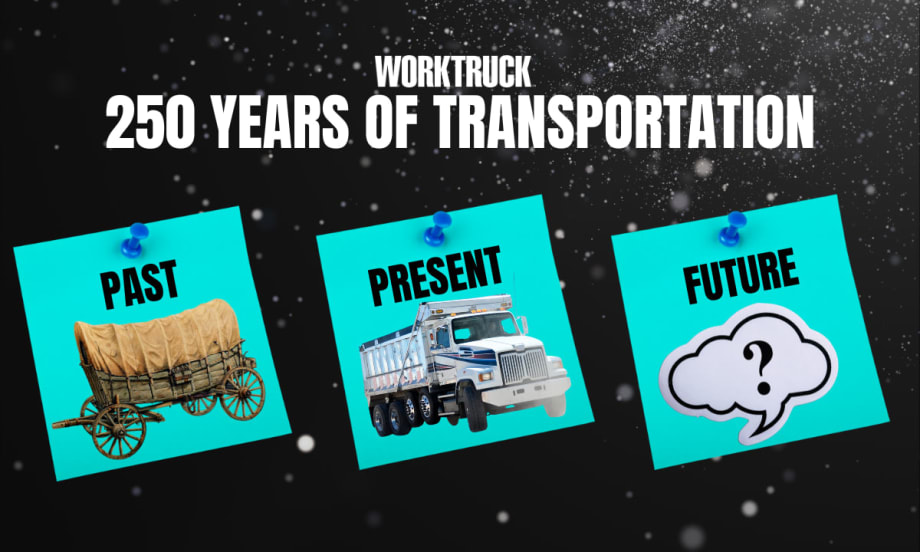
A quick look at how far work vehicles have come, from early wagons to today’s heavy-duty trucks, and where the next generation of fleet tech might take us.
Photo: Work Truck
7 min to read
Anyone who works in the commercial vehicle or fleet industry knows that America relies on its workers, and those workers rely on the vehicles that help them get the job done. As the country approaches its 250th anniversary, it’s a good moment to step back and look at the bigger picture.
This article traces the evolution of American work vehicles from 18th-century wagons to today’s advanced commercial trucks. It explores how work trucks shaped infrastructure, supported growing cities, and laid the foundation for modern fleet operations. Here’s how 250 years of progress built the vehicles fleets rely on today!
How did America evolve from horse-drawn wagons to purpose-built work trucks, and how do today’s fleets continue a tradition that started long before the first gasoline-powered truck rolled onto the road in 1899?
This isn’t just about history. It’s about how fleets became part of the fabric of everyday American life and how today’s work matters just as much as anything that came before it.
American work trucks have come a long way from the early wagons that kept communities alive in the 1700s. This overview explores how work vehicles evolved into today’s advanced work truck fleets, how they shaped American infrastructure, and how modern fleet managers carry the legacy forward.
From Wagons to Work Trucks: How America’s First Fleet Vehicles Took Shape
Long before the first commercial truck showed up in 1899, America relied on horse-drawn wagons and hand-built tools to move freight, support the military, and keep early communities supplied.
In 1776, wagons like the heavy-duty Conestoga carried everything from military gear and ammunition to textiles, food, lumber, and everyday goods along early trade routes such as the Great Wagon Road. It was the original version of moving what matters.
The roots of today’s fleet world start here. And we’ll be digging even deeper into this topic in our sister publication, Automotive Fleet, throughout the year.
Even in these early years, you can spot the first signs of a fleet mindset. Organized wagon lines managed routes, supplies, and workers. Specialized wagons were built for different types of loads. Wagon masters set the tone for modern fleet managers. Everything depended on uptime long before anyone used that word.
By the late 1800s and early 1900s, companies like Autocar and Mack launched some of the first gasoline-powered trucks built specifically for work rather than leisure. These early machines weren’t pretty, but they were tough, and they kicked off a new era of dedicated work vehicles.
From there, work trucks evolved right alongside the country. Flatbeds helped build railroads and highways. Utility wagons and later line trucks carried crews that extended electricity into rural America. Repurposed Model Ts hustled deliveries and farm supplies through small towns from coast to coast.
The equipment changed, but the mission stayed the same.
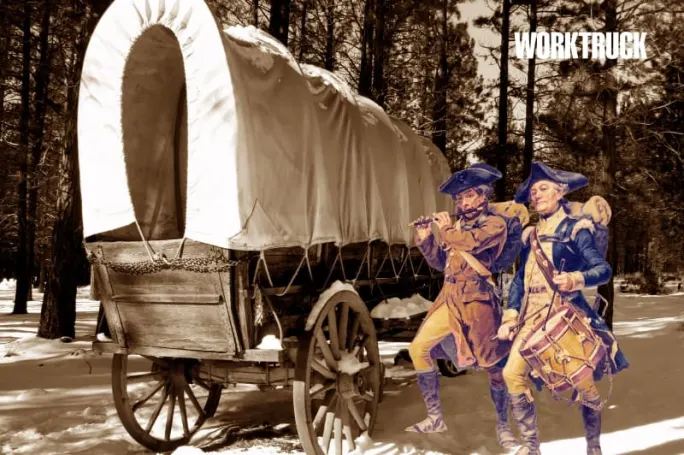
Work vehicles were part of American life even in the earliest days. Horse-drawn wagons supported communities, delivered supplies, and laid the groundwork for today’s fleet operations.
Photo: Work Truck
How Early Work Vehicles Shaped Growing Cities and Fleet Operations
Before modern fleets existed, the earliest versions of “fleets” were already shaping American cities. Wagons moved lumber to rebuild towns after fires. Horse-drawn carts hauled bricks, steel, and tools into expanding downtowns. Dirt roads, long travel times, and unpredictable weather didn’t stop progress because the people behind the wheels — whatever those wheels looked like — kept goods moving.
These weren’t fleets in the modern sense, but they were absolutely the first organized work vehicles. The mission hasn’t changed. Only the equipment has.
And some cities had to get particularly inventive to keep freight moving.
A Rare Underground Freight Network
Portland, Oregon, stands out as one of the only American cities that created an underground tunnel system specifically to move goods more efficiently from its port into the city. These tunnels weren’t built for rail systems or pedestrian passage. They were built for hand-pushed carts and wagon-style transport so merchants could bypass crowded or unpaved streets and keep commerce flowing.
Other American cities built tunnels, too, but most were designed for rail, utilities, or foot traffic. Portland is one of the rare examples of underground infrastructure supporting early logistics that eventually evolved into the work modern fleets do today.
It’s a reminder that long before upfit packages, liftgates, or powertrains, American cities were already experimenting with ways to deliver freight faster, safer, and more efficiently.
Work Trucks and the Rise of American Infrastructure
Every major milestone in America’s development had a work vehicle behind it. When roads expanded, so did the trucks that graded, paved, and maintained them. When cities grew vertically, fleets hauled the materials skyward. When utilities stretched across rural America, bucket trucks and service vehicles helped make it possible.
During the 1930s and early 1940s, New Deal projects relied on fleets of graders, dump trucks, and utility vehicles to build bridges, dams, and the early highway network. Later, during the construction of the Interstate Highway System, fleets grew again, adding more specialized bodies and equipment as job sites became more complex. The roads millions of drivers use today were built with work trucks operating in long lines, day and night, across every state.
That story continues today. Storm response crews roll in before most people know a storm is coming. Construction fleets turn empty lots into skylines. Delivery and service fleets keep daily life running smoothly in the background, so you barely notice the effort.
If you want to understand American resilience, just watch a crew of technicians get a downed grid back online in the middle of the night.
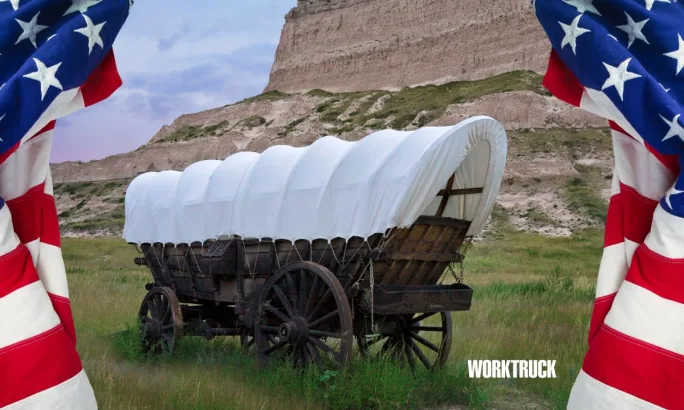
Before work trucks existed, wagons like this carried the freight that kept early America moving. These were the original work vehicles long before commercial fleets took shape.
Photo: Work Truck
The Modern Work Truck Fleet: Smarter, Safer, More Capable
Today’s work trucks look nothing like their earliest ancestors, but the job still comes down to the same thing: get the work done safely, efficiently, and reliably.
Modern fleets have become complex systems working in sync. Truck bodies are built for specific jobs. Powertrains can be diesel or electric. Modern fleet technology, such as telematics systems, find problems before drivers notice them. Upfits help reduce strain, improve workflow, and protect workers.
And the spirit that drove those early work vehicles is still alive. UPS, for example, started in 1907 with a single delivery bicycle in Seattle and eventually grew into one of the largest and most recognizable last-mile delivery fleets in the world. Their rise mirrored America’s shift from local storefronts to regional and nationwide commerce. That same pattern continues today as fleets adopt route optimization, alternative fuels, and last-mile efficiency tools.
For 250 years, America has been built by the people who move freight, rebuild cities, and keep communities running. For the last 126 of those years, purpose-built work trucks have carried out that mission.
What Today’s Fleet Leaders Carry Forward
As the U.S. reaches its 250th year, fleet managers continue a tradition that stretches back to wagons, workshops, and hand-built tools. Today, they solve problems, plan, and fight downtime with a blend of skill, strategy, and technology. They balance budgets, supply chain issues, driver needs, and evolving equipment.
Through it all, they support the workers who keep communities, cities, companies, and industries running. The job may look different today, but the impact is as big as ever.
This anniversary offers a chance to recognize that legacy and the people who continue it.
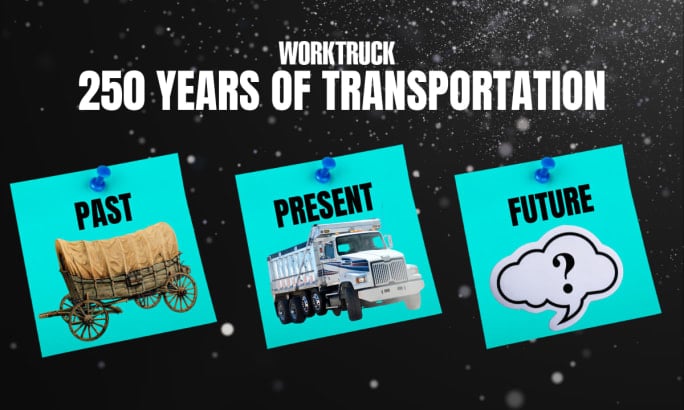
A quick look at how far work vehicles have come, from early wagons to today’s heavy-duty trucks, and where the next generation of fleet tech might take us.
Photo: Work Truck
Looking Ahead to the Next 250
If the past tells us anything, it’s that work trucks will keep changing. The next 250 years may bring electric everything, automation, or routing technology we haven’t even imagined yet, but fleets will still have the same job: keep America moving. And if there’s one thing this industry has shown repeatedly, it’s that it’s built to take on whatever comes next.
That’s also why staying connected matters more than ever. The fleets that thrive are the ones that keep learning, keep adapting, and keep an eye on what’s coming down the road. Work Truck is here to make that easier. The print magazine gives you deeper stories and long-view insights. Our newsletters break down the news you need. Social channels give you quick hits and everyday tips. And our YouTube videos bring you walkarounds, interviews, and Fleet FAQs, all available to watch on the go.
As America heads into its 250th year, what part of this work truck evolution are you seeing in your own fleet operations? Stay connected with Work Truck for ongoing insights into fleet management, commercial vehicle trends, and the work truck technologies shaping the future.
Loading data...