
May 1, 2026
The Future of Storytelling Still Belongs To Humans
New tools always change the process. They do not replace the instinct. From portrait painters adapting to photography to creators navigating AI, the people who matter most are still the ones who know how to see.
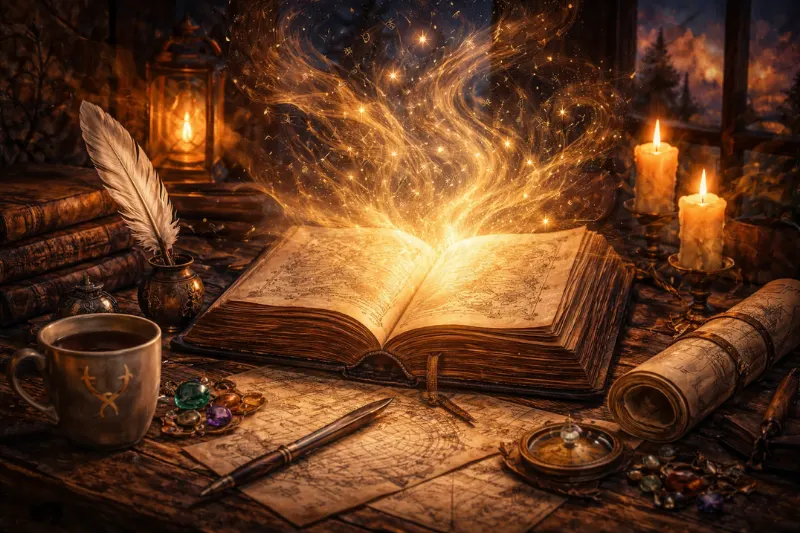
Every story carries something forward. Knowledge, memory, meaning that is passed from one voice to the next, long after the moment itself is gone.
Credit:
This is an AI-generated image. Refer to our Terms of Use.
8 min to read
- Technological advancements alter creative processes, but do not eliminate inherent human intuition in storytelling.
- Historic shifts such as the transition from portraiture to photography demonstrate adaptability without losing the human touch.
- Even with AI and modern tools, the most influential storytellers remain those with the keen ability to perceive and interpret the world.
*Summarized by AI
Prefer to listen?
There has always been a certain kind of person in the room. The person leaning in just a little closer. The one who catches the tiny detail that everyone else either missed or decided was not worth circling back to. The one who hears the answer, but can already feel the real story sitting somewhere underneath it, waiting to be asked for properly.
The one who says, “Wait, hold on,” because something is not clicking yet. (You know exactly who I mean.)
That person? They are a storyteller.
Not in the shiny, romanticized way we sometimes talk about it. Not just someone with a byline or a mic or a perfectly color-coded content plan, or writing their fifth novel. I mean the person who is wired to notice things. The person who cannot help but tug on the loose thread. The person who gets maybe a little too fixated on the one detail that does not fit, because, honestly, that is usually where the story starts.
And that kind of person has always mattered.
Before We Called It Content
Long before any of this became content strategy, brand storytelling, editorial planning, or whatever term we are using this week, storytellers had a very different job, but also kind of the exact same one.
In ancient Scotland, the seanchaí were not just entertaining people. They were carrying memory. History. Identity. They moved from place to place holding lineages, battles, folklore, and belonging in their voices. If they did not tell the story, it would not live on. It just... disappeared.
Which is kind of wild to think about. And it was not just them. You can trace that role across cultures: Bards, griots, and scribes. Different names, different places, but the same core truth.
They were not just repeating events. They were shaping meaning. Deciding what mattered. Deciding what lasted. Deciding what people would carry forward long after the moment itself was gone.
And honestly, that still feels like the job.
The tools are louder and faster now. But the actual work of storytelling still comes down to the same thing. Paying attention, making meaning, and trying to get as close to the truth of something as you can.
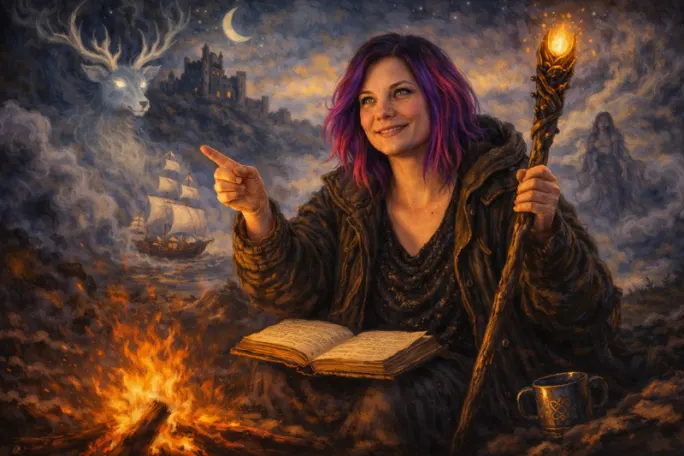
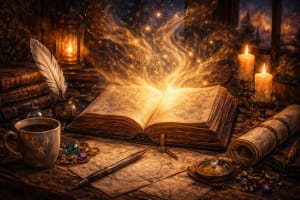
Before we called it content, storytelling looked like this. Different setting, same responsibility: remember, interpret, and make sure it lasts.
Credit:
This is an AI-generated image. Refer to our Terms of Use.
The People Who Notice
That is the part I keep coming back to. Storytellers are not just people who make things; they are people who notice.
They notice the pause before someone answers, the thing left unsaid, when a statistic is technically interesting, but the real story is somewhere inside the people behind it. They notice when everyone is talking about the obvious angle, but the more human one is sitting off to the side, quietly waving.
And then, because they are who they are, they ask another question. And then another. And perhaps five more.
Not because they are trying to be annoying (although I am sure we all have had our moments). Because they can feel when they are still standing on the surface of something. And the surface is rarely where the good stuff is.
That instinct is not fluff or some cute creative trait. It is the whole thing. Storytelling is not just about relaying what happened. It is about helping people feel why it mattered.
Why We Obsess Over the Tiny Stuff
This is also the part that makes total sense if you are a storyteller and absolutely none if you are not.
Why do we spend way too long chasing down one detail most people will never consciously notice? Why rewrite the same sentence six times? Because, technically, it works, but emotionally, it lands half an inch off. Why push for one more interview, one more layer, one more pass?
Because it matters. Because stories are not just nice little packages of information. They shape how people understand the world. They shape what gets remembered. They shape who gets seen clearly and who gets flattened into something easier, cleaner, and more convenient. And once a story hardens into “the story,” good luck undoing that.
So yes, a lot of the work looks invisible from the outside. It can look like overthinking. Or perfectionism. Or being unable to leave well enough alone. And okay, sometimes maybe it is a little bit like that.
But mostly? It is how much we care. It is knowing that framing, tone, and context matters. What you leave in matters. And what you leave out matters. The order matters. The language matters. Humanity matters. It all matters.
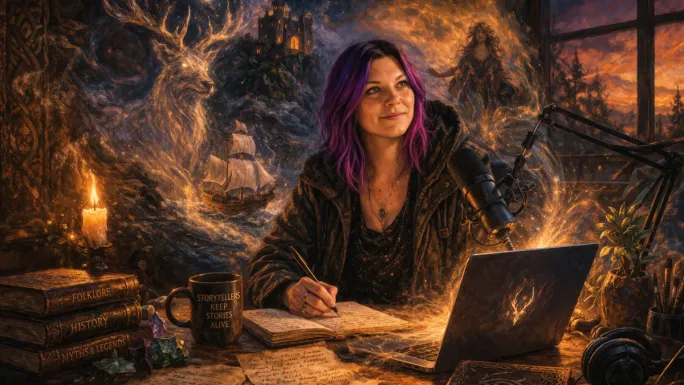
The tools have changed, but the role hasn’t. Today’s storytellers are still doing what they’ve always done: finding the thread, asking the question, and shaping meaning out of what matters.
Credit:
This is an AI-generated image. Refer to our Terms of Use.
What AI Can Do and What It Cannot
And now we have AI. My honest thought? It is genuinely useful. But something to be extremely cautious of. But useful and human are not the same thing, and I think that distinction matters more than people want to admit.
The comparison I keep coming back to is photography, but not just photography itself. The shift that happened when cameras first showed up. At the time, many portrait artists thought that was it. Done. Why would anyone sit for a painted portrait if a camera could capture their image faster, cheaper, and with way less effort? And honestly, fair question.
But the smartest artists did not see the camera as the end of their craft. They saw it as a tool. Something that could support the work rather than replace it. They could photograph a subject and use that image as a reference later. They no longer had to make someone sit still for hours in an uncomfortable pose while they worked through every detail in real time.
The camera did not take away their eye, or their talent, or their interpretation. It gave them another way to work. More flexibility, time, and in many cases, even more room for artistry.
That feels a lot like where we are now. Yes, a camera can capture an image. A beautiful one, even. But it does not decide where to stand. It does not know when to wait. It does not feel when a moment is about to become something worth preserving. It does not recognize the emotion underneath an expression and think, there, that is it.
That part belongs to the photographer. Or the artist. Same idea here.
AI can absolutely help organize, summarize, brainstorm, generate, and speed things up. It can take some of the strain out of the process and handle tedious or time-consuming tasks. And that impact can create more room for the real work.
But it does not wake up curious. It does not feel the itch of a story that has not yet been told right. It does not sit across from someone and sense that if you ask this next question gently enough, the real answer might finally come out.
It does not care. And that is not me dragging AI. It is just the truth.
Like the camera, it is a tool. A powerful one. One that can absolutely change the process. Maybe even improve parts of it. But the tool has never been what made the artist valuable in the first place.
The value is still in the eye, the human ability to recognize what matters and shape it with care. That part is still all the storyteller.
What Has Always Mattered
The value of a storyteller has never really been in the format, or the platform, or the tech, or even the output. It is in how they see. It is in the questions they ask. The connections they make.
It is in the way they can look at a pile of facts and feel the human thread running through it all. Or the way they can sense when something is almost true but not quite there yet. And always in the way that they care enough to keep going until it is.
That is the part that cannot be automated away.
From ancient Scotland to now, storytellers are still doing what they have always done. Helping us remember, understand, and feel the weight of something instead of just skimming past it.
Different platforms, same role.
Because this has never just been about making something new. It has also been about carrying something forward. Taking what has been noticed, learned, felt, and understood, and making sure it does not disappear. Holding onto the spark of knowledge and meaning long enough to pass it to the next person, and then the next.
So, if you are one of those people who cannot help but ask the extra question, who notices stories hiding in plain sight, who feels that weird quiet responsibility to tell them correctly, even when it would be faster not to, that instinct is not outdated.
It is not replaceable. If anything, it is more needed now than ever. Because in a world where everyone can make something, the real value is still in knowing what is actually worth saying, what is worth carrying forward, and how to shape it with enough care that it still means something to the people who come after us.
And caring enough to say it well.
Editor’s Note: You may have noticed that images in this piece were created with the help of AI, which, honestly, feels a little ironic in a story about something as deeply human as storytelling. But that tension is kind of the point.
These visuals weren’t meant to replace the story. They’re an extension of it. A way to explore the same themes through a different lens, using a tool that didn’t exist for most of storytelling history. And in that way, it mirrors the evolution the story itself talks about.
There’s something a little surreal about using AI to reimagine an ancient storyteller, and then again to place that same role into a modern setting. It’s fast, it’s flexible, and it opens creative doors that would have taken significantly more time or resources before. At the same time, it makes you pause and think about where the line between tool and voice lies.
Because the images didn’t decide what to create. They didn’t choose the moments, the symbolism, or the feeling behind them. That still came from a human perspective, shaped by the same instinct that has always driven storytelling forward.
When asked for sourcing? It was vague. "No direct sources in the traditional sense. Images were generated using AI based on a blend of traditional oil painting styles, Celtic folklore symbolism, and modern creative workspace." It mentioned publicly available resources, such as Rembrandt, folklore imagery, and others as basing it on the "idea" of these things.
TL;DR: Yes, AI helped generate these visuals. But it didn’t tell the story; it just helped give it another way to be seen.
Quick Answers
New tools change the storytelling process by altering the methods and mediums through which stories are conveyed, but they do not eliminate the fundamental human instinct required for storytelling.
*Summarized by AI
Loading data...