



Fleet Tips: Growing the Next Generation of Technicians
 MENU
MENU SEARCH
From oil changes to procurement decisions, fleet work is often underestimated by the very people who depend on it most. Bob Stanton makes the case for why communication, not just technical expertise, is one of the most important leadership skills in fleet.
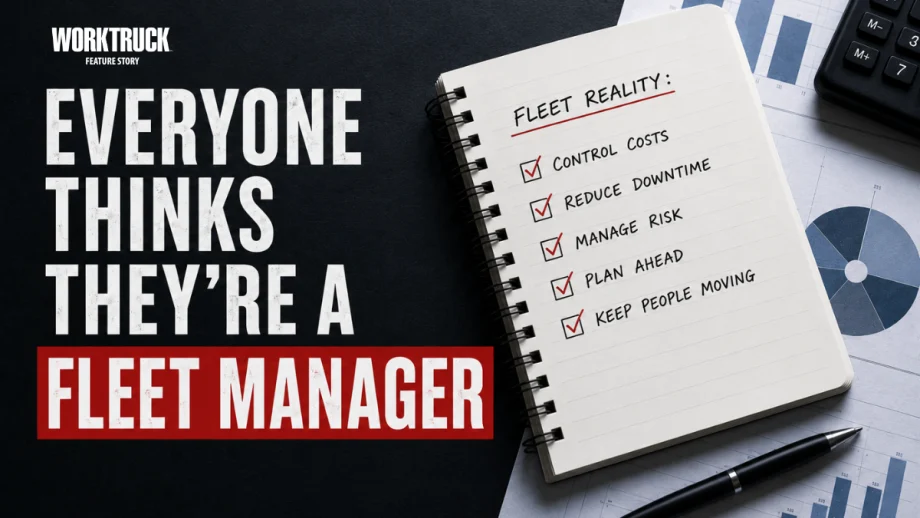
Fleet management is often underestimated because vehicles feel familiar, but behind every maintenance decision is a larger system balancing cost, downtime, risk, safety, and operational readiness. Inspired by insights from retired fleet manager Bob Stanton.
Work Truck
*Summarized by AI
There’s a particular challenge in fleet that rarely gets talked about directly, even though it shapes how the profession is viewed inside almost every organization. It is not just the pressure to control costs, reduce downtime, manage replacement cycles, or keep up with increasingly complex vehicles. It is the fact that so many people outside of fleet believe they already understand it.
That belief is easy enough to understand. Vehicles feel familiar. Most people have owned one, maintained one, paid for repairs, and formed opinions about what service should cost and how long it should take. The trouble starts when that personal experience gets mistaken for fleet expertise.
As retired fleet manager Bob Stanton put it, “An almost universal reason why fleet folks don't have the cache they deserve is that everyone else is a ‘fleet manager.’ At least they think they are.”
He adds that, “Through no fault of their own, they feel they possess the same experience and ‘expertise’ as their fleet person. They just don’t know what they don’t know.”
That last point is what makes this such an important leadership issue. This is not really about ego, and it is not about outsiders dismissing fleet on purpose. More often, it is about people relying on the only frame of reference they have. That may seem harmless, but inside a fleet operation it can shape everything from routine conversations to budget decisions to expectations around service, downtime, and cost.
Stanton said this reality became clearer over time as his own role evolved. Early on, he was not necessarily working side by side with peer department leaders. But as he grew into the position, he began to notice how little many of his peers in client departments understood about fleet, even though fleet was such an essential part of their operations.
He came to see that gap less as a problem of attitude and more as a problem of perspective. These were leaders who were highly knowledgeable in their own fields. Fleet simply was not their field.
Stanton explained it this way: “These managers were subject matter experts in their fields which was why their knowledge of fleet was minimal. Their only frame of reference was from their own personal experience. That’s when it clicked for me.”
That is a useful distinction because it changes the response. If the issue were simply that people did not respect fleet, the answer might be to push back harder. But if the real issue is that people are applying personal-vehicle logic to a commercial fleet environment, then the job of the fleet leader becomes something more strategic. It becomes about helping others understand the difference between what looks familiar and what is actually far more complex.
One reason this misunderstanding persists is that many fleet activities look deceptively simple from the outside. Stanton points to one of the most common examples.
“To clients, finance folks, or even department heads outside of fleet, an oil change is simply… an oil change,” he shared.
That assumption seems small, but it reveals a lot. If someone’s benchmark is a quick-lube visit for a personal vehicle, then a commercial preventive maintenance service can seem overpriced, overbuilt, or unnecessarily time-consuming. The question Stanton has heard captures that perfectly: why does it take 15 minutes at Jiffy Lube, but a fleet shop charges far more time for what appears to be the same thing?
Of course, it is not the same thing at all. In a fleet environment, that service is not just about swapping oil and filters. It is an inspection point, a compliance point, and a risk-management point. It is part of a broader system designed to catch issues before they lead to failure, downtime, or safety problems.
But unless someone explains that clearly, the comparison will keep happening because the outside observer is judging the work based on what is visible rather than everything embedded in it.
What makes this even more challenging is that the misunderstanding is not isolated to one audience. Stanton is direct about that.
“Fleet seems universally misunderstood. Finance debates our costs; operations debates downtime intervals; the executive suite easily complains and goes to the universal ‘you must lower your costs’ without understanding,” he said.
That observation is worth sitting with because it points to something bigger than routine frustration. Each of those groups is looking at fleet through its own priorities:
Fleet, meanwhile, has to balance all of those realities at once while also managing condition, readiness, risk, and long-term cost.
That disconnect is exactly why fleet leaders so often find themselves explaining decisions that should not have to be explained from scratch. But it is also why communication cannot be treated as an afterthought. If fleet is operating from a full-system view and everyone else is looking through a narrower lens, someone has to close that gap.
This issue would be frustrating enough if it only led to awkward conversations, but Stanton makes clear that the consequences are far bigger than that.
“The most important consequence is fleet doesn’t get the resources needed,” he said.
That line gets to the heart of why this is not just an internal branding problem for fleet. When expertise is underestimated, organizations are more likely to make decisions that look reasonable on paper but create operational headaches in practice.
Stanton shared one example involving an excavator purchased on a low bid despite the fleet’s strong objections and clearly stated reasoning. The machine was one of only two in the U.S., built in France, and unfamiliar even to the supplier. The result was not just inconvenience. The wrong hydraulic fluid was added, causing major downtime, and the machine was ultimately replaced after only a couple of years.
That example is striking because it was not caused by laziness or bad intent. It happened because fleet’s perspective was not fully understood or fully trusted early enough in the process. And that is often how these situations unfold. The organization thinks it is making a cost-conscious or efficient decision, while fleet can already see the long-term complications coming down the road.
There is also a human side to this that fleet professionals know well. It is difficult to be asked to justify what feels obvious, especially when your work depends on technical knowledge, operational judgment, and a constant balancing of tradeoffs that others may never fully see. Over time, that can create real frustration.
But Stanton’s view is that fleet leaders cannot afford to stay in that frustration.
“Fleet has the obligation to step back and understand where the angst originates and treat that with dignity and respect,” he said. “These are our customers, we cannot presume anyone understands our business, and it’s our role to help them, not assume everyone knows what we know.”
That is not a passive mindset. It is a disciplined one. It asks fleet leaders to see these moments not as insults, but as openings. If people are asking questions from a place of limited understanding, then explaining the work is not a distraction from leadership. It is part of leadership.
This is where Stanton’s perspective becomes especially useful as thought leadership, because he does not stop at diagnosing the problem. He talks about what to do with it. He said that instead of resenting those questions, he used them as “teachable moments.” He reviewed charges in detail, brought in sample charges from outside vendors for comparison, and used those conversations to build understanding.
As he put it, “These opportunities cannot be passed up.”
That is an important shift. A lot of fleet professionals understandably feel challenged when they are asked to explain a cost, a service interval, or a downtime decision that seems obvious from inside the operation. But Stanton’s point is that those are exactly the moments when fleet can make its expertise visible. The explanation is not just a defense of a single invoice or a single maintenance decision. It is a chance to build credibility over time.
He also widened that learning process beyond one-on-one conversations. Stanton invited clients to “all hands” meetings and gave his own staff more exposure to the worlds those departments were operating in. That shared understanding, he said, helped his team serve clients with more empathy and made them better “vendors.”
There is a smart leadership lesson in that, too. Education does not just need to flow outward from fleet. Fleet also benefits when it understands the pressures, priorities, and blind spots of the departments it supports.
One of the reasons fleet is so easy to underestimate is that much of its value is preventive. If the work is done well, breakdowns do not happen, safety issues are caught early, and disruption is minimized. Ironically, that can make the work harder to appreciate because people mainly notice fleet when something goes wrong.
Stanton tackled that by creating more intentional visibility. One of the most effective moves, he said, was forming a Fleet Advisory Committee composed of major department heads that meets quarterly. That gave fleet a regular forum to explain what was happening, whether the topic was new technology, changing environmental requirements, diagnostics, electrification, or hybrid systems. It also created a place for practical education.
Stanton said they would offer a “fleet minute” and show peers a PM sheet, which often amazed them because they had no idea how many items were checked during what they might have casually thought of as routine service.
That kind of visibility matters because once people see the work, the conversation changes. Routine service no longer feels routine. Costs no longer look arbitrary. Fleet becomes easier to understand as a professional discipline rather than a support function that people think they already know.
What Stanton is really talking about is not just a fleet challenge. It is a leadership challenge. In any organization, expertise that stays invisible tends to get undervalued. In fleet, that problem is amplified because the work is surrounded by something everyone thinks they know: vehicles.
That makes it even more important for fleet leaders to communicate proactively, explain consistently, and resist the temptation to assume the value of their work speaks for itself.
Stanton’s bottom line is not technical. It is relational.
“The imperative of proactive and constant customer or client engagement,” he said. “Never presume a client should know or understand what’s happening with their vehicles.”
He goes further, arguing that clients are the reason fleet has the work it has, and that the more knowledge they have, the more likely they are to become advocates.
That may be the real challenge hidden inside the idea that everybody thinks they are a fleet manager. The answer is not just to correct them. It is to recognize the assumption, understand where it comes from, and use it as the starting point for a better conversation.
Done well, that conversation can do more than reduce misunderstandings. It can help fleet earn the trust, support, and strategic standing it has deserved all along.
Fleet work is often underestimated because tasks such as oil changes and procurement decisions are viewed as routine. However, these tasks require significant knowledge and coordination, which is often overlooked by those who rely most on fleet services.
*Summarized by AI
Loading data...

Operations
The automotive industry talks constantly about its workforce shortage. But before we can recruit the next generation, we may need to do a better job giving kids a reason to care about automotive in the first place.

Technology & AI
AI may guide the future of fleet, but drones and robots could carry out the work. See how work trucks may become hubs for a new mobile workforce.
Operations
Fleet’s most respected leaders share the hard-earned lessons they wish they had known sooner about trust, communication, mistakes, and leading people.
Operations
From oil changes to procurement decisions, fleet work is often underestimated by the very people who depend on it most. Bob Stanton makes the case for why communication, not just technical expertise, is one of the most important leadership skills in fleet.

Operations
New tools always change the process. They do not replace the instinct. From portrait painters adapting to photography to creators navigating AI, the people who matter most are still the ones who know how to see.
Operations
What are the key benefits of tire pressure monitoring systems (TPMS), and how can they not only increase fleet safety but also drive efficiency and cost savings?

Maintenance & Uptime
Winter may be winding down, but the breakdown patterns don’t disappear with the snow. Here’s what fleets keep seeing, and what to fix now before next season.

Operations
Work Truck’s 2026 forecast breaks down the biggest shifts in cost, tech, safety, powertrains, and yard ops so fleets can plan smarter.
Operations
Discover how 250 years of American progress shaped the evolution of work trucks, fleet operations, and the commercial vehicles powering today’s workforce.