





Keep Watching: Explore More Legends of Fleet and Insights Here!
The Fleet Lessons That Don’t Show Up on a Spreadsheet
From index cards to predictive maintenance, Robert Martinez shares the hard-earned leadership lessons that shaped nearly 40 years in fleet.
June 2, 2026
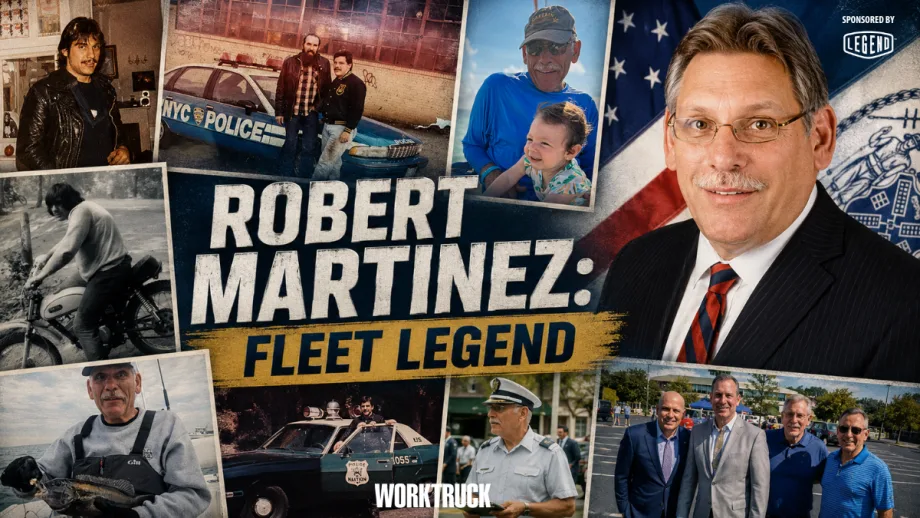
From wrenching on motorcycles as a teenager to leading one of the nation’s largest public sector fleet operations, Robert Martinez’s decades-long career reflects the evolution of fleet management and the people-first leadership lessons that shaped it.
Credit:
Work Truck | Robert Martinez
9 min to read
- Robert Martinez shares leadership lessons learned from almost 40 years in the fleet industry.
- The journey from using index cards to adopting predictive maintenance highlights the evolution in fleet management.
- Practical insights from Martinez demonstrate the blend of traditional practices with modern technology in fleet operations.
*Summarized by AI
For nearly four decades, Robert Martinez built a career around one simple idea: fleet is never just about vehicles.
It’s about people. Trust. Leadership. Timing. Mistakes. Adaptability. And sometimes, it’s about learning more from the cleaning staff than from the executive meeting.
Martinez’s path through fleet management wasn’t polished or planned. He started in a motorcycle shop after attending a technical vocational high school, spending afternoons wrenching on bikes while classmates finished their school day. Eventually, he opened his own motorcycle business, only to discover a lesson many leaders quietly learn the hard way.
“I thought I knew everything about running the business,” Martinez said. “I found out after a couple of years, after going out of business, that I didn’t know everything.”
That experience ultimately led him to the NYPD, where he entered fleet operations as a mechanic and retired decades later as deputy commissioner overseeing a massive support services operation with roughly 900 employees and a $180 million budget. Along the way, he became the longest-serving deputy commissioner in NYPD history, working under five police commissioners.
But what makes Martinez’s story resonate isn’t just the title progression. It’s the reality that so many of the lessons he learned are the same challenges fleet leaders still face today: managing people, navigating change, earning trust, and figuring out how to lead when not everyone wants to hear your ideas.
For newer fleet professionals entering an industry filled with rapidly evolving technology, Martinez’s experience serves as a reminder that while the tools may change, leadership fundamentals rarely do.
From Index Cards to Intelligent Fleet Data
Fleet management today runs on dashboards, telematics platforms, automated reporting, predictive analytics, and near real-time visibility. But Martinez remembers when fleet operations depended almost entirely on paper records and institutional memory.
“When I first got into the fleet side, we were still on index cards,” he recalled.
Every vehicle had a physical card. Maintenance records were handwritten. Replacement planning relied on ledgers and manually tracked notes. If a vehicle was condemned or removed from service, someone physically documented which unit would replace it next. There was no automated lifecycle forecasting, no digital work orders, and certainly no predictive maintenance alerts appearing on a dashboard.
Even the arrival of computers came slowly.
Martinez remembers being assigned one of the first computers in the NYPD fleet services. Its purpose was simply to enter vehicle information into a future system that most employees didn’t yet have access to. At the time, that alone felt revolutionary.
Over the years, Martinez watched the fleet evolve from spreadsheets and manually generated reports to highly connected operations capable of automatically collecting massive amounts of data.
Today, he believes one of the biggest advantages modern fleet managers have is access to information.
“GPS and telematics really is a game changer,” he said. “The information you’re getting back is just priceless.”
For Martinez, the power of telematics isn’t just about tracking vehicle locations. It’s about visibility into utilization, operational efficiency, safety, maintenance trends, and accountability. It removes much of the guesswork that fleets once accepted as unavoidable.
Years ago, fleets struggled with what Martinez referred to as “fleet creep.” Vehicles remained in service simply because no one had clear utilization data to prove whether they were actually needed. Some units sat largely unused while others were overworked, but without GPS and telematics, there was little reliable visibility into real-world operations.
Modern systems changed that.
Now, fleet managers can see utilization rates, idle time, route efficiency, maintenance indicators, geofence activity, driver behavior, and fault codes almost instantly. That level of information creates opportunities not only for cost savings but for better strategic decision-making.
Martinez pointed out that telematics has become especially valuable for litigation and operational accountability.
“You save one lawsuit with the GPS system, you probably pay for your whole GPS system,” he said.
He described telematics and GPS data as an unbiased witness. Unlike human memory, which can become unreliable or inconsistent after an incident, the data simply tells the story as it happened.
That same visibility also supports predictive maintenance strategies that were nearly impossible decades ago. Fleets can now monitor battery voltage trends, overheating events, ABS warnings, excessive idling, and operational wear patterns before vehicles fail in service.
Martinez noted that newer fleet managers have an enormous advantage because today’s systems allow them to make decisions with far greater accuracy and confidence than previous generations ever could. Still, he cautioned that data alone doesn’t guarantee good decisions. Leaders still need to understand context.
He shared an example involving tow trucks that appeared relatively low mileage on paper but had experienced extensive wear due to idle time.
“One hour of idle time is equal to 30 miles wear,” Martinez explained, referencing manufacturer guidance that reshaped how fleets began evaluating vehicle life cycles.
That shift fundamentally changed how fleets approached replacement planning and maintenance forecasting. Mileage alone no longer told the full story. For fleet leaders today, Martinez sees technology as a powerful operational tool, but not a replacement for leadership, communication, or common sense.
Learning to Lead When Nobody Wants to Listen
Long before Martinez became deputy commissioner, he was simply a mechanic with ideas. A lot of ideas. And not everyone appreciated them.
Early in his career, Martinez regularly submitted employee suggestions to improve operations and modernize processes. Instead of being encouraged, those suggestions often created tension with supervisors who viewed his initiative as disruptive.
“They hated me for it,” Martinez said bluntly.
At one point, management isolated him in an office and limited his responsibilities largely to administrative work, viewing him as a problem rather than an asset. For years, Martinez assumed his supervisors simply knew more than he did. He believed they saw a bigger picture he couldn’t yet understand.
But as his career advanced and he moved further into executive leadership, his perspective changed. He realized many leaders weren’t necessarily stronger managers or better thinkers. In some cases, they had simply been promoted into positions they weren’t fully prepared to handle. That realization became one of the defining lessons of his career.
“I think the biggest thing was figuring out how to get my bosses to listen to me,” Martinez said.
The experience also fundamentally shaped how he approached leadership once he gained authority himself.
Instead of shutting down ideas from frontline employees, Martinez made it a priority to create an environment where people felt comfortable speaking up. He believed innovation often comes from the people closest to the work itself, not necessarily from executives farthest from day-to-day operations.
That mindset became especially important as he took over larger teams and increasingly complex responsibilities within the NYPD.
Why the Best Ideas Often Come From Unexpected Places
One of the stories Martinez continues to carry with him came from a leadership lesson outside of fleet entirely. During executive education coursework, he learned about a hospital battling a persistent staph infection issue. Highly trained medical professionals had struggled to identify the source of the problem despite extensive analysis.
The breakthrough came from a cleaning woman.
While overhearing conversations during a meeting, she pointed out that doctors were carrying the same pens and clipboards from patient room to patient room, unknowingly helping spread contamination. That observation ultimately helped solve the issue.
For Martinez, the lesson was powerful because it reinforced something he had already begun learning throughout his career: expertise does not always come from titles.
“You need to have a little bit of empathy for them,” Martinez said. “They all have good ideas.”
It’s a philosophy that directly influenced how he built teams throughout his career.
Whether someone was a cleaner, a mechanic, a supervisor, or an executive, Martinez believed they deserved respect and an opportunity to contribute. Some of the best operational improvements, he said, came from people who approached problems from entirely different perspectives.
That willingness to listen became especially valuable in fleet environments, where technical teams can sometimes become locked into a single way of thinking.
Martinez shared his own experiences working on mechanical problems where another technician, or even someone without a technical background, approached the issue differently and solved it far faster than expected.
For him, leadership wasn’t about always having the answer. It was about creating space for the best answer to emerge.
Trust Is Still the Most Valuable Tool in Fleet
Despite the rapid growth of technology, Martinez believes trust remains the foundation of effective fleet leadership.
“Trust is the lubrication for organizations,” he said.
That trust, he explained, has to exist at every level. Employees need to trust leadership. Leadership needs to trust employees. Teams need to believe decisions are being made fairly and honestly. Martinez emphasized the importance of being truthful not only with others, but with yourself.
Throughout his career, including periods where he witnessed political tension and corruption concerns within city government and law enforcement, he learned that integrity becomes increasingly important the higher leaders climb.
“You'd better look yourself in the mirror,” he said while discussing leadership accountability and ethics.
He also stressed that employees should never be treated as disposable assets.
“Your employees are your number one asset,” Martinez said. “Trust them, believe in them, and give them a seat at the table.”
That belief shaped how he managed overtime planning, operational scheduling, and employee communication during major events and emergencies.
He described how simple operational changes, such as providing mechanics with earlier notice before snowstorm deployments, dramatically improved morale because employees had time to prepare for their families and personal responsibilities ahead of extended shifts.
For Martinez, leadership often came down to remembering that employees are human beings first.
The Difference Between Good Experience and Bad Corporate Knowledge
One of Martinez’s more candid reflections centered around organizational culture and inherited systems.
When he moved into executive leadership, he intentionally chose not to replace existing personnel immediately. He wanted to preserve institutional knowledge and give employees opportunities to succeed under new leadership.
Looking back, he considers that one of the biggest mistakes of his career. Some employees remained deeply loyal to previous leadership structures and quietly resisted operational changes behind the scenes. Over time, Martinez realized that not all institutional knowledge benefits an organization.
“Some corporate knowledge is not good corporate knowledge,” he said.
That distinction matters for fleet leaders inheriting struggling operations. Experience alone doesn’t automatically create value if the systems and behaviors being preserved are contributing to dysfunction. Leaders have to evaluate whether existing processes genuinely support progress or simply maintain outdated habits.
At the same time, Martinez cautioned against completely dismissing experience. The challenge is identifying which knowledge helps an organization move forward and which quietly holds it back.
That balance, he believes, is one of the hardest parts of leadership.
Fleet’s Future Still Depends on People
Martinez spent much of his career watching fleet evolve technologically, operationally, and structurally. But despite all the advancements, he still believes the industry's future depends heavily on people willing to share knowledge, mentor others, and continue learning.
“Never stop learning,” he said. “And never stop sharing what you know.”
Throughout his career, Martinez leaned heavily into conferences, networking, industry education, and peer collaboration. He taught fleet sessions, attended industry events, and consistently exchanged ideas with other professionals because he understood that leadership growth rarely happens in isolation.
For younger fleet managers entering the industry today, Martinez believes curiosity matters just as much as technical skill.
He encourages leaders to think outside the box, allow employees to learn from mistakes, and avoid creating environments where people are afraid to speak up.
“Be a mentor, be a leader, be a teacher,” he said. “Encourage thinking outside the box.”
And after nearly four decades in fleet, perhaps his biggest lesson is this: the vehicles may be the visible part of the operation, but the real success of any fleet still comes down to the people behind it.
Quick Answers
Robert Martinez emphasizes the importance of adapting to technological advancements and maintaining a balance between traditional methods, such as index cards, and modern techniques like predictive maintenance.
*Summarized by AI
Subscribe to Our Newsletter
More Operations
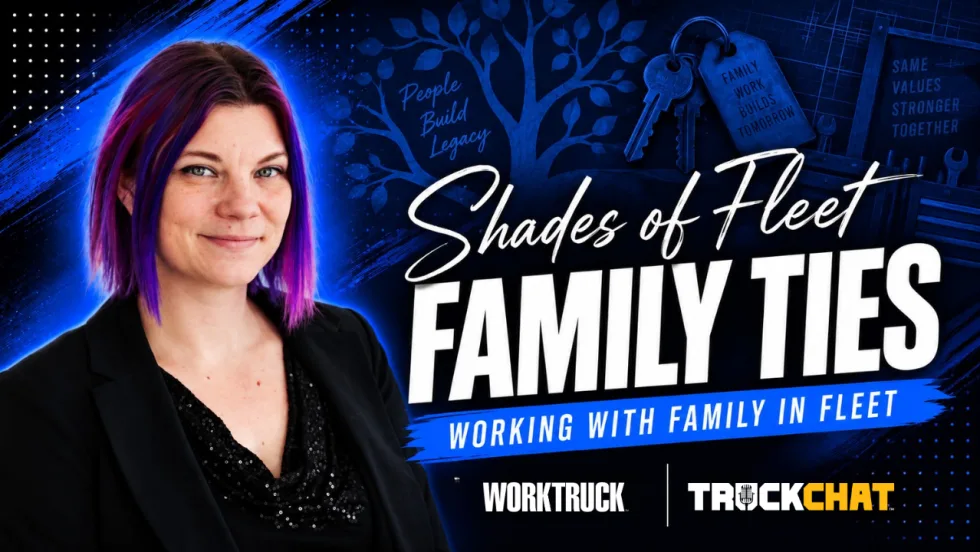
Family Ties Inside the Fleet Families Building Careers Across Generations
Three fleet families share what it really takes to work together, learn across generations, and keep business from following them home.
Read More →
Shades of Fleet Call for Voices: Fleet's Hidden Heroes
Fleet’s hidden heroes are often the ones keeping everything moving behind the scenes. September’s Shades of Fleet is looking for dispatchers, coordinators, parts specialists, and other support pros to share their stories.
Read More →
Truck Centers, Inc. Celebrates National Truck Driver Appreciation Week with $1,000 Fuel Card Giveaways
During National Truck Driver Appreciation Week, Truck Centers, Inc. is offering customers a chance to fuel up for free. Customers at all Truck Centers locations can enter to win one of four $1,000 fuel cards from Sept. 14 - 18.
Read More →
Fleet Guides, AI Time-Savers, Truck Tariffs & Fuel Strategy Lead the News
This week’s Truck Chat Cheat Sheet covers new fleet vehicle guides, practical AI use cases, U.S.-Canada truck production, mixed-energy strategy, and more.
Read More →
What Fleet Employers Are Missing When Hiring Veterans
What if some of the strongest candidates for fleet are already out there, but their experience is written in a language our industry does not always recognize?
Read More →
Automotive Fleet Opens 2026 Personal Use Survey for Commercial Fleet Managers
Less than two weeks left! Commercial and corporate fleet managers are invited to share how their organizations handle company vehicle personal-use policies, charges, and driver eligibility.
Read More →
What Resilient Fleets Do Differently When Conditions Change
Fleet resilience is about more than reacting to disruption. Lauren Fletcher talks with AP Fleet’s Alex Coveney about flexibility, planning, scaling, and what helps fleets adapt when business conditions shift.
Read More →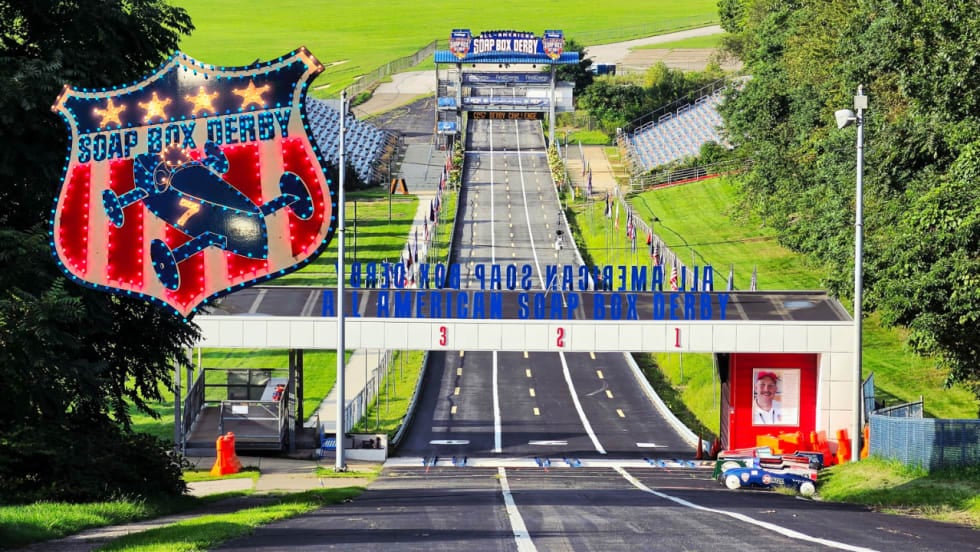
If We Want the Next Generation in Automotive, We Have to Give Them a Reason to Care
The automotive industry talks constantly about its workforce shortage. But before we can recruit the next generation, we may need to do a better job giving kids a reason to care about automotive in the first place.
Read More →
Ram ProMaster City Under $40K, Truck Tariffs, and AI Maintenance Lead the News
A sub-$40K commercial van, tariff questions, AI-powered maintenance, and a new EV production strategy headline this week’s Truck Chat Cheat Sheet.
Read More →
Bob Adamsky Shares the Fleet Lessons You Usually Learn the Hard Way
After more than 30 years in fleet, Arrow International’s Bob Adamsky has learned that the job is about far more than vehicles. He shares the lessons he wishes every fleet manager could learn a little earlier.
Read More →