





Keep Watching: Legends of Fleet Video Interviews
Fleet Leadership Starts with People (Always)
After 30 years in fleet, Ruth Alfson says the biggest leadership lessons have little to do with vehicles and everything to do with people.
July 14, 2026

From building lasting relationships across the fleet industry to mentoring the next generation of leaders, Ruth Alfson's career has been defined by connection, collaboration, and a passion for helping others succeed.
Credit:
Work Truck
10 min to read
For more than three decades, Ruth Alfson has built a career around solving fleet challenges. She's led operations in both the public and private sectors, managed multimillion-dollar budgets, helped modernize fleet organizations, and served in leadership roles that have helped shape the profession far beyond the fleets she managed.
Yet when she reflects on the lessons that have stayed with her the longest, they aren't about vehicle specifications, maintenance strategies, or the latest technology. They're about people.
In the latest episode of Fleet Legends, sponsored by LEGEND, Alfson shares the experiences that shaped her career, from unexpectedly finding her way into fleet management to mentoring the next generation of industry leaders. Along the way, she offers practical advice for anyone building a fleet career while reminding veteran professionals that experience is most valuable when it's shared. Prefer to watch? Check out the full episode below:
Like Many Fleet Professionals, She Never Planned on Working in Fleet
One of the recurring themes throughout the Fleet Legends series is that few people intentionally choose fleet management as a career. Alfson's story follows that familiar path.
"I got into fleet by accident, which I'm sure a lot of people do," Alfson said. "No one goes to school and says, 'Hey, I want to be a fleet manager.'"
Early in her career, she accepted a position as an executive assistant for the vice president of operations at a Chicago-based company. Just two weeks into the job, everything changed.
"My boss came to me and said, 'I don't like doing fleet. You do it,' " Alfson recalled with a laugh. "And I've been doing it ever since."
It's a story many fleet professionals can relate to. While today's industry has made significant progress in promoting fleet management as a career path, countless leaders still arrived through unexpected opportunities rather than carefully planned career moves.
For Alfson, what began as an assignment eventually became a profession spanning more than 30 years across corporate fleets, local government, consulting, and industry leadership. Looking back, she doesn't see that unconventional start as a disadvantage. Instead, it reinforced one of the biggest lessons she would later share with new fleet managers: you don't have to know everything on day one, but you do have to stay curious.
Three Decades of Change Have Reshaped Fleet Management
Having spent more than 30 years in the industry, Alfson has watched fleet management evolve in ways few could have predicted.
Some of the changes have been cultural. Others have been technological. Together, they have transformed what it means to manage a modern fleet.
One of the biggest shifts she's witnessed has been the growing number of women stepping into fleet leadership roles, particularly within government fleets.
"When I started, you really did not see a lot of women running government fleets," Alfson said. "Now you see more and more women entering that space."
Many, she noted, don't necessarily begin their careers in fleet. Instead, they often arrive from related disciplines such as finance, safety, or risk management before eventually taking on fleet leadership responsibilities.
At the same time, technology has changed nearly every aspect of fleet operations.
"I can't imagine doing some of the things I do now without technology and what it has enabled people to accomplish," Alfson said.
The conversation prompted both of us to laugh about the days before Excel became the standard. Alfson remembered using Lotus 1-2-3 to manage fleet information, while I joked that it often felt like logging into the software took longer than actually building the spreadsheet.
Behind the humor, though, was a reminder of just how dramatically fleet management has changed. Tasks that once required hours of manual tracking can now happen automatically through connected vehicles, fleet management systems, and real-time reporting.
Technology has undoubtedly made fleet professionals more efficient, Alfson said, but she believes the biggest advantage isn't simply having more information. It's having better information to support better decisions.
The Best Fleet Managers Never Try to Figure Everything Out Alone
As the conversation shifted from technology to leadership, Alfson returned to a lesson she believes every new fleet manager should hear early in their career: Don't try to solve every problem by yourself.
"I think one of the most important lessons is don't go it alone," Alfson said. "There are so many people out there who have been in your situation, have learned from it, and are more than willing to sit down with you, talk with you, and let you know how they solved their problems."
Throughout her career, she's found that some of the most valuable lessons didn't come from textbooks or formal training. They came from conversations with peers who had already faced similar challenges and were willing to share what worked, what didn't, and what they'd do differently the next time.
In many ways, that's one of the defining characteristics of the fleet profession. While organizations may compete in business, fleet professionals have built a culture that encourages collaboration. Whether it's during an association conference, a regional meeting, or simply a hallway conversation between educational sessions, experienced fleet leaders are often eager to help others avoid learning the hard way.
Alfson also encouraged fleet managers to look beyond their immediate professional circle when searching for answers.
"A lot of times, the information that you need may not come from a book," Alfson said. "It may come from the person next to you at a meeting... or it might come from somebody who's actually not in fleet, but maybe is in facilities or in risk."
That perspective reflects the reality of today's fleet organizations. Fleet rarely operates in isolation. Decisions about vehicles, safety, budgeting, maintenance, sustainability, procurement, and operations all intersect with other departments. Building relationships across an organization, Alfson suggested, often leads to better solutions than tackling every challenge alone.
The Information Is Out There, If You're Willing to Look for It
As the conversation continued, Alfson found herself thinking back to those first few months after unexpectedly being handed responsibility for a fleet. Today, new fleet managers have access to online training, industry publications, professional associations, webinars, podcasts, and countless opportunities to connect with experienced peers. That simply wasn't the case when she was getting started.
"The knowledge is there," Alfson said. "You just have to look for it."
Back then, she remembers spending weekends at the library searching for anything that could teach her about fleet management.
"I didn't know much about fleet, didn't know how to get started," Alfson said. "I actually went to the library several weekends in a row trying to find books and information on fleet management. Back then, there wasn't a lot out there."
She eventually found one of the few resources available at the time, John Dolce's fleet management textbook. It gave her a solid foundation, but like many technical resources, it couldn't answer every real-world question that comes with managing a fleet.
"It was a wealth of information for somebody who didn't know fleet back in the '90s," Alfson said. "But then you start thinking, 'Okay, this is great, but now how can I apply it?'"
That's where the industry itself became her classroom.
Today, she believes new fleet managers have a tremendous advantage, not because the job has become easier, but because knowledge is no longer limited to a single source. Fleet professionals can learn from publications, educational conferences, association training, online communities, vendors, and perhaps most importantly, one another.
"The knowledge is there," Alfson said. "I just had to seek it out, and that's what I wish I had known when I started."
The Biggest Rookie Mistake Isn't Lack of Experience
Every fleet manager begins somewhere, and mistakes are inevitable. The ones that concern Alfson most, however, have little to do with technical knowledge.
Instead, she believes that new leaders sometimes feel pressure to prove themselves by acting as if they already have all the answers.
"For me, I would say a rookie mistake is not admitting you may be wrong," Alfson said. "Don't think you're walking into it and you're going to get this and be an expert in six months. That's not going to happen."
She encouraged new fleet managers to approach the job with confidence, but also humility.
"Just be open," Alfson said. "Don't close yourself off. If something goes wrong, say, 'Hey, it went wrong. I understand that. Now we're going to find out why it went wrong, correct it, and move on.'"
That mindset, she explained, creates opportunities to learn rather than to defend decisions that may not have been right in the first place.
It's advice that applies well beyond someone in their first management role. Even after nearly two decades covering the fleet industry, I found myself nodding along. One of the things that has kept this profession interesting is that there is always something new to learn. New technology, new regulations, new vehicles, and new challenges ensure that no one ever truly finishes learning.
Alfson believes the most successful fleet leaders recognize exactly that.
Data Can Make Fleets Smarter, But Only If You Understand It
Few topics generated more discussion during our conversation than technology and the growing role of data in fleet management.
Today's fleet organizations have access to more information than ever before. Connected vehicles, telematics platforms, GPS tracking, fleet management software, and artificial intelligence are producing a constant stream of operational data.
For Alfson, that's both an opportunity and a responsibility. "I think data is really the most successful tool in managing a fleet," Alfson said.
Modern fleet systems can be tailored to organizations of nearly every size, whether they're managing a handful of vehicles or thousands. Combined with connected technologies, they provide visibility that simply wasn't possible even a decade ago. At the same time, Alfson cautioned against assuming that more data automatically leads to better decisions.
"Just because you have the data doesn't mean that it's pinpointing everything," Alfson said. "You have to look beyond the numbers sometimes and find out why you've got this data."
The goal, she explained, isn't to collect every possible metric. Instead, fleet managers should identify the information that actually supports decision-making while eliminating reports or measurements that no longer provide meaningful value.
"You have to bring it all together so that you can do the analytics, see what's happening, and then use that to build a better and more successful fleet," Alfson said.
Technology Works Best When It Removes Frustration
One example Alfson shared perfectly illustrated how technology can improve fleet operations without replacing the people managing them.
For years, preventive maintenance schedules often depended on drivers accurately recording mileage and reporting when vehicles needed service. Anyone who has spent time in fleet knows how inconsistent that process can be.
"Drivers really don't report basic mileage," Alfson said. "They don't tell you when your vehicle needs to come in to have service done."
Today's connected vehicle technology has changed much of that process. Rather than depending entirely on handwritten logs or manual reporting, maintenance information can be transmitted directly from the vehicle to the fleet management system.
"GPS and everything that the unit can read from the vehicle and then send back to you, that's been great," Alfson said. "A lot of times it's cut out all of that unnecessary frustration with the drivers because you're getting the data right from the vehicle."
She sees artificial intelligence becoming the next logical step.
Rather than spending hours sorting through spreadsheets to identify trends, anomalies, or maintenance issues, fleet managers will increasingly be able to use AI to pinpoint patterns that warrant closer attention. Used responsibly, those tools won't replace human decision-making. They'll simply help fleet professionals focus their attention where it's needed most.
At the same time, Alfson emphasized that technology should never become an excuse to stop asking questions.
Drivers are still people. Data still requires interpretation. A report may tell you what happened, but understanding why it happened still requires the judgment and experience that fleet managers bring to the table every day.
"People are fallible," Alfson said. "If you take out the element where you're not getting the correct information, and you're relying on data that comes directly from the vehicle, you've eliminated the person who can't read their odometer correctly, the person who can't calculate the number of miles, or their inability to send you the information in a timely manner."
She laughed as she added another familiar challenge: "And the handwriting you can't read."
The comment drew a laugh because nearly every fleet manager has experienced it. But it also reinforced a larger point that surfaced repeatedly throughout the interview. Technology isn't most valuable because it's new. It's valuable because it removes unnecessary administrative work, reduces opportunities for human error, and gives fleet professionals more time to focus on solving the bigger challenges their organizations face.
Subscribe to Our Newsletter
More Operations
Sponsored•October 14, 2026
A buyer's guide to fleet management software in 2027
Buying fleet management software in 2027 means looking beyond features and price. As fleet operations, technology and expectations evolve, this guide explores what today’s fleet professionals should consider when choosing a system that can deliver value now and adapt to what comes next.
Read More →
How to Build a Lasting Fleet Career by Staying Curious and Connected
Tina Kourakos never planned on a career in fleet. More than 30 years later, she says curiosity, strong relationships, and a willingness to keep learning helped turn an unexpected assignment into a career spanning fleet management and OEM leadership.
Read More →
Think You Know Trucks? Take Our 19-Question Fleet Trivia Challenge
From chicken lights to diesel engines and trucking history, test your knowledge with 19 questions from the 2026 Work Truck Exchange and Heavy Duty Trucking Exchange.
Read More →From Our Partners
Basic Tracking vs Next Generation Fleet Technology
Sponsored by AT&T Business
5 Facts Every Fleet Manager Should Know About Embedded Telematics
Sponsored by Stellantis/Mobilisights
How AI Video Telematics Boosts Driver Safety and Helps to Avoid Unnecessary Costs
Sponsored by Verizon Connect
Charting the 8 Bottom-Line Benefits of Workforce Optimization
Sponsored by Verizon Connect

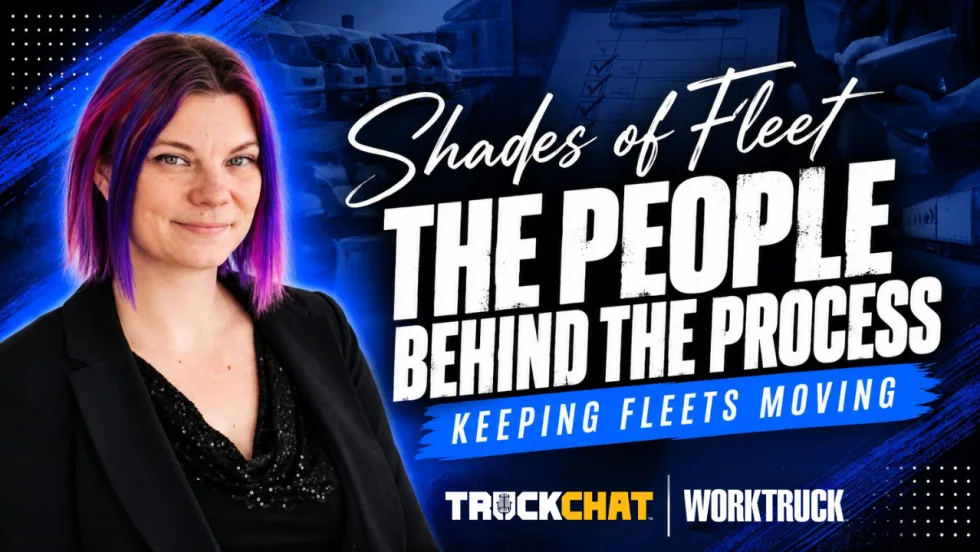
Where’s My Truck: Inside the Fleet Logistics Work Nobody Sees
Shades of Fleet video thumbnail featuring Lauren Fletcher beside the text “The People Behind the Process, Keeping Fleets Moving,” with fleet vehicles and logistics imagery in the background.
Read More →
Work Truck Seeks Fleet and Industry Insights on 2026 Trends and 2027 Forecasts
Work Truck is seeking insights from fleet leaders and industry partners on the trends that shaped 2026 and what commercial fleets should prepare for in 2027. Participate today!
Read More →
It's 10 p.m... Do You Know Who Has Access to Your Fleet?
Preventing cargo theft requires investment in technology, operational processes, and employee training. In an industry with tight margins, it can be difficult to justify investments whose value is measured by incidents that might never occur.
Read More →
GeoFencing Adds to Your Truck Security Arsenal
Geofencing is a familiar fleet tool today, but its early adoption marked a major shift in vehicle tracking, route monitoring, and the debate over employee privacy.
Read More →
Truckers’ Strike Rumors, New GM Engines, and Hidden Idling Costs Lead This Week’s News
Truckers’ strike rumors, GM’s new 2027 engines, hidden idling costs, racing lessons, IRP rules, and more headline this week’s Truck Chat Weekly Cheat Sheet.
Read More →
Shades of Fleet Wants to Hear From You About Building a Culture of Care
Fleet leaders, we want to hear from you. Share how empathy, trust, and creating space for people can strengthen your team, improve performance, and support retention.
Read More →
What Racing Can Teach Work Truck Fleets About the Work Nobody Sees
Race car driver and mechanical engineer Isaac Johnson shares practical lessons on preparation, relationships, setbacks, and building teams that perform when it counts.
Read More →