The Power of Preventive Maintenance in Asset Performance
Optimizing asset uptime through strong preventive maintenance practices is crucial for fleet operations, as downtime leads to productivity loss, customer dissatisfaction, and increased asset replacement needs.
by Rachael Plant, Fleetio
July 10, 2023
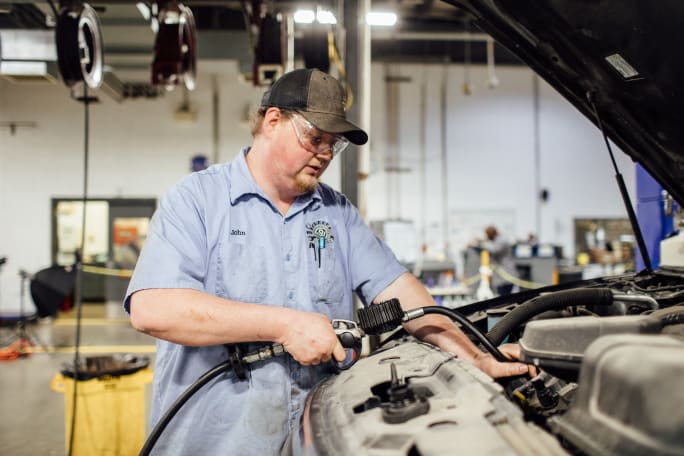
Implementing preventive maintenance practices that align closely with the specific requirements of each asset ensues optimal operability.
Photo: Fleetio
5 min to read
Asset uptime is imperative to a successful fleet operation. While downtime has direct financial impacts for fleets, including parts costs and technician and shop fees, it also has indirect impacts.
Ad Loading...
Productivity loss, employee and customer dissatisfaction (and potential loss), and increased asset replacement needs can significantly affect asset ROI and profitability.
Ad Loading...
“When an employee and vehicle are sidelined, the [downtime costs] can quickly add a significant amount to a fleet’s operating budget,” according to tire service provider getTREAD.
“For example, a technician/vehicle combo working for an air conditioning service business in Central Florida can generate billable revenue on average $200/job, and normally completes 3-5 jobs per day — that’s about $600-$1000/day in generated revenue per technician. When that technician’s vehicle gets sidelined for maintenance, that technician/vehicle combo misses out on a half day’s worth of jobs — if not more. That equates to between $300-$500 in lost potential revenue.”
Tack onto that the hourly and opportunity costs of the business losses and you could be looking at hundreds of thousands of dollars per year of profit loss.
A great way fleets can maintain asset integrity and operability is through strong preventive maintenance (PM) practices that closely adhere to the needs of individual assets supplemented with inspections.
Strong PM Reduces Repair Instances
Fleets can often face several challenges regarding PM, including bottlenecked communication, poor scheduling causing shop delays, and PM schedules that don’t meet asset needs. Fleets can use fleet technologies like fleet management software (FMS) to ensure clear, real-time communication to reduce downtime related to shop and pick up delays.
Ad Loading...
What is fleet management software?
Fleet management software refers to a specialized computer program or system designed to help fleet managers effectively manage and optimize various aspects of their fleet operations.
It provides a centralized platform for fleet-related data, allowing managers to monitor and control fleet activities, streamline workflows, and make data-driven decisions.
FMS improves communication and provides service workflow transparency to improve uptime and PM compliance rates.
“I use [FMS] to communicate with the guys so that the employees, the mechanics and the team members know everything that’s going on,” says Randy Hand, Lead Fleet Technician at Unified Government of Wyandotte County and Kansas City. “[It] helps us get those vehicles back out on the road quickly.”
FMS also allows you to set automated reminders to be sent out to anyone who needs to know what’s happening, improving PM compliance rates and further ensuring limited downtime in the shop.
“[FMS] automatically generates service reminders based on a time or mileage schedule, so the manager or dispatcher knows it’s coming and can schedule that particular asset to be out of service on a particular day,” says Curt Van Heuvelen, Safety and Training Coordinator at Eikenhout.
Unfortunately, in many cases, fleets are using generic PM schedules, or schedules based solely on OEM recommendations. While OEM recommendations are a great basis to start from, fleets can use asset service and inspection histories in FMS to tailor PM schedules for improved uptime and extended useful lifecycles.
Ad Loading...
Optimizing PM schedules based on service and inspection histories allows fleets to add high-fail items and/or recurring issues to improve uptime.
An FMS contributes to improved uptime and higher rates of preventive maintenance compliance.
Photo: Fleetio
Robust Inspections Catch Issues Early
Many fleets require daily, pre- and/or post-trip inspections with a standard set of components to check. Vehicles at different stages in their lifecycle or that run specialty equipment like power take-offs and vehicles operating on different routes and in different geographical locations can all have different needs.
Fleets can use FMS to customize inspections based on specific criteria to help reduce repair instances and improve uptime.
As with PM, communication failures affect how fast fleets can act on failed inspection items, which can lead to additional component failures and unnecessary downtime. And, as many fleets are familiar with, the chances of pencil-whipping when using paper inspection forms is a costly issue.
Digital inspections in FMS reduce pencil-whipping and surface failed inspection items in real time. Not only are digital inspections timed, they also track entry locations and can be set to require photos and/or comments on inspection items.
Ad Loading...
You can add detailed instructions to inspection items to ensure employees know specific things to look for.
Additionally, digital inspections in FMS provide easy, clear communication between all the moving parts of your fleet. “So many potential issues or simple fixes are lost in communication, and I feel the systems we’re putting in place with [FMS] are building an excellent communication platform,” says Ian Lomax, Fleet Maintenance Supervisor at AAA Oregon/Idaho.
“The difference is now we can see what’s happening. We can monitor the drivers and technicians and how quickly they’re doing the inspections.”
Being proactive with maintenance makes a big impact on asset ROI and uptime.
Photo: Fleetio
Profitable Domino Effect of Proactivity
Being proactive with maintenance by strengthening PM schedules, improving communication around service workflows, and gaining real-time insights from inspections can help reduce the total cost of ownership over the lifetime of fleet assets while improving assets’ useful life, making a big impact on asset ROI and uptime.
Of course, there will come a time when asset replacement becomes necessary. With FMS, you can use configurable fleet data reports to gain insights around when an asset goes from money maker to money pit.
Ad Loading...
“Since we’ve gone to [FMS], it’s really streamlined the process and with just a few clicks we can get a lifetime cost for different assets within our fleet,” explains Van Heuvelen. “We can identify which truck, trailer, or piece of equipment is costing us too much money. It’s made the process much more scientific.”
Because FMS automatically collects, consolidates, and aggregates data for you, getting replacement/procurement insights takes very little time or energy. “I can pull up the [service] history and determine: is this something that we want to put the money into that specific asset, or do we want to hold off and maybe trade that vehicle in and get something new?” says Alex Kennedy, Fleet and Safety Manager for R.T. Moore.
When it comes to improving uptime, being proactive is a cost-saving method, both directly and indirectly. Using FMS, fleets can ensure a sustainable, proactive asset management style to improve asset lifecycles and total cost of ownership, reduce customer and employee frustrations, and optimize the fleet’s productivity across the board.
Rachael Plant is a content marketing specialist for Fleetio, a fleet management software company that helps organizations track, analyze and improve their fleet operations. This article was authored and edited according to WT editorial standards and style. Opinions expressed may not reflect that of WT.
Fleet’s hidden heroes are often the ones keeping everything moving behind the scenes. September’s Shades of Fleet is looking for dispatchers, coordinators, parts specialists, and other support pros to share their stories.
During National Truck Driver Appreciation Week, Truck Centers, Inc. is offering customers a chance to fuel up for free. Customers at all Truck Centers locations can enter to win one of four $1,000 fuel cards from Sept. 14 - 18.
This week’s Truck Chat Cheat Sheet covers new fleet vehicle guides, practical AI use cases, U.S.-Canada truck production, mixed-energy strategy, and more.
What if some of the strongest candidates for fleet are already out there, but their experience is written in a language our industry does not always recognize?
Less than two weeks left! Commercial and corporate fleet managers are invited to share how their organizations handle company vehicle personal-use policies, charges, and driver eligibility.
Fleet resilience is about more than reacting to disruption. Lauren Fletcher talks with AP Fleet’s Alex Coveney about flexibility, planning, scaling, and what helps fleets adapt when business conditions shift.
The automotive industry talks constantly about its workforce shortage. But before we can recruit the next generation, we may need to do a better job giving kids a reason to care about automotive in the first place.
After more than 30 years in fleet, Arrow International’s Bob Adamsky has learned that the job is about far more than vehicles. He shares the lessons he wishes every fleet manager could learn a little earlier.