




Experts Forecast Broader Impact of Wildfires in 2026
This year’s wildfire season will likely be more intense than in 2025. The 2026 wildfire forecast from AccuWeather is for fewer fires, but even more acreage will be impacted this year.

Experts predict an intense wildfire season in 2026, with fewer wildfires, but those that do occur will likely burn more acres due to drought, dry fuels, and extreme heat.
Work Truck | Edited with OpenAI
- Experts anticipate the wildfire season in 2026 to be more intense compared to the one in 2025.
- According to AccuWeather, there will be fewer wildfires in 2026, but the area affected will be larger.
- The expected increase in impacted acreage suggests significant environmental and societal challenges ahead.
*Summarized by AI
While the 2026 wildfire forecast from AccuWeather projects fewer fires than last year, experts predict more acres will burn due to persistent drought, dry fuels, and extreme heat. That means the wildfires that do occur could become large, scorching extensive areas before being contained or extinguished.
According to the National Interagency Coordination Center Wildland Fire Summary, in 2025, 77,850 wildfires burned more than 5.1 million acres. That same analysis noted that the reported number of wildfires was significantly higher than both five- and 10-year averages.
AccuWeather predicts 65,000 to 80,000 wildfires will burn 5.5 to 8 million acres in 2026.
The highest fire risk, according to AccuWeather, is expected across the Southwest, Rockies, Great Basin, and Interior Northwest. California is expected to see fire danger increase as the summer progresses, in areas where grasses dry out and become more flammable.
Highest Wildfire Risk Areas
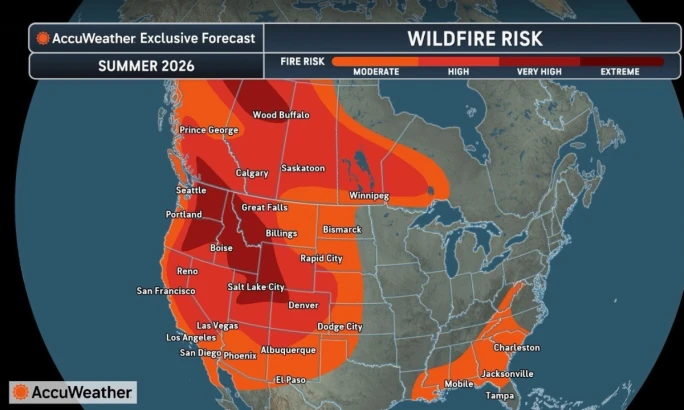
AccuWeather predicts 65,000 to 80,000 wildfires will burn 5.5 to 8 million acres in 2026.
AccuWeather
Paul Pastelok, AccuWeather's lead long-range expert, said the greatest U.S. wildfire risks are expected across the interior Southeast and mid-Atlantic, the Southwest and High Plains, and, developing quickly this summer, the Northwest and Great Basin.
He added that in the Southwest, central Rockies, High Plains, and interior Southwest, areas such as southern Colorado, New Mexico, and the western Texas Panhandle are expected to be hotspots in June and early July due to hot, dry, and windy conditions with low humidity, persistent drought, and dry grasses. The High Plains may remain vulnerable through summer because monsoon moisture may not reach far enough east.
In the Northwest, Great Basin and Northern Rockies, the wildfire risk is expected to build rapidly by late June into September, especially east of the Cascades, across the northern Rockies, Idaho, western Montana, northern Nevada, and Utah, Pastelock said. Heat, below-average rainfall, drought and dry lightning are key concerns.
In the Southeast and mid-Atlantic, Pastelok explained risk is more episodic but still notable, especially where drought persists and where Helene left downed trees and deadfall, particularly in western North Carolina.
Drought & Heat Intensify Fire Conditions
Pastelok also explained that drought and heat intensify fire conditions by drying vegetation and dead fuels, making them easier to ignite and allowing fires to spread faster. This is especially important in the Southwest, High Plains, Northwest, Great Basin, Northern Rockies, Northern California, and western Canada.
“In the Northeast, Ohio Valley, and parts of the Great Lakes, repeated rainfall and higher soil and fuel moisture are expected to keep the wildfire risk lower overall,” Pastelok said. “In the Southeast and Gulf states, summer thunderstorms and tropical moisture can reduce fire risk, although dry stretches may still cause flare-ups.”
Long-Range Impact of Wildfire Smoke
Wildfire smoke can travel hundreds or even thousands of miles from the fire source, Pastelok pointed out.
AccuWeather's forecast highlights smoke and air quality concerns this season from central Canada south into the northern Plains, Midwest, Great Lakes, and at times the Northeast. Smoke from the Great Basin, Northern California, and the Northwest may also affect surrounding regions, and late-summer smoke may spread through the Plains and Midwest.
“People should monitor air quality alerts, limit outdoor activity during smoky periods, keep windows closed, use filtered indoor air when possible, and consider high-quality masks when outdoor exposure is unavoidable, and the smoke is at or near ground level,” Pastelok suggested.
Wildfire Smoke Impact on Air Quality
Wildfire smoke can create poor air quality far from active fires because fine particles can be carried long distances by upper-level winds. Pastelok said that in 2026, the main smoke-related air quality concerns are expected from central Canada into the northern Plains, Midwest, Great Lakes, and sometimes the Northeast.
“Additional smoke concerns are possible in the Great Basin, Northern California, and the Northwest, with smoke spreading into the Plains and Midwest later in summer and early fall,” he added.
Reduced Visibility Impact on Fleets
Pastelok said the biggest travel concerns would include reduced visibility from smoke, road closures near active fires, rapidly changing wind conditions, and poor air quality that can affect drivers during loading, unloading, or roadside stops.
For trucking operations and fleets, the most important step is to check conditions frequently before and during trips, especially across the Southwest, High Plains, Northwest, Great Basin, Northern Rockies, Northern California, and areas downwind of Canadian wildfires, he explained.
“Fleets can monitor AccuWeather forecasts along their route from AccuWeather.com and the free AccuWeather app, as well as receive government alerts for their location. The free AccuWeather app provides localized air quality updates, an interactive air quality map, and a wildfire smoke map to help people track smoke and changing conditions in real time,” he said. “Specific states have 511 sites that often highlight road closures, as well.”
Be Ready to Evacuate if Needed
The American Red Cross provides a Wildfire Preparedness Checklist as a free, downloadable resource, with tips on what to do both before and after a wildfire. That checklist includes instructions on how to be ready to evacuate quickly to a safe area if needed.
Evacuation preparedness tips, from the Wildfire Preparedness Checklist, are:
- You may have to leave your home quickly to stay safe.
- Know where you will go, how you will get there, and where you will stay.
- Have different escape routes from your home and community.
- Practice these routes so everyone in your household is familiar with them.
- Be sure to understand how your community will respond to a wildfire.
- Have an evacuation plan for pets and livestock.
- Ensure your gas tank is full and you are ready to leave at a moment’s notice.
More Disaster Response
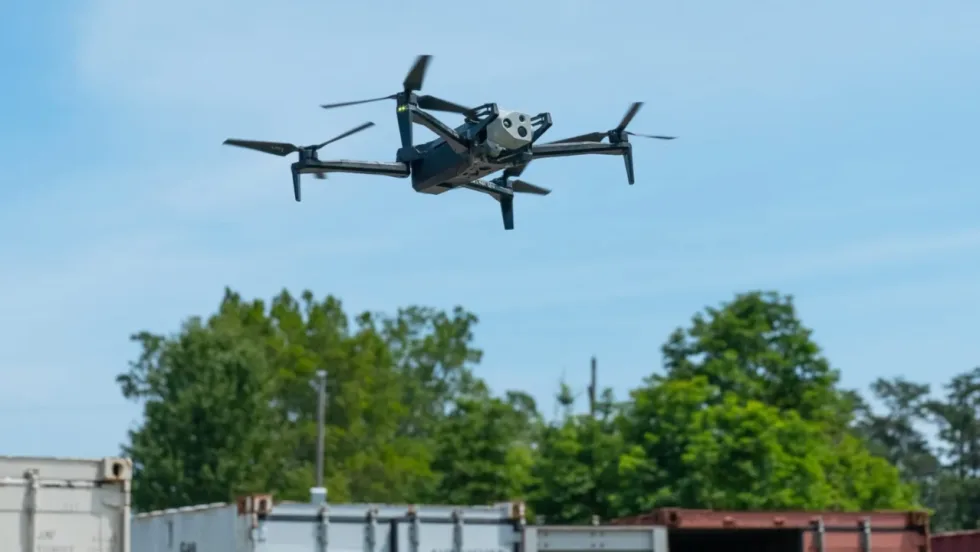
When Disaster Response Goes Mobile
Drones and robotic systems can give emergency teams a view of a disaster before crews ever reach the scene. But the real challenge is keeping those machines, vehicles, operators, and command centers connected when traditional infrastructure may already be compromised.
Read More →
Farmers Insurance Backs Red Cross Disaster Response Efforts With $250,000 Commitment
Farmers Insurance joined the Red Cross Disaster Responder Program to help support emergency response and recovery during disasters nationwide.
Read More →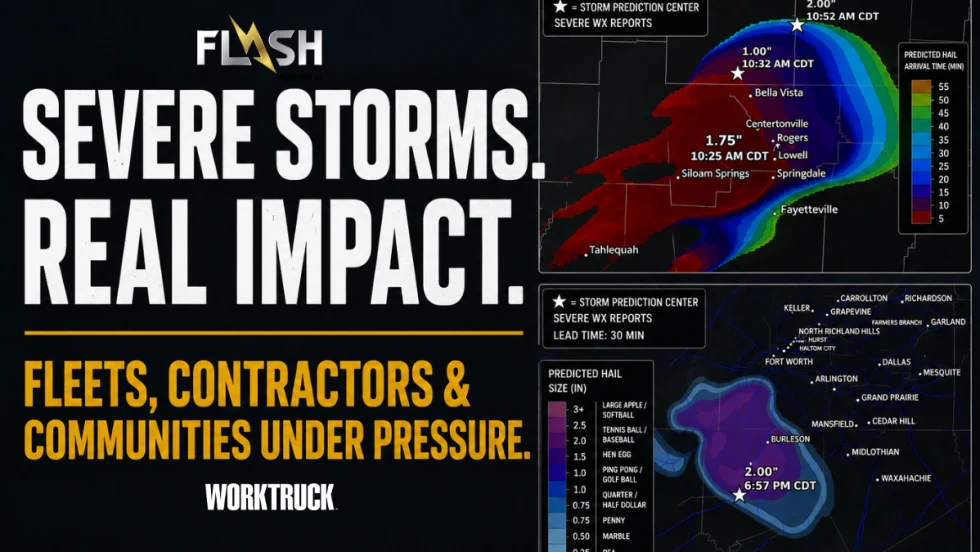
Severe Storms Are Reshaping Recovery Operations for Contractors and Work Truck Fleets
Hailstorms are creating costly new challenges for work truck fleets, from damaged onboard tech to longer recovery timelines and tactical storm planning.
Read More →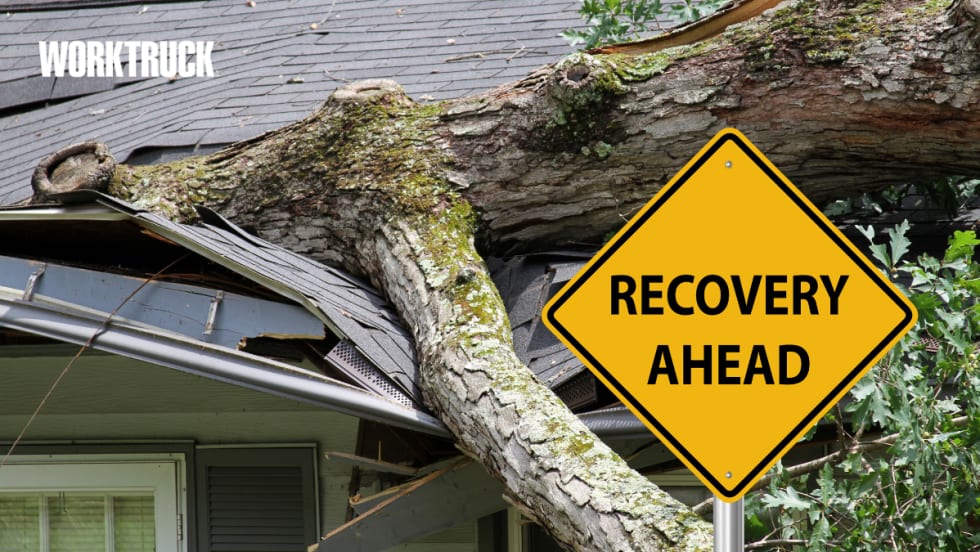
After the Storm Clears: Why Cargo Risk Spikes During Disaster Recovery
When the storm ends, cargo theft risk can spike. Here’s why the restart phase is the danger zone and what fleets can do to stay ahead.
Read More →
Your Suppliers Are Part of Your Disaster Plan
Your suppliers can make or break disaster response. Here’s how fleets can reduce vendor risk and keep critical parts flowing when storms hit.
Read More →
When the Process Breaks (Why Fleet Workflows Collapse During Disaster Response)
When disaster hits, fleet workflows don’t collapse all at once. They unravel quietly. Here’s where breakdowns start and how to build resilience before it’s too late.
Read More →
How Federal Disaster Declarations Work and Why Fleet Leaders Need to Know
How federal disaster declarations work and why fleet leaders should care about funding, reimbursements, infrastructure repairs, and recovery timelines.
Read More →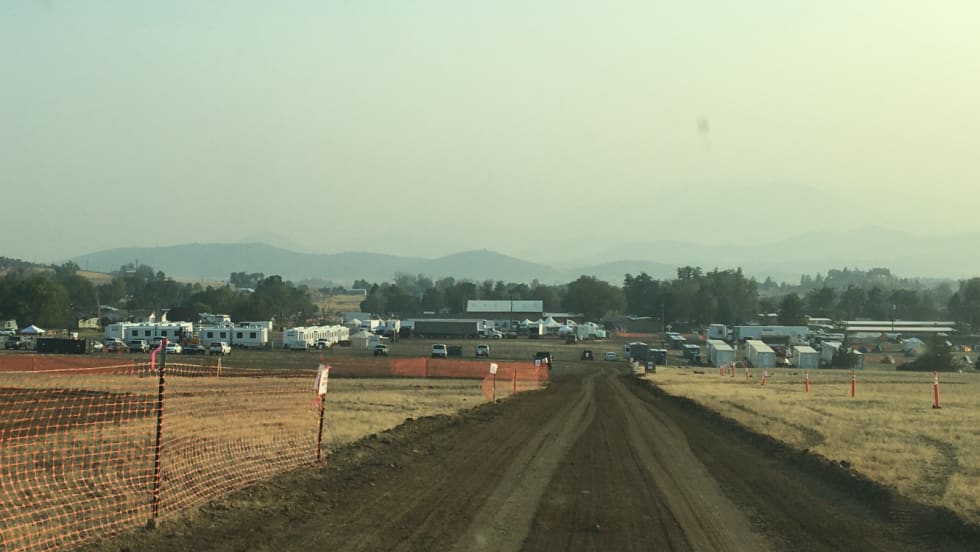
Disaster Readiness Is Not a Fleet Count, It’s a Stress Test of the Whole System
Fleet readiness isn’t about your vehicle count. It’s about condition, capacity, and whether your system can actually perform under stress.
Read More →
Disaster-Proofing Fleet Operations: How to Maintain Uptime When Conditions Are Anything but Normal
When disaster strikes, fleet uptime depends on prep, mobile maintenance, clear visibility, and disciplined execution before, during, and after the event.
Read More →
Finding the Vital Strand: Equipment Repairs in Remote Locations
When a stranded excavator stalled a remote Alaska project, disciplined troubleshooting and teamwork uncovered the one connection that made it run again.
Read More →