





Related:How Drones and Robots Could Redefine the Work Truck Fleet
When Disaster Response Goes Mobile
Drones and robotic systems can give emergency teams a view of a disaster before crews ever reach the scene. But the real challenge is keeping those machines, vehicles, operators, and command centers connected when traditional infrastructure may already be compromised.
August 20, 2026
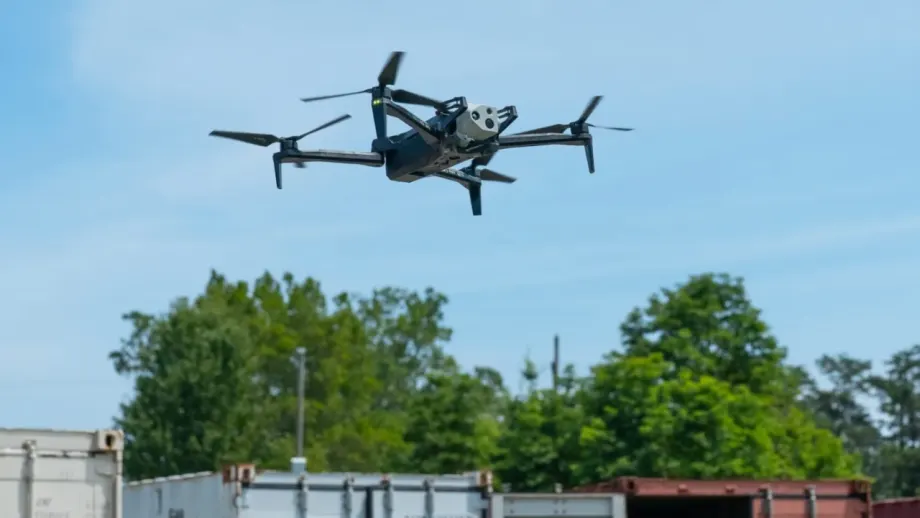
Designed to help restore connectivity during emergencies, the HAWK can lift an eFemto or small cell solution into the air when ground-based networks are unavailable. Because the drone is still considered an aircraft, its altitude and operating area must be carefully managed alongside manned emergency aircraft.
Credit:
Verizon Frontline
8 min to read
A drone can fly over a disaster zone in minutes. It can capture thermal imagery, map damaged infrastructure, stream live video, or show responders which roads are still passable before the first truck reaches the scene.
That part is easy to understand. The harder question is what happens next.
Who receives the information? Can it reach them quickly enough to change a decision? Does the network still work when power is out, towers are damaged, roads are blocked, and hundreds of responders are trying to communicate at the same time?
That is where the conversation around drones and robotics starts becoming less about the machine itself and more about the system surrounding it.
For Verizon Frontline, which supports public safety agencies and emergency responders with communications technology and specialized response assets, those questions are already playing out during real disasters.
“Verizon provides the reliable and resilient connectivity that turns advanced robotic systems and drones into effective field assets,” said Cory Davis, vice president of Verizon Frontline. “We ensure the reliable, real-time transmission of high-bandwidth video and sensor data, which is essential for enhanced coordination between field responders and remote command centers.”
In other words, sending a drone into the air is only step one. The value comes from getting what it sees into the hands of someone who can act on it.
Seeing the Disaster Before Crews Arrive
One of the clearest advantages of drones in emergency response is speed. Traditional response teams may need to physically reach a location before they can understand what happened. That can be difficult after a hurricane, wildfire, tornado, flood, or other major events when roads may be damaged or blocked, and conditions are still changing.
Aerial systems can give responders an earlier look.
“Responders often experience this realization when they are able to view a disaster scene via high-resolution thermal imaging or live video before ground teams even arrive,” Davis said. “This shift from reactive to proactive allows for faster, safer decision-making.”
Instead of sending crews into an area simply to determine what they will need, emergency managers may be able to review imagery first and decide which vehicles, personnel, equipment, or specialized teams should be deployed. It can also show responders where they may want to hold off before sending people in.
That is where technology starts to prove its value. The goal is not simply to come back with more images or video. It is to give teams enough information to make a better call about what happens next.
During Hurricane Milton, Verizon Frontline worked with the National Oceanic and Atmospheric Administration on disaster-response research that put that idea into practice.
According to Davis, the Verizon Frontline Crisis Response Team mapped tornado paths for NOAA, helping the agency and other organizations better understand the damage and what would be needed during recovery.
Mapping a tornado path may sound straightforward compared with some of the more dramatic uses of robotics, but it gets at an important piece of the puzzle. Emergency teams rarely lack things to respond to after a major disaster. What they often need is a faster way to understand the scale of the situation and decide where limited resources should go first.
Not Every Mission Needs the Same Drone
It is tempting to talk about “drones” as if they are one category of equipment with one job. They are not. The platform that makes sense for quickly surveying a wide area may be very different from the system needed to provide persistent communications support over one location.
“Flying drones excel at rapid deployment and wide-area aerial intelligence,” Davis said.
Those aircraft may be useful when teams need to survey a large disaster zone, inspect infrastructure, capture imagery, or quickly assess an area that would take much longer to cover from the ground.
Tethered drones, however, solve a different problem.
“Tethered drones, conversely, are ideal for establishing persistent, localized network coverage in areas where infrastructure is compromised,” Davis said.
That distinction became important during Verizon Frontline’s response to the Maui fires, where the team deployed its High Altitude Wireless Kennewhat, or HAWK, system. Rather than simply gathering imagery and returning to a vehicle, a tethered platform can remain elevated for extended periods and help support communications in a concentrated area.
The HAWK typically carries an eFemto, or enterprise femtocell, or another small cell network solution up to 300 feet in the air, essentially creating a temporary flying cell tower when terrestrial networks are compromised.
“The platform choice is dictated by the specific need for rapid mobility versus long-duration connectivity,” Davis said.
For fleets supporting these operations, that also means the equipment mix may grow more specialized. The question may no longer be whether an organization should carry a drone, but which platform, payload, power source, and supporting vehicle make sense for the mission.
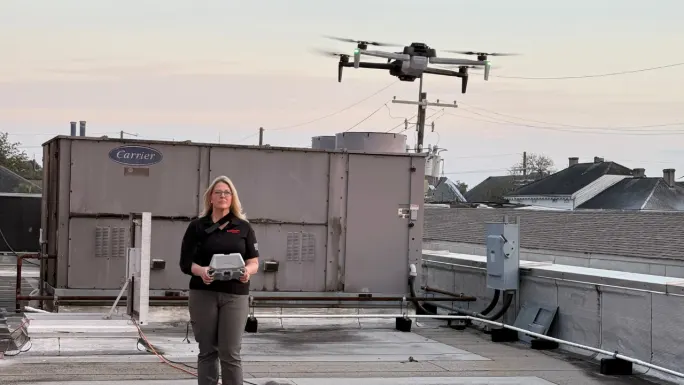
The HAWK can carry an eFemto or small cell network solution up to 300 feet in the air, essentially creating a flying cell tower when terrestrial networks are compromised. Even when tethered, the aircraft must operate within strict FAA airspace requirements to avoid interfering with emergency response aircraft.
Credit:
Verizon Frontline
The Network Becomes Part of the Equipment
Disaster technology is expected to work when almost everything around it is under stress. Power may be out, cellular infrastructure damaged, weather worsening, and access limited. Those conditions have made connectivity resilience one of Verizon Frontline’s biggest lessons from actual deployments.
“We have learned that connectivity resilience is the single most critical factor,” Davis said. “Without a robust network, the advanced data these tools generate becomes useless.”
A drone carrying a high-resolution camera or thermal sensor may capture valuable information, but if it cannot reliably reach an incident commander, engineer, emergency operations center, or other decision-maker, much of that value disappears.
That is why redundancy becomes part of the disaster-response strategy. Davis said Verizon’s network has 100% battery backup and 80% generator backup across its macro sites.
“It’s our job to ensure systems are reliable and have redundant backups so the network can perform under intense pressure,” he said.
For fleets, that introduces another layer of planning. A vehicle carrying drones or robots may also need satellite communications, networking equipment, antennas, batteries, generators, charging systems, and computing hardware. Some of those assets may exist specifically because the normal communications environment cannot be trusted during the exact situations when they will be needed most.
The vehicle becomes more than transportation. It has become part of the network.
Work Trucks Become Mobile Command Hubs
That shift could end up changing fleet operations just as much as the drones and robots themselves. As Davis put it, “Fleet vehicles are increasingly evolving into integrated mobile command hubs; transporting, charging, and launching drones and robots.”
For a work truck, that opens a much bigger equipment conversation. A vehicle supporting these systems may need secure storage for aircraft, sensors, controllers, and other sensitive electronics, along with enough onboard power to recharge batteries through a long response. Operators may need monitors, connectivity hardware, and a place to review incoming imagery or communicate with teams working somewhere else. In some cases, the truck could become the bridge between the equipment operating in the field and the people making decisions miles away.
That also changes what may be expected of the person operating the vehicle. “This shift expands the operator's role from managing traditional equipment to serving as a technician for high-tech support systems,” Davis said.
For fleet managers, that could mean thinking differently about training and staffing. The person behind the wheel may still need all the traditional skills required to operate the truck and its equipment, but they may also be asked to launch a drone, manage battery systems, troubleshoot connectivity, work with sensors or controllers, and coordinate with a remote command center. That is a different job description from simply getting the truck and crew to the scene.
Maintenance could broaden in the same way. Fleet teams already manage engines, tires, electrical systems, hydraulics, and plenty of other specialized equipment. Add drones and robotics, and the list starts to include aircraft batteries, cameras, antennas, sensors, controllers, networking hardware, software updates, and other components that may require a completely different type of expertise.
At that point, fleet is not just maintaining the truck anymore. The responsibility extends to the entire mobile system built around it.
The Next Step Is More Autonomous
Today, many of these deployments still require people to actively launch aircraft, monitor flights, review imagery, and interpret what the equipment is seeing. That could change. Davis expects autonomous, long-endurance drone monitoring for infrastructure inspection and immediate disaster-site assessment to become increasingly routine over the next three to five years.
Making that practical at scale will depend partly on regulation. Davis pointed to continued progress around Beyond Visual Line of Sight operations, commonly known as BVLOS. Allowing drones to routinely operate farther from the person controlling them could significantly expand the area a single system can inspect or monitor.
Artificial intelligence could also play a bigger role. Gathering thousands of images is helpful only if someone can make sense of them quickly. Deeper AI integration could eventually help analyze incoming imagery and sensor data, flag damaged infrastructure, detect changes, identify potential hazards, or surface the information that deserves immediate attention.
That may be particularly important during a disaster when responders do not need another screen full of information. They need to know what matters.
A Bigger Definition of Fleet
Drones and robots add another layer to fleet operations, but the underlying question remains familiar: What does the crew need to complete the mission safely and effectively? Increasingly, the answer may include equipment that does not stay attached to the vehicle.
A drone may leave the truck and survey miles of damaged infrastructure. A tethered aircraft may rise above the scene and provide communications coverage. A robot may eventually enter an environment where sending a person first would create unnecessary risk.
The truck still plays a central role. It gets the technology where it needs to go, provides power, connects the equipment with the people using its information, and gives responders a place to operate when the surrounding infrastructure may no longer be dependable.
As these systems move from specialized disaster deployments into more routine fleet operations, the organizations that benefit most may not be the ones with the most advanced machines. They may be the ones that figure out how to connect the machine, vehicle, operator, data, and decision into one working system.
Quick Answers
Drones and robotic systems provide emergency teams with aerial and ground views of a disaster site, allowing for better assessment and planning before human crews arrive.
*Summarized by AI
Subscribe to Our Newsletter
More Disaster Response

Experts Forecast Broader Impact of Wildfires in 2026
This year’s wildfire season will likely be more intense than in 2025. The 2026 wildfire forecast from AccuWeather is for fewer fires, but even more acreage will be impacted this year.
Read More →
Farmers Insurance Backs Red Cross Disaster Response Efforts With $250,000 Commitment
Farmers Insurance joined the Red Cross Disaster Responder Program to help support emergency response and recovery during disasters nationwide.
Read More →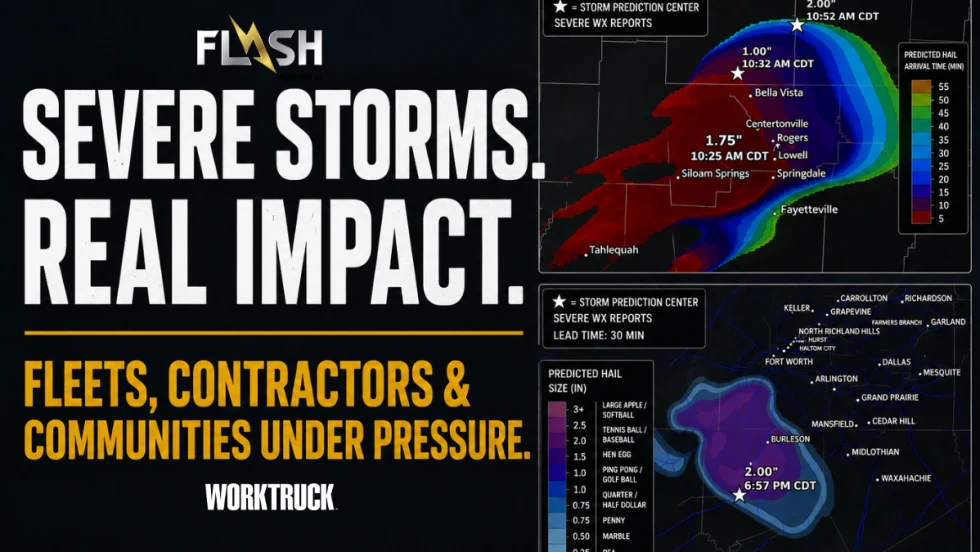
Severe Storms Are Reshaping Recovery Operations for Contractors and Work Truck Fleets
Hailstorms are creating costly new challenges for work truck fleets, from damaged onboard tech to longer recovery timelines and tactical storm planning.
Read More →
After the Storm Clears: Why Cargo Risk Spikes During Disaster Recovery
When the storm ends, cargo theft risk can spike. Here’s why the restart phase is the danger zone and what fleets can do to stay ahead.
Read More →
Your Suppliers Are Part of Your Disaster Plan
Your suppliers can make or break disaster response. Here’s how fleets can reduce vendor risk and keep critical parts flowing when storms hit.
Read More →
When the Process Breaks (Why Fleet Workflows Collapse During Disaster Response)
When disaster hits, fleet workflows don’t collapse all at once. They unravel quietly. Here’s where breakdowns start and how to build resilience before it’s too late.
Read More →
How Federal Disaster Declarations Work and Why Fleet Leaders Need to Know
How federal disaster declarations work and why fleet leaders should care about funding, reimbursements, infrastructure repairs, and recovery timelines.
Read More →
Disaster Readiness Is Not a Fleet Count, It’s a Stress Test of the Whole System
Fleet readiness isn’t about your vehicle count. It’s about condition, capacity, and whether your system can actually perform under stress.
Read More →
Disaster-Proofing Fleet Operations: How to Maintain Uptime When Conditions Are Anything but Normal
When disaster strikes, fleet uptime depends on prep, mobile maintenance, clear visibility, and disciplined execution before, during, and after the event.
Read More →
Finding the Vital Strand: Equipment Repairs in Remote Locations
When a stranded excavator stalled a remote Alaska project, disciplined troubleshooting and teamwork uncovered the one connection that made it run again.
Read More →