



Keep Learning: What Does Visibility in Fleet Really Look Like?
 MENU
MENU SEARCH
AI may guide the future of fleet, but drones and robots could carry out the work. See how work trucks may become hubs for a new mobile workforce.
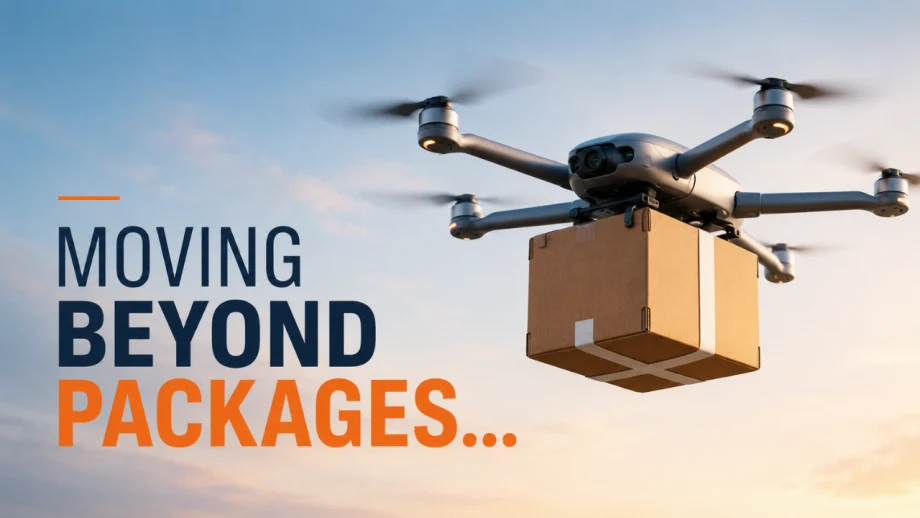
Package delivery grabbed much of the early attention, but drones may offer more immediate value to work fleets through inspections, mapping, damage assessment, and faster field decisions.
Work Truck
*Summarized by AI
Drones, firefighting robots, and four-legged machines are moving out of demonstrations and into field operations. As fleets begin managing equipment that flies, crawls, gathers data, and enters dangerous environments, the work truck could become the hub for an entirely new kind of mobile workforce.
For years, most conversations about the future of fleet have focused on what happens to the vehicle. Will it run on electricity, hydrogen, or another fuel? How much of the driving will become automated? What will artificial intelligence predict, schedule, or optimize? Those are important questions, but they still treat the truck as the center of the fleet universe.
But the next conversational shift may be even smaller (stay with me here). What if a work truck or commercial fleet is no longer defined only by the vehicles it owns? What if it also includes drones that inspect power lines, robots that carry water toward an industrial fire, and four-legged machines that enter a damaged building before a person does?
In that version of the future, the work truck does not disappear. Its role expands. The vehicle becomes a mobile launch point, charging station, communications hub, equipment carrier, and connection between the people making decisions and the machines gathering information in places they cannot safely go.
That raises more interesting questions than whether robots are coming for anyone’s job. Instead, I want to ask how this technology can be meaningfully integrated into day-to-day operations, and whether the fleet industry is prepared to manage assets that do not stay on the road.
The fleet industry has been talking about drones for years, although package delivery received much of the early attention. And the concept made sense: A truck would carry packages through most of the route, then launch a drone to complete the final stretch. It looked futuristic, photographed well, and gave everyone something to debate.
So, why aren’t all of our packages being delivered by drones and robots if we’ve been talking about it for a decade now? Well,the technology didn’t disappear. But it did run into the much less photogenic realities of regulation, limited payloads and delivery ranges, weather, noise concerns, landing space, and the cost of building an operation that can scale.
Delivery programs are expanding in select markets, but drones remain a specialized complement to ground delivery rather than a replacement for the truck. The FAA’s proposed rule for routine beyond-visual-line-of-sight flights could remove one of the biggest roadblocks, but that rule is not yet final.
So last-mile delivery may still become an important application, but vocational fleets may find more immediate value in using drones to see the work before sending someone to complete it.
For example, a utility can inspect poles, towers, lines, and substations without positioning a bucket truck at every asset. Contractors can view roofs, construction sites, bridges, solar installations, pipelines, or areas with unstable ground. Public works departments can assess flooding, blocked roads, damaged infrastructure, and terrain that is difficult to reach from the road.
Work Truck was exploring many of these applications as early as 2016. What has changed is not necessarily the idea. The equipment is becoming easier to deploy, cameras and sensors are improving, and more organizations are moving beyond one-time pilots.
PG&E, for example, now describes drones as part of its aerial fleet and uses them to inspect electric and gas assets. The company does not treat drones as a universal replacement for climbing, helicopters, or ground inspections. They are another tool used to make the work safer or more efficient.
Verizon offers another example of how drones can be integrated into a larger mobile response system. The company uses drone-captured 3D imagery to build digital models of its cell sites. After a storm, new imagery can be compared with existing models to identify damage to antennas, cables, and other equipment before floodwaters recede or roads are cleared. That allows engineers to prioritize repairs and prepare the equipment crews will need before they reach the site.
The drones are deployed alongside Verizon Frontline’s specialized response fleet, which includes mobile command centers, portable cell sites, satellite equipment, and rugged vehicles. Its THOR vehicle can provide 4G and 5G service, Wi-Fi, tethered drone operations, and a command center from a single mobile platform. In this case, the drone is not replacing the response vehicle. It is helping the vehicle and crew arrive with a clearer picture of the work ahead.
That may be the most realistic way to think about this technology. A drone does not need to replace every inspection; it just needs to improve enough of them to change how crews respond.
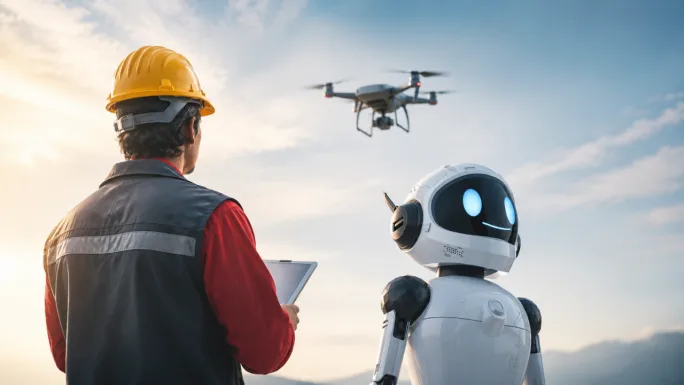
As drones and robots move into daily operations, fleets will need to manage more than the machines themselves, including operators, data, maintenance, connectivity, and how the technology fits into the work.
Work Truck
Fleet managers are used to deciding which vehicles, crews, and equipment should be dispatched. A drone could change that decision before the most expensive asset ever leaves the yard. A smaller inspection vehicle might arrive first, launch a drone, and send images to an engineer or experienced technician. The operation could then determine whether the job requires a pickup, bucket truck, crane, traffic-control unit, heavy equipment, or a combination.
The drone won’t eliminate the need for trucks and equipment, but it can help prevent the wrong trucks from showing up and make sure the right equipment does. And the potential return is spread across the organization. Crews can reduce climbing or roadside exposure, engineering receives better documentation, a public agency can shorten a closure, or a utility can restore service faster.
That can make the return harder to pin down. Fleet may fund the equipment, while the savings, safety gains, and operational benefits show up across several other departments.
But, we can’t ignore the fact that it also creates a risk. A drone can easily become one more step layered onto a process that never changes. If the company launches the drone and then simply sends the same trucks, completes the same inspection, and fills out the same paperwork it did before, the technology may amount to nothing more than a very expensive camera angle.
In the end, the flight or tech use should change a decision. Otherwise, the organization is spending more money to collect more data without necessarily improving the work.
The value of seeing a site before people enter becomes much clearer after a storm, wildfire, flood, earthquake, building collapse, or industrial accident:
But as noted earlier, the image itself is not the mission. What matters is the decision it supports. Which roads can the trucks use? Where should crews stage? Is heavy equipment needed? Can anyone safely enter the property? Which repair must happen first?
Ground robots can take that idea another step by moving closer to the hazard. The Los Angeles Fire Department’s Thermite RS3, launched in 2020, is a remotely operated tracked firefighting vehicle capable of delivering up to 2,500 gallons of water per minute. It can move into areas where conditions may be unsafe for firefighters and provide video back to its operator.
It also travels to incidents on a dedicated trailer pulled by a pickup truck. While that detail may be less exciting than the robot itself, it is where fleet enters the story. A machine weighing thousands of pounds needs a tow vehicle, trailer, storage location, trained operator, fueling plan, maintenance schedule, and a process for deciding when to deploy it.
Quadruped robots, often called robot dogs, bring another set of capabilities. San Bernardino County Fire introduced RoboHawk in June 2026 for mapping and situational awareness inside buildings, searches of compromised structures, and air monitoring during hazardous-materials incidents.
Four legs can help a robot climb stairs, step over debris, move through narrow passages, and maintain stability on uneven surfaces. Depending on the payload, the same machine could carry thermal cameras, gas detectors, radiation sensors, mapping technology, communications equipment, or two-way audio.
The unusual design may attract attention, but walking like a dog is not the value proposition. The real test is whether the robot can reliably carry those tools into an environment where sending a person would pose unnecessary risk, and then return information that crews can actually use.
That cannot be proven on a clean conference floor. Fleets need to know how the machine performs on wet stairs, behind concrete walls, in heavy smoke, across unstable debris, or when its connection to the operator begins to fail. They also need a plan for what happens when it gets stuck, damaged, or stranded inside the very hazard it was purchased to enter.
Emergency equipment may sit unused for long stretches and then be expected to work immediately under the worst possible conditions. A robot earns its place in the response fleet only when it can meet that same standard.
Work trucks have always been designed around the tools they carry. Service bodies organize parts, bucket trucks raise workers, and cranes lift equipment. Drones and robots extend that idea, but they also make the vehicle part of a larger operating system.
Sensitive electronics may require secure storage that protects them from dust, vibration, moisture, theft, extreme heat, and cold. Batteries may require temperature control and safe charging. Operators need controllers, screens, network connections, and a secure area to review what the machine sees.
Ground robots may require ramps, lifts, tie-downs, or dedicated trailers. Drones need enough room to launch and recover safely. Spare batteries, propellers, sensors, tracks, antennas, chargers, and repair parts must be organized and accessible.
And with all of this, power could become one of the biggest upfit considerations. Can the truck recharge several batteries between missions? Will the equipment use an inverter, a generator, an exportable power system, or a dedicated battery bank? Can it operate without idling for hours? What happens when the same truck also needs to power scene lighting, tools, communications equipment, and climate control?
Vehicle-mounted drone docks are already bringing the aircraft closer to the truck. DJI’s Dock 3, for example, supports mobile deployment from a vehicle rather than requiring a permanent installation. At that point, the drone is no longer simply an item stored in a compartment. The vehicle carries it, powers it, launches it, connects it to an operator, and receives the information it collects.
That starts to sound less like cargo and more like an upfit. Upfitters may eventually need to account for launch clearance, vibration isolation, network hardware, roof loading, battery safety, and electromagnetic interference alongside compressors, cranes, drawers, and shelving.
The next major work-truck upfit may not lift, tow, weld, or dig. It may leave the truck entirely.
Buying a drone or robot may be the easiest part of the process. Once the equipment arrives, someone must manage operator training, inspections, repairs, battery health, software updates, data, incidents, and replacement cycles. Drone programs also bring FAA requirements, aircraft registration, pilot credentials, flight restrictions, weather limitations, and rules governing where and how the aircraft may be operated.
Much of that will sound familiar to fleet professionals. They already manage licensed operators, regulated assets, maintenance schedules, safety policies, and incident reporting.
The difference is that these machines also cross into areas typically owned by operations, IT, legal, safety, training, engineering, emergency management, or aviation teams. Drone fleet management can be a bit more complex.
A drone is not only an aircraft. It is a connected camera-and-sensor platform. A ground robot may record workers, customers, private facilities, accident scenes, homes, and critical infrastructure.
Who owns those images? Where are they stored? Can the manufacturer or software provider access them? How long should the company retain them? What happens when a controller is lost or a truck carrying the equipment is stolen?
These questions can create a program that everyone touches, but no one fully owns. Fleet may be expected to transport and maintain the robot without controlling how it is operated. IT may secure the network without understanding the field environment. Operations may push for faster deployment without accounting for maintenance, weather, airspace, or battery limitations.
Someone needs to be accountable for the entire system. That includes the machine, vehicle, operator, communications, data, maintenance, policies, and mission. Without that ownership, an impressive piece of technology can become an equally impressive object sitting unused in a storage room.
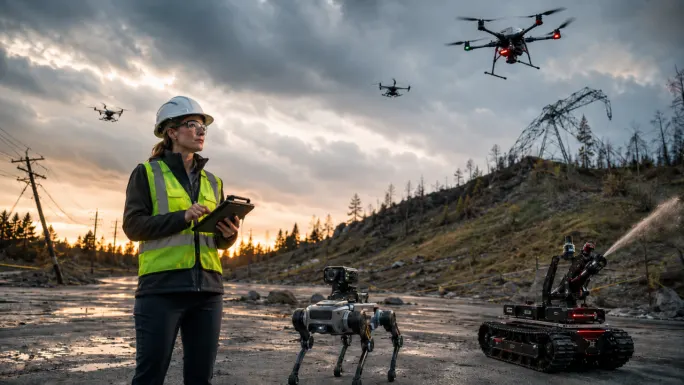
As drones and robots move into daily operations, fleets will need to manage more than the machines themselves, including operators, data, maintenance, connectivity, and how the technology fits into the work.
This image was generated by OpenAI. Please refer to our terms of use.
Artificial intelligence is getting a lot of attention today and may help fleets make better decisions. Drones and robots could help carry those decisions into the physical world.
A robot dog joining a department still earns a press release. Eventually, the novelty will fade, and fleets will judge these machines the same way they judge every other asset.
Was it ready when needed? Did it reduce risk? Did it improve the response? Did it help send the right truck, crew, and equipment? Did it perform often enough to justify the cost, maintenance, training, and added complexity?
The future of work fleets will not be better simply because it includes propellers, tracks, or mechanical legs. It may, however, force the industry to reconsider what belongs within the definition of "fleet".
The vehicles will still matter. They will carry the people, equipment, power, and expertise needed to complete the work. Increasingly, they may also carry machines that extend a crew’s reach into the air, across difficult terrain, and into environments where no person should be the first one through the door.
I feel beyond confident that the work truck will remain at the center. But the fleet built around it may no longer be defined by what stays on the road.
AI is expected to guide the future of work truck fleets by optimizing routes, improving efficiency, and providing data-driven insights for better decision-making.
*Summarized by AI
Loading data...

Operations
The automotive industry talks constantly about its workforce shortage. But before we can recruit the next generation, we may need to do a better job giving kids a reason to care about automotive in the first place.
Technology
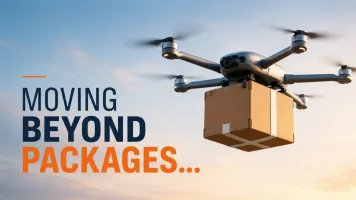
AI may guide the future of fleet, but drones and robots could carry out the work. See how work trucks may become hubs for a new mobile workforce.

Operations
Fleet’s most respected leaders share the hard-earned lessons they wish they had known sooner about trust, communication, mistakes, and leading people.
Operations
From oil changes to procurement decisions, fleet work is often underestimated by the very people who depend on it most. Bob Stanton makes the case for why communication, not just technical expertise, is one of the most important leadership skills in fleet.

Operations
New tools always change the process. They do not replace the instinct. From portrait painters adapting to photography to creators navigating AI, the people who matter most are still the ones who know how to see.
Operations
What are the key benefits of tire pressure monitoring systems (TPMS), and how can they not only increase fleet safety but also drive efficiency and cost savings?
Maintenance
Winter may be winding down, but the breakdown patterns don’t disappear with the snow. Here’s what fleets keep seeing, and what to fix now before next season.

Operations
Work Truck’s 2026 forecast breaks down the biggest shifts in cost, tech, safety, powertrains, and yard ops so fleets can plan smarter.
Operations
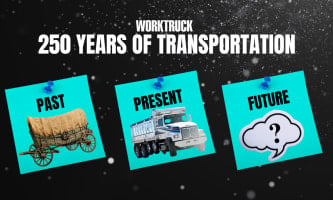
Discover how 250 years of American progress shaped the evolution of work trucks, fleet operations, and the commercial vehicles powering today’s workforce.