



Keep Reading: The Leadership Lessons Fleet Managers Learn Too Late
 MENU
MENU SEARCH
The automotive industry talks constantly about its workforce shortage. But before we can recruit the next generation, we may need to do a better job giving kids a reason to care about automotive in the first place.
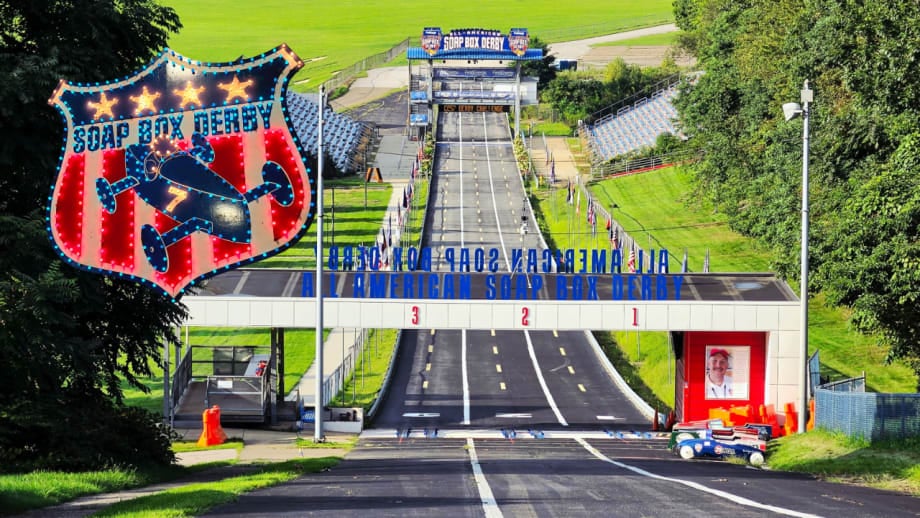
Sometimes the spark really does start with a hill. After finally racing the 996-foot Derby Downs track myself, I was reminded just how powerful one exciting, hands-on experience can be, especially for a kid who has not yet imagined a future in automotive.
Work Truck
*Summarized by AI
For years, the automotive and fleet industries have been talking about the technician shortage. We talk about recruiting, retention, training, apprenticeships, scholarships, career pathways, and how desperately we need to bring more young people into the skilled trades. None of that is wrong. In fact, all of it is necessary.
But after spending time at Derby Downs in Akron, Ohio, I found myself thinking about the problem from a slightly different angle. We spend a lot of time talking about how to get young people into automotive careers, but I am not fully convinced we spend enough time talking about how to get them interested in automotive in the first place.
And I think that distinction matters more than we sometimes realize.
Previous generations had more opportunities to bump into automotive almost by accident. Maybe you held a flashlight while a parent worked on the family car. Maybe you helped an uncle change the oil. Or maybe there was always something sitting in the garage that needed fixing, and at some point someone handed you a wrench and told you to give it a try.
That was not a workforce development program. Nobody was standing there explaining the technician shortage or mapping out career pathways. You were just around it.
You learned what tools did. You learned that bolts do not magically loosen themselves. You learned that sometimes the thing you were absolutely positive would work absolutely did not work, and then you had to figure out why. More importantly, you learned that there is something really satisfying about taking a problem, working through it with your own hands, and eventually getting something to work. That kind of exposure matters.
Today, vehicles are more complicated, families interact with them differently, and fewer kids are growing up with the same casual access to wrenching that previous generations had. That does not mean young people have suddenly stopped being curious about how things work. It does mean our industry may have to become a whole lot more intentional about giving them something to be curious about.
That is what kept running through my head at the Soap Box Derby.
I went to Akron because Team Fletcher is building a car for the Corporate Soap Box Derby, but there was also a very personal reason I was excited to be there. I have wanted to do this since I was a kid.
Soap box derby racing was one of those things I grew up seeing in television shows, cartoons, and movies. Somebody was always in a garage building a slightly questionable gravity-powered machine with a parent, sibling, or group of friends, usually with some wheels that looked like they had no business being attached to anything traveling downhill. Then they raced it.
I never got to do that.
So when I visited Derby Downs and unexpectedly got the chance to race down the 996-foot hill myself, I was thrilled. At least, I was thrilled right up until I saw the cars lined up at the starting line and realized that this was no longer a cute childhood bucket-list idea. I was actually going to have to climb into one of those things and point myself down a very large hill.
The nerves lasted until the wheels started moving. After that, I never wanted the ride to end.
I could have gone back up that hill a thousand times (and once I got to the Corporate Soap Box Derby it practically felt like I did). I crossed the finish line the first time grinning like a kid, and somewhere between the starting ramp and the bottom of the hill, the workforce conversation I have been having for most of my career suddenly looked a little different.
Because that feeling is the point. Not everyone is going to fall in love with a soap box derby car. Not everyone needs to. But there is something powerful about giving someone an experience that makes them think, "Wait, this is really cool. How does this work? Why did that car go faster? What could I change? Could I build one better?"
Before there is a career pathway, sometimes there just needs to be a spark.
"We cannot recruit someone into a career they have never had a reason to imagine themselves doing."
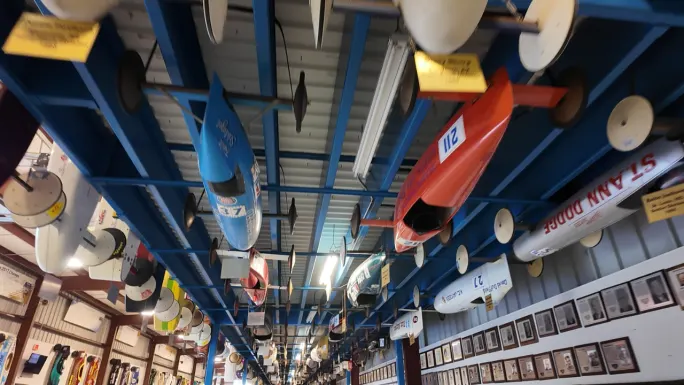
Decades of Soap Box Derby cars show just how much can grow from a simple question like, “Can I make this work?” Long before curiosity turns into a career, experiences like building and racing give young people a chance to experiment, problem-solve, and discover what interests them.
Work Truck
One of the most interesting things about the Soap Box Derby is that the race itself almost feels secondary once you start talking to the people who grew up in the program. Dennis VanFossen, the CEO of the All-American Soap Box Derby and a former champion himself, described it to me as "leadership development in the form of gravity racing."
That line stuck with me because it gets at something much bigger than building a car and seeing who gets to the bottom of the hill first. A kid participating in the Derby is building something, making adjustments, figuring out why one setup works better than another, competing, problem-solving, and learning what happens when the solution they were convinced was going to work does not. They are working with parents, mentors, teammates, and other racers. They are taking an idea and turning it into something that physically moves.
Yes, it is racing. But tucked inside that experience are mechanical curiosity, engineering, teamwork, persistence, and the confidence that comes from learning you can figure things out.
It's also dealing with frustration and loss. There is only one winner in a race and a lot of people competing to get there.
And hopefully, somewhere in the middle of all that, a kid realizes, "I really like this." Maybe it was the thrill of the hill, or the engineering problems to solve, or the mechanical fixes that needed to be done between heats. But whatever it is, that moment is incredibly valuable to an industry that keeps asking where its future workforce is going to come from, because we cannot recruit someone into a career they have never had a reason to imagine themselves doing.
One of the easiest ways to talk about Soap Box Derby is to point to the famous names associated with it. Bobby Unser, Dale Earnhardt, Tony Stewart, and Jimmie Johnson all have Derby connections, which is pretty fantastic trivia if you happen to work in automotive. But I actually think the more important stories for our industry are the people who raced and did not become professional race car drivers.
VanFossen talked about former racers who became engineers, business leaders, marketers, and professionals in all kinds of fields. One of the examples he shared was Nicole Stout, a former Derby racer who went on to become a racing tire engineer for Goodyear. He connected her Derby experience with the spark that helped send her down that career path. That is the story I think our industry needs to pay attention to.
There is a future technician out there right now who has never touched a torque wrench. There is a future maintenance director who might simply be the kid asking why one car goes faster than another. There is a future engineer building something at the kitchen table and no one has connected that curiosity to automotive yet. And somewhere out there, I am still holding out hope for the future fleet manager who actually knows fleet management is a career before accidentally falling into it at 27.
I would genuinely love for somebody to walk up to me someday and say, "I always wanted to be a fleet manager when I grew up." I realize that may be one of the nerdiest sentences I have ever written, but I mean it.
Why shouldn't kids know these jobs exist? Why shouldn't they know that fleets need people who understand vehicles, technology, data, safety, budgets, people, and operations? Why shouldn't automotive be presented as an industry full of sophisticated technology, challenging problems, and careers worth getting excited about?
If the first time we introduce someone to these possibilities is when they are 17 or 18 and we are asking them to pick a career, we are getting to the conversation awfully late.
Work Truck
There was another part of my conversation with VanFossen that stayed with me. He talked about not being particularly good at traditional sports as a kid. The Derby gave him something that was his. It gave him a place where he fit, friends he connected with, and a community that has stayed part of his life decades later.
I think that matters in this conversation, too.
Not every kid is going to find themselves on a football field, basketball court, or baseball diamond. Some are going to find themselves in a shop. Some are going to be happier taking something apart than kicking a ball. Some are going to stare at a set of wheels and immediately start wondering what would happen if they changed the alignment just a little bit. We need places for those kids to find their thing.
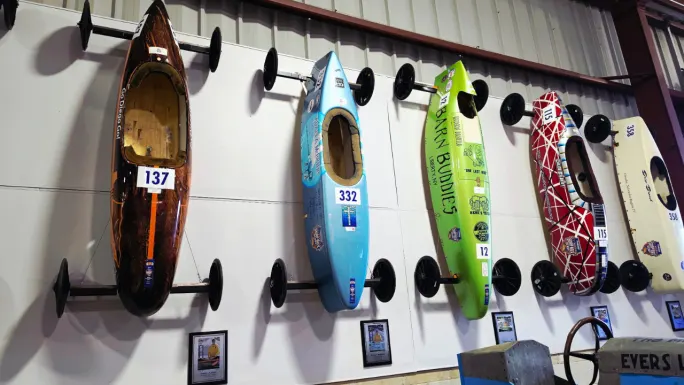
It was also impossible for me not to notice how many female champions I saw walking through the Derby museum. Girls were not officially allowed to compete in the All-American Soap Box Derby until 1971 (but that didn't stop them from "unofficially" racing from the very beginning). Today, female participation rivals or exceeds male participation in many Derby programs.
That is a pretty remarkable shift, but it is also a good reminder of what can happen when people are simply given access to an opportunity.
If you never invite someone into the garage, you cannot be surprised when they do not picture themselves working there someday. If we want more women in automotive, more young people choosing skilled technical careers, more veterans seeing the trades as an option for their next chapter, and frankly more people of every background looking at this industry and thinking, "There might be a place for me here," then exposure cannot begin with a job posting.
We have to give people a reason to picture themselves here first.
The automotive industry has gotten very good at talking about what happens at the end of the pipeline. We know how many technicians we need. We know how many are retiring. We talk about open positions, wages, retention, training, and how to keep good people once we manage to find them.
Those are critical conversations, and I certainly am not suggesting we stop having them. But that pipeline begins years before anyone fills out an application.
It starts when a kid takes something apart because they want to know what is inside. It starts when a teacher gives students something real to build instead of another worksheet. It starts when a parent, mentor, technician, fleet manager, engineer, or even slightly overexcited automotive journalist takes an extra five minutes to explain how something works instead of assuming a kid would not be interested.
It can happen in a Soap Box Derby program. It can happen through automotive CTE, SkillsUSA, a high school shop, a STEM program, a manufacturer initiative, a job shadow, or a community event. I do not think there is one magic program that solves the problem. In fact, I think looking for one is probably part of the problem.
We simply need a lot more doors into automotive, especially for young people who might never encounter this world otherwise. And the industry has to be willing to walk through those doors, too.
Sponsor the local program. Bring students into your fleet operation and let them see what actually happens there. Let technicians talk about what they do, including the parts that are hard and the parts they love. Let kids see the diagnostic equipment, the vehicles, the technology, and the problems your team solves every day.
Those of us who tell the industry's stories have a role in this as well. We need to do a better job showing people why these careers are interesting before we start telling them how desperately we need people to fill them.
"Please consider this career because we have a shortage" is not exactly the stuff childhood dreams are made of. "Come look at what you get to do" is a much better place to start.
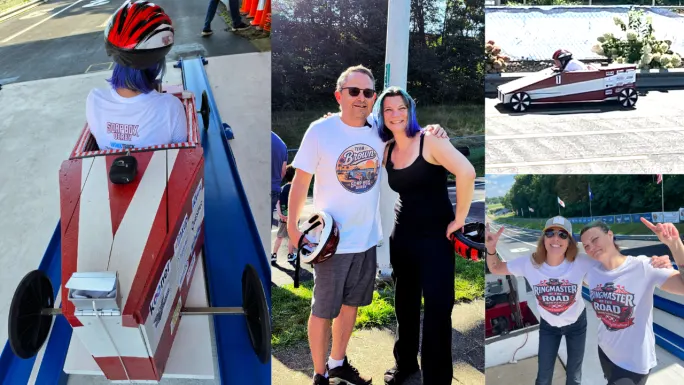
The Soap Box Derby is about more than getting to the bottom of the hill first. It brings together racing, problem-solving, mentorship, community, and the kind of hands-on excitement that can help someone discover an interest they did not know they had.
Work Truck
That is also why the Bobit Business Media Corporate Soap Box Derby's support of The Hourglass Foundation feels like such a natural fit. The foundation provides scholarships and opportunities for future technicians entering the workforce, including young adults, women, veterans, and others looking for a path into the skilled trades. It addresses a different part of the journey than the Soap Box Derby does, but to me they connect in a really important way.
One helps create the spark. The other can help somebody turn that spark into a future.
Because behind all our charts about technician shortages and workforce gaps are actual people whose lives can be changed by these careers. A scholarship can be the difference between training being financially out of reach and someone getting started. A technical career can provide stability, purpose, and a future for someone who may never have pictured themselves sitting behind a desk all day and should never have been made to feel like that was the only definition of success.
That is why I keep coming back to opportunity. Sometimes opportunity looks like tuition assistance, sometimes it looks like a mentor willing to show someone the ropes, sometimes it is a tour of a shop or a first internship, and sometimes, apparently, it looks like putting four wheels underneath a kid and letting gravity take care of the rest.
Walking through the museum at Derby Downs, I got to see the very first Derby race car. Old Number 7. It is an old metal car with faded paint and the number still visible on the side. I even got to put my hand on it, which was probably a much bigger thrill for me than it would be for a normal person.
Standing there, though, I kept thinking about the fact that nobody built that car because they were trying to create a museum piece or launch a national youth program. They built it because they wanted to see if it would work. Automotive has always been built on people asking questions like that. Can I make this faster? Can I make it stronger? Can I fix this? Can I build something better? What happens if I try this?
Long before those questions turn into engineering degrees, technician certifications, fleet careers, or businesses, they start as curiosity. And that is exactly where we need to focus a little more of our attention.
We say we want the next generation to become technicians, engineers, fleet leaders, and automotive professionals, but before we ask them to become any of those things, we have to give them a reason to care about automotive at all.
Give them something interesting enough to make them ask questions. Give them opportunities to build things, take things apart, get something wrong, and figure out why. Introduce them to the people in this industry who still light up when they talk about what they do.
Show them that automotive is not just an industry looking for workers. It is an industry full of really interesting problems waiting for people who want to solve them.
I wish I had gotten the chance to race a soap box derby car when I was a kid. I didn't. It took me until adulthood, a career spent writing about trucks, and a trip to Akron to finally climb into one.
But I can tell you this: The second those wheels started moving, I got it and I never wanted it to stop.
And if a 996-foot hill can still create that kind of excitement in me after 20 years in automotive, imagine what the right experience at the right moment could do for a kid who has no idea yet just how much this industry might have to offer them.
Watch some highlights from the Corporate Soap Box Derby Challenge below!
The main issue is the shortage of technicians and the need to recruit, retain, and train more young people to join the skilled trades in automotive.
*Summarized by AI
Loading data...

Operations
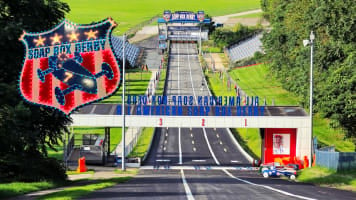
Race car driver and mechanical engineer Isaac Johnson shares practical lessons on preparation, relationships, setbacks, and building teams that perform when it counts.
Operations
The automotive industry talks constantly about its workforce shortage. But before we can recruit the next generation, we may need to do a better job giving kids a reason to care about automotive in the first place.

Technology & AI
AI may guide the future of fleet, but drones and robots could carry out the work. See how work trucks may become hubs for a new mobile workforce.
Operations
Fleet’s most respected leaders share the hard-earned lessons they wish they had known sooner about trust, communication, mistakes, and leading people.

Operations
From oil changes to procurement decisions, fleet work is often underestimated by the very people who depend on it most. Bob Stanton makes the case for why communication, not just technical expertise, is one of the most important leadership skills in fleet.

Operations
New tools always change the process. They do not replace the instinct. From portrait painters adapting to photography to creators navigating AI, the people who matter most are still the ones who know how to see.

Operations
What are the key benefits of tire pressure monitoring systems (TPMS), and how can they not only increase fleet safety but also drive efficiency and cost savings?
Maintenance & Uptime
Winter may be winding down, but the breakdown patterns don’t disappear with the snow. Here’s what fleets keep seeing, and what to fix now before next season.

Operations
Work Truck’s 2026 forecast breaks down the biggest shifts in cost, tech, safety, powertrains, and yard ops so fleets can plan smarter.
Operations
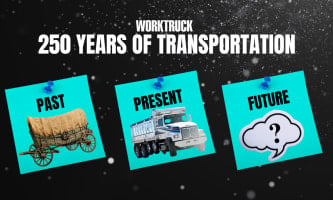
Discover how 250 years of American progress shaped the evolution of work trucks, fleet operations, and the commercial vehicles powering today’s workforce.