




Diminished Visibility & Cognitive Demand
I learned firsthand two simple tricks to improve driver visibility in inclement weather and at night, reducing the cognitive challenges of driving in the dark and stormy conditions.

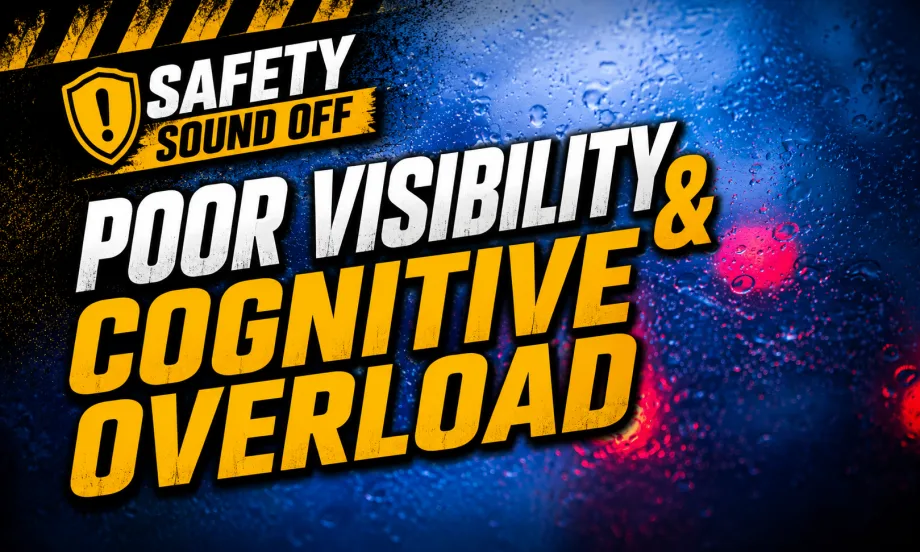
Focusing on driver visibility in rain and darkness can create a safer experience and less cognitive overload.
Work Truck | Image edited with OpenAI
- The author shares firsthand experiences with two simple tricks for better driver visibility in bad weather and nighttime conditions.
- These strategies aim to ease the cognitive demands associated with driving in challenging weather and darkness.
- Improved visibility helps in reducing the mental strain on drivers during inclement and nighttime driving scenarios.
*Summarized by AI
Spring is here, and with that, in many parts of the country, we see the build-up of heat all day, producing afternoon storms. Of course, tires and traction are important to keeping your drivers safe on the road, but there is another safety-related consideration – visibility.
Well, honestly, many people stress visibility. And visibility can mean different things.
One aspect is vehicle visibility. Nobody stressed that more than when I talked to lighting experts at Optronics for an article, 5 Things to Know When Buying Work Truck Lighting, two years ago. Not only do lights play a crucial role in illuminating your work truck, but they also provide some light for roadside workers, helping keep them safer. Plus, they can stay safer if they can see their work area.
Then there is the regular vehicle lighting aspect, making sure all your indicator lights, headlights, brake lights, and such are working properly. But that should be checked by your drivers during pre-trip inspections.
So, let’s talk about a visibility issue that can catch you off guard – having a clear view out the windshield.
Driver visibility can be affected in several ways.
I remember talking to Mike Hagaman, of FleetNet America by Cox, about Hot Weather Preventive Maintenance Tips. He stressed the importance of ensuring your truck's windshield wipers are in good condition and replaced before they degrade to the point where they don’t clear water and impede visibility.
Jane Jazrawy, CEO at CarriersEdge, likewise, told the same story. Windshield wipers must be in working order to maintain a driver’s visibility in inclement weather. In that conversation, we were talking about winter weather, but the sentiment echoes Hagaman's and applies to any time of year.
Another concern, again, at any time of year, is reduced visibility caused by fog. That is something you might encounter unexpectedly. However, Brendon Hill, senior vice president of product at Lytx, told me earlier this year that fleets can use the power of predictive analytics to warn drivers in advance about where and when they might encounter reduced visibility due to fog.
Okay, having all vehicle lighting working properly, checking to make sure the windshield wipers are functioning properly, and even using data to alert drivers to impending visibility challenges are all great. They all can play a role in keeping fleet drivers safer.
But last October, I learned some lessons about visibility firsthand.
Decreased Visibility, Increased Cognitive Demand
My wife and I were on a 1,493-mile motorhome trip to celebrate our anniversary. Midway through the week, we left Nashville, Tennessee, and pretty much drove all day across Kentucky until we stopped for the night in West Virginia.
We drove in the rain for hours; the wipers worked well, and as the driver, I had no visibility issues.
That is, until near the end of the day, when daylight started to fade, we faced even heavier rain and very dark asphalt, where, at times, it was hard to see the lanes.
The cognitive demand was high, and, out of safety concerns, we stopped earlier than planned. Mentally, I was tired, and the darkened interstate and constant rain were just too draining.
2 Simple Ways to Improve Visibility
A day or two later, I was on a mission to do two things I had put off.
One, buy a long-handled squeegee so I could clean the outside of the massive motorhome windshield. And, two, for the first time in my life, I purchased some of that anti-fog window treatment that you use on the inside of the windshield.
I cleaned the outside, and my wife applied the solution to and cleaned the inside of the windshield before we broke camp and headed home on a long drive day from West Virginia to Georgia.
Again, I spent hours driving in the rain. And as before, day transitioned to night, and the rain continued into the darkness.
But, bad pun intended, it was like a night and day difference after we had cleaned and treated the windshield.
The cognitive demand of driving at night for me was nowhere near what it had been several days earlier. The rain and darkness did not stress me at all.
But, that could be because I was riding passenger, eating my burger and fries while my wife drove that leg of the trip.
However, there was an obvious improvement in visibility.
So, clean those windshields; it can make a huge difference in visibility, and it is so simple.
More Blog Posts
Truckers’ Strike: Don’t Go Chasing Rumors
While the rumor of a truckers’ strike on Oct. 1 is probably unfounded and driven by social media, how would it affect work truck fleets if it did happen?
Read More →
Safety-Inspired Gift Ideas for Father's Day
When it comes time to choose gifts, why not consider safety? Here are some gift ideas for Father’s Day. The five main suggestions are items I own and use regularly, but I also included some additional ideas.
Read More →
7 Safety-Inspired Gift Ideas for Every Truck Owner
Do you know what to get that truck owner in your life as a gift this holiday season? Here are seven gift ideas that might help keep them safer on the road.
Read More →
Safety Sound Off: How Tire-Related Downtime is Like Shoelaces
Your fleet’s drivers not paying attention to their tires before they hit the road would be like not tying your shoelaces before walking a 5k. Both can lead to problems, downtime, and even injury.
Read More →
Witnessing the Devastation When Fleet Safety Fails
When fleet safety fails, the anguish and loss is very powerful. Many times a spouse arrives at the crash scene and learns their significant other is gone. If you ever witness that outpouring of grief, you understand fleet safety is far more than just terminology.
Read More →