





Read More: Why 2025 Fleets Still Face the Same Accident Causes
Witnessing the Devastation When Fleet Safety Fails
When fleet safety fails, the anguish and loss is very powerful. Many times a spouse arrives at the crash scene and learns their significant other is gone. If you ever witness that outpouring of grief, you understand fleet safety is far more than just terminology.
October 8, 2025
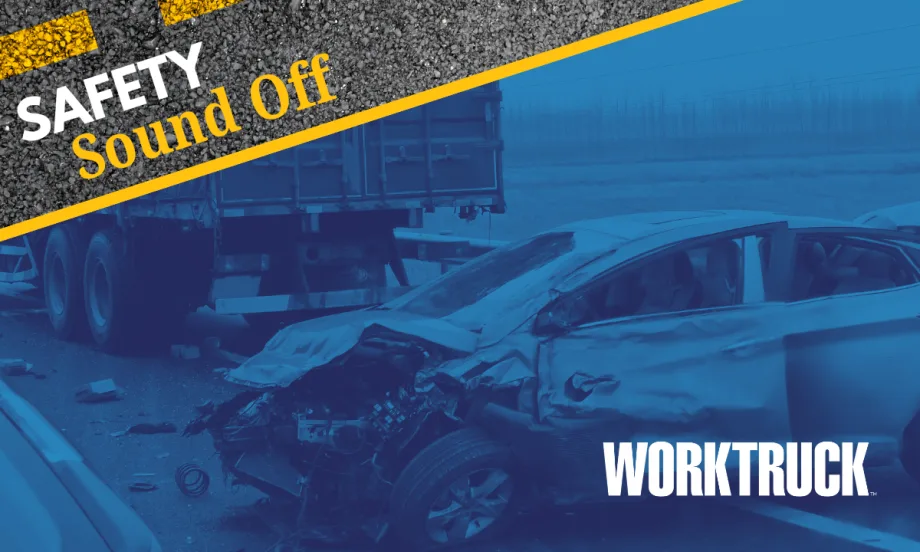
If you have witnesses when spouses arrive at fatal crash scenes and learn they have lost a loved one, you grasp the importance of fleet safety.
Photo: Work Truck
7 min to read
Let’s talk about fleet safety.
No. Not telematics, dashcams, CVSA Safety Scores, preventing nuclear verdicts, or even getting drivers home safely. All are valid discussions that should be taken seriously.
But let’s look at it from a different viewpoint.
I have witnessed true grief. Multiple times.
This is the story of a man in slacks and a dress shirt.
This is the story of a firefighter crying in a ditch.
This is the story of a grieving woman on a dark stretch of interstate, in a heavy downpour, and collapsing in anguish.
Please let their stories stay with you as you discuss fleet safety moving forward.
Media Experiences Before Bobit
I joined Bobit Business Media four years ago, but already had 33 years of media experience under my belt. Most of that was in the newspaper industry, with a 9-year stint at a business magazine before returning to the management side of the newspaper industry after completing my MBA in 2006.
I want to talk about fleet safety from a different perspective, from what I saw as a young photojournalist, up to just a few years ago, when, as a publisher, I still would grab a camera and dash out the door to help my news staff.
Let’s start with my young days as a much skinnier, and dashing if I must say, daily newspaper photographer – back in the days when I would arrive at an accident scene in one of those khaki photo vests with one Nikon in hand, and two others around my neck or off a shoulder. Yes, I am that old.
A Husband’s Suffering
I recall one of the earliest traffic fatalities I covered, back in 1989, when I was just 21 or 22. It involved a commercial motor vehicle (CMV), a tractor-trailer. That was the first time I ever witnessed true grief.
A woman had died in a collision with a tractor-trailer on a two-lane highway in western Georgia. Back in those days, we listened to scanners and responded to cover the news – even when it was tragic.
My memory goes back to watching what appeared to be a businessman hurriedly walk up to the accident scene, only to be intercepted by a state trooper. Those of us already at the scene knew the woman in the passenger car had perished.
This man, her husband, did not. Until then.
The trooper told him, and the man screamed, faced the trooper’s patrol car, and started pounding both fists into the top of the car as he cried and his world unraveled on that two-lane highway.
And I wonder.
What fleet safety policies, technologies, or strategies do we now have that, if available back in 1989, would have prevented that CMV crash? Would that woman still be alive? Would that man have never experienced the most devastating day of his life?
No Way to Save Him
Fast-forward a few years to sometime between 1991 and 1995. On another two-lane highway, two trucks were traveling south in tandem. Now, these were day cab semis hauling bulk trailers, I think of aggregate.
The lead truck struck utility poles with tandems attached under the rear, allowing them to be transported like a trailer. When the first truck struck those poles, the second truck slammed into the lead truck’s trailer.
The impact was so severe that the second trailer broke free, shifting forward and crushing the second truck's cab into the rear of the trailer ahead of it. The damage was severe, and the driver was trapped inside, sandwiched between the two trailers. He was barely visible inside the wreckage.
In my career, I have probably witnessed hundreds of fire department extrications, but this was the worst I have ever seen. And in this case, three CMVs were involved. The driver was pinned inside, with his lower body crushed by the engine and the metal of his own cab.
But he was responsive, and at first, paramedics could tell him to squeeze their hands in response to questions. But the wreckage was so severe, no rescue tools (Jaws of Life spreaders, hydraulic rams, etc.) could free the man.
A wrecker was finally used to pull apart the wrecked cab in an attempt to free the driver.
But as can commonly happen, the pressure applied by a crushing injury to the lower extremities kept blood pushed up into his upper body. When that pressure is removed, a person can bleed out. The challenge is to quickly free the patient so aid can be rendered and the blood loss dealt with immediately.
That was not possible in this case. The damage to the truck’s cab was too severe.
For more than an hour, I watched the firefighters trying to rescue the man, who, again, initially could respond to rescuers despite being trapped. Despite their best efforts, he did not survive.
Firefighters, paramedics, and EMTs stepped away from the wreckage. The man was gone. The operation shifted from a rescue to a recovery. It hit them hard; they had not saved him.
That day, I watched the grief of the firefighters, including one who sat off to the side, crying on the edge of a ditch.
And I wonder.
What fleet safety policies, technologies, or strategies do we now have that, if available back in the early 1990s, would have prevented this fatal accident involving three CMVs? Would that driver still be alive? When we talk about making sure drivers get home safely, I have witnessed when that does not happen. Multiple times.
Dark & Rainy Night Tragedy
This last one, from just a few years ago, will always stick with me.
The fire department call went out in the early morning hours, maybe two hours or more before daylight. I headed to that section of the interstate and soon learned the news that a wrecker driver had been struck and killed.
Troopers believed that he had been sideswiped by a passing semi, and the driver may have never known he had struck the man. This was a pitch-black night, and downpours had challenged visibility for hours.
I was parked on the shoulder of the road, back a little bit from the scene, and talking to the coroner when he said, “They’re not slowing down, they’re going to hit your Jeep.” All we saw were headlights racing down the shoulder of the interstate at high speed.
With that, we both quickly stepped away from the front of my Jeep, fearing an imminent collision. Somehow, we settled in maybe 15 feet apart from each other, with him slightly closer to the scene of the fatality and me closer to where my Jeep was parked.
The vehicle that had raced down the shoulder stopped, and a woman rushed out, reaching me first and asking, “Is that my husband’s truck? Is that my husband’s truck? I tracked his phone to here.”
I know I must have been babbling, unsure of what to say, as I steered her in the direction of the coroner and said, “Talk to him,” while pointing her toward the older gentleman I knew well. She soon would receive the most devastating news she, or any spouse, could ever hear.
Never will I forget the sounds and sights of her grief that morning. This truly was a tragedy, and the young man who was killed was friends with at least one person I know. That person was the one who found his body after it had been hit. All other traffic had continued past for hours, never noticing him on the edge of the interstate.
And I wonder.
What fleet safety policies, technologies, or strategies do we now have that, if available back just a few years ago, would have prevented this CMV-related fatality, prevented the tractor-trailer from fatally striking this young man? Would that man, a son, a husband, a father, still be alive? Would that wife have never experienced the most devastating day of her life?
Fleet Safety: Preventing Grief, Suffering, and Loss
I am not a fleet safety professional, but at Work Truck and Bobit, we cover a lot of fleet safety topics, trends, and related technologies and products.
Just this weekend, I connected those experiences of my covering tragedies related to CMVs to the concept of “fleet safety” in a new, more personal way.
See, fleet safety is more than just a terminology, more than just numbers on paper. And, it is more than just keeping drivers safe – there is an impact on the motoring public and the community when there is a CMV-related fatality.
After reflecting on the three experiences I shared, I now understand that going forward, I have a new respect for anything and everything labeled as “fleet safety.”
I have seen when it fails, and the great grief and pain it causes so many across our highways and streets in this country.
Stay safe out there.
Subscribe to Our Newsletter
More Blog Posts
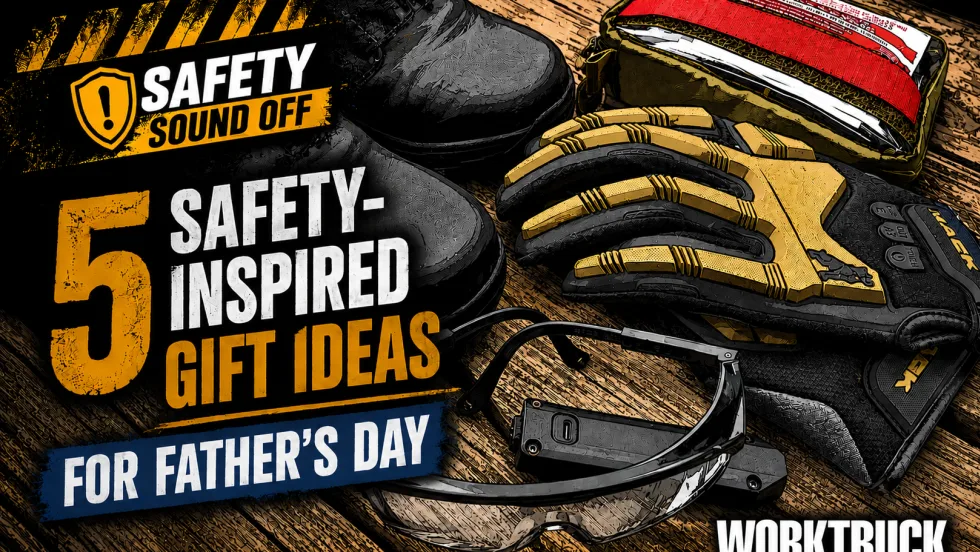
Safety-Inspired Gift Ideas for Father's Day
When it comes time to choose gifts, why not consider safety? Here are some gift ideas for Father’s Day. The five main suggestions are items I own and use regularly, but I also included some additional ideas.
Read More →
Diminished Visibility & Cognitive Demand
I learned firsthand two simple tricks to improve driver visibility in inclement weather and at night, reducing the cognitive challenges of driving in the dark and stormy conditions.
Read More →
7 Safety-Inspired Gift Ideas for Every Truck Owner
Do you know what to get that truck owner in your life as a gift this holiday season? Here are seven gift ideas that might help keep them safer on the road.
Read More →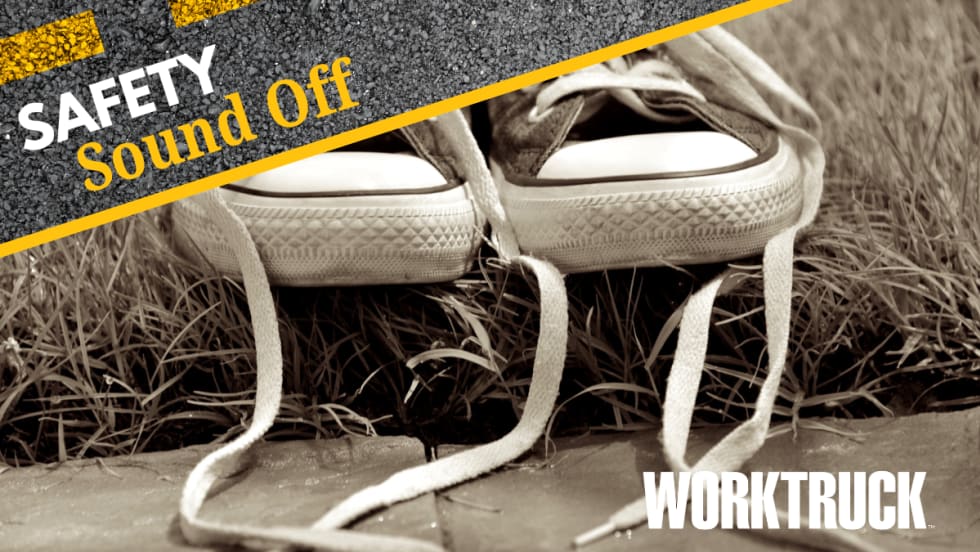
Safety Sound Off: How Tire-Related Downtime is Like Shoelaces
Your fleet’s drivers not paying attention to their tires before they hit the road would be like not tying your shoelaces before walking a 5k. Both can lead to problems, downtime, and even injury.
Read More →