Fleet safety starts with smart training. Explore best practices for coaching drivers, reducing risk, and building a long-term safety culture.
Driver safety training isn’t just about checking a box; it’s a core part of reducing collisions, improving performance, and creating a lasting safety culture. As driver turnover rises and vehicle technology changes, fleets adapt their training, coaching, and accountability approaches.
Start With the Right Foundation
A strong training program doesn’t happen by accident. It takes structure, consistency, and personalization, especially for vocational fleets with high-risk duty cycles.
"Today, best-in-class vocational fleet operators leverage multi-faceted programs to optimize fleet safety,” said Tony Smith, manager of driver safety at Holman.
To improve performance, mitigate risk, and reduce accident rates, Smith noted a successful driver safety program should include the following elements:
Properly set expectations for driving performance with an online fleet safety policy.
Establish a personalized onboarding program for new drivers that includes a driver skills assessment program to identify poor driving habits and assign corrective training before an incident occurs.
Provide regularly recurring refresher training for drivers to keep skills sharp and safety top-of-mind.
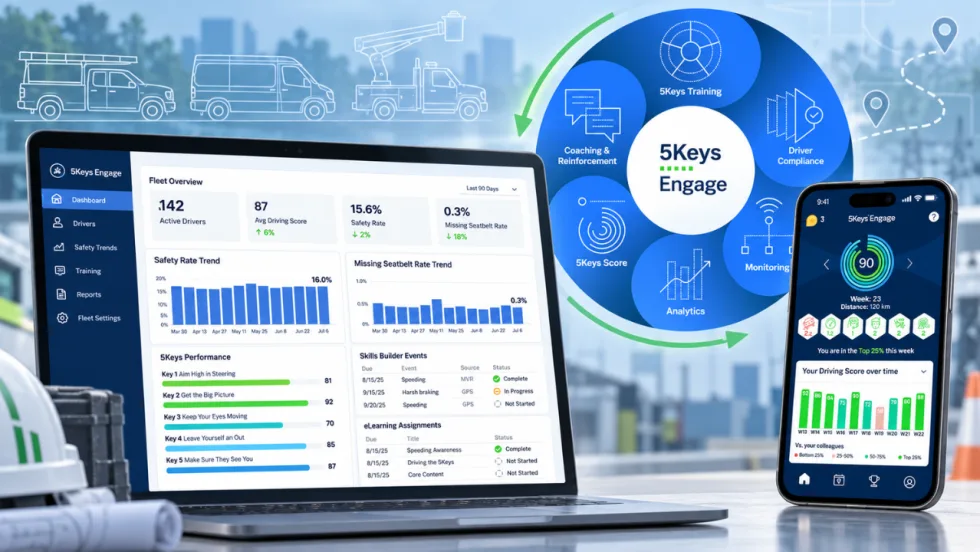
Continuously assess driver behavior using telematics and monitor MVRs on a consistent, ongoing basis rather than just annually.
When drivers exhibit risky behavior or incidents occur, prescribe online training modules to match specific driver weaknesses to improve behavior.
Smith also stressed that effective safety training must be individualized. "To maximize driver engagement, training should be personalized to the driver’s needs rather than generic training such as a defensive driving course. For new hires, this means first assessing their skills then providing targeted training to improve skills needing development. For tenured employees, this means monitoring their driving performance and providing immediate, personalized training to address high-risk behaviors."
Keep Safety Front and Center
Once the foundation is in place, keeping drivers engaged over time is just as important. Safety isn’t a one-time event; it has to be reinforced regularly.
"Once your safety program is well established, you can leverage comprehensive metrics and/or a driver scorecard to highlight trends and further engage your drivers. You’ll also want to share this information with leadership and encourage them to continue communicating the importance of driver safety and hold stakeholders accountable for results," Smith added.
Consistency and Buy-In Are Key
More fleets are recognizing that short-term training isn’t enough. According to Chris Senica, director of risk management at Enterprise Fleet Management, regular refreshers are becoming the norm.
"Today’s market is in a constant state of change, as a result, our Client Strategy Managers are actively communicating with clients about the benefits of continuous training and the impact it can have on losses. And the good news is, we are seeing clients more receptive to conducting ongoing driver training to help minimize losses/rate increases annually," Senica shared.
This approach doesn’t have to be disruptive. Smith pointed out that “burst” style learning is gaining traction.
"Another trend that continues to gain momentum is the use of shorter, more engaging and impactful training modules. For many fleet operators, it is difficult to pull their drivers off the road for significant periods of time to complete lengthy training sessions. While most fleet operators see the value and the impact of the safety training, they are now requesting shorter 'burst' sessions that can more easily fit into a driver’s day with minimal disruption to their typical workflow," Smith added.
Smith also emphasized the value of assigning behavior-specific modules.
"If a driver incurs a speeding offense, a speed management training module should be immediately assigned to the driver," he said.
Build a True Safety Culture
Creating a culture where safety is part of daily operations starts with leadership and expands through peer engagement and recognition.
"Safety culture starts with understanding the company mission, education to the driver, and recognition for safe driving for an extended period of time. Everyone wants to feel appreciated and useful," said Robert Martines, CEO of Corporate Claims Management (CCM).
Martines said peer mentorship can make a difference.
"Peer pressure can play an effective positive role. Pairing a good driver with a driver with some blemishes on his/her record can ‘open the eyes’ of the somewhat riskier driver. Everyone learns by many methods. However, real-time experience is invaluable. A situation that one driver deems routine may be more serious for another driver, but working through it together can deliver excellent results," Martines noted.
The goal is long-term commitment, not short-term fixes.
"Usually, it takes a severe accident or, unfortunately, a death for companies to really focus on accident prevention. Furthermore, a company that subscribes to adding great technology to their vehicles and a quality driver safety program tends to abandon them once the accident/incident rate drops. They have a false sense of security that the problem is solved. Repetition and reinforcement keep a driver safe and perpetually reduce risk opportunities," Martines said.
Train the Trainers, Too
Even the best training strategy will fall flat without experienced safety leadership. Martines pointed to the need for developing fleet safety leaders themselves.
"The field of experienced fleet managers is shrinking, and there is a definite different perception between veterans and newer, inexperienced fleet ‘managers or administrators’ who have limited exposure to the overall process, especially when they have multiple other responsibilities. Learning the job takes effort, and when your attention is distracted, unfortunately, very little effort is being invested. However, companies with seasoned fleet and safety managers clearly prove their value," Martines said.
Training That Works Takes Ongoing Effort
Creating a strong safety culture and improving driver behavior requires commitment during onboarding and throughout a driver’s career. Fleets that personalize their training, track performance, and keep safety in mind are seeing stronger engagement and long-term results.
Continue the Series
This article is Part 5 of our 5-part series on Fleet Accident Management in 2025. Don’t miss the rest: