




Learn More: Best Practices for Safe Driving in Light- and Medium-Duty Trucks
LightMetrics Introduces ΦFP AI Layer Filter for Safety Alerts
LightMetrics has launched ΦFP, a new cloud AI layer that filters every driver safety alert before it reaches a fleet manager, eliminating the false alarms.
from News/Media Release
April 22, 2026
LightMetrics’ ΦFP, a cloud-based AI layer, has access to far greater processing power than any in-vehicle device, allowing it to run more sophisticated analysis and apply a higher standard of accuracy.
Credit: LightMetrics/Work Truck
3 min to read
LightMetrics, a global leader in AI-powered video telematics and driver safety technology, today announced ΦFP, a cloud-based artificial intelligence (AI) layer that filters every driver safety alert before it reaches a fleet manager, ensuring that only genuine safety events make it through to the coaching queue.
Fleets across the industry have invested heavily in driver monitoring cameras, but LightMetrics said the volume of inaccurate alerts these systems typically generate has eroded trust on both sides. Drivers feel unfairly flagged for events that were not genuinely risky, and fleet managers spend hours reviewing alerts that turn out to be false alarms.
Over time, both groups stop taking the system seriously. ΦFP is built to change that by giving fleet managers and safety teams a tool they can trust, rather than one they’ve learned to second-guess.
How ΦFP Works
Traditional dash cameras process video footage directly on the device, analyzing short clips to detect risky driving behavior. Edge devices, however, operate under real constraints, limited on-board computing power and the economics of device cost mean that the largest, most accurate neural networks cannot always run on in-vehicle hardware.
LightMetrics said this is a fundamental trade-off in the industry and not a flaw in design, but a reality of deploying safety technology at scale. ΦFP is built to resolve that trade-off, adding a second layer of intelligence in the cloud where a more powerful AI model re-examines every event flagged by the camera before it reaches anyone’s queue.
This cloud layer has access to far greater processing power than any in-vehicle device, allowing it to run more sophisticated analysis and apply a higher standard of accuracy.
The impact is measurable, according to LightMetrics drowsiness and fatigue detection is among the most challenging behaviors to identify accurately, given the wide range of ways it can manifest.
LightMetrics’ edge AI already achieves 94% precision on these events, which means that for every 1,000 genuine drowsy driving incidents, roughly 60 alerts are false positives. In early customer deployments, ΦFP reduces that number to just nine, lifting precision from 94% to 99.1%. For a fleet manager, that is the difference between a coaching queue they can trust and one they have learned to ignore.
The result is a curated coaching queue that contains only the events that genuinely warrant attention.
“Every false positive has a cost, such as driver attention, eroded trust, and wasted time. Manual reviews are time-consuming, expensive, and inconsistent. ΦFP is built on the advances in generative AI and vision language models. We are giving fleet operators something they have never had before: complete confidence that when an alert surfaces, it is real, it is serious, and it demands action,” said Krishna Govindarao, co-founder and head of product and marketing, LightMetrics
What This Means for Fleets
For fleet managers and safety teams managing large numbers of drivers, the ability to focus on genuine risks rather than sifting through hundreds of questionable alerts is a meaningful shift in how driver safety technology can be used.
LightMetrics sees ΦFP as part of a broader vision to make AI-powered fleet safety not just more accurate, but more actionable, which helps fleets build stronger coaching programs, improve driver relationships, and make better use of the technology they have already invested in.
With deployments spanning North America, Europe, Latin America, the Middle East, Asia, and Australia, LightMetrics is positioned to bring ΦFP to fleets and telematics providers worldwide.
More Safety
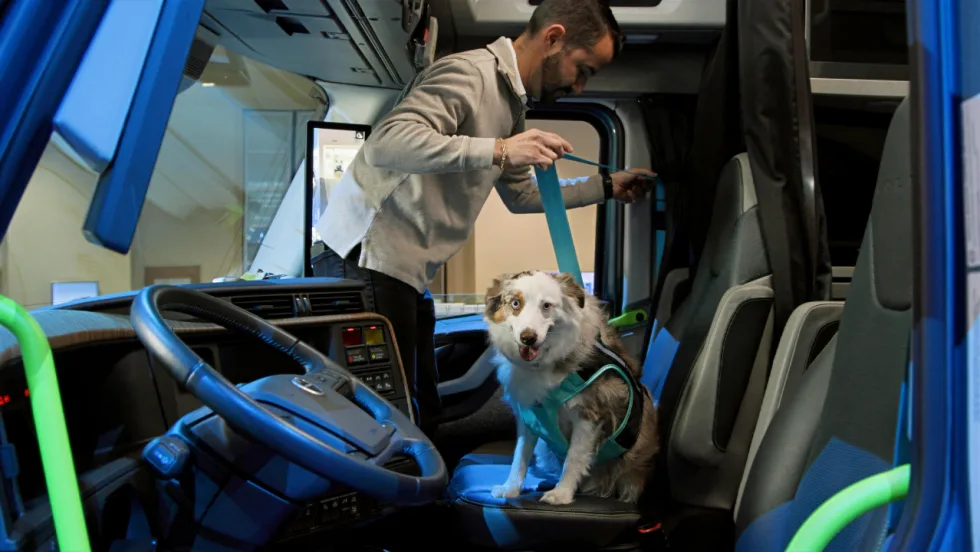
Volvo Trucks Releases New Safety Recommendations for Traveling with Pets
One of the most important recommendations for professional drivers traveling with pets is to ensure pets are properly restrained while the truck is moving. Other tips are available in the new guide from Volvo Trucks North America and Center for Pet Safety.
Read More →
API Issues Refueling Safety Guidelines
The American Petroleum Institute offers a list of safe vehicle refueling guidelines, including ways to avoid potential problems with static electricity discharges in fall, winter, and early spring.
Read More →
Winter Fleet Prep: Expert Tips to Keep Vehicles Running Smoothly
Cold weather can expose weak batteries, tires, fuel systems, and maintenance gaps fast. Use this winter fleet checklist to prepare trucks and drivers before temperatures drop.
Read More →
When a Work Truck Breaks Down, the Job Can Stop, Too
A work truck breakdown can stop more than the vehicle. Discover how payloads, jobsites, and specialty equipment change the roadside response.
Read More →
What Stronger Long-Term Fleet Service Partnerships Actually Require
Fleet service partnerships rarely fall apart all at once. Learn the three warning signs that trust is eroding and what fleets and providers can do before downtime, frustration, and lost revenue follow.
Read More →
Applause & TRUCE Software Partner to Improve Driver Safety Through AI-Powered Telematics & Employee Performance Management
Applause has integrated TRUCE driving metrics directly into its employee-first performance and safety platform that transforms mobile devices into AI-powered telematics.
Read More →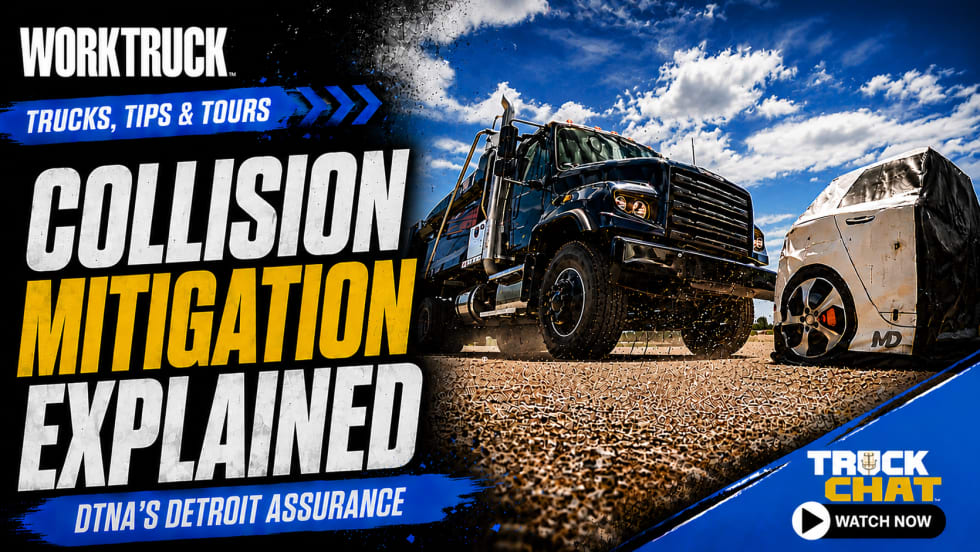
How Detroit Assurance with Active Brake Assist Works
Do you want to see what it is like to experience Detroit Assurance’s Active Brake Assist? In this video, Work Truck will put you in the cab to see how it all works and then hear more details from DTNA’s Mike Young.
Read More →
Get Left of Loss: A 5-Step Workplace Violence Prevention Framework for Fleet Operators
Violence risks do not stop at the driver’s door. Learn five practical steps fleets can take to spot threats early and protect workers before loss occurs.
Read More →
Sponsored•July 17, 2026
How Better Visibility Cut Speeding Violations by 48%
Fleet leaders don't need more data, they need clearer visibility into what the data is saying. This case study explores how one utility replaced speeding-event counts with a single metric — miles driven in violation — to strengthen safety and significantly reduce speeding violations.
Read More →
13 Safe Driving Tips for Commercial Vehicle Drivers
Make sure you are spending time on the road safely with these important tips.
Read More →