





Learn More: What One 40-Year Fleet Career Can Teach You Today
Why Fleet Leaders Have to Keep Asking Why
What if the biggest fleet improvements start with one simple question? After decades managing budgets, policies, technology, teams, and some of the largest fleet operations in the business, Jeff Hurrell shares why fleet leaders should keep asking “why” before deciding what comes next.
August 27, 2026
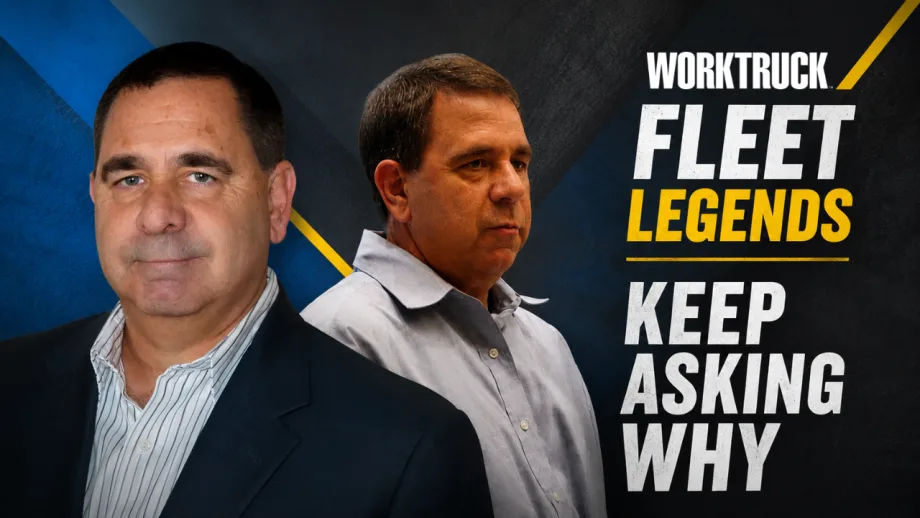
After decades working across fleet management, finance, consulting, and sales, Jeff Hurrell says strong fleet leadership starts with understanding the business, challenging long-held assumptions, and continuing to ask one simple question: Why?
Credit:
Jefrey Hurrell | Work Truck
14 min to read
- Jeff Hurrell's extensive experience in various aspects of the fleet industry highlights that fleet management encompasses much more than just managing vehicles.
- Through roles in rental, corporate management, finance, consulting, and sales, Hurrell has developed the perspective that effective fleet management is fundamentally about leadership.
- His diverse career trajectory offers insights into the multifaceted decisions fleet managers face, including budget management and supplier coordination.
*Summarized by AI
Jeffrey Hurrell has spent enough time in fleet to know the job is rarely just about the vehicles. The vehicles matter, of course. So do replacement cycles, budgets, suppliers, maintenance, policy, technology, data and the long list of other decisions that can fill a fleet manager’s day before lunch.
But after a career that took him through rental, corporate fleet management, finance, consulting and sales, Hurrell came away with a broader view of what the job really requires. Fleet management, in his experience, is leadership.
That perspective was built over decades. Hurrell first entered the automotive world from finance, working in car rental as a CFO before moving into corporate fleet management and eventually overseeing one of the largest fleets in North America at Hewlett-Packard. Later, he shifted into consulting, advising and selling fleet services, which gave him the chance to see fleet from several very different sides of the business.
He has been the person managing the budget, the person working with suppliers, the person trying to improve fleet performance, and the person helping other organizations solve their own fleet problems.
Looking back, he has seen no shortage of change. Fleets have access to more data than ever. Telematics has gone from an emerging tool to a normal part of the operation. Vehicle choices have expanded, electrification has added another layer to planning, and technology can now help fleets model outcomes and make decisions faster than most managers could have imagined earlier in their careers.
Yet some of Hurrell’s strongest advice has very little to do with chasing the newest tool. It starts with understanding why the fleet exists at all.
Prefer to watch? Check out the full interview below or scroll down to read more:
Start With the Business Before the Fleet
For Hurrell, one of the biggest mistakes a fleet manager can make is walking into an operation and immediately focusing on the vehicles without first understanding the company behind them.
It is easy to see how that happens. A new fleet manager inherits a budget, a policy, a vendor, a replacement plan, and a whole bunch of vehicles that already need attention. The temptation is to jump straight into managing what is sitting in front of you. Hurrell’s advice is to back up first and ask a more basic question. Why does the organization have a fleet in the first place?
That answer should shape nearly every decision that follows. A fleet supporting field service has different needs than one supporting sales. A vehicle that functions as an essential business tool needs to be evaluated differently than one being offered as a perk. Employee expectations matter, but so do utilization, cost, productivity, and what the organization is actually trying to accomplish. If the fleet manager does not understand that bigger picture, it becomes much harder to know whether the current operation is actually working.
Hurrell saw that firsthand when he was given a total fleet budget to manage. On paper, it was straightforward. Here is the amount of money you have. Stay within it. But there was an obvious problem with looking at fleet costs that way. What happens when the company grows?
If the organization adds employees and needs more vehicles, the total fleet spend is likely to increase even if the fleet itself is becoming more efficient. Hurrell started shifting the conversation toward cost per vehicle instead of relying only on the total budget. That gave management a much clearer way to understand performance. A fleet could spend more overall because it had grown while still lowering the cost of operating each vehicle.
It changed the story from “fleet costs went up” to “the business grew, the fleet grew with it, and we are managing each vehicle more efficiently.”
That is a much more useful conversation, and it is a good example of why fleet managers have to understand not only the numbers but also what those numbers are supposed to tell the business.
Fleet Policy Has to Match the Fleet You Actually Run
Hurrell also returns again and again to fleet policy, and not as an administrative exercise. He sees policy as the foundation of the operation because it influences nearly everything that happens after it. Vehicle eligibility, selection, cycling, employee use, management expectations and even the way costs behave can all be shaped by what the policy allows, requires or fails to address.
“Fleet policy drives all the behavior,” Hurrell said.
That is why he believes fleet managers should look critically at the policies they inherit instead of assuming they are still right simply because they are already in place. A policy may have made perfect sense when it was written, but fleets do not operate in a frozen moment. Vehicle availability changes. Technology changes. Business needs change. Employees work differently than they did five or 10 years ago, and new powertrains or vehicle types may create options that did not previously exist.
If the policy does not keep up, problems tend to show up somewhere else. The fleet may be spending more than it should. Employees may be driving vehicles that no longer fit the work. Management may be frustrated by costs or utilization. A replacement cycle may have outlived the assumptions that created it.
For Hurrell, that is why policy should not be something fleet revisits only when there is a problem. It should be part of the regular conversation about whether the operation is still aligned with the business. And that leads to another question he has asked throughout his career, one that is probably worth putting on a sticky note near any fleet manager’s desk.
Why?
Ask Why, Then Ask It Again Later
“Why do we do this?” became one of Hurrell’s most useful management questions. Sometimes he already knew the answer. That was not really the point. He wanted to hear how the people around him understood the process and whether everyone was operating from the same assumptions.
More than once, the answer came back in a form fleet managers everywhere have heard before: We have always done it this way. Hurrell never found that especially convincing.
A process can be familiar without being effective. A vehicle standard can be comfortable without being the best fit. A cost can become so routine that nobody stops to ask whether it is still necessary. Fleet has a lot of practices that can quietly become permanent simply because nobody has challenged them in a while.
That does not mean every old process is wrong or every traditional decision needs to be replaced. Sometimes there is a very good reason something has been done a certain way. But Hurrell’s point is that fleet leaders should know what that reason is.
He also believes the question needs to be revisited. Maybe a process was reviewed three years ago and changed. Great. Ask why again. Did the change actually work? Has the business shifted since then? Does the policy still produce the behavior you wanted? Does everyone involved still understand what the fleet is trying to accomplish?
That curiosity helped Hurrell’s teams uncover savings in places that were easy to overlook. Fleet managers naturally pay attention to major expenses such as fuel and depreciation because those numbers are sitting right there in front of them. But Hurrell also dug into the smaller line items. Vehicle transfers. Surplus units. Car washes. How vehicles were being cycled. What models employees were choosing. None of those expenses may look transformational on their own, but across a large fleet they can add up quickly.
His team also experimented with encouraging employees to select smaller vehicles. The idea was not simply to force everyone into the cheapest car available. They looked at incentives, employee acceptance and the financial impact, then measured what happened. In some cases, employees ended up liking the smaller vehicles enough that they later bought them when the units came out of service, including for children heading into college or starting out on their own. A change that began as a cost discussion ended up touching driver satisfaction and remarketing, too.
That is the kind of fleet problem solving Hurrell enjoys. You ask the question, test the assumption, and then see where the answer takes you.
More Data Does Not Automatically Mean Better Decisions
Hurrell has also watched fleet technology move through a pretty dramatic evolution. When telematics first started gaining traction, there was plenty of excitement around simply being able to collect more information from the vehicle. Suddenly, fleets could see things they had never been able to see before.
The problem was that collecting data and knowing what to do with it are two very different things. Hurrell remembers asking fleets what they actually wanted to accomplish with telematics. Sometimes the answer was essentially that they wanted the data because the data was available. That is how a fleet ends up with more information than anyone has time to use.
“You can have data coming out of your ears and not know what you’re looking at,” he said.
His approach was to start with the objective. What are you trying to improve? Maintenance compliance? Utilization? Driver behavior? Cost? If the fleet is investing in technology, what return are you looking for and how are you going to measure it?
That advice feels even more relevant now as fleets gain access to AI, predictive modeling and systems capable of turning enormous amounts of information into recommendations much faster than before. Hurrell sees that evolution as a positive one. The technology behind the scenes may be getting more sophisticated, but the information presented to the fleet manager can actually become simpler and more useful.
Still, the fleet manager has to know what they are asking the technology to solve. Hurrell is not hesitant about AI, either.
“Don’t fear AI, embrace it,” he recommended. For him, that does not mean handing every decision over to an algorithm. It means using better tools to spot patterns, model outcomes and make more informed decisions more quickly. The goal is not more data for the sake of having more data. The goal is a better fleet.
Fleet Leaders Cannot Live in the Day-to-Day
One of Hurrell’s strongest messages for newer fleet professionals is to resist the temptation to define the job by the work that lands on their desk every day. There will always be something urgent. A vehicle is down. A replacement is delayed. A driver needs help. A budget question is waiting. A supplier needs an answer. Something somewhere is probably on fire, figuratively if it is a good day.
But Hurrell believes fleet professionals get into trouble when the entire job becomes reacting to those things. He does not think of fleet management as simply managing the fleet. He thinks of it as leading a piece of the organization.
That means becoming the subject matter expert who can explain how fleet supports the business, what the vehicles are accomplishing, where the money is going, and where opportunities exist to improve. It means understanding the connection between vehicles and employee productivity, retention, operations and cost. It also means being able to walk into a management discussion and explain not just what fleet is doing, but why it is doing it.
“It’s not just pushing paperwork around,” Hurrell said.
That line gets at the difference between managing and leading. A manager can keep the operation moving. A leader can help shape where it goes next.
Hurrell carried that same thinking into the way he managed his own team. He did not want people working on isolated tasks without understanding what the department was trying to accomplish. Instead, he tried to give them the larger picture, including the goals, the financial pressures, and the challenges the company was working through.
Once people understood the bigger problem, they could start helping solve it.
He describes his own style as servant leadership. Rather than expecting the team to simply work for him, he saw his job as supporting them, helping them grow and listening when they had an idea worth considering. He brought fleet team members into conversations with departments such as HR instead of keeping those discussions confined to leadership. He wanted people to understand how fleet fit into the organization, not just the small corner of the operation assigned to them.
That involvement also created more continuity. People were not simply completing tasks. They were learning the business.
A Small Goal Can Get a Team Moving
Hurrell shared one example that says a lot about how he approached team engagement. He challenged his team to reduce cost per vehicle by $25 per month. Seems simple enough.
For a large fleet, the savings would still be meaningful, but the number itself did not feel impossible. It was small enough that people could get their arms around it. They could start looking for a few dollars here, a few dollars there, and see where the opportunities were hiding.
Then the team started digging. They questioned expenses, looked harder at processes, and brought forward ideas. The fleet management provider became involved. Other people inside the company contributed. Instead of one person being responsible for coming up with the answer, the problem became something the group was working through together.
Over time, that initial $25 goal turned into much larger savings per vehicle.
What stands out in Hurrell’s telling of the story, though, is not just the amount of money saved. It is how much the team got into the work. People wanted to find the next opportunity. They wanted to talk about what else could be changed. Ideas were discussed openly, and people could see that their input had a real impact on the fleet.
That is a very different kind of motivation than simply telling a team to cut costs. They owned the problem, so they cared about the result.
Fleet Is a Career Worth Choosing on Purpose
Like plenty of longtime fleet professionals, Hurrell admits he more or less fell into the industry. But once he got there, he found far more than financial management. Fleet forced him to think about people, vehicles, suppliers, technology, data, operations, costs and organizational strategy. There was always another problem to solve or another part of the business to understand, and that variety became one of the reasons he enjoyed the career as much as he did.
He thinks the next generation should look at fleet the same way.
Rather than treating the industry as something people stumble into, Hurrell sees it as a career someone can actively choose. His advice to new professionals is to build a broad skill set, network with people at different stages of their careers, get to know suppliers and OEMs, attend conferences and local events, and keep learning from what other fleets are doing.
He also warns against becoming too quick to dismiss an idea because someone tried it before. Maybe they did, and maybe it did not work. But the fleet around that old decision may be completely different now. Technology changes quickly. Vehicle offerings change. Business needs change. Something that failed five years ago could be worth another look today.
The important thing, Hurrell said, is to stay open.
Keep Looking Ahead
Hurrell retired in 2025, but retirement has not exactly removed fleet from the family conversation. One of his sons now works in fleet, while another works in automotive, giving him plenty of reasons to keep talking about the business and where it is headed.
And there is a lot to talk about.
Remote work has already changed the way some companies think about vehicle eligibility. Virtual meetings have changed travel patterns. Some employees who once needed a company vehicle may not need one today, while other roles will always depend on a vehicle to get the job done.
Hurrell believes fleet managers should keep evaluating that balance instead of assuming yesterday’s fleet size and structure are automatically right for tomorrow. He has used break-even analysis to compare the cost of providing a company vehicle with reimbursing an employee for personal vehicle use, looking for the point where one option makes more sense than the other.
Vehicle cycling deserves the same kind of attention. Keeping units for a long time may reduce replacement frequency, but it can also mean holding on to older technology and missing opportunities to bring in more efficient vehicles or better tools for the job. Hurrell’s advice is not to replace vehicles simply because something newer exists. It is to keep watching the market and be ready to move when the business case makes sense.
Technology is moving too quickly for fleet managers to spend much time looking backward. Hurrell believes the people leading fleets will increasingly be expected to make better decisions faster and anticipate what is coming next rather than waiting for change to arrive on their doorstep. Data and AI can help, but only if fleet leaders stay curious enough to question their assumptions and confident enough to act when the information supports it.
After decades in the industry, Hurrell can point to plenty of cost savings, technology changes, and fleet decisions that shaped his career. But when he talks about what made the work worthwhile, he comes back to the people. The suppliers he worked with, the peers he learned from, the employees he led, and the relationships built along the way.
For the next generation of fleet professionals, that may be one of the best lessons in his story.
Learn the numbers. Understand the vehicles. Get comfortable with technology. Know your policy. Pay attention to the business. But do not get so buried in the day-to-day that you stop looking around, talking to people, and asking whether there is a better way to do the work.
And every so often, ask the question Hurrell kept coming back to throughout his career. Why?
Quick Answers
Fleet management encompasses a wide range of responsibilities beyond vehicles, including replacement cycles, budgets, suppliers, maintenance, policy, technology, and data management.
*Summarized by AI
Subscribe to Our Newsletter
More Operations
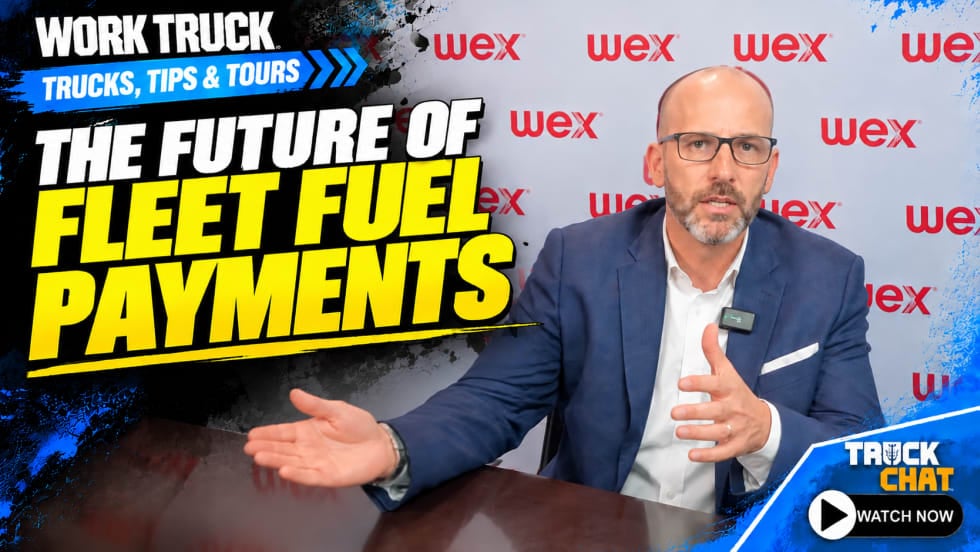
How Cardless Fuel Payments Benefit Commercial Fleets
Is it time for fleets to move beyond plastic fuel cards? David Abraham of WEX explains how cardless fuel payments can help reduce fraud, simplify driver transactions, and improve efficiency by allowing drivers to pay for fuel using their smartphones.
Read More →
Good Fleet Leadership Starts With the People You Already Have
From developing future leaders to listening to employees, discover how better leadership can help work truck fleets retain talent and build stronger teams.
Read More →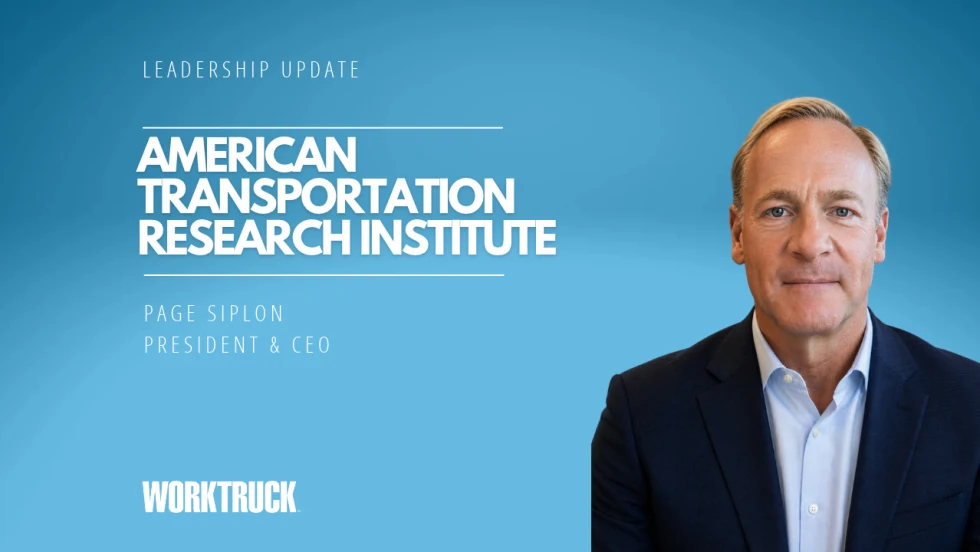
ATRI Names Next President and CEO
Page Siplon, a longtime transportation and logistics industry executive, has been chosen as the next president and CEO of the American Transportation Research Institute (ATRI).
Read More →From Our Partners
Basic Tracking vs Next Generation Fleet Technology
Sponsored by AT&T Business

5 Facts Every Fleet Manager Should Know About Embedded Telematics
Sponsored by Stellantis/Mobilisights
How AI Video Telematics Boosts Driver Safety and Helps to Avoid Unnecessary Costs
Sponsored by Verizon Connect

Charting the 8 Bottom-Line Benefits of Workforce Optimization
Sponsored by Verizon Connect


Coltrain Onsite Fleet Care Sponsors 2026 Cure Bowl to Support Cancer Research
The mobile fleet maintenance provider is supporting the annual college football bowl game, which has helped raise $6.83 million for cancer research since 2015.
Read More →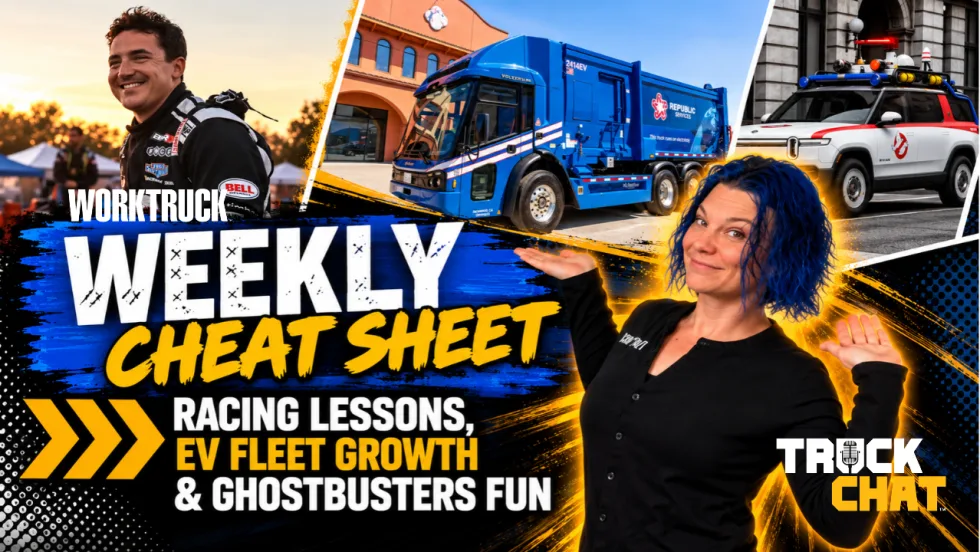
Racing Lessons, Electric Fleet Growth, and Ghostbusters Lead This Week's Work Truck News
Racing lessons for fleets, Republic Services' electric truck expansion, 40 years of fleet wisdom, truck trivia, autonomous yard trucks, and more headline this week's Truck Chat Cheat Sheet.
Read More →
Sponsored•October 14, 2026
A buyer's guide to fleet management software in 2027
Buying fleet management software in 2027 means looking beyond features and price. As fleet operations, technology and expectations evolve, this guide explores what today’s fleet professionals should consider when choosing a system that can deliver value now and adapt to what comes next.
Read More →
How to Build a Lasting Fleet Career by Staying Curious and Connected
Tina Kourakos never planned on a career in fleet. More than 30 years later, she says curiosity, strong relationships, and a willingness to keep learning helped turn an unexpected assignment into a career spanning fleet management and OEM leadership.
Read More →
Think You Know Trucks? Take Our 19-Question Fleet Trivia Challenge
From chicken lights to diesel engines and trucking history, test your knowledge with 19 questions from the 2026 Work Truck Exchange and Heavy Duty Trucking Exchange.
Read More →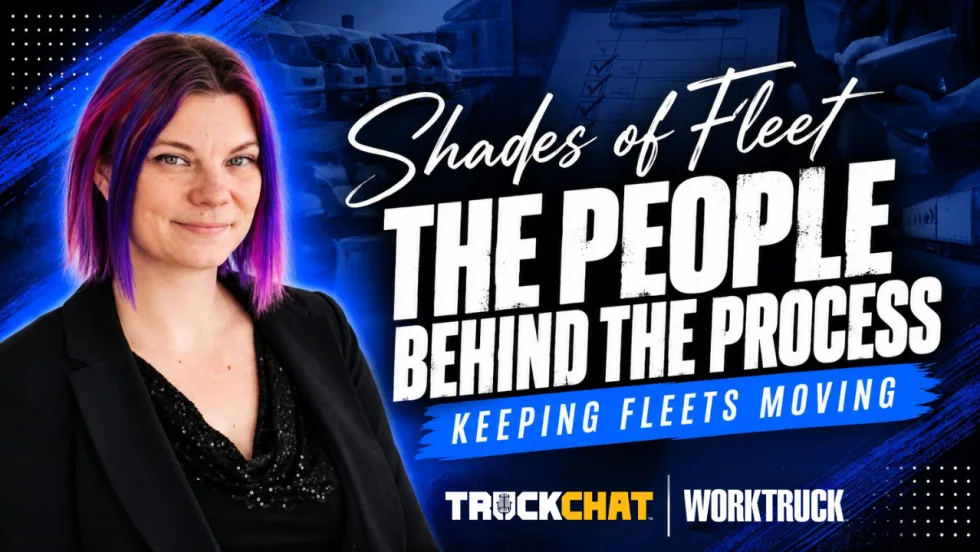
Where’s My Truck: Inside the Fleet Logistics Work Nobody Sees
Shades of Fleet video thumbnail featuring Lauren Fletcher beside the text “The People Behind the Process, Keeping Fleets Moving,” with fleet vehicles and logistics imagery in the background.
Read More →
Work Truck Seeks Fleet and Industry Insights on 2026 Trends and 2027 Forecasts
Work Truck is seeking insights from fleet leaders and industry partners on the trends that shaped 2026 and what commercial fleets should prepare for in 2027. Participate today!
Read More →