




How to Lead Fleetwide Compliance
Whether working alone or with a fleet management company, fleet managers are at the helm of driving compliance with federal, state, and local mandates. What does it take to lead compliance in a fleet?

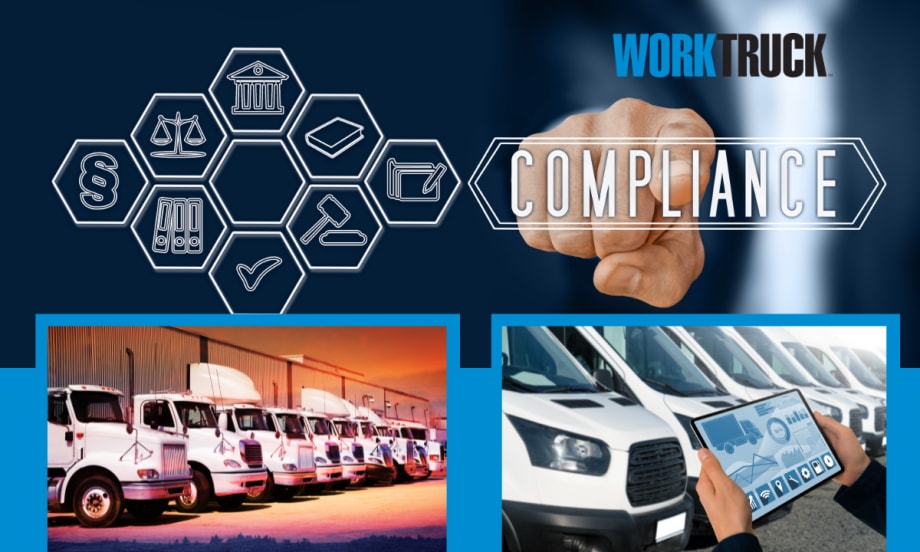
Whether trying to pull it off solo or by partnering with a fleet management company, fleet managers are ultimately responsible for a fleet’s compliance.
Photo: Work Truck
Even when fleet managers are well-educated on all applicable regulatory rules and laws, achieving compliance in every aspect of a fleet’s operation is still challenging. Whether that be getting vehicle registrations done on time, taking care of emissions testing, or managing drivers’ compliance behavior behind the wheel, what is the solution?
Maybe a fleet manager can take on all the regulatory and compliance responsibilities. However, most now use a fleet management company (FMC) or other services to assist. Either way, there are some common elements that can help a fleet achieve compliance.
There may not be a single definitive answer to ensuring compliance, but some approaches can increase the likelihood of compliance success, thereby reducing pain points such as downtime and fines.
Start with Understanding the Rules
Rick Malchow, an industry business advisor with J. J. Keller & Associates, said driving compliance with rules and regulations starts with “awareness of what the rules are.”
Federal regulations, Section 49 CR 390.3, section E2, require a driver to be trained and compliant with all applicable regulations. Ignorance is not an excuse, but if a driver doesn’t know the rules, a fleet manager should make them responsible for knowing them.
“You start out educating the driver on ‘These are the rules that you need to follow. And by the way, we have corresponding policies and procedures that are written to enforce compliance with these rules.’ And then you have progressive coaching and discipline,” Malchow suggested. “But again, it starts with training and education, and then what gets measured gets done.”
Malchow suggested another way to drive compliance, which is spot checks. Those random checks should cover all functions, whether reviewing safe driving metrics, fatigue mitigation, maintenance, or follow-ups on violations from roadside inspections — anything and everything.
Again, everything can be measured.
Data is King When Driving Compliance
According to Chris Karlak, director of licensing and compliance at Holman, accurate data is a key component of maintaining compliance for any fleet, whether small, large, or in between.
“Data is an amazing starting point to make sure you're going after the right things,” Karlak said.
He points to things as simple as having registration renewal dates available and addresses correct to ensure annual emissions inspections are completed without problems.
“The starting point data elements are really critical. For example, if you don't have a registration renewal date available, nothing's going to trigger to start the,” he explained
In some states, those renewals are done at the county level. If an address is wrong and you try to get the renewal through the wrong county, that creates hassle and delays.
But what if a fleet manager is not the one getting those renewals done? They must know who to contact in the field and who within the organization is responsible for it.
Laying Groundwork for Flow of Information
That data is only valuable if it reaches the proper hands in a timely fashion. But how is that accomplished? Karlak draws on his experience with Holman, a fleet management company (FMC), to explain that it all starts with expectations.
“In our partnership with our clients, they have the ability to say, ‘This is how my company operates; this is how I'd like you to communicate with my team in my field.’ Together we set up basic communication parameters,” Karlak said.
Expectations could flow like this: The driver needs to make sure inspections are done, and then that data will be entered into a system the fleet manager can access. That lays the ground rules for the flow of information and how those two roles will communicate.
Maybe the fleet uses pool vehicles with no permanent driver assignments. Who would be accountable then? It might be a branch manager. It is important to have a plan and communicate it to all stakeholders.
“We want to be able to get to the right person that's going to action the process the first time, and that's through partnership with finding out what contacts our customers would like us to use,” Karlak explained. “And then, how do we provide fleet personnel with the right information to follow up, stay current, and realize where they may have to follow up to ensure compliance?”
Setting expectations upfront is important and could involve several people—a fleet manager, an operations manager, a local division manager, drivers, and possibly others.
How do you interact with all those different people at those levels to get what they need, whether it's renewals, inspections, or other information?
That is why a communication plan needs to be in place.
But that flow of information can be a moving target, according to Karlak. Businesses grow and expand, new businesses or fleets are acquired, and new people, vehicles, and assets are onboarded. A fleet manager could become overwhelmed when taking on new challenges and new processes.
“It's not just a one-and-done. It's constantly evolving, and you need ongoing support,” Karlak added. “Now you have new regulatory aspects to adapt to, and I think that's where a strategic fleet management partnership can be extremely beneficial.”
Karlak shares three tips for making sure you get compliance throughout a fleet. Those are:
Whether done by a fleet manager or an FMC, educate everyone about regulations and compliance.
Taking a hard look at your current state will help prepare for your future state.
Make sure all the departments are aligned on the roles they play.
Look to the Future and Prepare Now
Regulations tend not to be sneaky; they let you know they are coming well in advance, and fleets are wise to prepare early.
“The way that the rulemaking goes is from that Notice of Proposed Rulemaking to a Final Rule. But that cycle can take a long time,” Malchow explained.
It could be finalized in six months to a year, but more often, it takes years and years, even decades. State rules can come about similarly, again with lead times.
State or federal rules come from two sources: either the regulatory body has the authority to write them, or it comes from the state or federal legislature.
The Electronic Logging Device Mandate was a little different. It was a congressional instruction directing the federal agency to write the regulation as part of Moving Ahead for Progress 2021. That legislative directive to create a regulation can happen at both state and federal levels.
“To enforce compliance and to drive regulations, it takes the states and/or federal government a while to build out what compliance will look like. So, you do have time to make some upfront decisions,” added Karlak.
Look at what you are doing today. How do you deal with current regulations? He said that tomorrow will be a challenge if you are struggling today. Ask what it looks like culturally to build the routine and what departments need to get involved to help you drive compliance with upcoming regulations.
More Operations
Family Ties Inside the Fleet Families Building Careers Across Generations
Three fleet families share what it really takes to work together, learn across generations, and keep business from following them home.
Read More →
Shades of Fleet Call for Voices: Fleet's Hidden Heroes
Fleet’s hidden heroes are often the ones keeping everything moving behind the scenes. September’s Shades of Fleet is looking for dispatchers, coordinators, parts specialists, and other support pros to share their stories.
Read More →
Truck Centers, Inc. Celebrates National Truck Driver Appreciation Week with $1,000 Fuel Card Giveaways
During National Truck Driver Appreciation Week, Truck Centers, Inc. is offering customers a chance to fuel up for free. Customers at all Truck Centers locations can enter to win one of four $1,000 fuel cards from Sept. 14 - 18.
Read More →
Fleet Guides, AI Time-Savers, Truck Tariffs & Fuel Strategy Lead the News
This week’s Truck Chat Cheat Sheet covers new fleet vehicle guides, practical AI use cases, U.S.-Canada truck production, mixed-energy strategy, and more.
Read More →
What Fleet Employers Are Missing When Hiring Veterans
What if some of the strongest candidates for fleet are already out there, but their experience is written in a language our industry does not always recognize?
Read More →
Automotive Fleet Opens 2026 Personal Use Survey for Commercial Fleet Managers
Less than two weeks left! Commercial and corporate fleet managers are invited to share how their organizations handle company vehicle personal-use policies, charges, and driver eligibility.
Read More →
What Resilient Fleets Do Differently When Conditions Change
Fleet resilience is about more than reacting to disruption. Lauren Fletcher talks with AP Fleet’s Alex Coveney about flexibility, planning, scaling, and what helps fleets adapt when business conditions shift.
Read More →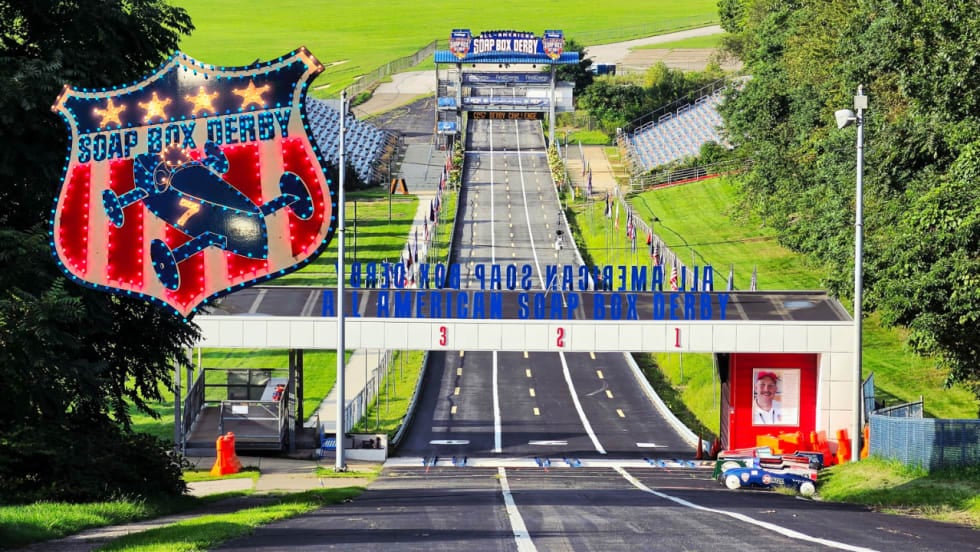
If We Want the Next Generation in Automotive, We Have to Give Them a Reason to Care
The automotive industry talks constantly about its workforce shortage. But before we can recruit the next generation, we may need to do a better job giving kids a reason to care about automotive in the first place.
Read More →
Ram ProMaster City Under $40K, Truck Tariffs, and AI Maintenance Lead the News
A sub-$40K commercial van, tariff questions, AI-powered maintenance, and a new EV production strategy headline this week’s Truck Chat Cheat Sheet.
Read More →
Bob Adamsky Shares the Fleet Lessons You Usually Learn the Hard Way
After more than 30 years in fleet, Arrow International’s Bob Adamsky has learned that the job is about far more than vehicles. He shares the lessons he wishes every fleet manager could learn a little earlier.
Read More →