





Work Truck 2025 Forecast: Regulatory and Sustainability Challenges
Staying Informed on Regulatory Issues
It is vital for fleet managers to stay informed about all regulations impacting their fleet, rule changes, and proposed rulemaking. Two fleet management experts share how fleet managers can best stay updated on regulatory issues.
February 11, 2025
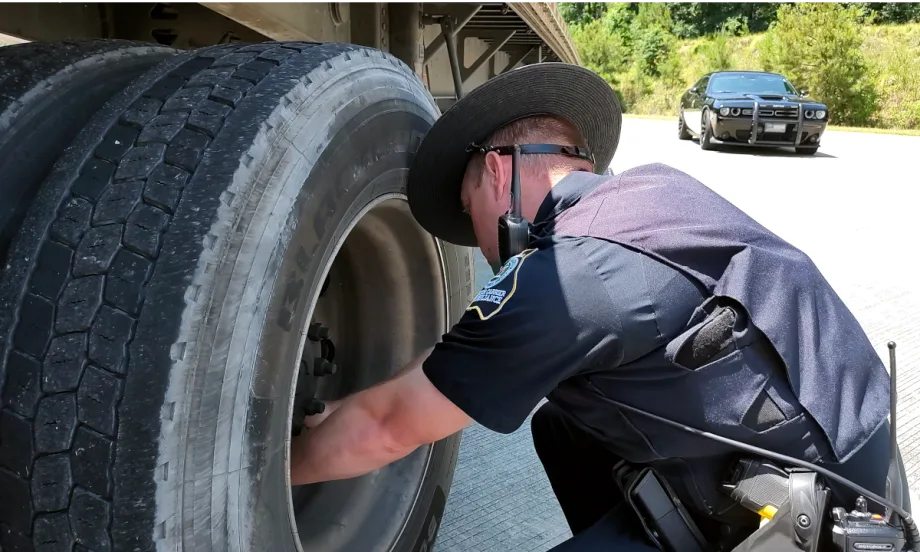
Commercial motor vehicles can be regulated under federal, state, and local rules or laws.
Photo: Wayne Parham
7 min to read
A young man who aspired to be an attorney visited a local lawyer’s office several years ago. He asked questions, listened patiently, and then glanced at a law library stretching down the hallway more than 60 feet. Noticing that, he asked, “Do you have to read all those books to become a lawyer?”
“Yes,” replied the elderly gentleman with a grin.
“If I have to read that many books, I don’t want to be a lawyer,” the high school boy exclaimed.
In a similar fashion, fleet managers could easily be overwhelmed by the daunting task of understanding and staying informed about all the regulatory compliance tasks of keeping a fleet in compliance.
But before striving for compliance, a fleet manager must first learn to navigate the constantly changing rules of the game.
Knowing What is Out There is Vital
A fleet manager must determine whether their vehicles fall under federal regulations, state regulations, or a combination of both. However, even at the driver level, there should be awareness of regulations and a desire to comply.
“Whoever is in the driver's seat really needs to be aware of what rule set that they are following and what rules apply to them. Just like any other area of law or regulation, ignorance is no excuse,” said Rick Malchow, an Industry Business Advisor with J. J. Keller & Associates.
One of the most regulated areas is over-the-road (OTR) trucking. Drivers must follow a handbook of federal regulations, which is updated every month. Motor carriers of any size also have a handbook of federal regulations, albeit larger and more in-depth. That one is updated quarterly.
“The reason that they're updated so often is because that's what regulators do. They write rules, so they're constantly changing, and you have to stay updated,” Malchow said.
With the ongoing evolution and regulations fluctuations across many government levels, how should a fleet manager stay updated? They will not have time to dig through a 500-page or even a 100-page final rule when it comes out.
Most fleet managers get assistance from fleet management companies (FMC) or other services like those offered by J.J. Keller & Associates, which provides regulatory insights and analysis and pushes such information to subscribers. Malchow is part of a team of experts that provides updates and analyses of regulatory changes.
“I would say that it's almost impossible for a smaller operation to stay on top of all the state regulations and federal regulations without partnering with somebody now. That may be J.J. Keller, that may be the American Trucking Associations, that may be one of the state associations,” Malchow added. “You really do need to partner with somebody that is keeping their finger on that pulse so that you are aware.”
Chris Karlak, director of licensing and compliance at Holman, also pointed to resources that a fleet manager can seek out to become more informed and stay current on regulations.
“What if you're a small, medium-sized fleet, and you do not have a fleet management provider? There are resources where you can educate yourself and keep yourself current to prepare and then make an educated decision to say, ‘Hey, I may not be able to handle this. I will need a fleet management partner or outside support.”
Karlak said you can find ample information at the federal level through places like the Department of Transportation (DOT) or the Federal Motor Carrier Safety Administration (FMCSA) websites. These websites provide details on regulations current through 2025, but more importantly, they give insight into what may be coming on the horizon so a fleet manager can have time to prepare accordingly and potentially adapt buying decisions to what may be needed in the future.
The federal and state agencies may offer newsletters so fleet managers can subscribe and have relevant information pushed to them rather than continually searching and reading.
“It can be pretty challenging all of a sudden to have four new regulations in four different states, plus some vehicles in bordering states are going to cross over, and be faced with preparing for that. That’s the reality and the challenge for a lot of fleets,” Karlak said.
Regulations from All Directions
Fleets fall under various regulating bodies, some overseeing safety, others emissions, and yet more that enforce compliance when dealing with employees. Just like that young man in the lawyer’s office, picking through all those pages of regulations can be intimidating.
Malchow pointed out that an intrastate fleet would fall under the purview of the FMCSA’s regulation 49 CFR 392.2, which mandates that “Every commercial motor vehicle must be operated in accordance with the laws, ordinances, and regulations of the jurisdiction in which it is being operated. However, if a regulation of the Federal Motor Carrier Safety Administration imposes a higher standard of care than that law, ordinance, or regulation, the Federal Motor Carrier Safety Administration regulation must be complied with.”
“Our customers are certainly not under-regulated,” he said.
Complexities can continue to abound. A fleet could be subject to Environmental Protection Agency (EPA) emissions regulations, the Occupational Safety and Health Administration (OSHA) regulations at a work site, FMCSA regulations while moving from point A to point B, and state safety regulations.
Then, they must contend with Department of Labor regulations, and possibly, based on what is transported, a fleet could fall under rules set by the Pipeline Hazardous Material Safety Administration.
“So, you're not under-regulated. And so, you really need to be partnering with somebody keeping track of this for you and then pushing the information that you need to you,” he said.
Recent Major Regulatory Changes
According to Malchow, the Supreme Court made several impactful recent decisions. One was striking down the 40-year-old Chevron doctrine.
The justices overruled their 1984 decision in Chevron v. Natural Resources Defense Council, which gave rise to the Chevron doctrine. Under that doctrine, if Congress has not directly addressed the question at the center of a dispute, a court was required to uphold the agency’s interpretation of the statute as long as it was reasonable. The court, in a 6-3 decision, struck down the doctrine.
An FMCSA final rule on oral fluids testing was issued in 2023. Some were excited because it set up a fast turnaround for drug screening results. Malchow said the rule is out there but has not had an impact yet.
He pointed out that the rule requires two approved test kits and two approved labs, which has not happened yet but will possibly materialize in 2025.
One big change in December was the FMCSA Crash Preventability Program.
“They added several new types of crashes that can be challenged by a data cue to say, ‘Hey, that was a nonpreventable accident, and it should not be taken into consideration for my compliance safety and accountability program scores,” Malchow explained.
When Regulations Go Away
When President Donald Trump took office in 2017, he signed an executive order that mandated that if the federal government created a new regulation, two other regulations must be removed.
“That was somewhat effective, but there wasn't a lot of policing to it. So, regulatory agencies slowed down,” Malchow said. “As a result of the election this year and President Trump coming back into office, we are expecting a similar executive order, so that will likely have the same impact that it did from 2017 through 2020 of slowing down the rate of new regulations and cleaning up some of the regulations now the at the federal level for the commercial motor vehicle regulations.”
Many fleets had been preparing for new emissions regulations to roll out in California. However, the state backed away from its zero-emission vehicle mandate quest for fleets.
With a new administration soon to take charge of the White House, the California Air Resources Board (CARB) withdrew its waiver request from the Environmental Protection Agency for the state's Advanced Clean Fleets (ACF) regulation.
Malchow also said the FMCSA has been working on cleaning up some regulations, but that has moved slowly. However, it removed 49 CFR 391.27 about CDL holders reporting moving violations. Now technology allows that information to be accessed when a motor vehicle report (MVR) is pulled.
“That was removed from the regulations, partially because it was an old regulation before computers and before the sharing of information between states. And so, it really wasn't necessary anymore,” Malchow explained.
Subscribe to Our Newsletter
More Operations
New Fleet Guides, Hidden Truck Wear, and Driver Fit Lead This Month
Our latest Truck Chat recap covers new Fleet Guides, hidden idling costs, driver fit, lighter-truck registration rules, and year-round technician appreciation.
Read More →
Work Truck Takes Fleet Rivalry Downhill to Support Skilled Trades
Team Fletcher claimed a head-to-head win and second overall as Work Truck and Automotive Fleet helped raise $22,000 for the Hourglass Foundation.
Read More →
From Ledger Books to AI Patti Earley Shares 40 Years of Fleet Lessons
Patti Earley, CAFM, shares what four decades in fleet have taught her about using data, building relationships, and listening to the people behind the vehicles.
Read More →From Our Partners
Basic Tracking vs Next Generation Fleet Technology
Sponsored by AT&T Business

5 Facts Every Fleet Manager Should Know About Embedded Telematics
Sponsored by Stellantis/Mobilisights

How AI Video Telematics Boosts Driver Safety and Helps to Avoid Unnecessary Costs
Sponsored by Verizon Connect

Charting the 8 Bottom-Line Benefits of Workforce Optimization
Sponsored by Verizon Connect

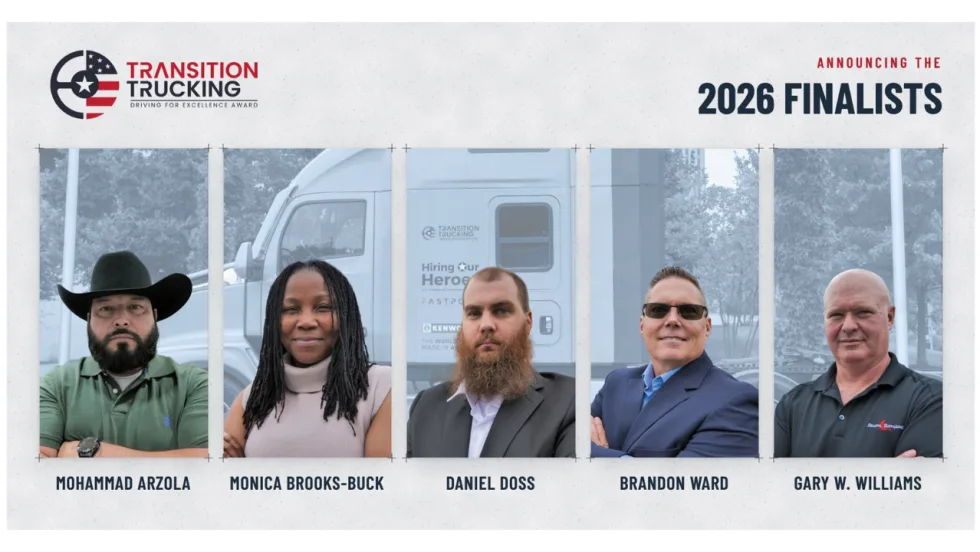
Finalists Announced for 2026 Transition Trucking: Driving for Excellence Award
Kenworth Truck Company, Fastport, and the U.S. Chamber of Commerce Foundation's Hiring Our Heroes program have announced the five finalists for the 2026 Transition Trucking: Driving for Excellence Award.
Read More →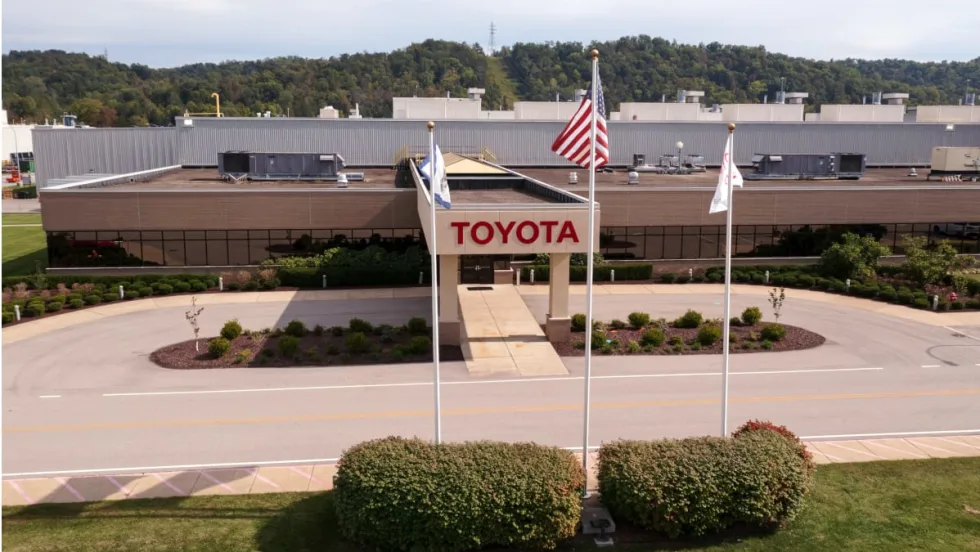
Toyota West Virginia Celebrates Three Decades of Manufacturing in the Mountain State
Toyota West Virginia celebrated 30 years of manufacturing. Toyota assembles both engines and drivetrain components in West Virginia to support its North American operations.
Read More →
The Hidden Cost of Idling
A low-mileage truck can still be one of the fleet’s hardest-working and most worn assets. Engine hours, idle time, and duty cycle reveal what the odometer misses.
Read More →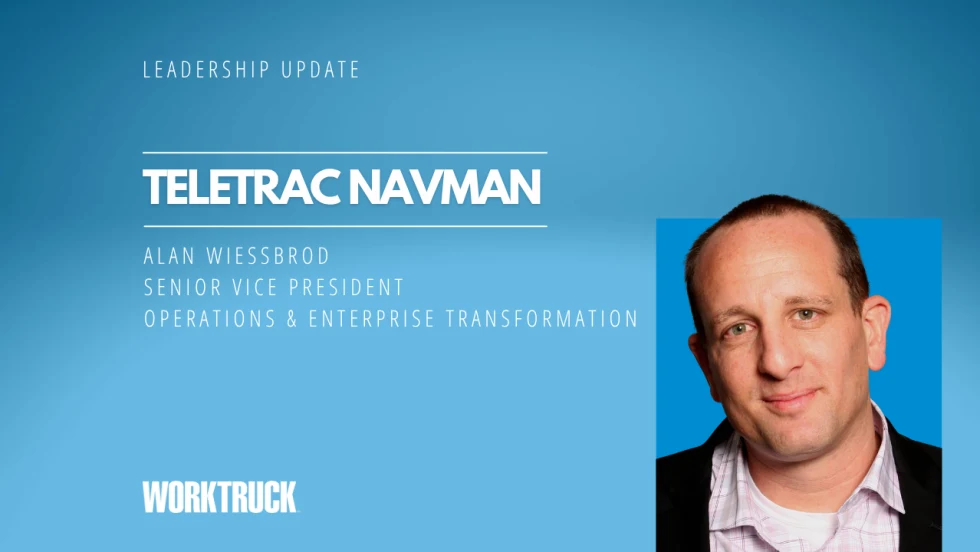
Teletrac Navman Hires SVP of Operations & Enterprise Transformation
Teletrac Navman has appointed Alan Wiessbrod to its senior leadership team as senior vice president, operations and enterprise transformation. The company said he has a strong track record of delivering profitable growth and operational excellence.
Read More →
2027 GM Trucks, Technician Retention, and Fleet Lessons Lead This Week’s News
New GM pickups, technician retention, fleet leadership lessons, winter equipment, and more headline this week’s Truck Chat Weekly Cheat Sheet.
Read More →
Family Ties Inside the Fleet Families Building Careers Across Generations
Three fleet families share what it really takes to work together, learn across generations, and keep business from following them home.
Read More →
Shades of Fleet Call for Voices: Fleet's Hidden Heroes
Fleet’s hidden heroes are often the ones keeping everything moving behind the scenes. September’s Shades of Fleet is looking for dispatchers, coordinators, parts specialists, and other support pros to share their stories.
Read More →