




The Fleet Manager's Guide to Comparing Fuel Economy
Vehicles 8,500-lbs. GVWR or more are exempt from federal fuel economy requirements, making it more challenging to project fuel economy for vehicles such as 3/4-and 1-ton pickups, vans, and medium-duty trucks.

Despite the many fleet-related variables, reasonably accurate mpg info can be gathered.
Photo: Work Truck
If you’re planning to expand your truck fleet or replace aging trucks this year, projected fuel economy is one important factor to guide your decision. Just a modest 2 mpg improvement can create anywhere from several hundred to $2,000 or more in annual fuel savings per vehicle, operating 30,000 miles per year (depending on the truck class and assuming $3.05 per gallon fuel costs). Multiply those savings by the size of a truck fleet and the potential is obvious.
When evaluating manufacturers and their truck offerings, what resources are available to most accurately research and compare projected fuel economy?
The answer depends on the size of the truck you’re looking to compare. For example, if you’re acquiring a vehicle from a mid-size to a 1/2-ton full-size pickup or van, most of the research can be done easily on the Web. Vans, trucks, and SUVs under 8,500 lbs. gross vehicle weight rating (GVWR) are required to meet federal fuel economy standards. Therefore, each vehicle’s projected fuel economy ratings for both city and highway driving are published and easy to access through Web resources.
However, vehicles 8,500 lbs. GVWR or above are exempt from federal fuel economy requirements, making it more challenging to project fuel economy. These vehicles include 3/4-ton and 1-ton pickups, vans, and medium-duty trucks (such as cab-overs and conventional chassis cabs).
Working with Vehicles Under 8,500-ls. GVWR
Where on the Web are the resources to accurately evaluate fuel economy of trucks under 8,500 lbs. GVWR?
A productive place to start is www.fueleconomy.gov, created by the U.S. Department of Energy (DOE) and the Environmental Protection Agency (EPA). Once logged onto the site, click "Compare Side-by-Side." Select the model-year you want to compare and the site will guide you from there.
Once a comparison report is generated, keep in mind the site is assuming what it deems standard usage when calculating combined mpg. By standard, the Web site assumes 55-percent city mileage, 45-percent highway mileage. Actual usage may differ. To create a comparison report that more accurately reflects how your company will use the vehicle, click on the link for "Customize with Your Gas Prices and Annual Miles." You can then adjust the city and highway percentages.
Other services the site provides to assist in research include:
MPG Estimates from Users. This link provides access to the fuel economy actual users of particular vehicles say they are getting.
Print Fuel Economy Guide. Published annually, this guide provides fuel economy values for the full range of makes and models for the model-year.
Why MPG Varies. This section outlines the variables that may affect fuel economy and how they can be accounted for in planning.
The following are additional online resources to guide research on fuel economy considerations.
www.edmunds.com/fueleconomy. This site provides articles, such as Top 10 Most Fuel-Efficient Trucks and SUVs, among other resources.
www.kbb.com. Kelley Blue Book offers lists on "Gas Mileage Champs."
To better reflect real-world operation, the EPA has changed the way it estimates mpg. Starting with the 2008 model-year, the EPA accounts for the impact of the following factors on fuel economy:
Faster speeds and acceleration.
Air conditioner use.
Colder outside temperatures.
A 1-2 mpg or so difference may be noticed when comparing the window sticker mpg estimates on a 2008 model to a 2007 truck with the same equipment.
What if you want to compare EPA ratings of 2008 trucks with previous model-year trucks? What conversion must be made to compare apples to apples? The Web site, www.fueleconomy.gov, has already converted older model years in its mpg comparisons to mitigate this issue. .
Working with Vehicles Above 8,500-lbs. GVWR
What about researching vehicles that exceed 8,500 lbs. GVWR, including 3/4- and 1-ton pickups, vans, and medium-duty chassis? The EPA doesn’t offer published guidelines. How then, can accurate comparisons be made?
This objective is definitely more difficult. You can’t just visit a Web site and compare truck to truck. Even more challenging, the real-world fuel economy on a single medium-duty chassis can range widely, depending on the truck’s application and daily load requirements. Will the truck be used in mostly stop-and-go conditions or will it operate primarily on the highway? Will the truck need to idle lengthy amounts of time for PTO operation?
Despite the variables, however, reasonably accurate mpg info can be gathered.
Here’s an idea that should point you in the right direction.
Contact three to four industry peers who are using one, the other, or both of the makes and models you’re evaluating. Ask these questions:
What average fuel economy are you getting from this type of truck? This is a starting point. The next questions will help compare usage to that of your own trucks.
What percentage of the truck’s usage is city mileage? What percentage is highway mileage? Evaluate whether their usage reflects your own. If not, adjust accordingly.
What type of body or upfits do you have on the truck? Weight affects fuel economy. You want to ensure an apples-to-apples comparison.
Is the vehicle regularly maintained? Even the smallest maintenance items, such as checking tire pressure, can significantly impact fuel economy. If your contact follows a consistent maintenance schedule, you will gain a more accurate read on projected fuel economy.
Sales literature from many of the truck manufacturers publish claims for "improved fuel economy." This may very well be the case due to the availability of more efficient engine technologies. However, how do you, as the purchaser, quantify what "improved" really means? Let those whom you respect, who actually use the trucks, provide their assessment.
The Bottom Line
When it comes to projecting fuel costs, why take a shot in the dark? Leverage the resources available on the Web and the knowledge of peers in your industry to gain the objective information needed to make the best decision for your company.
More Fuel

The Smart Way to Build a Mixed-Energy Fleet Isn’t About Picking a Side
Mixed-energy fleets aren’t about picking a winning fuel. Sarah Booth of WEX explains how vehicle data, duty cycles, charging strategy, and real-world costs can help fleets choose the right energy source for each job.
Read More →
Ignoring This Dashboard Warning Could Cost Your Fleet Thousands in Fuel
New research suggests neglected diesel aftertreatment systems could waste up to $30 in fuel per vehicle each day. Here's why vocational fleets should pay attention.
Read More →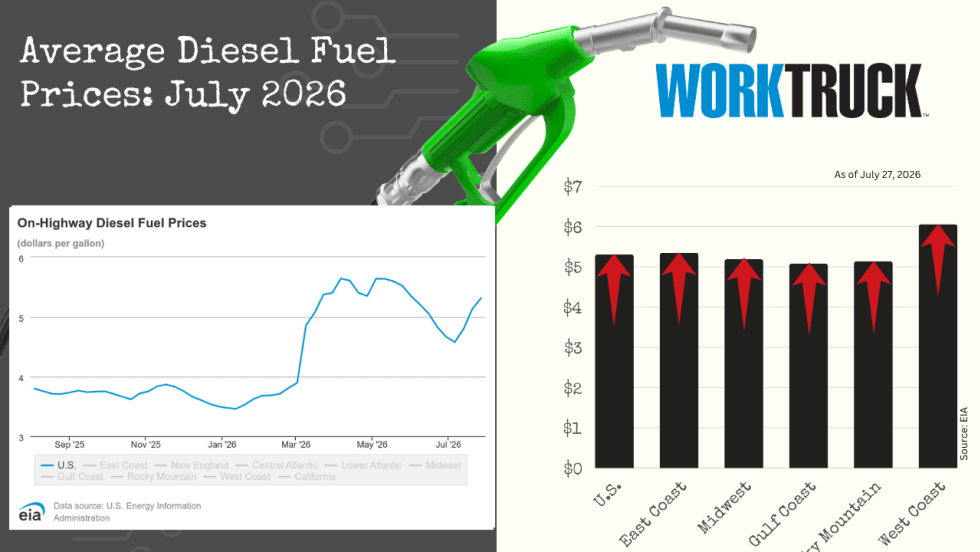
July Diesel Trends Update
The average price of a gallon of diesel increased again this week, and the EIA reported a new national average of $5.31 at the start of the week.
Read More →
WEX Brings Standard Fleet's Connected Vehicle Platform to Fleet Customers
This week’s product launch with Standard Fleet’s connected vehicle platform reflects WEX Venture Capital's strategy of turning startup innovation into customer solutions. Standard Fleet is now available to WEX fleet customers.
Read More →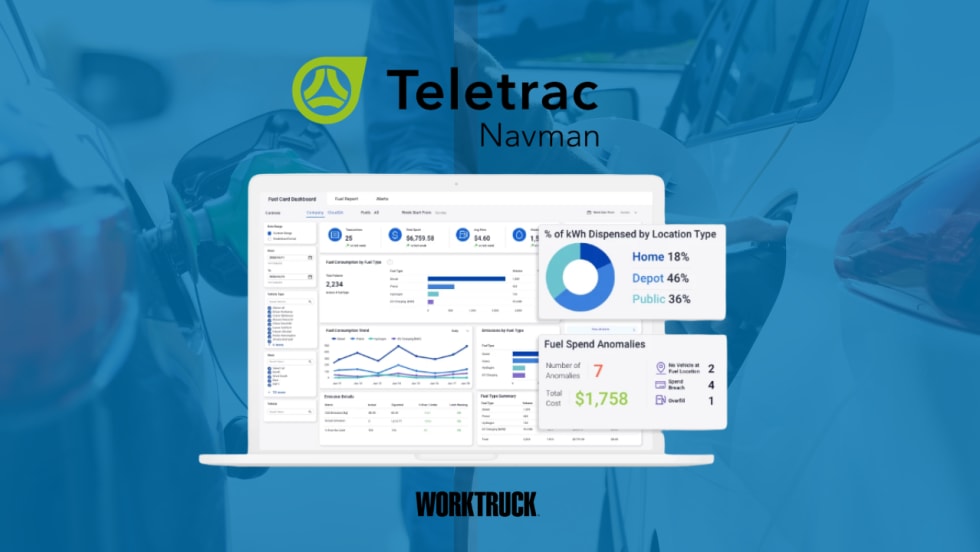
Teletrac Navman Adds Mixed-Energy Fleet Tools to TN360
The new Energy Hub combines fuel transactions, EV charging data, vehicle range, and energy costs in one dashboard for fleets operating multiple vehicle and energy types.
Read More →
WEX DriverDash adds CITGO, Expands Nationwide Access for Fleets
The DriverDash mobile payment app, by WEX, has been integrated into the CITGO merchant network, which means WEX has expanded its U.S. station footprint with the addition of approximately 4,000 CITGO locations.
Read More →
Mixed Energy Fleet Tips for Balancing EVs, Gas and Diesel Vehicles
Mixed energy fleets are becoming the new normal. Learn how fleet managers are balancing EVs, gas and diesel vehicles while controlling costs and planning for the future.
Read More →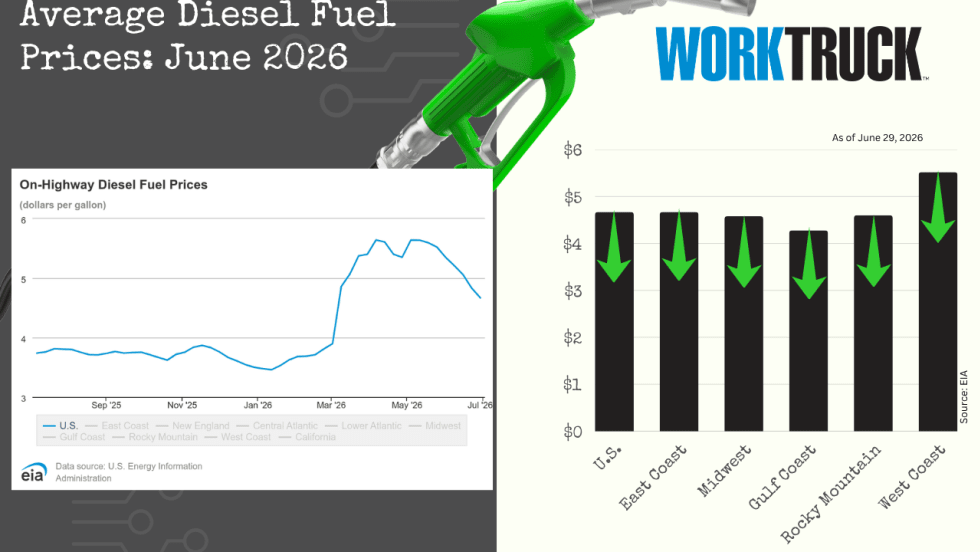
June Diesel Trends Update
The national average price of a gallon of diesel has dropped again, this week by more than 16 cents. All five regions reported lower average prices, ranging from almost 13 cents to more than 28 cents cheaper than a week ago.
Read More →
RoadFlex Launches RoadFlex Direct Open API Platform
RoadFlex Direct connects fuel cards, controls, and data to the telematics and fleet management systems fleets already run, from Geotab and Samsara to Fleetio and RTA, with no separate dashboard or double data entry.
Read More →
The Key to Fuel Efficiency Sits in the Cab
Learn how driver behavior, telematics, coaching, and fuel data can help fleets improve fuel efficiency, lower costs, and reduce emissions.
Read More →