



10 Tips for Getting the Most Out of AI
Fleets are now learning the advantages of artificial intelligence’s capabilities to analyze data and drive efficiency. Samantha Thompson, of Penske Transportation Solutions, provides insights and 10 tips to help fleets get the most out of AI.

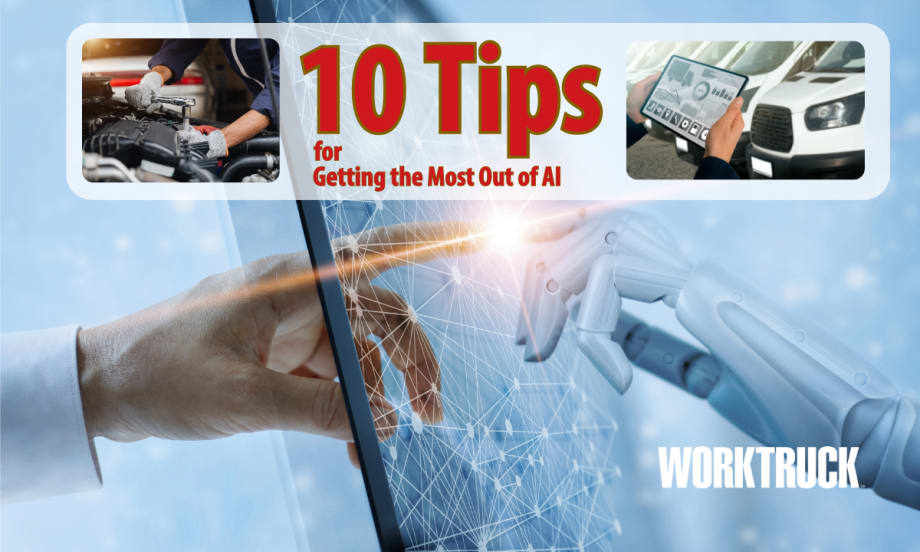
Fleets are either starting to use artificial intelligence, or one day will. Here are tips on how to get the most out of AI when it comes to trucking and transportation.
Photo: Work Truck
As fleets strive for efficiency, making data-driven decisions can be time-consuming. Just as artificial intelligence (AI) is moving into nearly every facet of life, it too is finding its place in the transportation industry with the prospect of helping handle and interpret all that data.
So, how can fleets get the most out of AI?
Well, maybe you could pose that question to ChatGPT.
However, a far better source to field that question is Samantha “Sam” Thompson, vice president of customer success and fleet telematics for Penske Transportation Solutions.
“In short, I geek out about technology all day and help our customers realize the value of technology, help them get value from that technology, and achieve their desired outcomes with technology,” explained Thompson, who has been with Penske for well over a decade.
She quickly pointed out data is great, but it's only as useful as a human being can make it actionable.
“While data is a wonderful thing, information is better. Insights are what we're after. I think AI allows us to sift through an enormous amount of data so that we can get to those insights and start to inform decisions based on the information in front of us,” Thompson said.
When did AI start to really take hold in trucking and transportation?
“I don't know that it quite has taken hold, but I think it's on its way,” she replied.
She explained that with any technology, transportation is usually maybe a year or two behind the consumer market, and AI has been “gangbusters” in the consumer market for the last couple of years.
“I think transportation will take its time, kick the tire so to speak, to kind of really understand it and wrap their arms around it and how they can use it,” she added.
However, she pointed out that technology has been adopted more widely over the past seven years because of the ELD mandate requiring many customers to adopt connectivity.
Do fleet managers go out and pursue AI, or do fleet providers drive the interest in AI?
“At this point, it's more about the technology companies or the service providers saying, ‘Hey, we've got this capability. We think it'd be helpful to you’,” explained Thompson.
She said fleet managers are still trying to figure out AI—what it is and what it does—and ensure that their people are not going to be replaced by AI. She said that often, AI is a bright and shiny new thing, and many may not yet completely understand it because it's new.
“With that said, we definitely want people to be comfortable with it, because it's going to be here, and it actually can be useful to a fleet manager or a fleet operation overall,” Thompson said. “I think it's just going to take more education around what it is and how it can be helpful, and the understanding it's not exactly a threat to human beings. It could be a quite powerful tool.”
Demystifying AI
She said part of demystifying AI is educating people that it will not take their jobs. Instead, they have to understand how AI can ultimately enhance human capabilities, not replace them in job roles.
Where will AI help?
Thompson said AI can help streamline processes, sift through a ton of data, and maybe eliminate some of the redundant things humans do, freeing humans to be more impactful in other areas. She pointed out that AI can also possibly supercharge people by enabling them to analyze large volumes of data that it takes to manage a fleet with a lot of information, a lot of moving parts, and a lot of people and things to track.
What fleets are early adopters of AI?
“I would say for sure the larger fleets were on the forefront of adoption, but even they are still learning and looking to adopt AI in a meaningful way for their businesses. I don't think anyone's rushing to just get it because it's been a buzzword for some time,” Thompson explained. “They're really looking for practical use cases that are meaningful to them.”
As she pointed out, although AI can help fleets of all sizes, larger fleets tend to adopt new technologies sooner for two reasons. First, they often have larger budgets to spend on things like technology. Second, they have the staff and talent available to take on technology.
Where is AI headed in transportation in the next five or 10 years?
Thompson said she thinks AI in fleets will continue to mature, and already, there is a lot of significance around how AI can help with maintenance and improve vehicle uptime.
“We've got a number of use cases internally, most of them around maintenance. That's the most tangible and I think impactful thing that we can leverage it for today, and for the next couple of years beyond that, as well as optimizing things for drivers, fuel consumption and so on,” she said.
Thompson clearly has her finger on the pulse, figuratively speaking, of AI. She works with fleets on technology every day and has offered 10 tips for getting the most out of AI.
Here is what Thompson suggests:
1. Use AI to streamline administrative processes.
Administrative tasks can often be tedious and time-consuming. To reduce administrative processes, fleet managers should consider connecting their fleet operations with AI technology to automate these duties and leverage real-time insights into vehicle performance.
2. Analyze large datasets with AI to be proactive in maintenance and decrease downtime.
Recent industry research found that 77% of transportation professionals are more likely to rely on historical, annual forecasting, and industry benchmark reports to inform their planning and procurement decisions. This manual, time-consuming process is unable to provide fleet managers a holistic view of how their fleet is performing in comparison to similar fleets. New industry technology, such as Penske’s Catalyst AI platform, is a great tool because it provides fleet managers with large datasets to help them better evaluate the true performance of their fleets and, ultimately, inform changes to optimize their operations.
3. Use AI to optimize routes for drivers.
AI can analyze historical data, traffic patterns, and external factors — such as traffic, weather, and shipper or receiver delivery constraints — to optimize route planning and scheduling. More efficient routing can reduce fuel consumption, improve delivery times, and cut costs.
4. Use AI to measure and identify ways to improve fuel consumption.
No matter your fleet size, fuel is often a common expense. Investing in technology that has the ability compare their fleet’s fuel efficiency over time compared to similar fleets can help to pinpoint areas for fuel savings. For fleets that are underperforming, managers can get insights into metrics that are likely affecting fuel efficiency. Unlike a static industry report that offers basic fuel benchmarks, AI-based technologies like Catalyst AI provides actionable insights that are relevant to fleets hauling a variety of goods.
5. Use AI to monitor fleet utilization, comparing performance across vehicles.
It is important to look for tools that use data and machine learning to deliver precise, actionable insights for your fleet. Whether you manage a small fleet or oversee dozens or hundreds of vehicles, it is crucial to use tools that compare your fleet’s performance to fleets that operate similarly to help provide insights to better optimize fleet operations and reduce costs.
6. Reduce costs and enhance efficiency by monitoring truck data with AI.
Right now, fleets face many obstacles, including the increased cost of labor, equipment expenses, increased interest rates, rising operational costs, and so much more. While managing and level-setting costs are a top priority for many fleets, managers who consider incorporating new technology into their fleets have a unique opportunity to address rising prices and potential issues before they disrupt operations.
7. Use AI to help your team find relevant and actionable insights quickly and easily.
From improving roadside assistance to automating compliance tasks, technology integrations simplify the complexities of fleet management, allowing fleet managers to focus on what matters most — Keeping your business moving.
8. Automate fleet metrics reporting with AI for more accurate results.
I often hear fleet managers ask the same question repeatedly, “How am I doing?” Measuring and tracking the multitude of factors that indicate how efficient a fleet is likely is an incredibly difficult task. With innovative technologies like Catalyst AI that capture, organize, store, and analyze the millions of data points, fleet professionals can get these insights right at their fingertips to help them see the opportunities that traditional benchmarks are unable to provide.
9. Improve decision-making with AI-driven insights from fleet data.
AI has the power to greatly impact a fleet's efficiency and functionality and fleet managers’ positive impact on a business. By combining real-time vehicle data with their own operational expertise, fleet professionals will be able to receive actionable information so they can manage and optimize their fleets accordingly.
10. I know it’s hard, but trust the tech.
With the trucking industry taking a more methodical approach to tech adoption, it is understandable why fleet professionals are unsure about AI. Instead, see AI as a tool that enables you and your team to work faster and enhance your skills and experience. This technology has the power to combine AI and human ingenuity to put AI results into action for fleets
More Operations

Why Fleet Leaders Have to Keep Asking Why
What if the biggest fleet improvements start with one simple question? After decades managing budgets, policies, technology, teams, and some of the largest fleet operations in the business, Jeff Hurrell shares why fleet leaders should keep asking “why” before deciding what comes next.
Read More →
Drones, EV Reality, Truck Production & Smarter Fleet Operations Lead This Month
August’s biggest work truck stories go beyond the vehicle, from disaster-response drones and EV reality checks to truck production, roadside uptime, and smarter fleet operations.
Read More →
Team Fletcher Takes 2nd Overall at the Corporate Soap Box Derby
Team Fletcher came to Akron as a rookie and left with a win over Team Brown, a second-place overall finish, and $22,000 raised for The Hourglass Foundation. See how race day unfolded.
Read More →

Shades of Fleet Call for Voices: Fleet's Hidden Heroes
Fleet’s hidden heroes are often the ones keeping everything moving behind the scenes. September’s *Shades of Fleet* is looking for dispatchers, coordinators, parts specialists, and other support pros to share their stories.
Read More →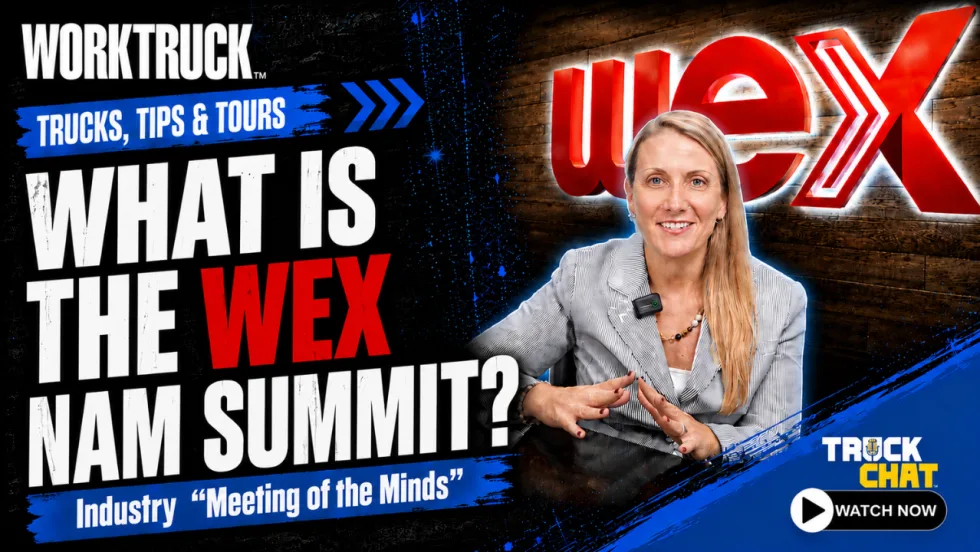
What is the WEX NAM Summit?
What makes the WEX NAM Summit different from other fleet industry events? It's a meeting of the minds that brings fleet and mobility leaders together to discuss emerging trends, AI, new solutions, best practices, and the future of the industry.
Read More →
With 293% 3-Year Revenue Growth, Fleetworthy is One of the Fastest-Growing Private Companies in the U.S.
Fleetworthy has been named to 2026 Inc. 5000 list of fastest-growing private companies for the second consecutive year. It ranked No. 2 overall in the Albany-Schenectady-Troy, New York metro area.
Read More →
EV Fleet Reality, Ford Fathom, Robots, and Smarter Fleet Tech Lead the News
EV fleet lessons, Ford’s new Fathom electric truck, robots, manufacturing shifts, and smarter fleet technology headline this week’s Truck Chat Cheat Sheet.
Read More →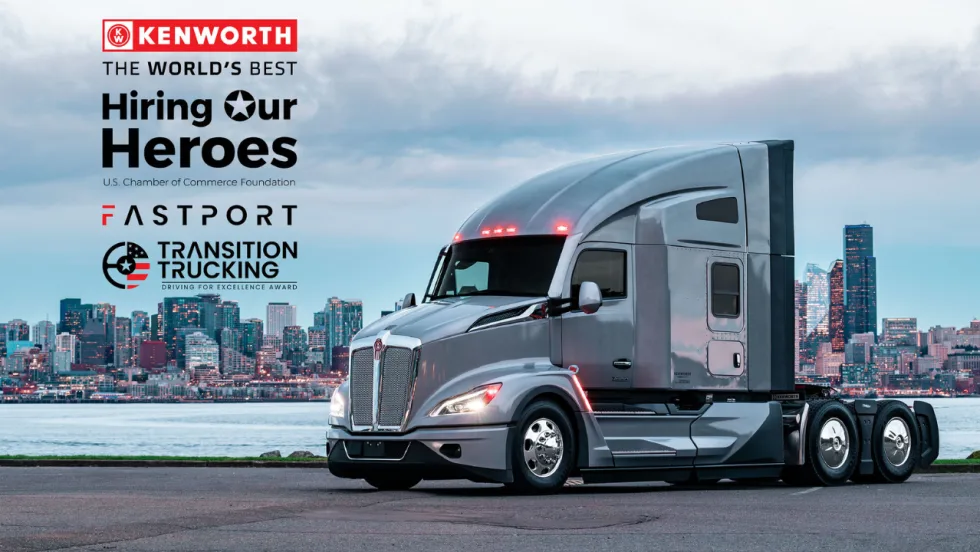
Elite 11 Semi-Finalists Announced for the 2026 Transition Trucking: Driving for Excellence Award
The 11 semi-finalists for the 2026 Transition Trucking: Driving for Excellence award have been announced. The award honors the achievements of military veterans who have transitioned into careers in the professional trucking industry.
Read More →
Are You Saying These Work Truck Company Names Correctly?
Think you know how to pronounce the biggest names in work trucks? We asked the companies themselves to settle it once and for all.
Read More →
Why Reactive Fleet Management Is Becoming Too Expensive to Sustain
Research highlights a growing need for proactive management strategies to address rising costs in fleet operations effectively.
Read More →