




Keep Reading: Increasing Safety Through Telematics
The Second Trip and What Missing Tools Really Cost a Service Business
For service fleets, missing tools and equipment can lead to second trips, lost technician time, higher operating costs, and delayed jobs. Equipment tracking can help HVAC, plumbing, electrical, landscaping, and other service businesses improve visibility and reduce downtime.
by Alan Niesel, Azuga
October 8, 2026
Missing tools and equipment can lead to extra trips, lost technician time, delayed jobs, and added operating costs for service fleets.
Credit:
Work Truck
5 min to read
Every service company has a version of the same morning. A tech arrives at a job, opens the back of the van, and the one thing they need is not there. Maybe it went home in someone else’s truck. Maybe it is still sitting at yesterday’s job site. Maybe it was never loaded.
What happens next is usually the same: a phone call, a drive back to the shop or across town, an apology to the customer, and a schedule that quietly falls apart for the rest of the day.
Nobody codes that as a loss. There is no line item on the P&L called “second trip.” But it can be one of the most expensive recurring events in a service business, and one that is often preventable.
Why the Shop Whiteboard Stops Working
Small equipment moves differently than vehicles. A van has a fixed home, an assigned driver, and often a GPS unit. A pressure gauge, ladder, blower, sewer camera, or compaction plate has none of those things. It gets loaded onto whichever truck is closest, used at two sites in a day, handed to a helper, and set down somewhere.
Many service companies manage this with a sign-out sheet, shared spreadsheet, or institutional memory sitting in a dispatcher’s head. That can work with a smaller operation. But as the crew grows, the tracking system can quickly turn into people asking each other where a tool went.
Making Small Equipment Visible
Azuga positions its Equipment Beacons as a relatively low-cost way to extend visibility to tools and smaller equipment. The beacons emit a Bluetooth Low Energy 5.1 signal that can be picked up by Azuga GV620 asset trackers installed on vehicles and trailers. The tracker’s cellular connection then relays the beacon’s location back to Azuga Fleet.
According to Azuga, a single GV620 can detect and report on 50 beacons simultaneously, allowing one tracker to cover multiple pieces of equipment carried in a van or truck.
For users, the basic appeal is knowing where equipment is without having to track it down manually. In a December 2024 G2 review, DeShaun W. described the benefit simply: “It benefits me by letting me know where vehicles and equipment is at all times.”
The beacons weigh about 24 grams and measure roughly 4.6 cm across, small enough to attach to equipment without taking up much space. They also carry an IP67 rating, meaning they are protected against dust and temporary immersion in water. That matters when equipment spends its life in truck beds, job sites, crawlspaces, and other less-than-gentle environments.
Setup involves three main steps: entering the equipment details and organizing items by category, scanning the beacon’s barcode to assign it, and then viewing the item on the Fleet live map or in Azuga Fleet Mobile.
The status model is fairly simple. A beacon currently detected by an asset tracker is shown as with that tracker, and its location is tied to the tracker’s location. A beacon that is no longer being detected is shown as dropped, with Azuga Fleet displaying where it was last seen.
What Equipment Visibility Changes in Daily Operations
For a service fleet, the real value comes down to knowing where equipment is before someone has to go looking for it.
Dispatch can see which equipment is already at a job site and what still needs to be brought before the crew leaves. Equipment can also be viewed by location or within a geofence, turning “who has the auger?” into a search instead of a string of phone calls.
History and utilization reports can also show which items are frequently used and which have been sitting in the yard for months. That gives fleet and operations teams another data point before approving a replacement or additional purchase.
There is also an accountability piece. Pete S. noted in an August 2025 G2 review that Azuga was “helping us stay organized with our reporting and helping us save money by keeping everyone accountable for their own pieces of equipment.”
That does not make equipment tracking a theft-prevention system. Azuga notes that the technology can help discourage theft and show where equipment was last detected and which team had it, but it cannot prevent every theft or guarantee that stolen equipment will be recovered.
For fleets, that makes equipment tracking primarily a visibility and accountability tool. Theft deterrence can be an added benefit, but it is not the same as theft prevention.
What Missing Equipment Can Actually Cost
Industry-wide figures on small-tool loss are weaker than they sometimes appear. Commonly cited figures suggesting companies lose 5% to 10% of portable tool inventory annually, at a cost of $500 to $3,000 per item, can often be traced back to tracking vendors’ own benchmark calculators rather than independent research. Those numbers are better treated as vendor estimates than established industry benchmarks.
There is more documentation around equipment theft. The National Insurance Crime Bureau, working with the National Equipment Register, recorded 11,625 heavy equipment thefts reported to law enforcement in 2014.
The two organizations have also estimated annual U.S. losses from construction equipment theft at between $300 million and $1 billion, with fewer than one-quarter of stolen machines recovered. However, both stopped publishing detailed annual reports after 2016, so these figures should not be presented as current data.
For a service business, the more useful number may be one it can calculate internally.
The Bureau of Labor Statistics puts the median annual wage for HVAC mechanics and installers at $61,010 as of May 2025, or roughly $29 an hour before overhead, vehicle costs, and other employee expenses. A technician who loses 90 minutes to a return trip has consumed roughly $45 in wages alone.
That is only part of the cost. There is also the job that gets pushed to another day, the billable time that disappears, overtime needed to catch up, additional vehicle operating costs, and the customer whose schedule was disrupted.
Fleets can start by looking at how many second trips dispatchers logged in the past month and why they happened. If missing tools and equipment are part of the pattern, the cost of not knowing where something is may be much larger than the price of the tool itself.
Fewer missing tools are a good outcome. Fewer second trips are the outcome that can show up in productivity, customer service, and revenue.

Credit:
Work Truck | Azuga
Quick Answers
Missing tools can lead to second trips, lost technician time, higher operating costs, and delayed jobs, affecting the efficiency of service fleets.
*Summarized by AI
Subscribe to Our Newsletter
More Technology & AI
GeoFencing Adds to Your Truck Security Arsenal
Geofencing is a familiar fleet tool today, but its early adoption marked a major shift in vehicle tracking, route monitoring, and the debate over employee privacy.
Read More →
Geotab Data Shows Regional Trucking Growing Faster as Last Mile Routes Get Denser
Geotab's first U.S. supply chain report finds stable long-haul activity, stronger regional freight movement, tighter hub-and-spoke utilization, and more last-mile trips on shorter routes.
Read More →
When Fleet Technology Helps and When It Just Adds Complexity
New technology can help fleets work smarter, but only if it solves the right problem. Lauren Fletcher talks with AP Fleet’s Alex Coveney about innovation, AI, data, and knowing when a new solution is actually worth adopting.
Read More →From Our Partners
Basic Tracking vs Next Generation Fleet Technology
Sponsored by AT&T Business
5 Facts Every Fleet Manager Should Know About Embedded Telematics
Sponsored by Stellantis/Mobilisights
How AI Video Telematics Boosts Driver Safety and Helps to Avoid Unnecessary Costs
Sponsored by Verizon Connect

Charting the 8 Bottom-Line Benefits of Workforce Optimization
Sponsored by Verizon Connect

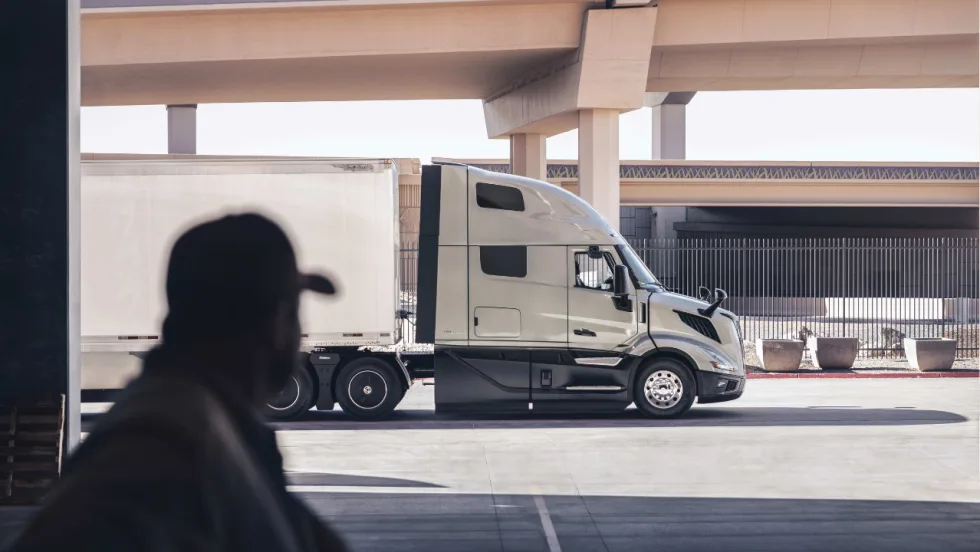
Volvo Trucks’ 'Lock and Leave' Software Updates Go Live Across North America
Unattended over-the-air software updates are now available in Volvo trucks across the U.S. and Canada. The new capability lets trucks stay current with the latest software without interrupting operations or requiring a dealership visit.
Read More →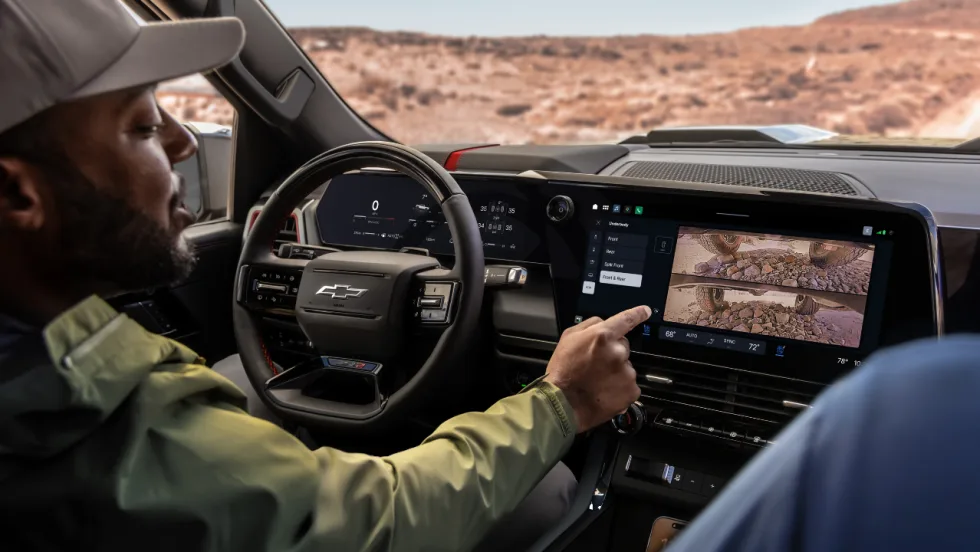
GM Brings New Truck Focused Interface to 2027 Silverado and Sierra
GM's new pickup interface puts trailering data, camera views, vehicle controls, and smartphone integration closer to the driver in the 2027 Silverado and Sierra.
Read More →
Samsara Driver Perks Expands Rewards Beyond the Long Haul Driver
Samsara’s new driver rewards program was built with a broader professional driver in mind, including employees who split their day between driving, job sites, service calls, and other work.
Read More →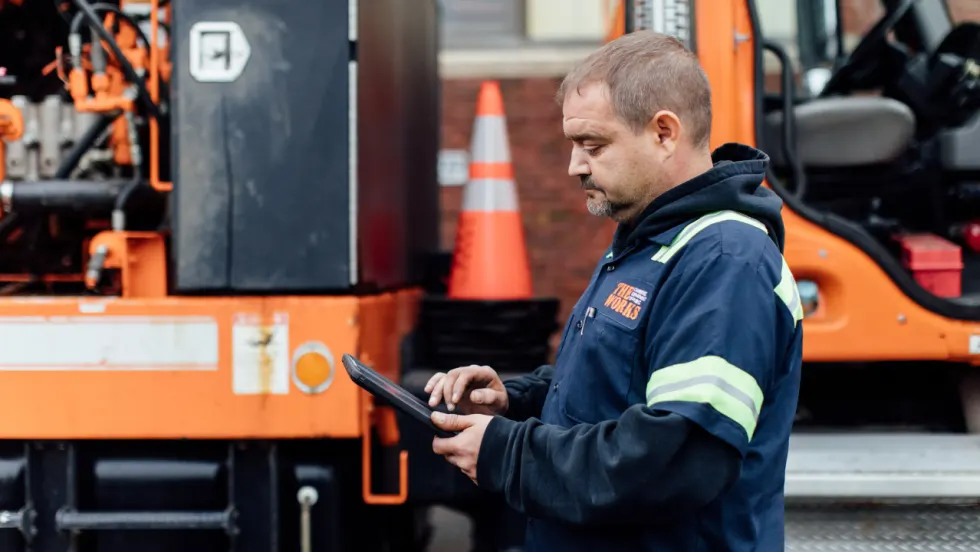
AI Service Advisor Aims to Cut Fleet Repair Downtime
Fleetio said its AI Service Advisor can help fleets cut repair downtime by an average of 2.5 hours per repair while reducing manual maintenance work.
Read More →
Verra Mobility Launches AI-Driven Title & Registration Solution
Verra Mobility has launched a new AI-driven Title & Registration platform to help fleets move vehicles from acquisition to the road the same day while reducing compliance risk.
Read More →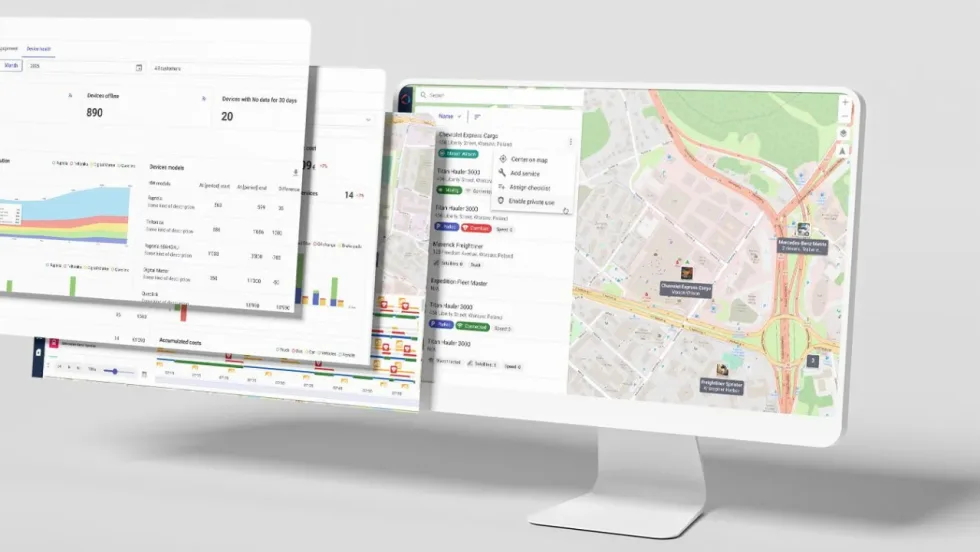
Wialon Unlocks OEM Data to Give Fleet Owners Data Ownership & Operational Clarity
Wialon has introduced hardware-free OEM integration as the EU Data Act accelerates the shift in vehicle data access across the fleet industry in many countries.
Read More →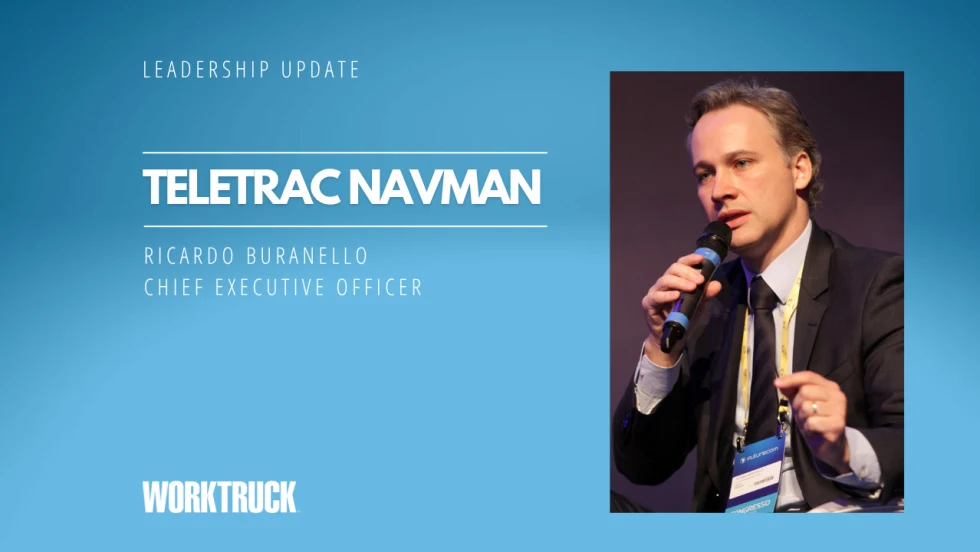
Teletrac Navman Promotes New CEO from Within
Teletrac Navman’s next CEO, Ricardo Buranello, has served as the company’s chief financial and operating officer. He brings deep financial and operational expertise, a strong strategic orientation, and an intimate knowledge of the business to his new role.
Read More →