





Fleet 101: Understanding Direct vs. Port Injection in Engines
New Direct-Injection Propane Tech for Truck Fleets
Through a joint partnership between Stanadyne, Katech, and the Propane Education & Research Council, this new technology will drive the transportation industry further down the path to zero.
September 18, 2023
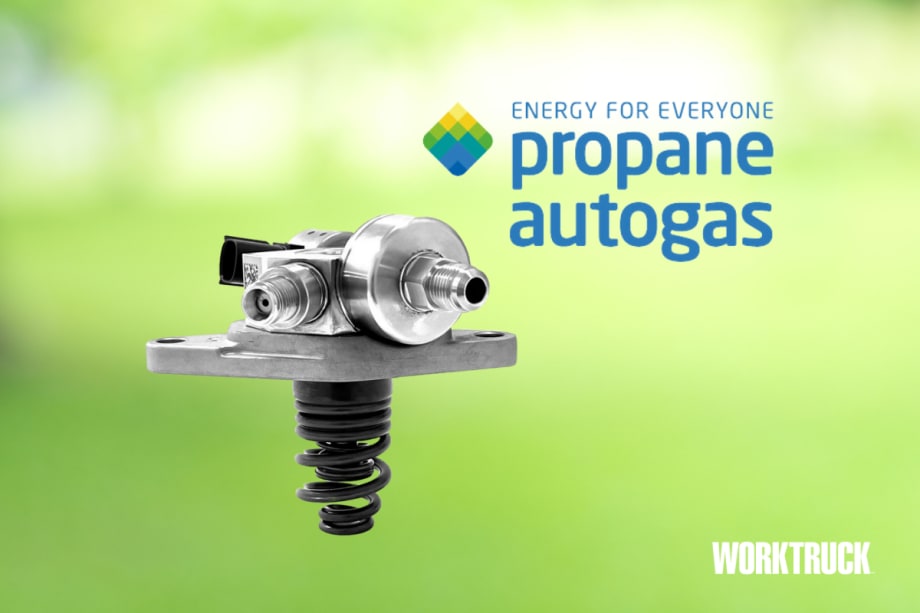
The new solution combines Stanadyne’s direct injection fuel pump and injector system with Katech’s vapor lock technology.
Photo: Work Truck | PERC
3 min to read
Fleet owners looking for a low emission, high efficiency, and affordable engine solution will soon have new technology to turn to thanks to a partnership between Stanadyne, Katech, and the Propane Education & Research Council.
“The direct liquid injection system for high-vapor pressure gases such as propane autogas has been technically elusive until this joint partnership between PERC, Katech, and Stanadyne materialized,” said PERC director of research and sustainability, Dr. Gokul Vishwanathan. “This technology will be a significant enabler for high-efficiency and low-emission propane and renewable propane-powered engines and hybrids for the on-road and off-road markets.”
The new solution combines Stanadyne’s direct injection fuel pump and injector system with Katech’s vapor lock technology to create the industry’s first medium-duty engine system that can deliver propane autogas at a constant 350-bar pressure directly into the engine. It’s all part of the three company’s combined decarbonization mission.
“This partnership has allowed Katech to focus more directly on the development and advancement of vapor lock systems, propane direct injection engine controls, and future propane direct injection engine applications,” said Katech lead engineer Eric Suits. “Collectively, we have produced a truly complimenting control strategy and delivery system necessary to ensure reliable propane direct injection operation under all operating conditions.”
The breakthrough engine technology overcomes vapor lock, a common technical issue when liquified gases vaporize, which can interrupt fuel pump operation. By finding a solution, the new technology improves engine performance and efficiency. The combined system fueled a standard 6.6L GDI engine during a 250-hour performance and durability test. The tests successfully demonstrated that the technology works with existing engines and that propane autogas can be a low-carbon, high-performance replacement for gasoline and diesel engines.
“Internal combustion engines are the workhorses of our economy, and this advancement in technology will help them run much more sustainably using renewable fuels,” said Stanadyne president David Zimmerman. “The opportunity to partner with PERC and Katech on this initiative aligns with our commitment to developing solutions bridging the significant adoption gap between fossil-fueled propulsion and low-carbon and zero-carbon fueled vehicles.”
The new technology will help fleet owners exceed the ultra-low emissions mandates going into place in 2027. Compared to diesel, propane autogas reduces harmful nitrogen oxide emissions by 96% and provides a five to 10% reduction in carbon dioxide emissions. The engine technology can also utilize renewable propane, which has a carbon intensity four times lower than conventional diesel.
“In the short term, this engine technology provides medium-duty fleet owners with a decarbonization solution to meet their immediate goals,” said Gavin Hale, director of business development at PERC. “But the real breakthrough is the long-term impact this will have to provide fleets with exactly what they need — a powerful engine that exceeds sustainability goals and reduces fuel and operation costs to provide the lowest total cost of ownership of any energy source.”
More Green Fleet

Fleet Forward Conference Introduces One-Day Passes for 2026
New one-day registration gives fleet professionals the flexibility to attend Tuesday, Wednesday, or Thursday, with passes available for $199 through Sept. 18.
Read More →
CALSTART Rebrands as Catalyst Mobility, Will Combine with Forth in 2027
CALSTART has rebranded as Catalyst Mobility and will combine with Forth at the start of 2027. The new organization said it is poised to become one of the world's largest, strongest, and most impactful clean transportation nonprofits.
Read More →
Electric Truck and Charging Programs to Boost Sustainability at NY & NJ Ports
Together, the Port Authority of New York and New Jersey and CALSTART will electrify drayage and terminal operations serving the East Coast’s busiest container port. A pair of incentive programs totaling $45 million has launched to accelerate adoption of zero-emission drayage trucks and terminal tractors.
Read More →
Xos Hub Surpasses One Gigawatt-Hour of Energy Delivered in the Field
A single Xos Hub has surpassed one gigawatt-hour of energy across more than 33,600 charging sessions in the field, demonstrating performance that supports Xos' expansion across new products and markets.
Read More →
Carrier Transicold Launches All-Electric Vector 8200 TRU for Diesel-Free On-Site Cold Storage
Carrier Transicold’s first engineless multi-temperature TRU helps fresh- and frozen-food fleets add supplemental cold storage capacity during seasonal peaks.
Read More →
Narro Trucks Introduces Electric Utility Vehicle
Narro Trucks officially launched its operations on Aug. 20 and hosted a ride and drive to showcase its electric truck, which will be produced in Virginia.
Read More →
Samsung SDI Takes Full Control of GM Battery JV as Indiana Plant Pivots to Energy Storage
Samsung SDI is taking full control of its Indiana battery plant with GM, marking a major shift from the EV-focused joint venture Charged Fleet first covered in 2023.
Read More →
NWSA Taps CALSTART to Administer Zero-Emission Drayage Assistance Program
CALSTART will provide free technical assistance services to drayage fleets serving the Ports of Seattle and Tacoma and looking to transition to cleaner technologies and help decarbonize freight hubs.
Read More →
EV Fleet Reality Check: What Operators Wish They Knew Before Electrifying Their Work Vans
Electric work truck upfits bring new compatibility questions. Learn how parts availability, OEM guidance, power demands, and route planning can affect fleet performance.
Read More →
Peterbilt Expands Sourcewell Partnership with Electric Vehicle Lineup
Peterbilt Motors Company’s cooperative purchasing agreement with Sourcewell and its Canadian partner, Canoe Procurement Group, now includes including Peterbilt's battery-electric vehicle lineup.
Read More →