




What Republic Services Learned Moving Electric Trucks Beyond the Pilot
With 250 electric refuse trucks now in service, Republic Services is learning that scaling a new powertrain depends as much on routes, drivers, technicians, and daily operations as it does on the truck itself.
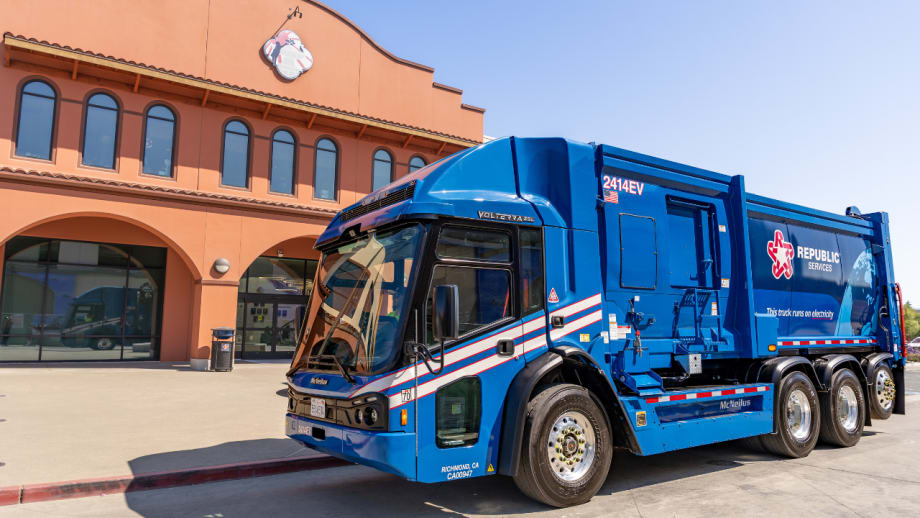
Republic Services worked with McNeilus to develop its Volterra electric collection trucks, bringing drivers, technicians, and operations teams into real-world testing before expanding deployment.
Republic Services
- Republic Services has integrated 250 electric refuse trucks into their operations, gaining insights beyond the initial pilot phase.
- Successful scaling of electric trucks relies on understanding the interplay between routes, driver behavior, and maintenance needs.
- The transition emphasizes that daily operations and technical support are as critical as the vehicle technology itself.
*Summarized by AI
A pilot can tell a fleet whether a new truck can do the job. It can tell you whether the vehicle can finish the route, how it handles the load, what drivers think after a few weeks behind the wheel, and whether the technology holds up once it leaves the controlled environment of testing and starts doing real work.
What a pilot cannot fully show is what happens after the truck works.
Republic Services has reached that point with its electric refuse fleet. The company began testing electric collection trucks in 2020 and has since grown to 250 electric trucks operating at 35 sites across 11 states. By the end of 2025, more than 180 were already in service, marking a fairly quick transition from early testing to regular customer routes and broader deployments.
At that scale, the question is no longer simply whether an electric refuse truck can complete a demanding route. The bigger challenge is making sure the operation around that truck is ready to support it every day, without treating it like a special project that needs extra attention just to stay on the road.
“One of the biggest lessons we've learned is that successfully operating electric refuse trucks at scale requires much more than deploying the vehicles themselves,” said Brett Rogers, vice president of operations technology at Republic Services. “As we've expanded the fleet, we've seen firsthand the importance of coordinating charging infrastructure, utility partnerships, technician training, driver readiness, route planning and long-term maintenance to support reliable daily operations.”
For vocational fleets watching electric trucks move into more applications, that distinction matters. Republic Services is no longer testing whether the technology can work in theory. It is figuring out what has to happen inside a working fleet organization to make that performance repeatable.
Start With the Work
Waste and recycling collection has several characteristics that can work in favor of electrification. Routes are generally predictable, vehicles stop and start constantly throughout the day, and trucks typically return to the same facility when the route is finished. Republic Services has found that those operating patterns align well with what its electric trucks can do.
“We've seen our electric collection trucks consistently deliver strong performance in the demanding conditions that are characteristic of recycling and waste operations,” Rogers said. “One of the things we've validated through real-world operations is that recycling and waste collection is particularly well-suited for electrification.”
That does not mean the company simply replaces a diesel truck with an electric truck and sends it out on the same assignment.
Republic Services evaluates route characteristics, mileage, payload requirements, and charging availability together when deciding where to place an electric truck. Energy management becomes part of the vehicle assignment process because the fleet needs to know the truck can complete the work expected of it and still fit within the operating window available each day.
For work truck fleets, that is one of the more transferable parts of the Republic Services experience. A truck running a predictable route and returning to its home facility every evening presents a very different electrification case from a service truck responding to emergency calls, a utility vehicle covering changing territory, or a work truck towing unpredictable loads.
The right place to start is not with the powertrain but with the work. Ask yourself these questions:
- Where does the truck go?
- What does it carry?
- How long is it away from the yard?
- How much variation exists from one day to the next?
- What happens when the planned route changes?
Those are not new questions for fleet managers. Electrification simply makes it harder to ignore the answers.
Drivers Helped Shape the Truck
Republic Services also brought drivers, technicians, and operations teams into the development process rather than waiting until the trucks were ready for full deployment.
Beginning in 2022, the company worked closely with McNeilus on development of the Volterra electric collection truck. Republic Services employees provided feedback on route performance, safety, visibility, maintenance, and the overall driver experience as the vehicle moved through real-world testing.
That hands-on involvement helped the company determine whether the truck could stand up to daily collection work and where changes might be needed before larger orders were placed. As the automated side loader proved itself in service, the program expanded into additional applications, including the McNeilus Volterra ZFL front loader introduced in 2025.
The process also gave Republic Services an early view into something every fleet manager introducing unfamiliar equipment eventually has to deal with: driver acceptance.
Rogers said drivers frequently point to the quieter cab, improved visibility, and advanced safety technologies as positives. Regenerative braking and different handling characteristics still require an adjustment period, but training and ongoing feedback have helped drivers become more comfortable with the vehicles.
“One of the most encouraging signs has been seeing drivers who were initially skeptical become strong advocates for the trucks after gaining firsthand experience with them,” Rogers said.
There is a useful fleet management lesson buried in that transition. Skepticism is not always something to overcome as quickly as possible. Vocational fleet drivers spend more time with the truck than almost anyone else in the organization, and they tend to find the things that work and the things that do not long before those issues appear in a spreadsheet or management report.
Giving them a role in the process can help a fleet separate simple resistance to change from legitimate operational concerns, while also building confidence when the new equipment does make the job better.
A Pilot Can Hide the Hard Parts
Small pilots are useful because fleets can surround a handful of vehicles with extra attention, from hands-on driver training to direct maintenance support and quick problem-solving when something does not go as planned. That kind of close oversight can help a fleet learn quickly, but it becomes much harder to sustain once the technology begins spreading across multiple routes, locations, and teams.
“What a small pilot can't fully reveal is how all of these elements must work together across multiple sites and markets,” Rogers said. “Operating at scale has shown that when the vehicles, infrastructure and operational teams are aligned, electric trucks can successfully become part of everyday collection service.”
That may be the real dividing line between testing a technology and adopting it. At some point, the truck has to stop being the EV everyone is watching and become another fleet asset expected to show up for work.
For Republic Services, reaching that point has required more coordination around route planning, driver readiness, maintenance, training, and the support systems surrounding the vehicle. It also means learning which processes that worked for a few trucks need to become standard operating practices before hundreds can be supported consistently.
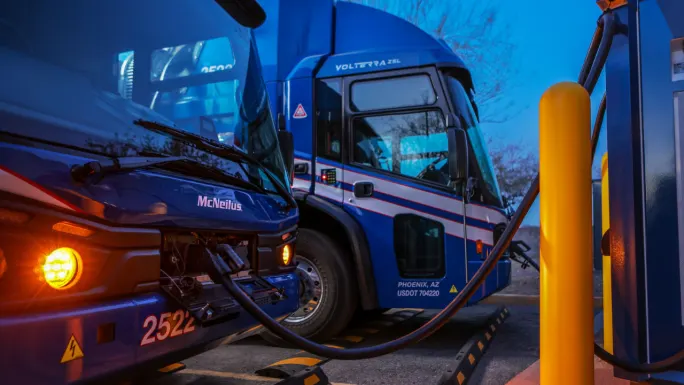
Charging infrastructure has become a key part of Republic Services’ electric truck deployment as the fleet has grown to 250 electric refuse trucks operating at 35 sites across 11 states.
Republic Services
Maintenance Has to Evolve Too
The maintenance organization has been changing alongside the fleet. Republic Services has invested in technician training, preventive maintenance processes, parts planning, and charging infrastructure support as its electric fleet has grown. The company still expects the same fundamentals from the operation: safety, reliability, and uptime.
“Electrification has enabled our maintenance teams to evolve and expand their capabilities, all while maintaining a strong focus on safety, reliability and uptime,” Rogers said. “As we've grown the program, we've invested in technician training, preventive maintenance processes, parts planning and charging infrastructure support to ensure our teams are equipped to maintain electric vehicles with confidence.”
That point deserves some attention because electric vehicles are sometimes discussed as though fewer moving powertrain components automatically make maintenance simpler. In practice, the work changes rather than disappears. Technicians need different skills, shops need procedures for unfamiliar systems and new safety requirements, and parts planning still matters when a truck is down and waiting to return to service.
As the fleet grows, those capabilities also have to extend beyond a small group of EV specialists so the broader maintenance organization can support the vehicles confidently as part of normal operations.
“As we continue to expand our electric fleet, we've learned that success depends on planning for the entire operating ecosystem, from maintenance and charging infrastructure to technician readiness and operational execution,” Rogers said. “That holistic approach has been critical to supporting uptime and scaling the program effectively.”
For a vocational fleet, that may be a better measure of maturity than the number of trucks purchased. A technology has truly entered the fleet when the organization knows how to support it.
Change Has to Reach the Whole Operation
Republic Services' electric fleet is still growing, but the experience already offers a broader takeaway for vocational fleets considering any major technology transition. The truck may be where the change begins, but it rarely stays there.
A different powertrain can change how vehicles are assigned, how drivers are trained, what technicians need to know, how maintenance is planned, and what managers have to consider before assigning a truck to a route. New safety systems, connected technology, automation, and other major fleet changes can create many of the same ripple effects.
That is why the more interesting part of the Republic Services story is not simply that 250 electric refuse trucks are now operating across the country. It is what had to happen for those trucks to move from a technology project into daily collection service.
“One of the most important lessons from our fleet electrification journey is that the benefits extend well beyond emissions reduction,” Rogers said. “We've seen opportunities to enhance vehicle safety, improve driver experience and reduce noise in the communities we serve, creating value for our employees, customers and the public.”
For fleets considering electric trucks in demanding vocational applications, Rogers comes back to the same idea that has shaped Republic Services' program as it has grown.
“The key is to view electrification as more than a vehicle transition,” he said. “Success requires aligning the right routes, charging infrastructure, technician and driver training, and operational planning.”
Republic Services started by figuring out whether electric refuse trucks could do the work. Six years later, the challenge is broader and, in many ways, more familiar to fleet managers. The truck has to work, but so does everything around it.
Quick Answers
Republic Services has learned that scaling electric refuse trucks involves considerations beyond the truck itself, such as optimizing routes, training drivers and technicians, and adjusting daily operations.
*Summarized by AI
More Sustainability
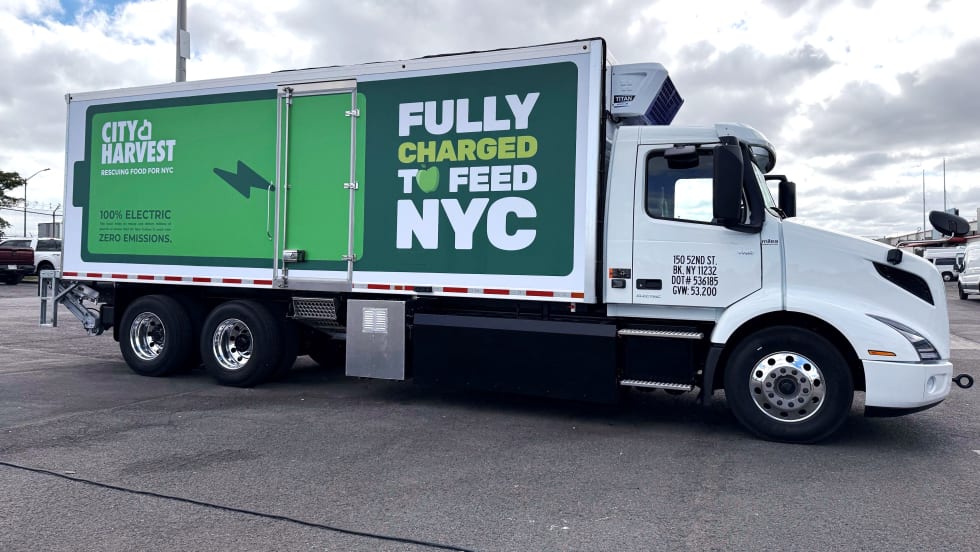
City Harvest Begins Using Volvo VNR Electric Trucks to Rescue Food Across New York City
Volvo Trucks North America and the Bronx Is Breathing project team handed over three new Volvo VNR Electric trucks to City Harvest, which will use the trucks to rescue and deliver food throughout the Bronx and across all five boroughs of New York.
Read More →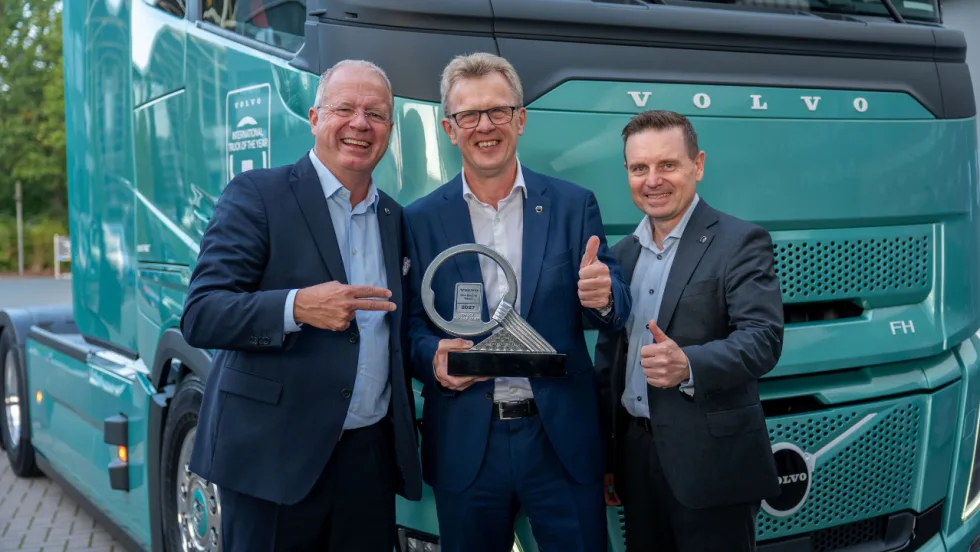
Volvo Trucks Wins International Truck of the Year 2027 for its Global Electric Range
Volvo Trucks' global heavy-duty electric range has been named International Truck of the Year 2027. Since 2019, more than 7,000 electric Volvo trucks have driven more than 310 million miles worldwide.
Read More →
Fleet Forward Conference Introduces One-Day Passes for 2026
New one-day registration gives fleet professionals the flexibility to attend Tuesday, Wednesday, or Thursday, with passes available for $199 through Sept. 18.
Read More →

CALSTART Rebrands as Catalyst Mobility, Will Combine with Forth in 2027
CALSTART has rebranded as Catalyst Mobility and will combine with Forth at the start of 2027. The new organization said it is poised to become one of the world's largest, strongest, and most impactful clean transportation nonprofits.
Read More →
Electric Truck and Charging Programs to Boost Sustainability at NY & NJ Ports
Together, the Port Authority of New York and New Jersey and CALSTART will electrify drayage and terminal operations serving the East Coast’s busiest container port. A pair of incentive programs totaling $45 million has launched to accelerate adoption of zero-emission drayage trucks and terminal tractors.
Read More →
The Smart Way to Build a Mixed-Energy Fleet Isn’t About Picking a Side
Mixed-energy fleets aren’t about picking a winning fuel. Sarah Booth of WEX explains how vehicle data, duty cycles, charging strategy, and real-world costs can help fleets choose the right energy source for each job.
Read More →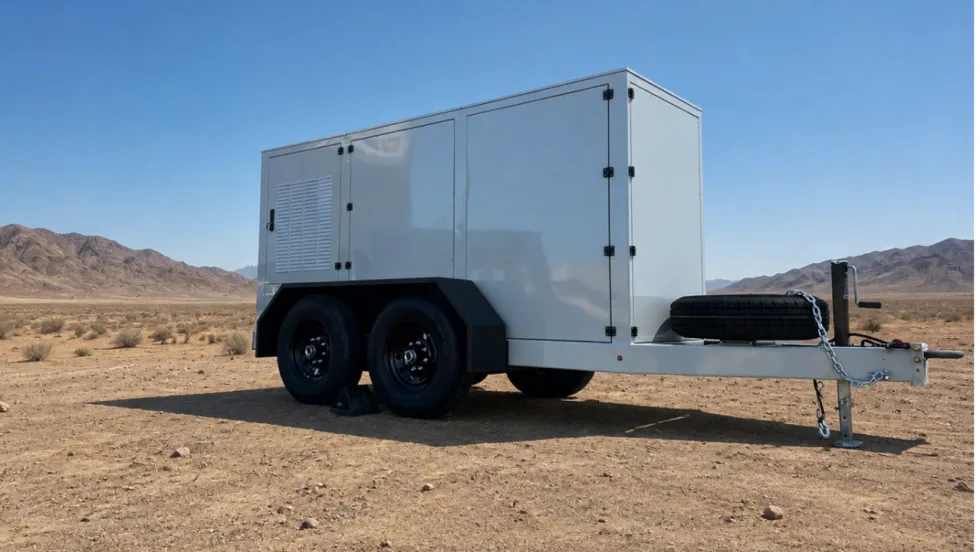
Xos Hub Surpasses One Gigawatt-Hour of Energy Delivered in the Field
A single Xos Hub has surpassed one gigawatt-hour of energy across more than 33,600 charging sessions in the field, demonstrating performance that supports Xos' expansion across new products and markets.
Read More →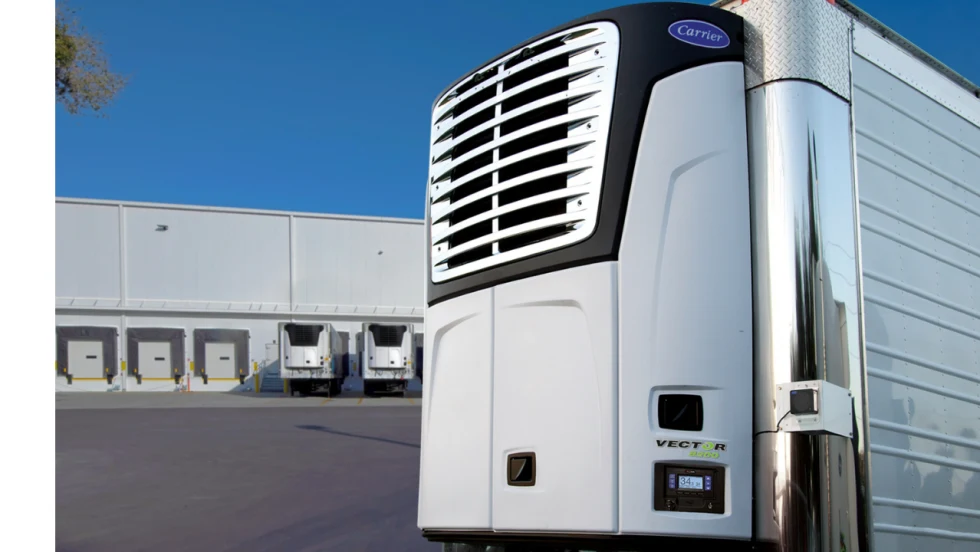
Carrier Transicold Launches All-Electric Vector 8200 TRU for Diesel-Free On-Site Cold Storage
Carrier Transicold’s first engineless multi-temperature TRU helps fresh- and frozen-food fleets add supplemental cold storage capacity during seasonal peaks.
Read More →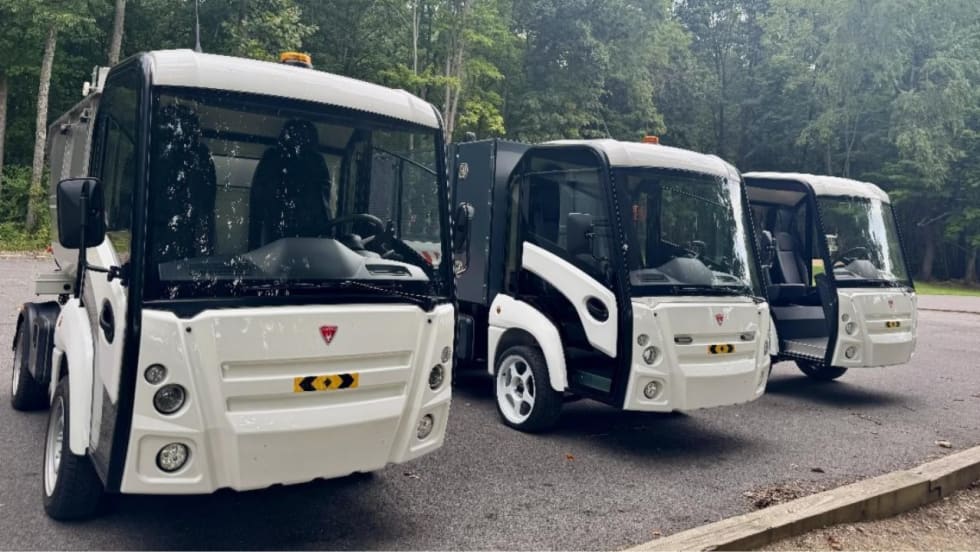
Narro Trucks Introduces Electric Utility Vehicle
Narro Trucks officially launched its operations on Aug. 20 and hosted a ride and drive to showcase its electric truck, which will be produced in Virginia.
Read More →
Samsung SDI Takes Full Control of GM Battery JV as Indiana Plant Pivots to Energy Storage
Samsung SDI is taking full control of its Indiana battery plant with GM, marking a major shift from the EV-focused joint venture Charged Fleet first covered in 2023.
Read More →