





Related: New Nevada Plants to Produce 11,000 Barrels of Renewable Diesel Per Day
Everything You Need to Know About Renewable Diesel
A cleaner burning, next-generation synthetic fuel, renewable diesel use and demand is growing.
December 7, 2018

Renewable diesel is a hydrocarbon diesel fuel produced by hydroprocessing of fats, vegetable oils, and waste cooking oils.
Photo: Neste US
6 min to read
- Renewable diesel is a cleaner burning, next-generation synthetic fuel.
- The use and demand for renewable diesel are on the rise.
- Renewable diesel contributes to reducing environmental impact through lower emissions.
*Summarized by AI
At its most basic definition, renewable diesel fuel is a direct substitute for diesel fuel that is refined from lower carbon and renewable source materials.
“Renewable diesel is generally a hydrocarbon and is indistinguishable from the petroleum it is replacing. So, it is basically diesel fuel from a renewable resource,” explained Michael Lokey, executive officer for Sunshine Biofuels.
Getting a little more technical, renewable diesel is a hydrocarbon diesel fuel produced by hydroprocessing of fats, vegetable oils, and waste cooking oils.
“It has very similar properties to petroleum-derived ultra-low sulfur diesel (ULSD) and must meet the same ASTM standard as petroleum-derived diesel,” said Robert McCormick, senior research fellow for the National Renewable Energy Laboratory (NREL).
Renewable Diesel 101
So - again, what is renewable diesel fuel? Renewable diesel is a next-generation synthetic diesel fuel.
“It can be made from vegetable oil or other biomass feedstock (wood, agricultural waste, garbage, etc.). It can also be made from coal and natural gas, though the status of those products being called ‘renewable’ is probably not going to happen,” noted Mark Fitz, president of Star Oilco.
Additionally, this high-quality renewable diesel delivers up to 80% lower lifecycle emissions compared to petroleum diesel.
Is renewable diesel the same as biodiesel?
“Unlike biodiesel, Neste MY renewable diesel is a direct replacement fuel that requires no blending and is compatible with all diesel engines. In fact, every molecule in Neste MY renewable diesel is found in ULSD diesel, meaning no change in infrastructure is required to switch,” according to Matt Leuck, technical manager, North America for Neste US.
When looking at renewable diesel production, the processes are usually either Fischer-Tropsch or Hydrogenation.
“These processes take one molecule, crack it into baser parts, and then reform it with the introduction of hydrogen into a super clean, high-performance synthetic hydrocarbon molecule,” Fitz said. “Basically, renewable diesel producers use processes that are pretty much magic. They take low-grade rendering and veggie oils and remake it into pure diesel fuel.”
There are also a few processes that make renewable diesel additives.
“These renewable diesel fuels do not have the exact chemical structure of diesel fuel but can be blended with traditional diesel fuel without affecting the specification of the fuel. The simplest way to describe it is a fungible diesel product made from sustainable sources. But, it is not made with transesterification, which is what biodiesel uses for production. To make it even easier, renewable diesel is fuel made from renewable resources that can replace all or some diesel in the transportation market that is not biodiesel or made via transesterification,” said Lokey of Sunshine Biofuels.
Due to the purity of the process renewable diesel is a purer fuel, therefore performs better, with a lower CO2 footprint and better tailpipe emissions than petroleum diesel.
“It’s an amazing product that says huge things about how bright the future of humanity is. This is the fuel of the future. A low carbon renewable better performing fuel.”
Benefits of Renewable Diesel
One thing for fleets to keep in mind, however, is that this is not biodiesel, it is a premium fuel that does come with a premium price tag, costing more than petroleum and diesel, currently.
But, a few of the benefits of renewable diesel over biodiesel or traditional diesel fuel help outweigh the price premium. These benefits include better vehicle performance, reduced maintenance, cleaner burning, and no odor.
“Renewable diesel is an advanced biofuel, meaning it provided greater than 50% lifecycle greenhouse gas (GHG) emissions-reduction relative to petroleum-derived diesel,” explained McCormick of NREL.
Several experts noted the cleaner-burning properties of renewable diesel as well.
“It is a cleaner burning low CO2 fuel with a better performance characteristic seen in more power, fewer regens in DPFs, and many fleets state they see better mileage,” said Fitz of Star Oilco.
An added benefit is related to fuel storage.
“Renewable diesel can be stored for a long time with no deterioration in quality or water accumulation, which can promote microbial growth,” according to Leuck of Neste US.
Its similarity to petroleum-derived diesel means there are no infrastructure or vehicle compatibility issues. Renewable diesel can be blended with conventional diesel at any level.
Additionally, there is little to no odor.
“Unlike other diesel fuels, renewable diesel contains no aromatics or impurities, producing no odor and allowing fuel to combust with maximum efficiency while decreasing the frequency of injector maintenance and diesel particulate filter regenerations. Plus, no odor means it’s less harmful for drivers, handlers and the environment. Drivers won’t be inhaling harmful fumes all day or going home smelling like diesel,” according to Leuck of Neste US.
Renewable diesel also experiences improved performance in cold weather, featuring a low “cloud point” for superior cold-weather performance and a high cetane number that ensures quicker cold starts, less noise, and better throttle response.
Particular to the work truck industry, one of the main benefits is the fact that renewable diesel is a direct replacement fuel that can be used in existing heavy-duty diesel engines without any modification.
“Since it is hydrogenated, it doesn’t contain oxygen, meaning fleets are not faced with any cold weather, water attraction, or storage challenges,” according to Leuck of Neste US. “Our renewable diesel can also significantly reduce a work truck fleet’s carbon footprint.”
Finally, fleets focused on total uptime or experiencing recurring injector and DPF maintenance issues should see improvement in the use of renewable diesel.
“It is a cleaner, drier, and superior performing fuel to wholesale ASTM diesel. Fleets with a high amount of idling and stop and go will particularly benefit. Fleets, such as utility bucket trucks or garbage haulers, report renewable diesel is described to significantly reduce the maintenance cost of a modern clean diesel truck,” Fitz said.
Availability & Future Growth of Renewable Fuels
In the U.S., nearly 7 billion metric tons of GHG are emitted each year and more than 28% come directly from the transportation industry.
“Diesel emissions have been reduced by nearly 95% since the implementation of diesel particulate filters (DPF) and Selective Catalytic Reduction (SCR), but recently the federal government imposed further regulations to tighten emissions and improve the fuel economy for heavy-duty trucks by up to 25% from now through 2027,” said Leuck of Neste US. “Global demand for cleaner fuels is constantly growing and more and more companies around the world are investing in renewable diesel technology.”
Right now, renewable diesel fuel is not widely available, mainly used in the west coast states of Washington, Oregon, and California. But, plants are under construction and the demand and need for this cleaner-burning fuel is present.
“Quite a few plants are currently under construction and we expect traditional refiners to also start producing this fuel. Still, as the largest producer in the U.S., the Renewable Energy Group describes this extra capacity is ‘like water in a desert’ as supply is so short of demand currently,” Fitz noted.
Lokey of Sunshine Biofuels believes that renewable diesel fuel will eventually replace biodiesel.
“Renewable diesel fuel is a much easier and more beneficial product for the petroleum supply chain and technology to process it from lower cost feedstocks or renewable sources are developing that make it more cost competitive than other solutions,” Lokey said.
And, while domestic production is increasing, McCormick of NREL noted that for renewable diesel to become much more widespread will require the development of a much larger resource of fats and oils feedstocks.
Curious about fleets actually using renewable diesel? Check out what three fleets have to say about their renewable diesel fuel experience.
Quick Answers
Renewable diesel is a cleaner burning, next-generation synthetic fuel that is derived from renewable resources.
*Summarized by AI
Subscribe to Our Newsletter
More Fuel

The Smart Way to Build a Mixed-Energy Fleet Isn’t About Picking a Side
Mixed-energy fleets aren’t about picking a winning fuel. Sarah Booth of WEX explains how vehicle data, duty cycles, charging strategy, and real-world costs can help fleets choose the right energy source for each job.
Read More →
Ignoring This Dashboard Warning Could Cost Your Fleet Thousands in Fuel
New research suggests neglected diesel aftertreatment systems could waste up to $30 in fuel per vehicle each day. Here's why vocational fleets should pay attention.
Read More →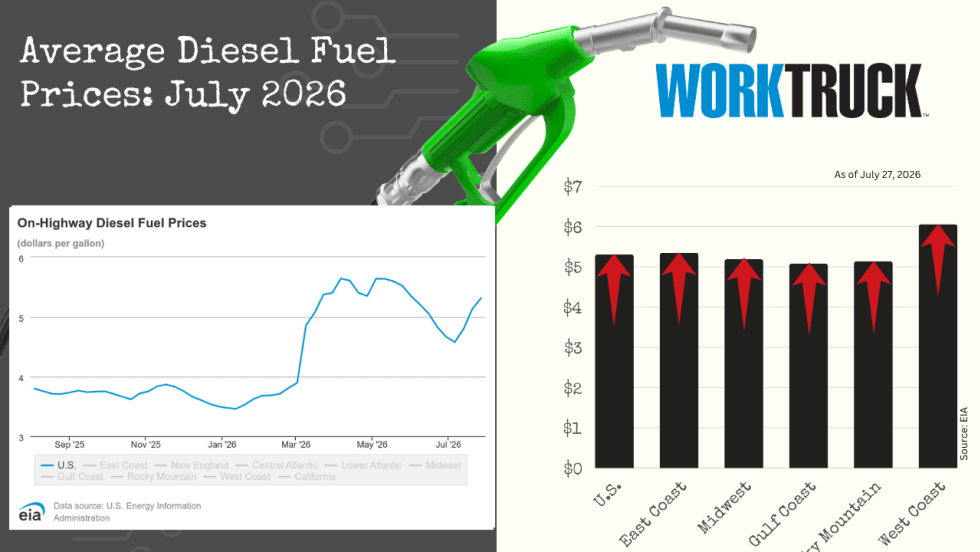
July Diesel Trends Update
The average price of a gallon of diesel increased again this week, and the EIA reported a new national average of $5.31 at the start of the week.
Read More →
WEX Brings Standard Fleet's Connected Vehicle Platform to Fleet Customers
This week’s product launch with Standard Fleet’s connected vehicle platform reflects WEX Venture Capital's strategy of turning startup innovation into customer solutions. Standard Fleet is now available to WEX fleet customers.
Read More →
Teletrac Navman Adds Mixed-Energy Fleet Tools to TN360
The new Energy Hub combines fuel transactions, EV charging data, vehicle range, and energy costs in one dashboard for fleets operating multiple vehicle and energy types.
Read More →
WEX DriverDash adds CITGO, Expands Nationwide Access for Fleets
The DriverDash mobile payment app, by WEX, has been integrated into the CITGO merchant network, which means WEX has expanded its U.S. station footprint with the addition of approximately 4,000 CITGO locations.
Read More →
Mixed Energy Fleet Tips for Balancing EVs, Gas and Diesel Vehicles
Mixed energy fleets are becoming the new normal. Learn how fleet managers are balancing EVs, gas and diesel vehicles while controlling costs and planning for the future.
Read More →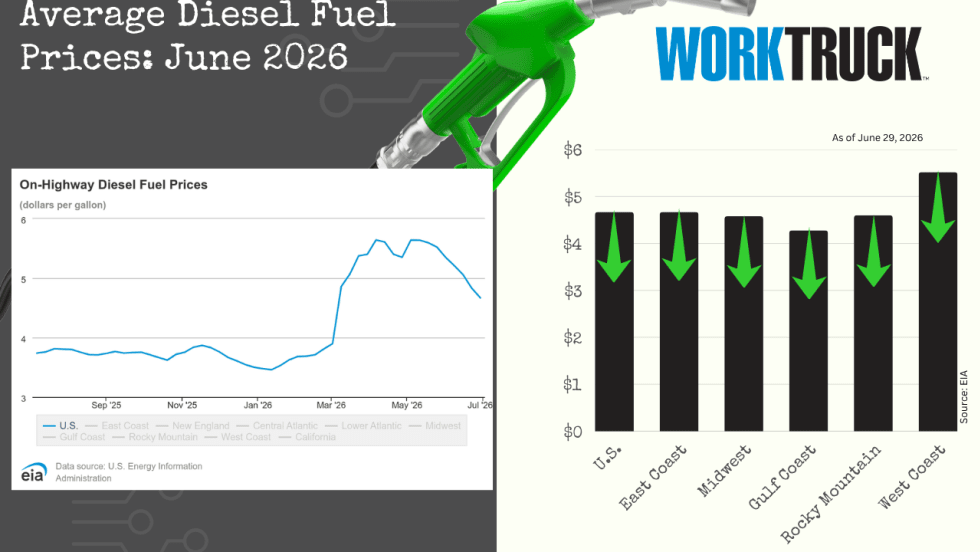
June Diesel Trends Update
The national average price of a gallon of diesel has dropped again, this week by more than 16 cents. All five regions reported lower average prices, ranging from almost 13 cents to more than 28 cents cheaper than a week ago.
Read More →
RoadFlex Launches RoadFlex Direct Open API Platform
RoadFlex Direct connects fuel cards, controls, and data to the telematics and fleet management systems fleets already run, from Geotab and Samsara to Fleetio and RTA, with no separate dashboard or double data entry.
Read More →
The Key to Fuel Efficiency Sits in the Cab
Learn how driver behavior, telematics, coaching, and fuel data can help fleets improve fuel efficiency, lower costs, and reduce emissions.
Read More →