




Keep Learning: Build it Right the First Time: A Fleet Pro’s Candid Take on Smarter Truck Upfitting
The Key to Fuel Efficiency Sits in the Cab
Learn how driver behavior, telematics, coaching, and fuel data can help fleets improve fuel efficiency, lower costs, and reduce emissions.
by Sarah Richey, Mike Albert Fleet Solutions
June 22, 2026
Driver habits such as speeding, hard braking, excessive idling, and inefficient routing can have a greater impact on fleet fuel costs than vehicle specifications alone, making the truck cab one of the most important places to improve fuel efficiency.
Credit:
Work Truck
6 min to read
- Driver behavior, when optimized, plays a crucial role in enhancing fuel efficiency for fleets.
- The integration of telematics and fuel data provides insights that help reduce costs and emissions.
- Coaching fleet drivers based on data-driven insights can lead to improved operational efficiency.
*Summarized by AI
Here’s a sobering fact: a new work truck might deliver, say, a 5% bump in fuel economy on paper, but the person behind the wheel can swing that number by 30% in either direction. With fuel prices squeezing operating budgets, that gap represents a significant cost-reduction opportunity.
Working with our clients on telematics rollouts and fuel programs, I frequently hear some version of the same question: Why are some of our trucks burning so much more fuel than others when they’re running comparable routes and logging comparable mileage? In virtually all cases, my answer is: your drivers.
Driver Behavior Has the Biggest Impact on Fuel Economy
With fuel prices shaped by supply, demand, and geopolitics, the person behind the wheel is the single largest controllable factor in your fuel spend and, therefore, the key to fuel efficiency. To convert drivers from fuel wasters into fuel savers, fleet managers should first examine the four habits most responsible for fuel waste, with the help of telematics and route data:
1. Speeding
The U.S. Department of Energy (DOE) estimates that every 5 mph driven over 50 mph is roughly equivalent to paying an extra $0.18 per gallon at the pump. A truck cruising at 65 instead of 75 will post a noticeable improvement in fuel consumption, and on a vehicle covering 100,000 miles a year, those savings add up quickly. In the fleet data we review with clients, a small group of “lead feet” tends to account for a disproportionate share of speeding incidents, making targeted coaching especially manageable and effective.
2. Hard Acceleration and Braking
An MIT analysis cited by the DOE shows that aggressive driving can lower fuel economy by 15% to 30% at highway speeds and 10% to 40% in stop-and-go conditions. Every time a driver punches the throttle, the engine's fuel consumption spikes. And when drivers brake hard, fuel is converted to heat and brake wear rather than forward motion.
The fix? In a word, it’s: anticipation. Drivers who think one or two cars ahead, coast toward red lights, and ease into acceleration burn measurably less fuel.
3. Excessive Idling
This is where the data can become genuinely surprising. Argonne National Laboratory estimates that idling vehicles waste roughly 6 billion gallons of fuel a year in the U.S. To put that in perspective, that’s enough fuel for a 20-mpg pickup truck to travel the distance equivalent to more than 400 round-trip trips to Mars. So, clearly, idle time is not a rounding error.
The DOE notes that a heavy-duty truck can burn up to 0.8 gallons of fuel per hour while idling, and that idling for more than about 10 seconds uses more fuel than shutting down and restarting the engine. Some fleets run power take-off (PTO) equipment, and significant idle time is unavoidable. However, for a driver lingering at a customer site or running a non-work-related errand, the cost is pure waste. For heavier vehicles, this can add up to hundreds, even thousands, of dollars per truck per year.
4. Route choice and distractions
Two trucks dispatched to the same job site will often take different paths and therefore arrive with different fuel burn rates. Some of that variance is unavoidable. But when drivers default to familiar routes over efficient ones or backtrack because of a missed stop, the cost shows up in your monthly fuel reporting. Distraction also plays a role. A driver glancing at a phone is more likely to brake hard, miss a turn, and accelerate hard to make up time. Each of those events carries a fuel penalty.
A clearer picture emerges when you layer route data onto behavior data. A driver working a tight urban route with constant traffic and short turn windows is not, of course, in the same situation as one running open-highway miles, even when their raw mpg numbers look similar.
Pairing GPS history with telematics behavior scores helps fleet managers distinguish drivers who genuinely need coaching from those simply operating under tougher conditions. It also identifies where smarter dispatch and routing decisions can reduce fuel consumption.
In addition to tracking and managing these four key driver behaviors, here are some other fuel-savings considerations:
Using Telematics and Fuel Data to Identify Fuel Waste
A fuel card program offers valuable additional insight. For example, Wex’s reporting and analytics tools allow fleet managers to spot anomalies at the pump, including out-of-network purchases, off-hours fills, and consumption that exceeds the vehicle profile’s predictions.
When you cross-reference fuel card data with telematics activity, patterns surface quickly. A driver whose mpg is well below average and whose harsh-event count is well above it is a coaching opportunity hiding in plain sight.
Driver Coaching and Incentives Improve Fuel Efficiency
Data alone does not change behavior; it must be paired with feedback that drivers can use. Real-time alerts in the cab help drivers self-correct in the moment, which research consistently shows is more effective than a performance review weeks later. Eco-driving training, when reinforced over time, can produce fuel savings of as much as 5% to 30%. The DOE’s Alternative Fuels Data Center recommends pairing drivers with coaches who can identify specific opportunities, like coasting before a red light or limiting idle time to 30 seconds or less.
Incentive programs make driver data feel less like surveillance and more like a scoreboard. So, consider monthly recognition for the most improved driver, a gift card for the safest scorecard, or even a friendly leaderboard at a terminal. These small and relatively easy-to-execute gestures can lead to the real prize: a lasting cultural shift. Once drivers see that your fleet is paying attention to fuel usage and rewarding progress, the cost-reduction habits tend to stick.
How to Reduce Fleet Fuel Costs Through Driver Behavior
If you want a place to begin, pick one metric and one quarter. Idling is often the easiest target. Pull a baseline from your telematics data, communicate a clear goal to your drivers, and report on progress weekly. Most fleets we work with see meaningful movement within 30 days, and the financial case is straightforward enough to justify a deeper investment in driver coaching, training, and reporting.
Fuel will keep doing what fuel does: rise, fall, and then rise again. There’s no controlling that. What you can control is what your drivers do between fill-ups. If you get that piece right, you’re sure to reduce your fuel costs and, in so doing, improve your fleet’s safety record and cut down on air pollution. What’s not to like about all of that?

Credit:
Mike Albert Fleet Solutions | Work Truck
About the Author: Sarah Richey is Manager of Products and Implementation at Mike Albert Fleet Solutions, where she helps fleet clients translate technology investments into measurable results. Under her leadership, organizations across a range of industries have adopted solutions such as telematics to improve safety and efficiency while controlling costs. This article was authored and edited following Work Truck editorial standards and style. Opinions expressed may not reflect those of WT.
Subscribe to Our Newsletter
More Fuel
Peterbilt Trucks Equipped with Paccar TX-18 Pro Boost Efficiency for Maryland Fleet
Patuxent Companies is replacing aging trucks with the Peterbilt Model 567 and Model 589, specified with the Paccar TX-18 Pro 18-speed automated transmissions, and is reporting an 8% to 10% improvement in fuel economy.
Read More →
The Smart Way to Build a Mixed-Energy Fleet Isn’t About Picking a Side
Mixed-energy fleets aren’t about picking a winning fuel. Sarah Booth of WEX explains how vehicle data, duty cycles, charging strategy, and real-world costs can help fleets choose the right energy source for each job.
Read More →
Ignoring This Dashboard Warning Could Cost Your Fleet Thousands in Fuel
New research suggests neglected diesel aftertreatment systems could waste up to $30 in fuel per vehicle each day. Here's why vocational fleets should pay attention.
Read More →

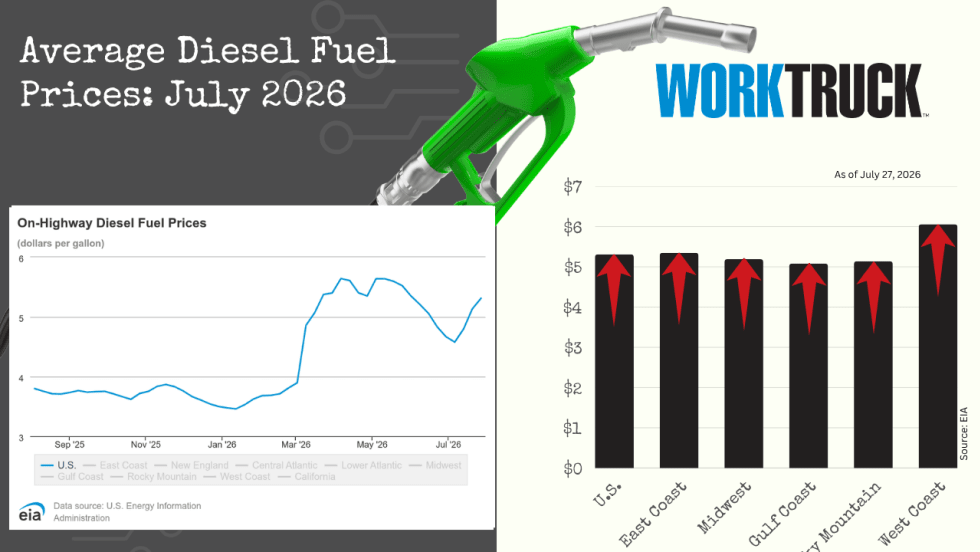
July Diesel Trends Update
The average price of a gallon of diesel increased again this week, and the EIA reported a new national average of $5.31 at the start of the week.
Read More →
WEX Brings Standard Fleet's Connected Vehicle Platform to Fleet Customers
This week’s product launch with Standard Fleet’s connected vehicle platform reflects WEX Venture Capital's strategy of turning startup innovation into customer solutions. Standard Fleet is now available to WEX fleet customers.
Read More →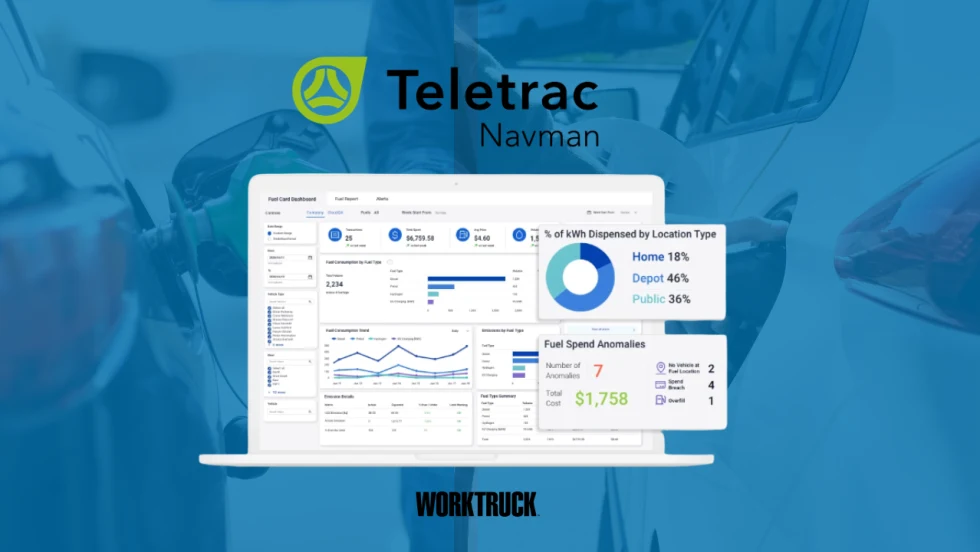
Teletrac Navman Adds Mixed-Energy Fleet Tools to TN360
The new Energy Hub combines fuel transactions, EV charging data, vehicle range, and energy costs in one dashboard for fleets operating multiple vehicle and energy types.
Read More →
WEX DriverDash adds CITGO, Expands Nationwide Access for Fleets
The DriverDash mobile payment app, by WEX, has been integrated into the CITGO merchant network, which means WEX has expanded its U.S. station footprint with the addition of approximately 4,000 CITGO locations.
Read More →
Mixed Energy Fleet Tips for Balancing EVs, Gas and Diesel Vehicles
Mixed energy fleets are becoming the new normal. Learn how fleet managers are balancing EVs, gas and diesel vehicles while controlling costs and planning for the future.
Read More →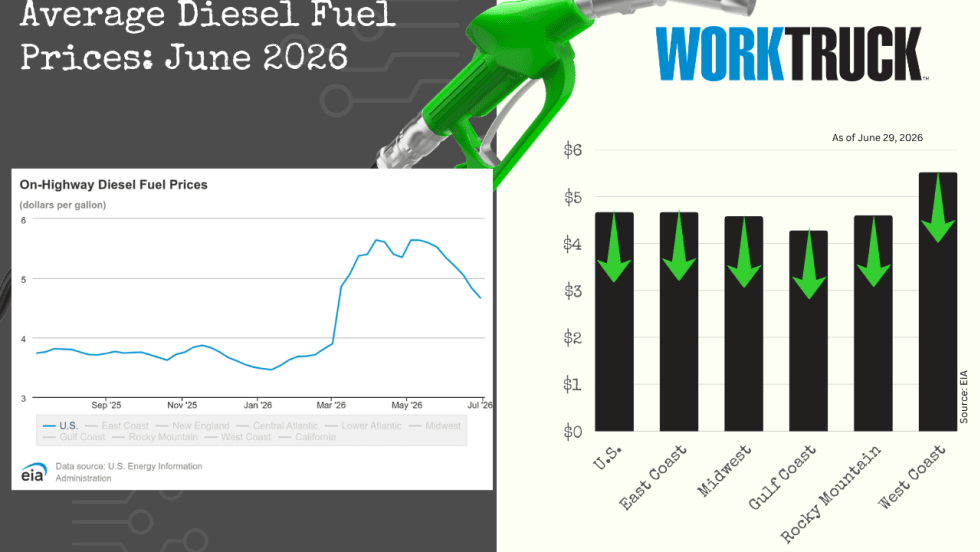
June Diesel Trends Update
The national average price of a gallon of diesel has dropped again, this week by more than 16 cents. All five regions reported lower average prices, ranging from almost 13 cents to more than 28 cents cheaper than a week ago.
Read More →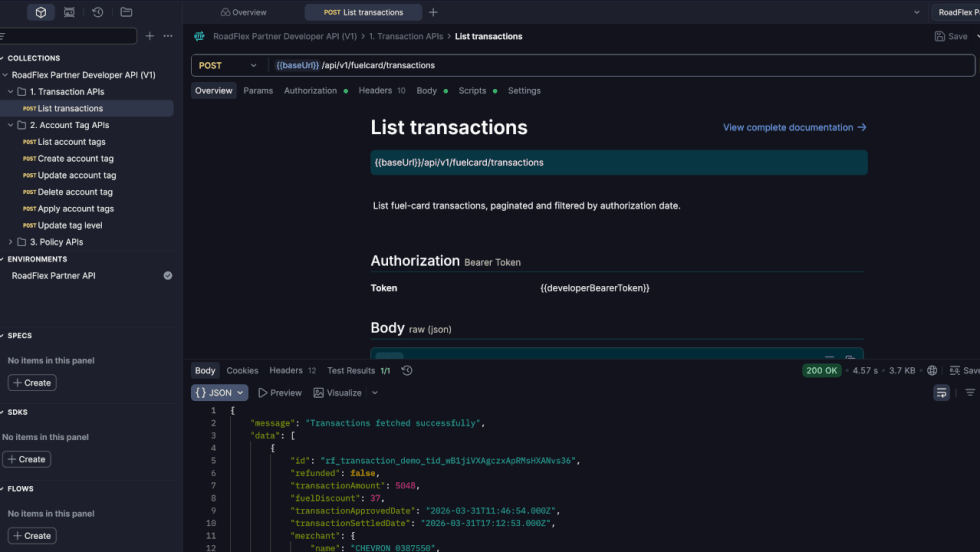
RoadFlex Launches RoadFlex Direct Open API Platform
RoadFlex Direct connects fuel cards, controls, and data to the telematics and fleet management systems fleets already run, from Geotab and Samsara to Fleetio and RTA, with no separate dashboard or double data entry.
Read More →