




New Propane Autogas Program Offers Fleet Compensation
Qualified commercial fleets can receive $7,500 per eligible propane autogas vehicle and up to $10,000 for new refueling site prep. Learn how the program works and see whether your fleet qualifies.
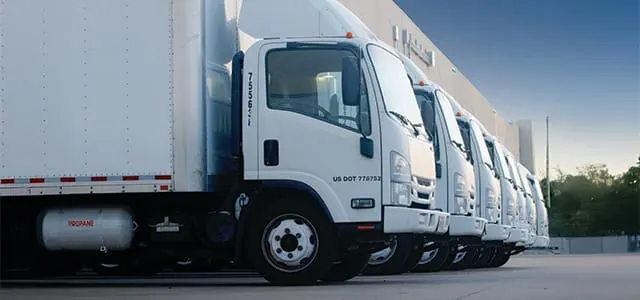
PERC

Commercial fleets considering a move away from gasoline or diesel have a new opportunity to offset the cost of putting propane autogas vehicles into service. Through the Propane Autogas Research Program, qualified fleets can receive a payment of $7,500 per eligible vehicle, along with up to $10,000 for new refueling site prep.
In return, participating fleets will operate the vehicles in their regular duty cycles and submit quarterly data covering fuel use, maintenance costs, reliability, downtime, and performance. The result is a practical exchange: fleets receive financial support as they introduce propane autogas into daily operations, while building an operating record they can use to evaluate future vehicle decisions.
“This program is a mutually beneficial partnership,” said Tucker Perkins, president and CEO of the Propane Education & Research Council. “By providing direct financial compensation to qualifying fleets, we are lowering the barrier to adoption.”
A Ready-Now Option for Commercial Fleets
The program arrives as fleet managers continue to balance cost control, dependable performance, and emissions goals. Propane autogas is a proven, ready-to-deploy fuel solution available on commercial vehicle platforms and supported by established vehicle and fueling partners.
For many fleet applications, its business case begins with operating expenses. PERC reports that daily propane autogas fuel costs can be up to 50% lower than diesel and 40% lower than gasoline. Propane autogas engines also avoid the complex diesel aftertreatment systems associated with particulate filters, selective catalytic reduction and diesel exhaust fluid. Fewer components and fluids can reduce maintenance complexity and help lower lifecycle operating costs.
The emissions profile gives fleets another reason to evaluate the technology. Current propane autogas engines are certified to an ultra-low nitrogen oxide level of 0.02 grams per brake horsepower-hour, meeting the level required by the U.S. Environmental Protection Agency’s 2027 standards today. Fleets can therefore pursue cleaner operations without giving up the range, payload capability, or dependable performance their routes require.
Fueling can be designed around return-to-base operations. Private infrastructure is scalable and can be sized to a fleet’s needs, allowing vehicles to refuel at a central location rather than relying on a developing public network.
How Participation Works
The Propane Autogas Research Program is open to commercial fleets, including vocational, delivery, service, and commercial logistics operations. School transportation, municipal, and transit fleets are not eligible for this program.
After applying and receiving approval, fleets may purchase new propane autogas vehicles or convert eligible vehicles already in service. Eligible vehicles must be two model years old or newer and have fewer than 50,000 miles. Compensation cannot be used to replace existing propane autogas vehicles. Class 2-7 vehicles are eligible, with priority given to Class 3-7 vehicles. Program rules apply.
Once deployed, the vehicles become part of normal fleet operations. Participants submit operational data each quarter and receive compensation after the applicable program requirements are met. The data collection is intended to capture the full ownership experience — not only fuel consumption, but also maintenance, reliability, downtime, and day-to-day performance across different fleet applications.
Turning Participation Into a Fleet Planning Tool
The quarterly reporting requirement gives PERC broader field data, but it can also create value for participating fleets. Tracking fuel consumption, maintenance, uptime, and performance in a consistent way gives decision-makers a clearer picture of how propane autogas performs in their own routes, duty cycles, and operating environment.
That fleet-specific record can inform the next procurement cycle. Rather than relying only on projections or results from a different operation, participants can evaluate actual costs and performance against their existing vehicles. That makes careful, fleet-specific evaluation especially useful before broader procurement decisions. The program compensation helps offset the initial commitment while the fleet develops that evidence.
Propane autogas already has a long operating history in fleet applications. This program gives commercial operators a structured, financially supported way to assess the technology within their own operations — and determine whether a broader deployment makes business sense.
Commercial fleet operators, procurement directors and logistics managers can review eligibility requirements, participation expectations, and application information at propane.com/parp.
This article reflects the views of Propane Education & Research Council (PERC) and does not necessarily represent the views of Work Truck or Bobit Business Media.
Quick Answers
Qualified commercial fleets can receive $7,500 per eligible propane autogas vehicle.
*Summarized by AI
More Fuel

Precision Under Pressure: Why Modern Diesels Demand a New Fuel Maintenance Playbook
Modern diesel fuel systems leave little room for contamination, deposits, or old maintenance habits. See why today’s HPCR engines demand a more proactive approach to fuel quality, injector health, and DPF protection.
Read More →
Peterbilt Trucks Equipped with Paccar TX-18 Pro Boost Efficiency for Maryland Fleet
Patuxent Companies is replacing aging trucks with the Peterbilt Model 567 and Model 589, specified with the Paccar TX-18 Pro 18-speed automated transmissions, and is reporting an 8% to 10% improvement in fuel economy.
Read More →
The Smart Way to Build a Mixed-Energy Fleet Isn’t About Picking a Side
Mixed-energy fleets aren’t about picking a winning fuel. Sarah Booth of WEX explains how vehicle data, duty cycles, charging strategy, and real-world costs can help fleets choose the right energy source for each job.
Read More →From Our Partners
New Propane Autogas Program Offers Fleet Compensation
Sponsored by Propane Education & Research Council
Basic Tracking vs Next Generation Fleet Technology
Sponsored by AT&T Business

How AI Video Telematics Boosts Driver Safety and Helps to Avoid Unnecessary Costs
Sponsored by Verizon Connect

Do You Need an Integrated Fuel Management System?
Sponsored by AssetWorks
Ignoring This Dashboard Warning Could Cost Your Fleet Thousands in Fuel
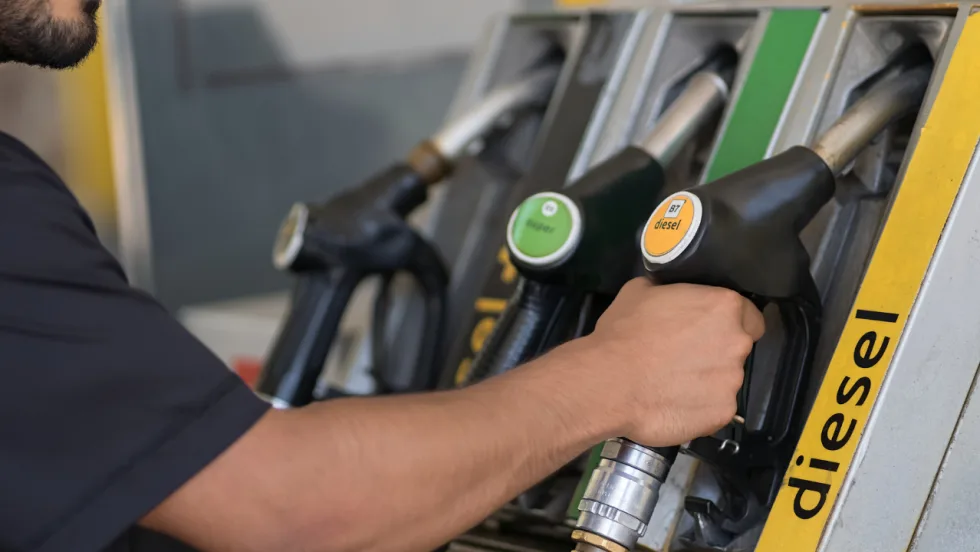
New research suggests neglected diesel aftertreatment systems could waste up to $30 in fuel per vehicle each day. Here's why vocational fleets should pay attention.
Read More →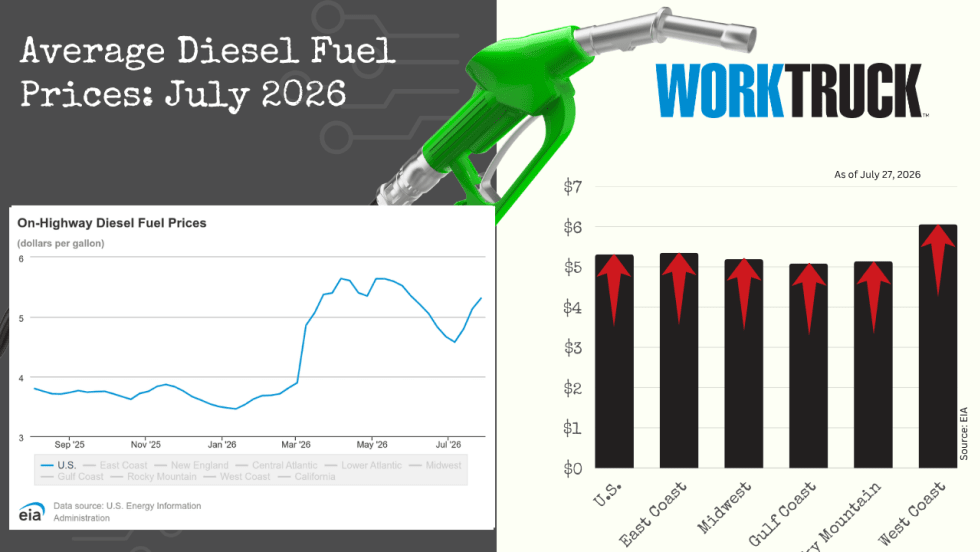
July Diesel Trends Update
The average price of a gallon of diesel increased again this week, and the EIA reported a new national average of $5.31 at the start of the week.
Read More →
WEX Brings Standard Fleet's Connected Vehicle Platform to Fleet Customers
This week’s product launch with Standard Fleet’s connected vehicle platform reflects WEX Venture Capital's strategy of turning startup innovation into customer solutions. Standard Fleet is now available to WEX fleet customers.
Read More →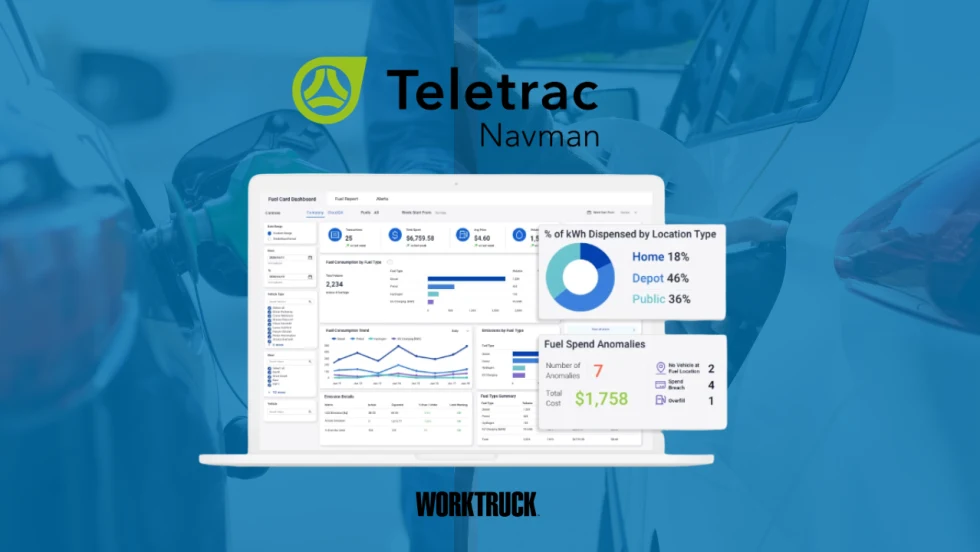
Teletrac Navman Adds Mixed-Energy Fleet Tools to TN360
The new Energy Hub combines fuel transactions, EV charging data, vehicle range, and energy costs in one dashboard for fleets operating multiple vehicle and energy types.
Read More →
WEX DriverDash adds CITGO, Expands Nationwide Access for Fleets
The DriverDash mobile payment app, by WEX, has been integrated into the CITGO merchant network, which means WEX has expanded its U.S. station footprint with the addition of approximately 4,000 CITGO locations.
Read More →
Mixed Energy Fleet Tips for Balancing EVs, Gas and Diesel Vehicles
Mixed energy fleets are becoming the new normal. Learn how fleet managers are balancing EVs, gas and diesel vehicles while controlling costs and planning for the future.
Read More →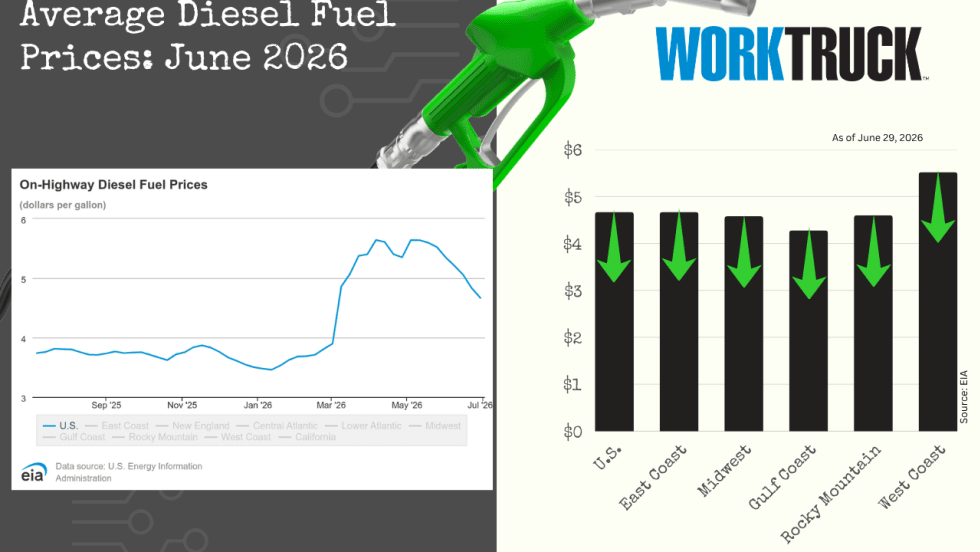
June Diesel Trends Update
The national average price of a gallon of diesel has dropped again, this week by more than 16 cents. All five regions reported lower average prices, ranging from almost 13 cents to more than 28 cents cheaper than a week ago.
Read More →