





Watch Now: What Drives the Price of Diesel Fuel?
RoadFlex Brings Fuel Tax Compliance & Audit-Ready Reporting to Government Fleets
RoadFlex now offers its capabilities to help public-sector and public works fleets streamline fuel tax exemptions, reclamation, reconciliation, and audit-ready reporting.
June 15, 2026
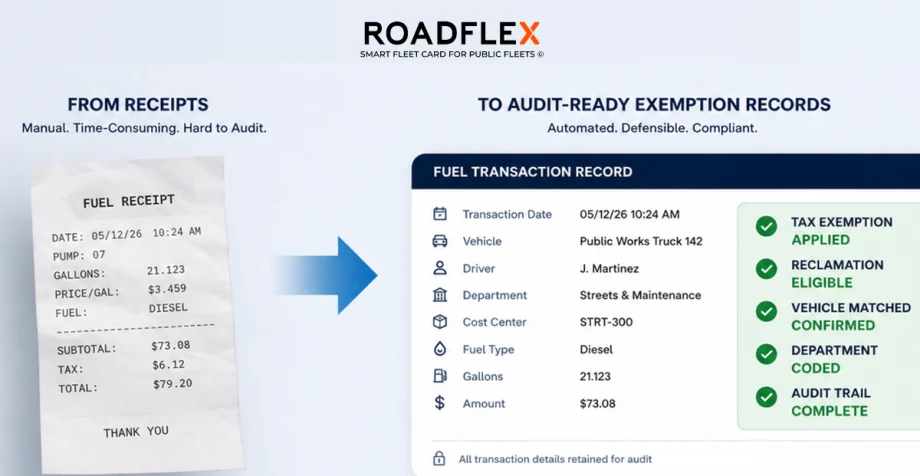
RoadFlex automatically identifies eligible fuel purchases using enhanced transaction data, rather than sorting them by hand.
Credit:
RoadFlex
3 min to read
- RoadFlex has introduced services that aid government fleets in managing fuel tax exemptions and reclamation.
- The company now provides solutions for effective fuel tax reconciliation tailored to public-sector needs.
- RoadFlex ensures its offerings include audit-ready reporting for improved compliance in government fleets.
*Summarized by AI
RoadFlex, a leading fuel risk management solutions provider, is expanding its fuel tax compliance capabilities for government and public works fleets.
The capabilities are built to help eligible public-sector agencies reduce the administrative burden of managing fuel tax exemptions, reimbursements, and reclamation, providing a more automated and auditable way to process fuel transactions, flag eligible purchases, and maintain clean records for finance and audit teams.
Making Fuel Tax Compliance Easier
For many public-sector fleets, fuel tax compliance is still a manual process built on receipts, spreadsheets, merchant-level review, department coding, and end-of-period reconciliation. RoadFlex pulls these workflows into a single platform by connecting each fuel transaction with cardholder, vehicle, merchant, department, cost center, and transaction-level detail.
That matters most for the agencies running the widest range of vehicles and equipment. Public works, transportation, and municipal fleets spread fuel spend across departments, cost centers, and field sites, which makes exemption tracking and audit prep harder the moment it leaves a single fuel island.
“Government fleets need more than a payment card. They need a platform that manages spend, enforces controls, and documents compliance in a way auditors can follow,” said Rush Akin, chief revenue officer of RoadFlex. “These capabilities cut the administrative work behind fuel tax compliance and give agencies cleaner, more defensible records of every fuel purchase.”
How RoadFlex Helps with Fuel Tax Compliance
RoadFlex’s fuel tax compliance capabilities help agencies:
- Identify eligible fuel purchases automatically using enhanced transaction data, instead of sorting them by hand.
- Distinguish exempt or reclamation-eligible spend from purchases that require standard tax treatment.
- Support exemption handling at the point of sale where available, and streamline reclamation where tax is paid upfront.
- Tie each transaction to the relevant vehicle, driver, department, and cost center, cutting spreadsheet and receipt reconciliation.
- Retain transaction-level evidence, including merchant, date, amount, fuel data, cardholder, vehicle, and department, for audits and reimbursement reviews.
- Manage exemptions, controls, and compliance reporting for multi-department, multi-location fleets in one platform.
The capabilities run on RoadFlex’s open-loop Visa platform and use enhanced transaction data and card-level controls to identify eligible fuel purchases.
Where an exemption can be applied at the point of sale, it is. Where tax is paid upfront, which is common when crews fuel at retail stations, the same transaction-level detail supports exemption handling where available and streamlines reclamation.
That gives fleet and finance teams a clearer view of which purchases may be eligible for exemption or recovery and which require standard tax treatment.
Where Can Drivers Fuel?
Because the platform is open-loop, drivers can fuel wherever Visa is accepted rather than inside a limited fuel network. For fleets working across districts, depots, and field sites, that means fewer out-of-network workarounds and a more complete record for compliance reporting to draw from.
The capabilities are built to support both savings and compliance. Recovering eligible taxes is part of it, but so is giving agencies a more controlled, transparent, and auditable fuel spend process overall.
The new capabilities build on RoadFlex’s broader public-sector offering, a modern alternative to legacy fuel card programs that combines open-loop Visa acceptance, configurable spend controls, audit-ready reporting, cooperative purchasing readiness, and integrations across fleet and financial systems.
For agencies that procure through cooperative purchasing channels, fuel tax compliance adds another public-sector-specific capability tied to fuel savings, compliance, and administrative efficiency.
They also extend RoadFlex’s work with Visa to modernize fleet payments for government and enterprise fleets. RoadFlex recently collaborated with Visa on a public-sector fleet payments whitepaper on how modern card technology, transaction controls, data visibility, and compliance workflows can help agencies reduce administrative burden and improve oversight of fleet spend.
RoadFlex discussed its public-sector fleet payment and compliance capabilities at the Government Fleet Expo & Conference (GFX), the largest annual conference for public fleets.
Watch Now: What Drives the Price of Diesel Fuel?
More Fuel

The Smart Way to Build a Mixed-Energy Fleet Isn’t About Picking a Side
Mixed-energy fleets aren’t about picking a winning fuel. Sarah Booth of WEX explains how vehicle data, duty cycles, charging strategy, and real-world costs can help fleets choose the right energy source for each job.
Read More →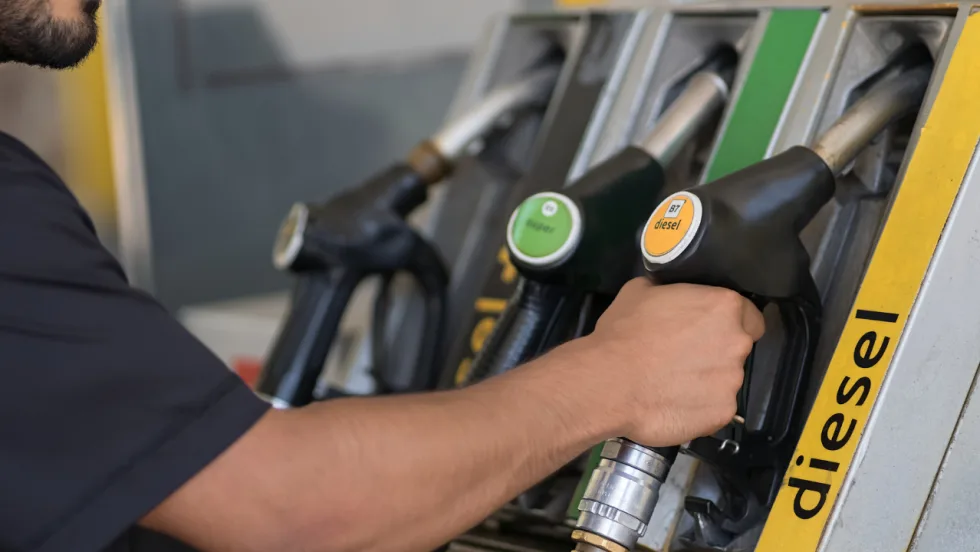
Ignoring This Dashboard Warning Could Cost Your Fleet Thousands in Fuel
New research suggests neglected diesel aftertreatment systems could waste up to $30 in fuel per vehicle each day. Here's why vocational fleets should pay attention.
Read More →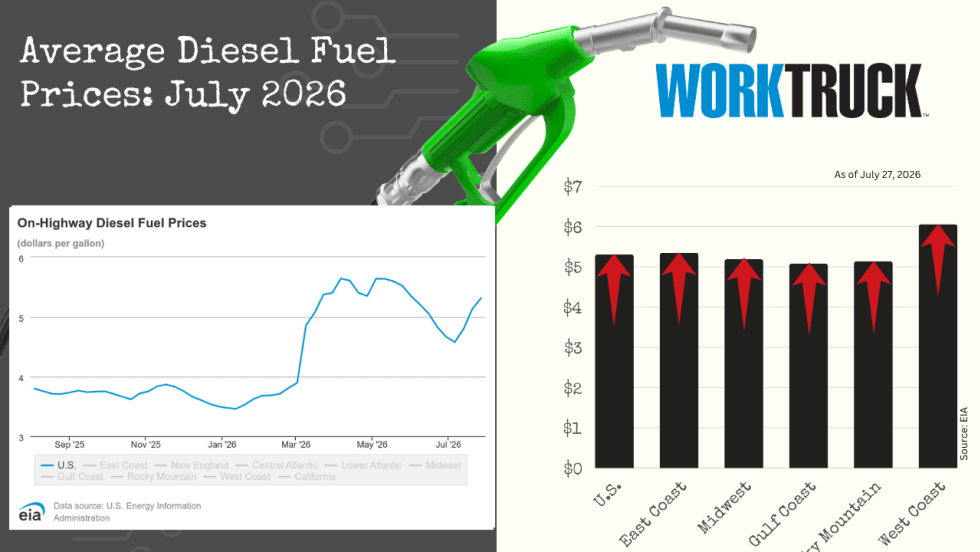
July Diesel Trends Update
The average price of a gallon of diesel increased again this week, and the EIA reported a new national average of $5.31 at the start of the week.
Read More →
WEX Brings Standard Fleet's Connected Vehicle Platform to Fleet Customers
This week’s product launch with Standard Fleet’s connected vehicle platform reflects WEX Venture Capital's strategy of turning startup innovation into customer solutions. Standard Fleet is now available to WEX fleet customers.
Read More →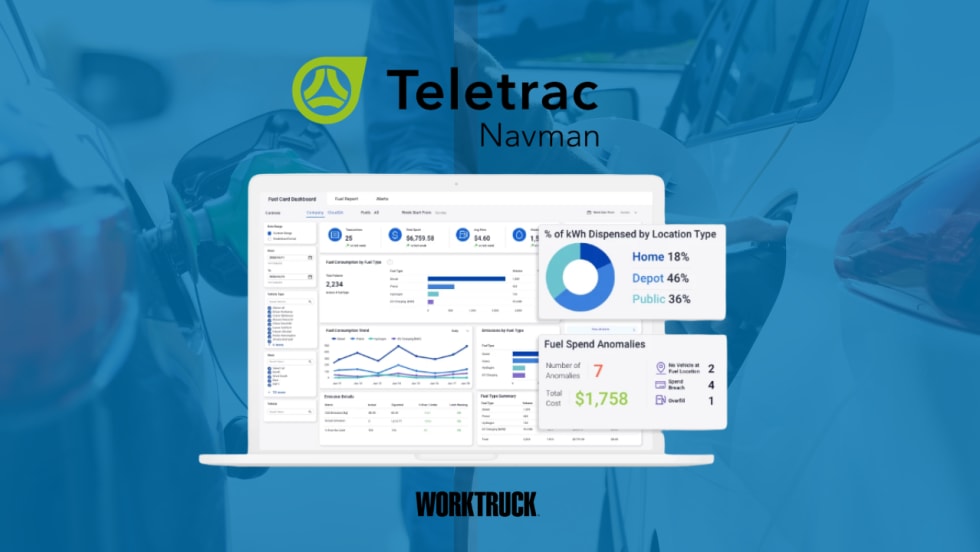
Teletrac Navman Adds Mixed-Energy Fleet Tools to TN360
The new Energy Hub combines fuel transactions, EV charging data, vehicle range, and energy costs in one dashboard for fleets operating multiple vehicle and energy types.
Read More →
WEX DriverDash adds CITGO, Expands Nationwide Access for Fleets
The DriverDash mobile payment app, by WEX, has been integrated into the CITGO merchant network, which means WEX has expanded its U.S. station footprint with the addition of approximately 4,000 CITGO locations.
Read More →
Mixed Energy Fleet Tips for Balancing EVs, Gas and Diesel Vehicles
Mixed energy fleets are becoming the new normal. Learn how fleet managers are balancing EVs, gas and diesel vehicles while controlling costs and planning for the future.
Read More →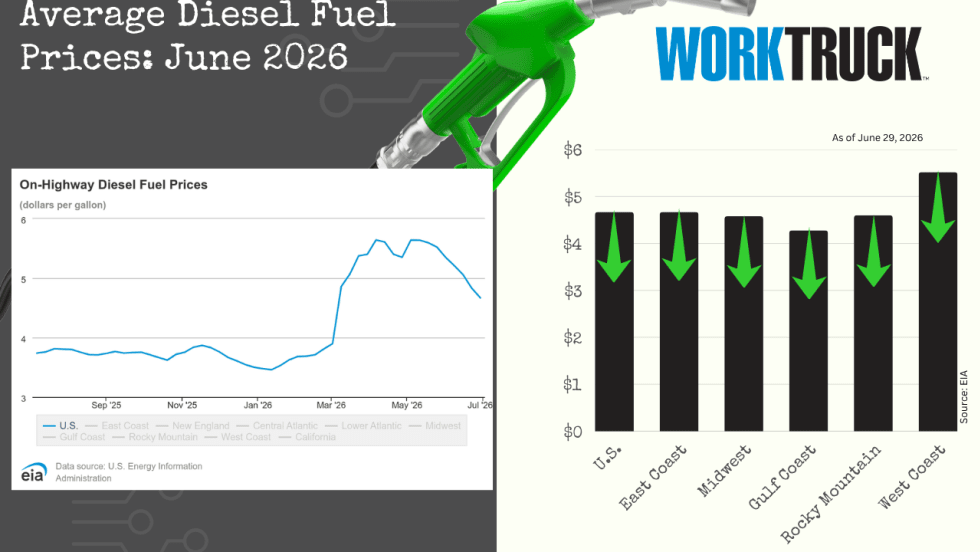
June Diesel Trends Update
The national average price of a gallon of diesel has dropped again, this week by more than 16 cents. All five regions reported lower average prices, ranging from almost 13 cents to more than 28 cents cheaper than a week ago.
Read More →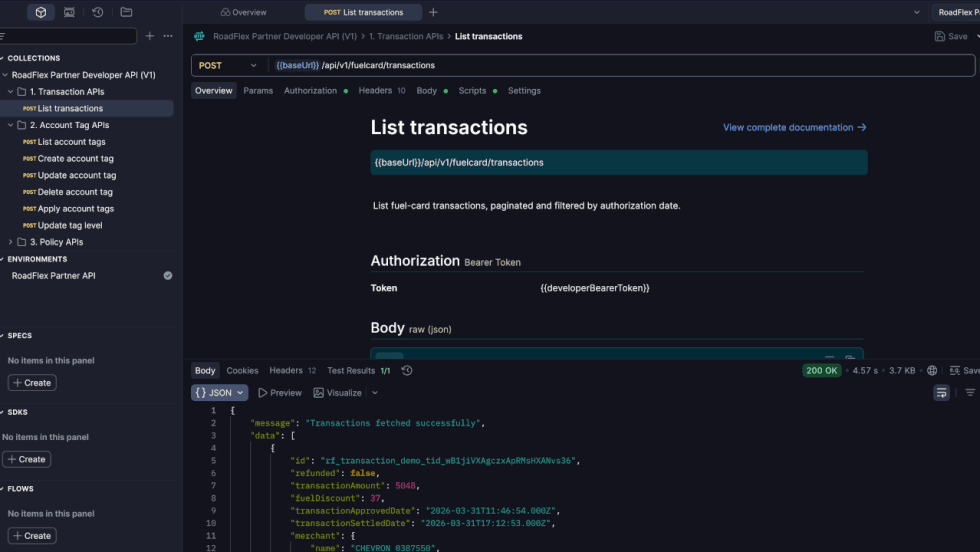
RoadFlex Launches RoadFlex Direct Open API Platform
RoadFlex Direct connects fuel cards, controls, and data to the telematics and fleet management systems fleets already run, from Geotab and Samsara to Fleetio and RTA, with no separate dashboard or double data entry.
Read More →
The Key to Fuel Efficiency Sits in the Cab
Learn how driver behavior, telematics, coaching, and fuel data can help fleets improve fuel efficiency, lower costs, and reduce emissions.
Read More →