Why Technician Appreciation Can’t Be a Once-a-Year Thought
For fleets trying to keep skilled technicians, recognition cannot begin and end with Technician Appreciation Week. Learn what year-round appreciation really looks like and why the everyday technician experience matters just as much as pay when fleets are trying to keep good people.
Technician appreciation should go beyond a single recognition week and show up in the everyday experience of the job.
Credit:
Work Truck
13 min to read
There is nothing wrong with buying lunch, handing out some swag, or making a point to publicly thank technicians during Technician Appreciation Week. Those gestures matter, especially in an industry where the people keeping trucks on the road are often working behind the scenes, solving problems under pressure, and making sure someone else can get their job done.
Ad Loading...
The problem comes when appreciation disappears as soon as the week is over.
Ad Loading...
For work truck fleets already competing for a limited pool of qualified technicians, retention has become every bit as important as recruiting. Keeping good technicians takes more than competitive pay or a once-a-year recognition event. It means paying attention to the experience they have the other 51 weeks of the year, including the tools they work with, the schedules they are expected to keep, the training they receive, the managers they report to, the career paths available to them, and even whether the shop itself is a safe and comfortable place to spend a long day.
“Recognition should be consistent and authentic, not limited to one week each year,” said Arthur Lon, senior director of talent management at Cox Fleet.
That sounds simple enough, but putting it into practice requires fleet leaders to think about appreciation in a much broader way. It is not only about saying thank you. It is about creating a workplace where technicians can feel that their time, skills, ideas, and long-term careers are respected.
Technicians Have More Options Than They Used To
The technician shortage is not a new conversation for fleet. For years, employers have talked about recruiting, training, and finding the next generation of technicians. What has changed is how easy it has become for experienced technicians to look around when something is not working for them.
“The technician labor market has become increasingly competitive,” Lon said. “Digital job boards and one-click applications make it easier than ever for technicians to explore and pursue new opportunities, often applying to multiple positions in a matter of minutes.”
Ad Loading...
Fleets are also competing for skilled workers well beyond the fleet industry itself. Adjacent industries are looking for employees with many of the same mechanical abilities and can sometimes offer comparable or higher wages, giving technicians more places to take their experience if they decide it is time for a change.
“When opportunities are abundant, technicians are less likely to remain in positions where they feel unsupported or dissatisfied,” Lon said.
That changes the way fleet leaders have to think about retention. A conflict with a manager, an unexpected schedule change, a lack of advancement opportunities, or a workplace frustration that keeps happening may have once been something an employee tolerated for a long time. Today, another opportunity may only be a few clicks away.
It makes the everyday experience of being a technician part of a fleet’s retention strategy, whether leadership thinks of it that way or not.
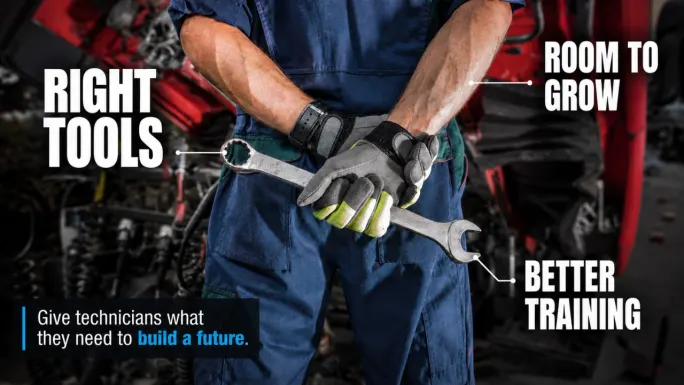
Retention improves when technicians have the tools, training, and career opportunities they need to succeed and see a future in the organization.
Credit:
Work Truck
Pay Matters, But It Cannot Carry the Whole Retention Strategy
Compensation still matters, and there is no getting around that. Technicians should be paid competitively for skilled work that keeps vehicles safe, productive, and on the road. But pay alone is not enough to fix a workplace where technicians feel unsupported.
Ad Loading...
“Today’s technicians are placing equal value on things like having the right tools and equipment, access to quality training, clear career advancement opportunities, and a healthy work-life balance,” Lon said.
A technician can earn a competitive wage and still spend every day fighting outdated equipment, dealing with an unpredictable schedule, struggling to get the training needed to diagnose newer technology, or wondering whether there is any opportunity to grow beyond the role they are in today. Eventually, those frustrations can outweigh the paycheck.
“Employers that focus exclusively on pay often overlook the broader employee experience,” Lon said. “Retention improves when technicians feel supported, equipped for success, and confident about their long-term future within the organization.”
That long-term future is becoming increasingly important. Technicians want to know not only what their job looks like today, but where it can take them over the next several years. A clearly defined career path can help someone see that they do not necessarily have to leave the organization to take the next step in their career.
“Technicians want to understand how they can grow within an organization and what training or development opportunities are available to help them reach the next step in their careers,” Lon said.
Ad Loading...
For fleets, that could mean creating clearer paths into senior technician roles, leadership positions, training responsibilities, specialization, or other areas where a technician’s experience can continue to grow. Simply showing someone that there is a next step, and helping them understand how to reach it, can send a powerful message that the organization sees them as more than the person completing today’s repair order.
Work-Life Balance Matters in the Shop, Too
The expectations surrounding technician careers have changed in another important way. Work-life balance is now a much bigger part of the conversation than it may have been five or 10 years ago. Lon said flexible schedules, minimal weekend work, and more paid time off have become increasingly important considerations for technicians deciding where they want to work and whether they want to stay.
For fleet operations that have traditionally put vehicle uptime above almost everything else, that can require some adjustment. Trucks will break. Customers will need vehicles. Emergencies will happen, and there will always be days when plans change.
But not every repair request needs to become a personal emergency for the technician.
“Last-minute shift changes and urgent, non-emergency repair requests can disrupt technicians’ personal lives and contribute to stress,” Lon said. “Better planning and communication can go a long way in supporting employee well-being.”
Ad Loading...
That distinction matters. Technicians understand the realities of fleet maintenance better than anyone. They know breakdowns happen, and most understand that there are times when the job requires flexibility. The frustration comes when poor planning becomes routine, schedules are constantly shifting, or everything is treated as an emergency regardless of whether it actually is one.
Burnout can also come from a source fleet leaders may not immediately connect with technician retention, and that is the constant pace of organizational change.
New systems, software, procedures, documentation, and workflows can all be necessary parts of running a modern fleet operation. Then comes another platform login, another process update, or another new requirement layered on top of the work technicians are already trying to complete.
“One of the largest contributors to burnout is the constant pace of change,” Lon said. “Frequent updates to internal processes, systems, and workflows can create frustration when technicians would rather focus on maintaining and repairing vehicles.”
The answer is not to stop improving or modernizing the operation. It is to be thoughtful about how those changes reach the people actually doing the work. Grouping initiatives where possible, clearly explaining why changes are happening, listening to technician feedback, and giving employees enough time to learn a new process can make the difference between change feeling manageable and change feeling like one more thing being dropped on the shop floor.
Ad Loading...
Training Is One of the Clearest Ways to Show Technicians They Matter
Fleet technology is not slowing down, and technicians are being asked to keep pace with vehicles and systems that continue to become more complex. That makes ongoing education more than a nice benefit or something to offer when the training budget happens to allow it. It is becoming an essential part of helping technicians do the job they were hired to do.
“Technicians take pride in keeping vehicles operating safely and efficiently, but rapidly evolving technologies require ongoing education to stay current,” Lon said.
There is a real frustration that comes with being responsible for diagnosing and repairing a problem without having the training, information, or tools needed to solve it efficiently. Technicians do not want to feel like they are guessing their way through repairs, especially when they take pride in doing the job correctly.
“Without access to training and professional development, technicians can become frustrated by their inability to diagnose and repair issues efficiently,” Lon said.
Training helps solve that immediate problem, but it also communicates something bigger. When a company continues to invest in an employee’s knowledge, certifications, and professional development, it is showing that it expects that person to have a future there.
Ad Loading...
“Ongoing learning opportunities not only improve performance and confidence, but also create clear pathways for career growth, helping technicians feel valued and invested in their future,” Lon said.
Cox Fleet has taken that idea a step further by building technicians rather than relying only on hiring experienced ones. The company operates its own accredited technician training academy, taking candidates with mechanical aptitude through a structured curriculum and into full technician roles. From there, technicians continue to receive support for advanced training and certification as they progress. In a shrinking labor market, that gives the company another option beyond competing for the same experienced technicians and gives new employees a visible career path from the start
That investment does not always have to come from a formal classroom, either. Mentorship can be especially valuable for technicians who are newer to fleet and still learning how their individual work connects to the larger operation.
“Effective mentorship goes beyond teaching technical skills. It helps newer technicians understand the larger business impact of their work,” Lon said.
An experienced technician can teach someone how to complete a repair, but they can also help that person understand why preventive maintenance matters, what downtime really costs an operation, how maintenance decisions affect a customer, and how one repair can ripple through the rest of the business.
Ad Loading...
“When technicians understand both the ‘how’ and the ‘why’ behind their work, they are more engaged and better positioned for long-term success,” Lon said.
That kind of context can be especially important for someone early in their career. It helps turn a job into a profession and gives technicians a better understanding of just how important their work is to the fleet around them.
Recognition can reinforce that same message when it is connected to the skills technicians work hard to build. Cox Automotive’s annual TopTech competition brings top performers together for hands-on skills testing, training, and team building, with champions recognized across the company. Instead of recognition being limited to a trophy ceremony, the event also becomes a development opportunity, giving technicians a reason to continue sharpening their craft and a place where that work gets seen.
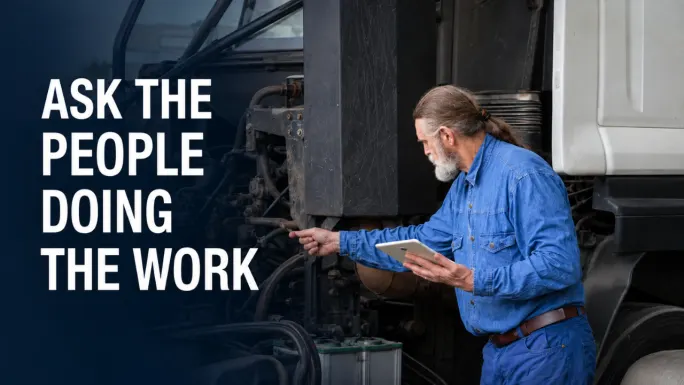
Inviting technicians into conversations about processes, equipment, and workflow can strengthen trust and improve retention.
Credit:
Work Truck
Sometimes Appreciation Starts with Asking
One of the most practical ways fleet leaders can show technicians they are valued is also one of the easiest to overlook. Ask them what they think.
Technicians are the people using the equipment, navigating the workflows, repairing the vehicles, working inside the shop, and seeing firsthand where processes make sense and where they create unnecessary friction. Their perspective can be incredibly useful when fleets are making decisions about equipment, processes, scheduling, or workflow.
Ad Loading...
Lon recommended creating opportunities for technicians to contribute to decisions that directly affect their work, whether that involves workflow improvements, equipment selection, or operational processes. Giving technicians a voice does more than produce ideas. It also sends the message that their experience carries weight.
“Organizations that prioritize open communication, explain the reasoning behind decisions, encourage feedback, and give technicians a voice in the workplace are more likely to build trust and long-term commitment,” Lon said.
That does not mean every suggestion has to become policy or every decision has to be made by committee. Fleet leaders are still responsible for running the operation. But listening, explaining the reasoning behind a decision, and acting on feedback when it makes sense can build a level of trust that no employee appreciation giveaway can replace.
That communication also has to reach the managers shaping a technician’s day-to-day experience. Cox Fleet uses weekly and monthly communications to make sure frontline leaders have the information, tools, and resources they need to lead their teams, from safety reminders to career conversations. A technician’s relationship with a direct manager can play a major role in whether that person stays, and managers cannot reinforce opportunities, expectations, or resources they were never told about themselves.
The Small Things Still Count
Year-round appreciation does not have to mean launching a big corporate program or creating one more initiative that managers and technicians must keep track of. Sometimes it is much simpler than that.
Ad Loading...
Celebrate birthdays and career milestones. Share positive customer feedback in a team meeting. Recognize someone who came up with a better way to handle a process. Give credit when a technician goes above and beyond. Pay attention to the employee who quietly does good work every day but may not be the loudest person in the room.
Those moments add up. So do the basic working conditions fleets sometimes take for granted. Lon pointed to providing air conditioning and water in hot conditions and proper uniforms in cold weather as practical examples of supporting technicians.
Those things may sound small compared with compensation plans or career development programs, but they matter when someone is spending eight, 10, or more hours working in that environment. Making sure technicians are safe, comfortable, and equipped to do their jobs should be one of the most basic forms of appreciation a fleet can offer.
Supporting causes that matter to employees, recognizing personal milestones, and finding ways to build stronger connections between technicians and the organization can all help create a workplace where people feel like they are part of something rather than simply filling a position.
“Workplace culture plays a significant role in retention because technicians spend a substantial portion of their lives at work,” Lon said. “A positive environment where employees feel respected, supported, and connected to their teams can have a lasting impact on engagement.”
Ad Loading...
That kind of culture can be easy to take for granted when things are running smoothly. It becomes much more visible when a strong technician leaves, and the team suddenly feels the loss in more ways than one.
There is the open position to fill, of course, but there is also the experience that walks out the door, the relationships that have to be rebuilt, the workload that shifts to everyone else, and the time it takes for a new person to get fully up to speed. By then, the value of making people feel respected and connected is a lot harder to dismiss as a “nice to have.”
For Cox Fleet, those relationships can extend beyond the shop team and directly to the customer. The company’s own customer research has found that the relationships technicians build with fleet customers can become strong enough that customers may follow a technician who leaves for another employer. That changes the retention conversation considerably. Losing a good technician is not only an HR or staffing problem. It can put customer relationships and revenue at risk, too.
Your Reputation Is Already Being Built in the Shop
There is another reason year-round technician appreciation matters, especially as fleets continue competing for a shrinking pool of skilled labor.
Technicians talk to each other. The fleet and maintenance communities are closely connected, and people hear about the places where technicians are supported just as quickly as they hear about the places where they are not.
Ad Loading...
“As the technician labor pool continues to shrink, company reputation will become an even greater differentiator,” Lon said. “The technician community is closely connected, and word travels quickly about employers that either value or overlook their people.”
A fleet’s reputation as an employer is not built only through recruiting campaigns, job postings, or the benefits listed on a careers page. It is being built every day by the technicians already working there and by what they say when someone asks, “What is it actually like to work there?”
“The fleets that succeed will be those that treat technicians as skilled professionals and essential contributors to the business, not simply as a labor cost,” Lon said.
That means investing in career development and continuous training, protecting work-life balance where possible, providing the right tools and equipment, communicating through workplace changes instead of simply announcing them, and giving technicians opportunities to speak up and know that someone is listening.
Most of all, it means recognizing that technician appreciation is not a once-a-year event.
Ad Loading...
Technician Appreciation Week can be a great reminder to stop and recognize the people keeping work trucks safe, productive, and on the road. They deserve the lunch, the thank-you, the public recognition, and the extra attention that comes with the week.
They also deserve to feel that same respect when it is 95 degrees in the shop, when a new system is rolled out, when they ask for training, when they have an idea that could make a process better, or when they need to get home on time to be with their family.
If fleets want good technicians to stay, appreciation must show up in the work itself, all year long.
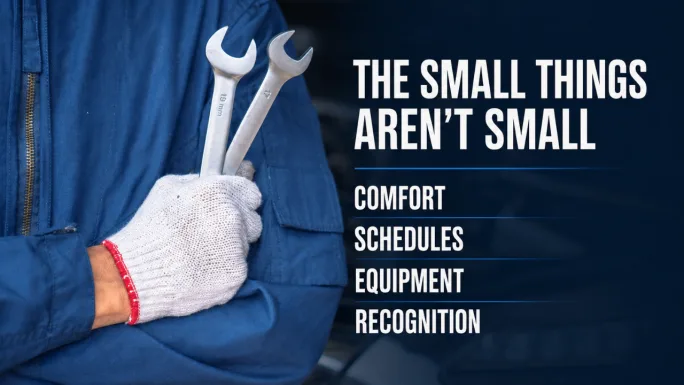
Small day-to-day factors such as working conditions, scheduling, equipment, and recognition can have a big impact on whether technicians feel valued.
Credit:
Work Truck
The Year-Round Technician Appreciation Checklist
Technician appreciation is less about one big gesture and more about what technicians experience every day. Fleet leaders can use this checklist to see where their operation is showing support and where there may still be room to improve.
Give technicians the right tools for the job. Make sure equipment, technology, and shop resources help technicians work efficiently instead of creating another obstacle.
Keep compensation competitive. Pay is not the whole retention equation, but it is still an important part of showing skilled technicians that their work is valued.
Protect work-life balance when possible. Look for ways to reduce unnecessary last-minute schedule changes, weekend work, and non-emergency requests that become emergencies because of poor planning.
Make training ongoing. Give technicians regular opportunities to stay current as vehicles, diagnostics, and maintenance technology change.
Show them where their career can go. Create clear paths for advancement, specialization, leadership, mentorship, or other professional growth.
Ask for their input. Include technicians in conversations about workflow, shop equipment, processes, and other decisions that directly affect how they do their jobs.
Recognize good work while it is happening. Celebrate milestones, share positive customer feedback, acknowledge great ideas, and recognize employees who consistently contribute to the team.
Pay attention to working conditions. Heat, cold, uniforms, hydration, shop comfort, and safety may seem basic, but they have a real impact on how supported employees feel.
Explain changes instead of just announcing them. When new systems, software, or processes are introduced, give technicians context, time to adapt, and a chance to provide feedback.
Build mentorship into the culture. Give experienced technicians opportunities to help newer employees understand both the technical side of the job and how their work affects uptime, customers, and the larger fleet operation.
Listen, then follow through. Asking for feedback only matters if employees can see that leadership considers it and acts on it when appropriate.
Do not save appreciation for one week. The thank-you lunch is great. The stronger message comes from how technicians are treated the rest of the year.
Achieving the right balance of efficiency, durability, and electrical performance is critical in high-speed electric-vehicle drivetrains. The Society of Tribologists and Lubrication Engineers (STLE) released its new special report about EV lubrication.
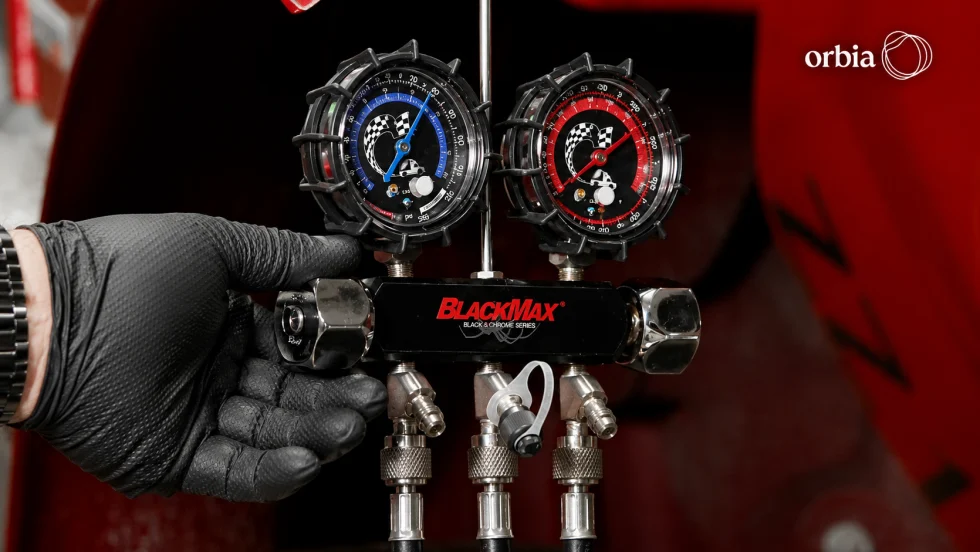
As new A/C refrigerants enter the market, fleet shops may already have many of the tools they need to service them. Here’s why revisiting basic refrigerant service skills could save equipment costs and get trucks back on the road faster.
A new referral partnership connects on-site fueling and maintenance services, with a focus on reducing off-site trips and making better use of fleet downtime.
Unplanned downtime hurts efficiency and even profitability for work truck fleets, but catching potential problems early can help prevent it. Here is an inspection list that can help potentially prevent that downtime.
Hunter Engineering’s collaboration with Bosch enables ADASLink to connect directly with Bosch diagnostic experts through an integrated remote support platform, allowing shops to service more vehicles.
Mack Trucks introduced four system-specific chassis coverage plans, giving fleets more flexibility to manage repair costs for driveline, HVAC, electronics, safety systems, and other components.
The GM Automotive Service Technicians 30 Under 30 program honors GM service technicians under the age of 30 who demonstrate continuous technical training, exemplary customer service, mentorship, and leadership.
A strategic partnership between Kooner Fleet Management Solutions and Safe Truck Parking brings mobile maintenance and 24/7 repair services directly to Safe Truck Parking locations, beginning in San Diego, California, with nationwide expansion planned.
Meter readings still matter, but engine hours, idle time, maintenance trends, and utilization can help fleets spot costly vehicles before the odometer does.