





Learn More: 7 Steps for a Successful Zero-Emission Vehicle Strategy
Electric Truck and Charging Programs to Boost Sustainability at NY & NJ Ports
Together, the Port Authority of New York and New Jersey and CALSTART will electrify drayage and terminal operations serving the East Coast’s busiest container port. A pair of incentive programs totaling $45 million has launched to accelerate adoption of zero-emission drayage trucks and terminal tractors.
September 9, 2026
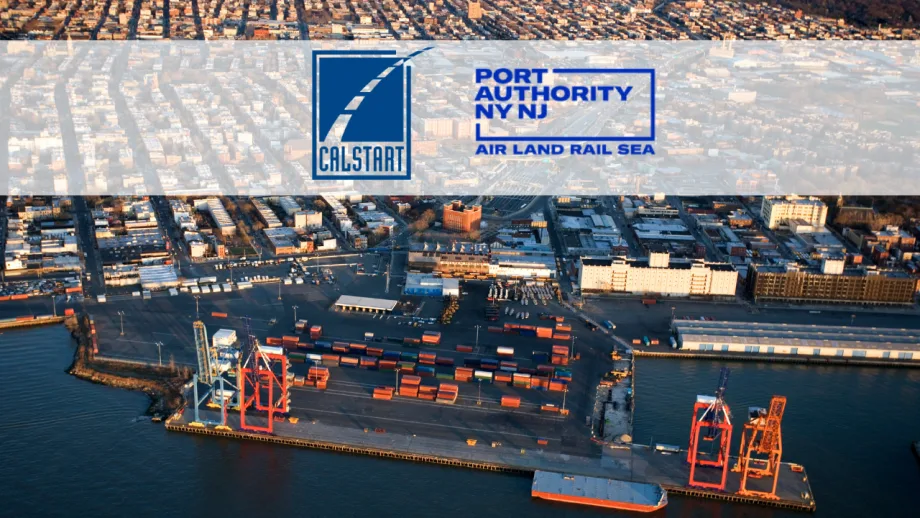
Two programs will provide $45 million in funding to help drive the adoption of zero-emission drayage trucks and terminal tractors and provide the needed infrastructure at the Port of New York and New Jersey.
Credit:
CALSTART | Work Truck
5 min to read
- The Port Authority of New York and New Jersey, in collaboration with CALSTART, is working to electrify drayage and terminal operations at the region's busiest container port.
- Two incentive programs with a combined budget of $45 million have been launched to support the transition to zero-emission vehicles.
- The programs aim to facilitate the adoption of electric drayage trucks and terminal tractors to enhance sustainability efforts.
*Summarized by AI
CALSTART and the Port Authority of New York and New Jersey have announced a pair of incentive programs totaling $45 million to accelerate adoption of zero-emission (ZE) drayage trucks and terminal tractors, and the infrastructure needed to power them, at the Port of New York and New Jersey.
Commencing this fall, CALSTART will serve as the program designer and administrator for the Clean Truck Incentive (CTI) Program and Green Drayage Accelerator (GDA), looking to drive zero-emission commercial fleet adoption across the East Coast’s busiest seaport.
"Deploying zero-emission trucks at scale requires pairing accessible vehicle incentives with reliable, high-capacity charging,” said Alycia Gilde, CALSTART executive vice president of California and regional market acceleration. “By combining flexible financial support with streamlined program administration, our partnership with the port authority lowers the barrier to entry for drayage operators, modernizing the East Coast supply chain while delivering immediate, tangible air quality improvements to local port communities.”
CTI will deploy up to $39 million in point-of-sale vouchers for the purchase of zero-emission drayage trucks, yard tractors, and supporting charging infrastructure.
The $5 million GDA program aims to award up to five electric truck charging hubs within 10 miles of the port authority’s seaport facilities (or marine terminal facilities).
The programs are designed to advance the Port Authority’s sustainability goals by accelerating cleaner technologies while providing port operators with affordable, discounted electric vehicles and charging options.
“The port authority has committed to reaching net-zero by 2050, and we can't get there without bringing our tenants, contractors, and partners like the trucking community along with us,” said Kathryn Garcia, port authority executive director. “These new incentive programs make it financially realistic for drayage operators to switch to zero-emission trucks and yard equipment. Paired with other industry-leading programs and regulations, we’re making sure we back up our ambitious sustainability commitments with real action.”
They complement a multitude of other sustainability initiatives at the seaport as the Port Authority looks to encourage all links in the supply chain, including ocean carriers, container terminals, and trucking companies, to adopt greener operations.
The agency has committed to reaching net-zero carbon emissions by 2050, including helping its wide universe of operating partners, tenants, and contractors to reach the same goal in the same timeframe.
“The trucks that move through our gates don't stop there. They fan out to warehouses and distribution hubs across the region, carrying the goods that power our economy,” said Kevin O’Toole, port authority chairman. “This $45 million partnership with CALSTART puts zero-emission trucks, terminal tractors, and charging infrastructure within reach for the operators who serve this port every day. Cleaner trucks here mean cleaner air not just for our port facilities, but for every community along the routes these trucks travel.”
“Drayage operators are the backbone of this port, keeping freight moving day and night from our terminals to warehouses and businesses across the region,” said Bethann Rooney, port authority port director. “We know that any shift towards cleaner operations must happen through real support and partnership, rather than top-down mandates. We’re making zero-emission trucks and terminal tractors more affordable for the operators who keep this port running, backed by the charging infrastructure they'll need to power them.”
CALSTART Tracking Dashboards
To ensure transparency and measure long-term impact, CALSTART will build and launch dynamic tracking dashboards for both initiatives. These tools will monitor deployment, vehicle performance, and charger utilization across port operations before being fully transferred to the Port Authority in 2028.
Port Authority and CALSTART staff will conduct outreach with the trucking community through in-person and online presentations and informational pamphlets over the coming weeks.
$451-Million Grant
The programs are funded through a $451-million grant awarded to the Port Authority through the U.S. Environmental Protection Agency’s Clean Ports Program, the largest sustainability grant in Port Authority history.
Beyond the CALSTART-administered programs, the grant will also fund the deployment of electric cargo handling equipment at marine terminals and the installation of vessel shore power infrastructure to allow container ships to plug in while at berth and shut down their auxiliary engines. A separate $3-million EPA planning grant will fund the creation of a Port Community Advisory Council. Subrecipients of the overall award will also be positioned to pursue workforce training and job creation efforts tied to the clean energy sector.
Port Authority’s Sustainability Agenda
The programs will further strengthen the Port Authority’s wide-ranging, ambitious sustainability agenda. Through its comprehensive net-zero roadmap, the agency has committed to reaching net-zero carbon emissions by 2050 while assisting the broad ecosystem of operating partners, tenants, and contractors in reaching the same goals in the same timeframe.
Truck Replacement Program
At the seaport, these efforts have taken several forms. The Truck Replacement Program provides financial incentives to trucking companies that swap out older, higher-emission engines for newer, cleaner ones.
Clean Vessel Incentive Program
The Clean Vessel Incentive program similarly rewards ocean carriers that voluntarily reduce speed near the port, cutting air emissions and conserving fuel in the process.
The agency has also built emissions requirements into its marine terminal rules and regulations, mandating that terminal operators shift to zero-emission cargo handling equipment as it becomes commercially available, a move designed to build market demand and push the industry toward further innovation.
ExpressRail Expansion
Also, the continued expansion of the seaport's on-dock ExpressRail system allows goods to move to the Midwest, New England, and eastern Canada more sustainably than trucking alone. The agency also opened an electric truck charging station at Port Newark last year, with four super-fast chargers located at the truck welcome center at Marlin and Kellogg streets. The port's tenants have pursued their own sustainability initiatives as well, among them Port Newark Container Terminal's recently completed solar installation.
Progress Toward Emissions Goals
Progress toward the Port Authority's emissions goals is documented in the seaport's latest 2024 Air Emissions Inventory and Efficiency, which shows sulfur dioxide down 98% and both nitrogen oxide and particulate matter down more than 83% from 2006 baseline levels, even as cargo volume climbed nearly 71% over the same period.
The new programs are also part of a broader push to streamline and improve conditions for the truckers who serve the port, alongside upgraded public restrooms, better roadway paving and striping, new wayfinding and navigation signage, and stronger channels for feedback between drayage drivers and port staff.
Meanwhile, the ongoing Port Street Corridor Improvement Project is reworking and modernizing one of the port complex's key interchanges, aiming to make operations safer and more efficient for the thousands of trucks that pass through daily.
More Sustainability
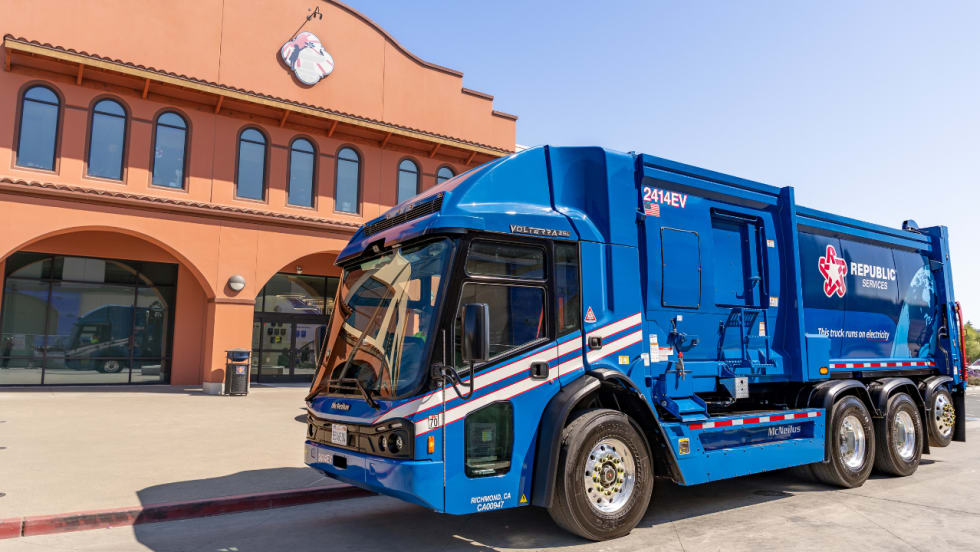
What Republic Services Learned Moving Electric Trucks Beyond the Pilot
With 250 electric refuse trucks now in service, Republic Services is learning that scaling a new powertrain depends as much on routes, drivers, technicians, and daily operations as it does on the truck itself.
Read More →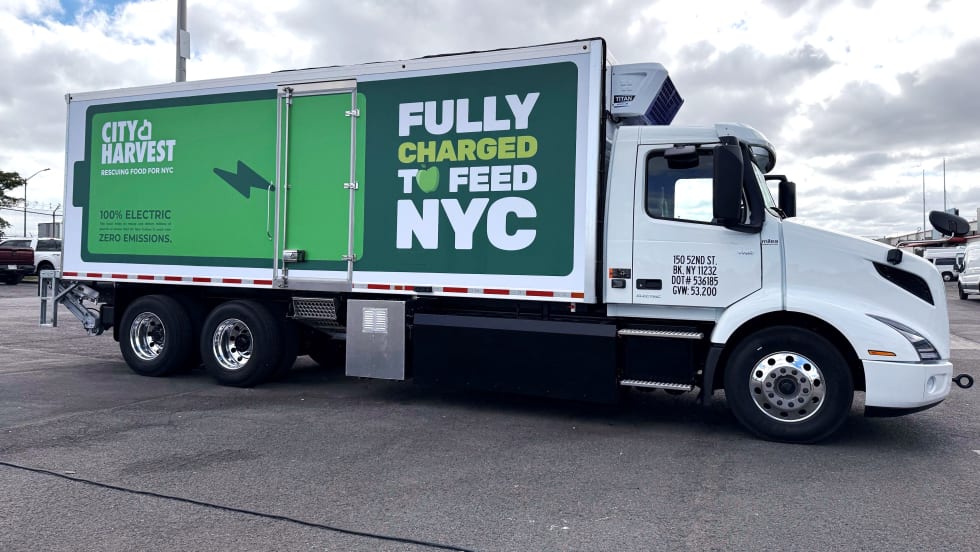
City Harvest Begins Using Volvo VNR Electric Trucks to Rescue Food Across New York City
Volvo Trucks North America and the Bronx Is Breathing project team handed over three new Volvo VNR Electric trucks to City Harvest, which will use the trucks to rescue and deliver food throughout the Bronx and across all five boroughs of New York.
Read More →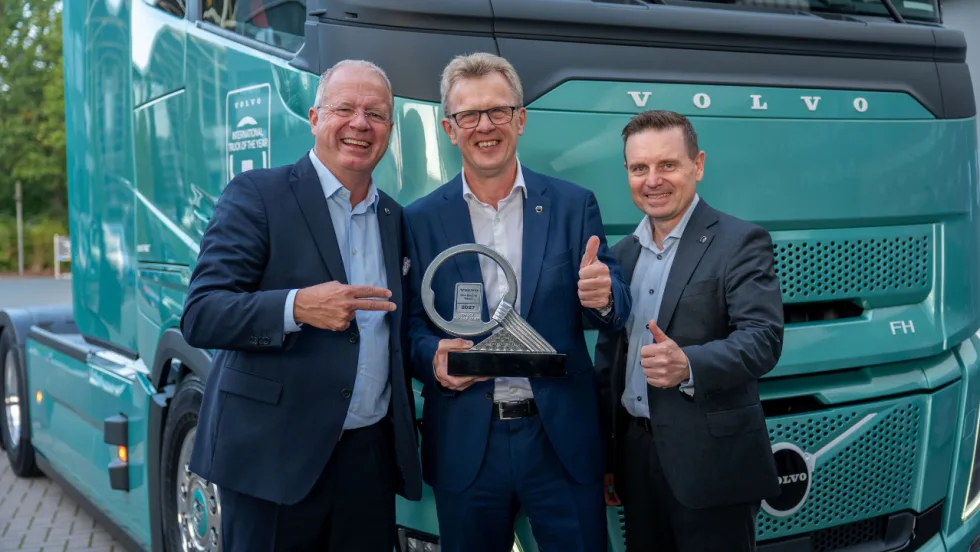
Volvo Trucks Wins International Truck of the Year 2027 for its Global Electric Range
Volvo Trucks' global heavy-duty electric range has been named International Truck of the Year 2027. Since 2019, more than 7,000 electric Volvo trucks have driven more than 310 million miles worldwide.
Read More →


Fleet Forward Conference Introduces One-Day Passes for 2026
New one-day registration gives fleet professionals the flexibility to attend Tuesday, Wednesday, or Thursday, with passes available for $199 through Sept. 18.
Read More →
CALSTART Rebrands as Catalyst Mobility, Will Combine with Forth in 2027
CALSTART has rebranded as Catalyst Mobility and will combine with Forth at the start of 2027. The new organization said it is poised to become one of the world's largest, strongest, and most impactful clean transportation nonprofits.
Read More →
The Smart Way to Build a Mixed-Energy Fleet Isn’t About Picking a Side
Mixed-energy fleets aren’t about picking a winning fuel. Sarah Booth of WEX explains how vehicle data, duty cycles, charging strategy, and real-world costs can help fleets choose the right energy source for each job.
Read More →
Xos Hub Surpasses One Gigawatt-Hour of Energy Delivered in the Field
A single Xos Hub has surpassed one gigawatt-hour of energy across more than 33,600 charging sessions in the field, demonstrating performance that supports Xos' expansion across new products and markets.
Read More →
Carrier Transicold Launches All-Electric Vector 8200 TRU for Diesel-Free On-Site Cold Storage
Carrier Transicold’s first engineless multi-temperature TRU helps fresh- and frozen-food fleets add supplemental cold storage capacity during seasonal peaks.
Read More →
Narro Trucks Introduces Electric Utility Vehicle
Narro Trucks officially launched its operations on Aug. 20 and hosted a ride and drive to showcase its electric truck, which will be produced in Virginia.
Read More →
Samsung SDI Takes Full Control of GM Battery JV as Indiana Plant Pivots to Energy Storage
Samsung SDI is taking full control of its Indiana battery plant with GM, marking a major shift from the EV-focused joint venture Charged Fleet first covered in 2023.
Read More →