





Keep Reading: Chevrolet Brings Back 'Heartbeat of America' Campaign Featuring Trucks and Everyday Workers
Samsung SDI Takes Full Control of GM Battery JV as Indiana Plant Pivots to Energy Storage
Samsung SDI is taking full control of its Indiana battery plant with GM, marking a major shift from the EV-focused joint venture Charged Fleet first covered in 2023.
August 12, 2026
Samsung SDI has acquired GM’s 49.99% stake in their SynergyCells battery joint venture, taking full ownership of the New Carlisle, Indiana, plant as the facility shifts its near-term focus toward energy storage system battery production.
Credit:
Charged Fleet | General Motors
4 min to read
- Samsung SDI assumes full ownership of its Indiana battery plant in partnership with GM.
- The decision signifies a strategic departure from the initial electric vehicle-oriented joint venture.
- The Indiana plant will now shift its focus towards energy storage solutions.
*Summarized by AI
Samsung SDI has acquired General Motors’ 49.99% stake in their SynergyCells battery joint venture, giving the battery manufacturer full ownership of a New Carlisle, Indiana, plant originally planned as a major piece of GM’s expanding U.S. electric vehicle battery supply chain.
The ownership change comes more than three years after GM and Samsung SDI first announced plans to jointly build the battery facility, and it illustrates how quickly EV manufacturing strategies have shifted as automakers and suppliers adjust to changing demand.
Samsung SDI said slower-than-expected EV demand factored into the companies’ decision to move away from the joint-venture structure. Once construction is completed, Samsung SDI plans to initially use the facility to manufacture batteries for the growing U.S. energy storage system, or ESS, market.
The companies are not ending their battery relationship. Samsung SDI and GM have also signed a new joint development agreement covering next-generation prismatic battery cells for potential future EV applications. The companies said the cells will target high energy density and fast-charging capability.
Samsung SDI said future prismatic cells developed with GM could potentially be manufactured at the Indiana facility.
From EV Expansion to Energy Storage
The current plan looks significantly different from the one GM and Samsung SDI outlined when the partnership was first announced.
Charged Fleet reported in April 2023 that the companies planned to invest more than $3 billion in the battery cell plant, which was originally expected to begin operations in 2026. At the time, the companies projected more than 30 GWh of annual capacity and planned to jointly operate the facility.
GM Chair and CEO Mary Barra said at the time that batteries produced through the partnership would help the automaker scale EV capacity in North America to well beyond 1 million vehicles annually. The facility was also expected to broaden the battery formats available to GM, with plans at the time calling for nickel-rich prismatic and cylindrical cells.
By the time Samsung SDI and GM finalized the joint-venture agreement in August 2024, the companies put the investment at approximately $3.5 billion and identified New Carlisle as the location. The facility was expected to create more than 1,600 jobs and begin with 27 GWh of annual production capacity, with expansion plans that could take it to 36 GWh. Mass production had also shifted from the original 2026 target to 2027.
At that point, the plant was still being positioned squarely around EVs. Samsung SDI said it would produce nickel-rich prismatic batteries expected to be used in upcoming GM electric vehicles.
Two years later, Samsung SDI will instead become the plant’s sole owner and initially direct its output toward stationary energy storage.
Battery Makers Look for More Flexibility
GlobalData sees the transaction as part of a larger adjustment taking place as battery manufacturers balance EV investments with growing opportunities in energy storage.
“From Samsung SDI’s viewpoint, acquiring full ownership provides more control over capacity, scheduling, product mix, and investment decisions,” said Madhuchhanda Palit, senior automotive analyst at GlobalData. “With ESS demand growing more robustly than EV battery demand in the US, the Indiana plant can be oriented toward prismatic cells for ESS in the near term, allowing Samsung SDI to pivot more responsively.”
Full ownership also gives Samsung SDI its first independently operated battery production facility in North America. For GM, meanwhile, selling its ownership position reduces the automaker’s direct exposure to the manufacturing operation while preserving access to Samsung SDI battery development.
“For GM, the exit suggests a recalibration of its EV strategy, reducing its exposure to cell production risk amid EV demand softness,” Palit said. “By signing a joint development agreement for next-generation prismatic cells, GM retains access to advanced battery technology without bearing full capacity investment or operating risks.”
The change does not mean the Indiana factory is permanently leaving the EV supply chain. Samsung SDI said the facility could eventually manufacture the prismatic cells being jointly developed with GM.
But compared with the companies’ 2023 announcement, the priorities have clearly shifted. What began as a jointly owned plant designed to add EV battery capacity for GM will now open under Samsung SDI ownership with energy storage as its first target market.
“Samsung SDI’s acquisition reflects evolving market realities: ESS demand is strengthening, EV volume forecasts are moderating, and incentives favor domestic control and flexibility,” Palit said. “For GM, it reallocates risk and capital while maintaining technological collaboration.”
Quick Answers
Samsung SDI has taken full control of the Indiana battery plant, previously operated as a joint venture with GM.
*Summarized by AI
Originally posted on Charged Fleet
More Green Fleet
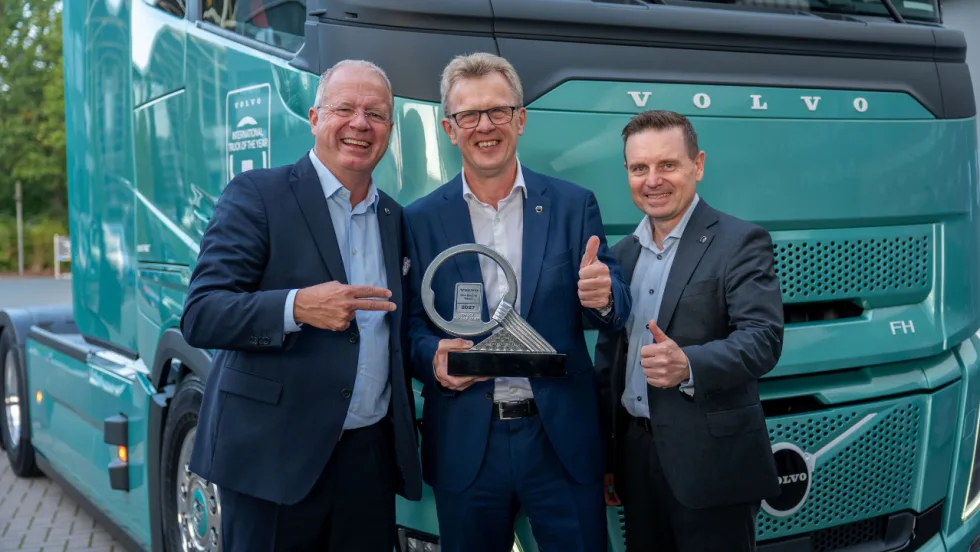
Volvo Trucks Wins International Truck of the Year 2027 for its Global Electric Range
Volvo Trucks' global heavy-duty electric range has been named International Truck of the Year 2027. Since 2019, more than 7,000 electric Volvo trucks have driven more than 310 million miles worldwide.
Read More →
Fleet Forward Conference Introduces One-Day Passes for 2026
New one-day registration gives fleet professionals the flexibility to attend Tuesday, Wednesday, or Thursday, with passes available for $199 through Sept. 18.
Read More →
CALSTART Rebrands as Catalyst Mobility, Will Combine with Forth in 2027
CALSTART has rebranded as Catalyst Mobility and will combine with Forth at the start of 2027. The new organization said it is poised to become one of the world's largest, strongest, and most impactful clean transportation nonprofits.
Read More →


Electric Truck and Charging Programs to Boost Sustainability at NY & NJ Ports
Together, the Port Authority of New York and New Jersey and CALSTART will electrify drayage and terminal operations serving the East Coast’s busiest container port. A pair of incentive programs totaling $45 million has launched to accelerate adoption of zero-emission drayage trucks and terminal tractors.
Read More →
The Smart Way to Build a Mixed-Energy Fleet Isn’t About Picking a Side
Mixed-energy fleets aren’t about picking a winning fuel. Sarah Booth of WEX explains how vehicle data, duty cycles, charging strategy, and real-world costs can help fleets choose the right energy source for each job.
Read More →
Xos Hub Surpasses One Gigawatt-Hour of Energy Delivered in the Field
A single Xos Hub has surpassed one gigawatt-hour of energy across more than 33,600 charging sessions in the field, demonstrating performance that supports Xos' expansion across new products and markets.
Read More →
Carrier Transicold Launches All-Electric Vector 8200 TRU for Diesel-Free On-Site Cold Storage
Carrier Transicold’s first engineless multi-temperature TRU helps fresh- and frozen-food fleets add supplemental cold storage capacity during seasonal peaks.
Read More →
Narro Trucks Introduces Electric Utility Vehicle
Narro Trucks officially launched its operations on Aug. 20 and hosted a ride and drive to showcase its electric truck, which will be produced in Virginia.
Read More →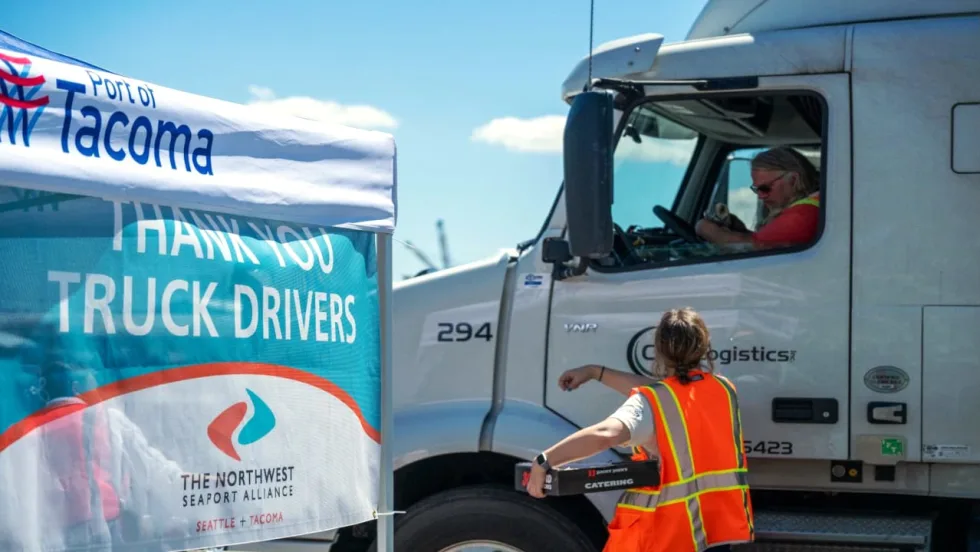
NWSA Taps CALSTART to Administer Zero-Emission Drayage Assistance Program
CALSTART will provide free technical assistance services to drayage fleets serving the Ports of Seattle and Tacoma and looking to transition to cleaner technologies and help decarbonize freight hubs.
Read More →
EV Fleet Reality Check: What Operators Wish They Knew Before Electrifying Their Work Vans
Electric work truck upfits bring new compatibility questions. Learn how parts availability, OEM guidance, power demands, and route planning can affect fleet performance.
Read More →