





5 Things to Know When Selecting Charging Solutions for Work Truck Fleets
GM and LG Energy Solution to Pioneer LMR Battery Cell Technology
Battery engineers at General Motors and LG Energy Solution have developed a new lithium manganese-rich (LMR) prismatic battery that unlocks 33% higher energy density compared to the best-performing lithium iron phosphate (LFP) based cells.
May 13, 2025
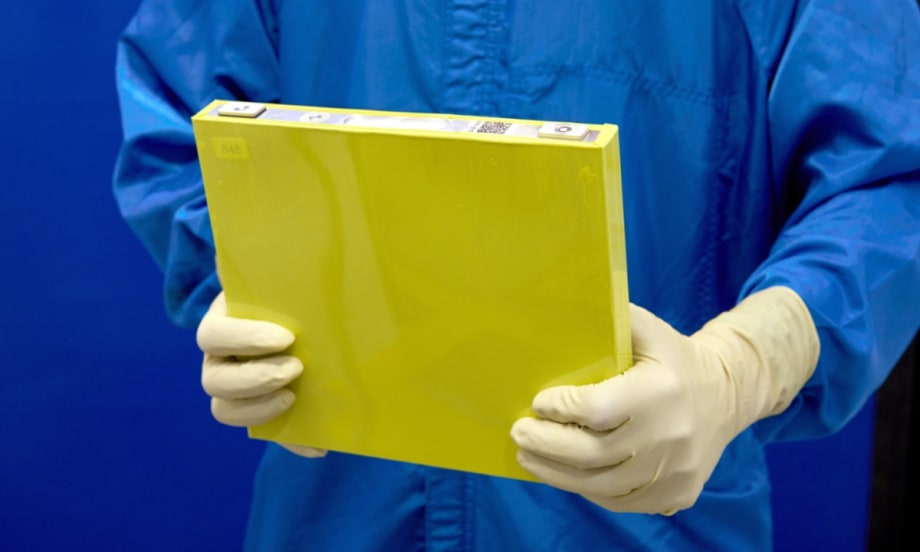
An employee holds a full-size prototype LMR battery cell at the General Motors Wallace Battery Cell Innovation Center in Warren, Michigan. GM and LG Energy Solution are collaborating to commercialize lithium manganese-rich (LMR) prismatic battery cells for future GM vehicles.
Photo: Steve Fecht for General Motors
3 min to read
General Motors and LG Energy Solution will commercialize lithium manganese-rich (LMR) prismatic battery cells for future GM electric trucks and full-size SUVs, in a new battery technology breakthrough.
This builds on a partnership between the two companies to develop prismatic battery cell technology and related chemistries, and on GM’s long legacy of American ingenuity that’s produced innovations like the small-block V8 engine, OnStar connected vehicle services, and hands-free Super Cruise.
GM aims to become the first automaker to deploy LMR batteries in EVs, the company said in a press release.
Ultium Cells, a GM and LG Energy Solution joint venture, plans to start commercial production of LMR prismatic cells in the United States by 2028, with pre-production expected to begin at an LG Energy Solution facility by late 2027.
The final production design of these LMR battery cells will be validated at GM’s Battery Cell Development Center in Warren, MI, which is expected to open earlier that year, as well as LG Energy Solution’s facility.
Battery cathodes require materials like cobalt, nickel, and manganese, with cobalt being the most expensive. LMR battery cells use a higher proportion of more affordable manganese, while also delivering greater capacity and energy density.
Battery engineers at GM and LG Energy Solution have developed a new LMR prismatic battery cell that unlocks 33% higher energy density compared to the best-performing lithium iron phosphate (LFP) based cells – at a comparable cost.
GM's electric truck platform has segment-leading range using high-nickel chemistry today. By integrating LMR battery technology and the manufacturing and space efficiency benefits of prismatic cells, GM aims to offer more than 400 miles of range in an electric truck while achieving significant battery pack cost savings compared to today’s high-nickel pack.
“We’re pioneering manganese-rich battery technology to unlock premium range and performance at an affordable cost, especially in electric trucks,” said Kurt Kelty, VP of battery, propulsion, and sustainability at GM. “As we look to engineer the ideal battery for each vehicle in our diverse EV portfolio, LMR will complement our high-nickel and iron-phosphate solutions to expand customer choice in the truck and full-size SUV markets, advance American battery innovation, and create jobs well into the future.”
“We’re excited to introduce the first-ever LMR prismatic cells for EVs, the culmination of our decades-long research and investment in the technology,” said Wonjoon Suh, executive vice president and head of the Advanced Automotive Battery division at LG Energy Solution. “GM’s future trucks powered by this new chemistry are a strong example of our shared commitment to offering diverse EV options to consumers.”
Building Manganese-Rich Lithium-Ion Battery Cells
GM began researching manganese-rich lithium-ion battery cells in 2015, accelerating this technology development by prototyping LMR cells at its Wallace Battery Cell Innovation Center in Warren.
In collaboration with partners, GM engineers advanced cathode materials, electrolytes, additives, form factors, and cell assembly processes to overcome LMR’s legacy challenges in performance and durability.
LG Energy Solution holds the largest LMR technology IP portfolio globally, having secured over 200 patents1 in this technology field. Its expertise reflects extensive research, with its first patent on LMR chemistry dating back to 2010.
LMR battery technology integrates into GM’s battery supply chain and cell manufacturing processes, reinforcing strategic investments in domestic battery production and the responsible sourcing of critical materials, such as lithium, graphite, and manganese, from North America.
More Green Fleet

Fleet Forward Conference Introduces One-Day Passes for 2026
New one-day registration gives fleet professionals the flexibility to attend Tuesday, Wednesday, or Thursday, with passes available for $199 through Sept. 18.
Read More →
CALSTART Rebrands as Catalyst Mobility, Will Combine with Forth in 2027
CALSTART has rebranded as Catalyst Mobility and will combine with Forth at the start of 2027. The new organization said it is poised to become one of the world's largest, strongest, and most impactful clean transportation nonprofits.
Read More →
Electric Truck and Charging Programs to Boost Sustainability at NY & NJ Ports
Together, the Port Authority of New York and New Jersey and CALSTART will electrify drayage and terminal operations serving the East Coast’s busiest container port. A pair of incentive programs totaling $45 million has launched to accelerate adoption of zero-emission drayage trucks and terminal tractors.
Read More →
Xos Hub Surpasses One Gigawatt-Hour of Energy Delivered in the Field
A single Xos Hub has surpassed one gigawatt-hour of energy across more than 33,600 charging sessions in the field, demonstrating performance that supports Xos' expansion across new products and markets.
Read More →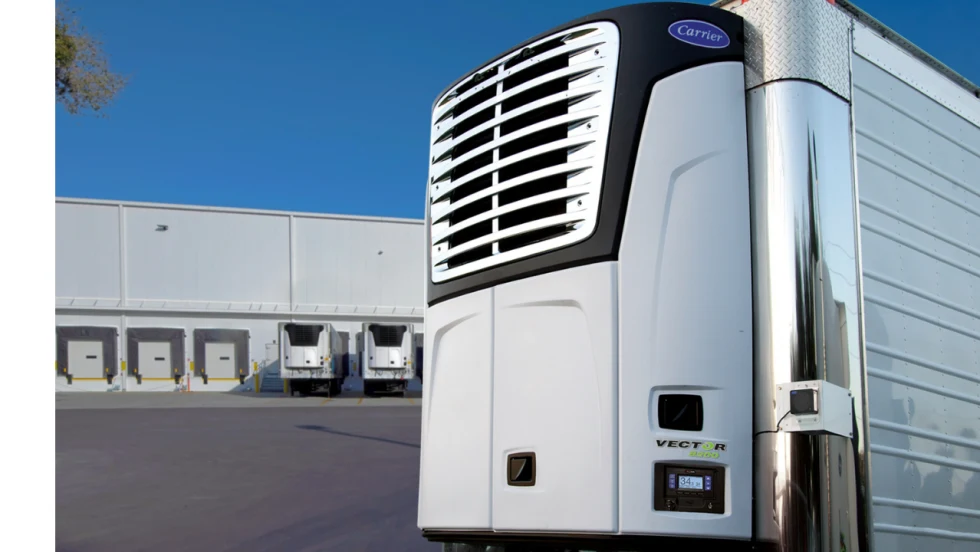
Carrier Transicold Launches All-Electric Vector 8200 TRU for Diesel-Free On-Site Cold Storage
Carrier Transicold’s first engineless multi-temperature TRU helps fresh- and frozen-food fleets add supplemental cold storage capacity during seasonal peaks.
Read More →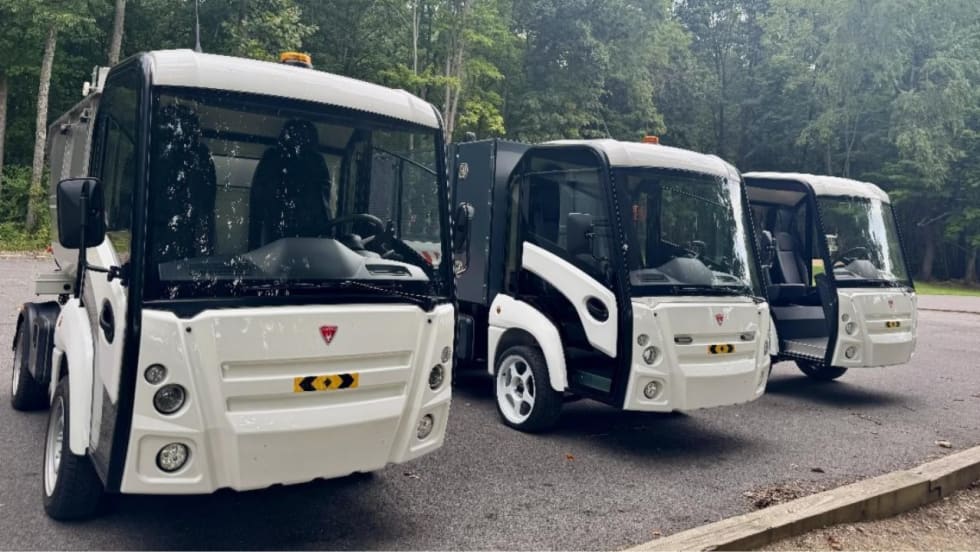
Narro Trucks Introduces Electric Utility Vehicle
Narro Trucks officially launched its operations on Aug. 20 and hosted a ride and drive to showcase its electric truck, which will be produced in Virginia.
Read More →
Samsung SDI Takes Full Control of GM Battery JV as Indiana Plant Pivots to Energy Storage
Samsung SDI is taking full control of its Indiana battery plant with GM, marking a major shift from the EV-focused joint venture Charged Fleet first covered in 2023.
Read More →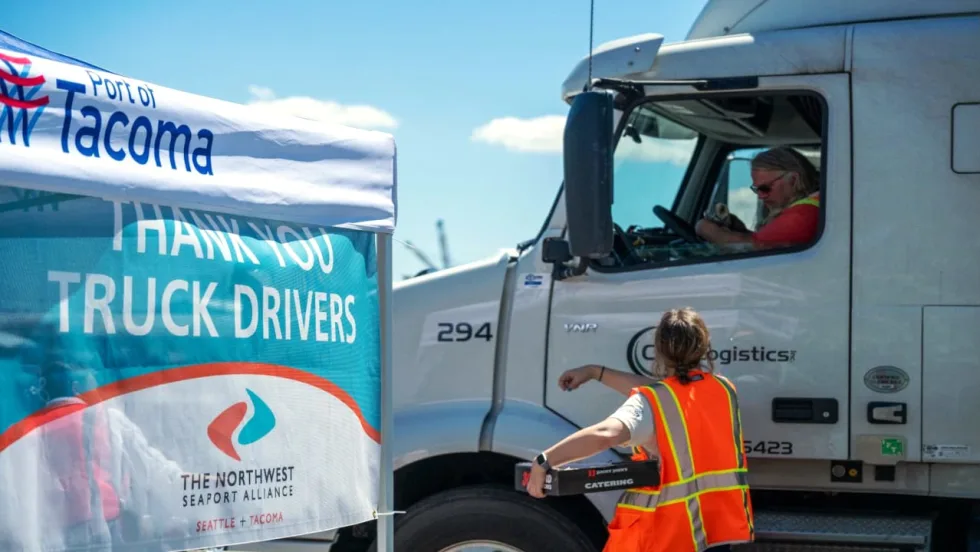
NWSA Taps CALSTART to Administer Zero-Emission Drayage Assistance Program
CALSTART will provide free technical assistance services to drayage fleets serving the Ports of Seattle and Tacoma and looking to transition to cleaner technologies and help decarbonize freight hubs.
Read More →
EV Fleet Reality Check: What Operators Wish They Knew Before Electrifying Their Work Vans
Electric work truck upfits bring new compatibility questions. Learn how parts availability, OEM guidance, power demands, and route planning can affect fleet performance.
Read More →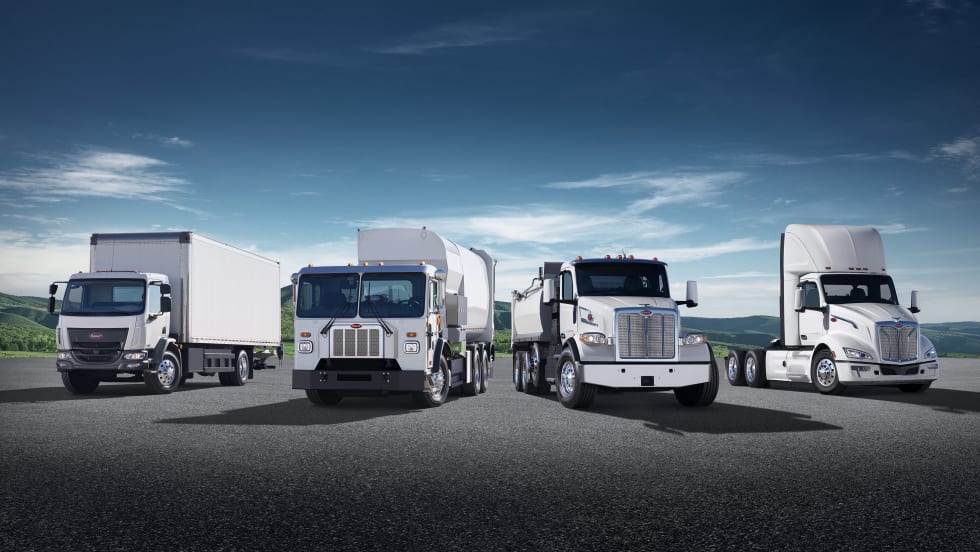
Peterbilt Expands Sourcewell Partnership with Electric Vehicle Lineup
Peterbilt Motors Company’s cooperative purchasing agreement with Sourcewell and its Canadian partner, Canoe Procurement Group, now includes including Peterbilt's battery-electric vehicle lineup.
Read More →