





Engaging Telematics Can Improve Driver Safety and Increase Savings
Ford Pro’s Commercial Vehicle Connectivity Takes Off
During NTEA Work Truck Week 2025, Ford Pro announced announced a 40% increase in connected commercial vehicles in the last two years, now totaling 5.2 million in operation.
March 4, 2025
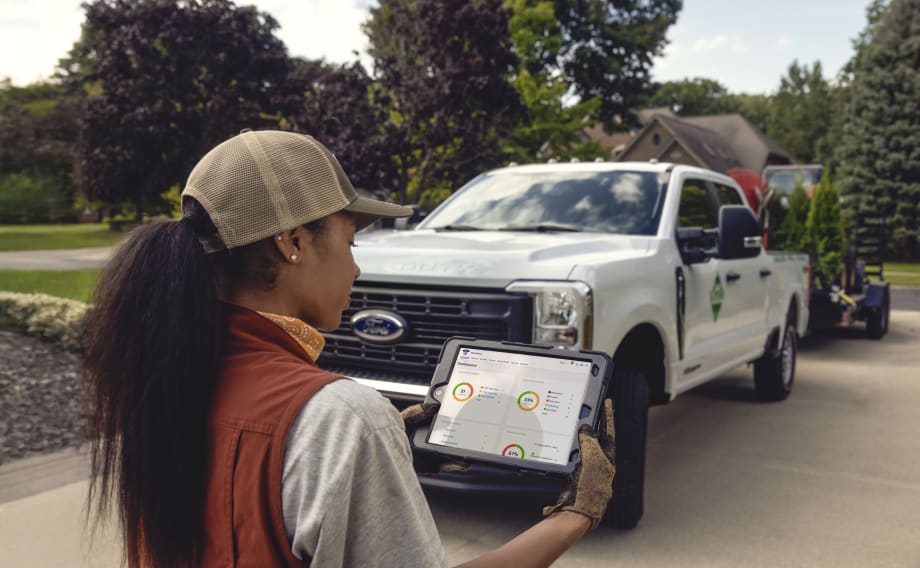
Since 2023, the number of Ford connected commercial vehicles has grown by over 40%, with 5.2 million in operation today.
Photo: Ford Pro
4 min to read
Ford Pro, the commercial division within Ford Motor Company, announced a 40% increase in connected commercial vehicles in the last two years, now totaling 5.2 million in operation.
Building on Ford’s 40-year legacy as America’s commercial vehicle leader, recognized in 2024 as the #1 brand for Class 1-7 electric trucks and vans, Ford continues to offer customers the power of choice to select the right vehicle to get the job done with gas, diesel, hybrid or electric powertrains.
When vehicles are connected, they can communicate with the internet, cloud services and devices such as electric vehicle chargers, dashcams and more. Ford said the resulting data from connected commercial vehicles can help fleet operators improve mobility, efficiency and uptime.
“The demand for data in commercial vehicles is rapidly growing,” said Dave Prusinski, chief revenue officer, Ford Pro Integrated Services. “Acknowledging that our fleet customers operate a variety of powertrains, makes and models, we are committed to ensuring our software solutions are compatible across all types. We’re maximizing the value of connectivity across every layer of fleet management to boost uptime.”
How Ford Pro Data Helps Fleets
Ford Pro solutions bring together data from connected vehicles—including components, sensors, dashcams and electric vehicle chargers—to give subscribers a comprehensive view of their fleet.
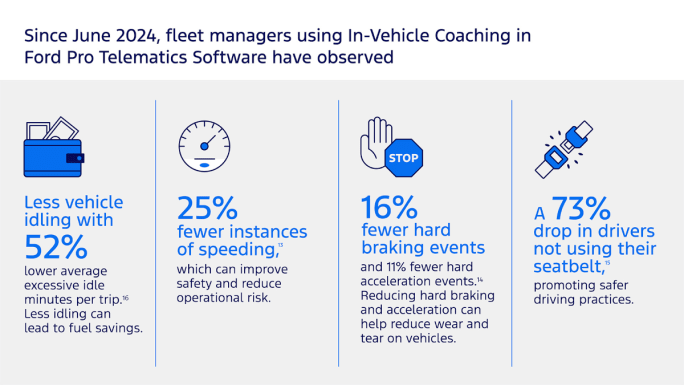
The impact of data to maximize fleet utility is evident through Ford Pro’s In-Vehicle Coaching feature. Since June 2024, data from Ford Pro shows that fleets using this solution have experienced less idling, reduced speeding violations, less hard braking, and a 73% drop in driver seatbelt violations on average.
Source: Ford Pro
The impact of data to maximize fleet utility is evident through Ford Pro’s In-Vehicle Coaching feature. Since June 2024, data from Ford Pro shows that fleets using this solution experienced:
Less idling with 52% lower average excessive idle minutes per trip, potentially leading to fuel savings.
Speeding violations down by 25% with lower average speeding over the limit per trip,
Less hard braking with 16% lower deceleration force and 11% less hard acceleration, which can help reduce wear and tear on vehicles.
A 73% drop in driver seatbelt violations on average per trip, helping promote improved driving practices.
“The insights provided by our solutions can help improve driving practices and help fleet managers make more proactive decisions, like coaching drivers to idle less in their vehicles or better adhere to speed limits” said Prusinski.
“Fleets today are more intelligent than ever. While customers have been able to receive information from vehicles, with our new capabilities they can also now send commands to their vehicles to improve fleet operations,” said Prusinski. “We’re pushing the envelope of connectivity and building capabilities at the vehicle's code level that seamlessly integrates with our software solutions. Our customers need to understand and control all aspects of their fleet vehicles. These new solutions will help them be ready for anything.”
Ford Pro Expands Capabilities
Ford Pro’s newest capabilities are redefining fleet management and changing the way commercial customers interact with their vehicles. Expanded solutions that will be available later this year include:
Top Speed Limiter: This will allow fleet managers to remotely set a maximum speed limit on their fleet vehicles to help avoid speeding violations. The feature will be available in Ford Pro Telematics8 later this year on model years 2022 and newer F-150 Lightning and model years 2023 and newer Super Duty trucks. This new feature can help improve driver behavior by controlling speed limit adherence for millions of fleet vehicles on the road.
Acceleration Limiter: Also coming later this year in Ford Pro Telematics for F-150 Lightning, this new feature gives fleet managers remote management to control how quickly a vehicle accelerates to help reduce wear and tear and maximize vehicle longevity.
Fleet Start Inhibit: This allows fleet managers to help combat theft and unauthorized vehicle use. It can disable the vehicle by remotely prohibiting attempts to start the vehicle’s engine. This feature will be available later this year in Ford Pro Telematics on 2023 and newer F-Series Super Duty, 2023 E-Transit in Europe, 2024 F-150 gas and hybrid trucks, 2024 Transit and E-Transit vans, 2025 Explorer, 2025 Expedition, and 2025 Mustang Mach-E.
Remote Lock/Unlock: Available now, fleet managers can remotely lock or unlock any Ford vehicle in their fleet through Ford Pro Telematics, equipping them with virtual command and control of their fleet vehicles.
To learn more about the expanded suite of solutions from Ford Pro, visit FordPro.com.
More Technology
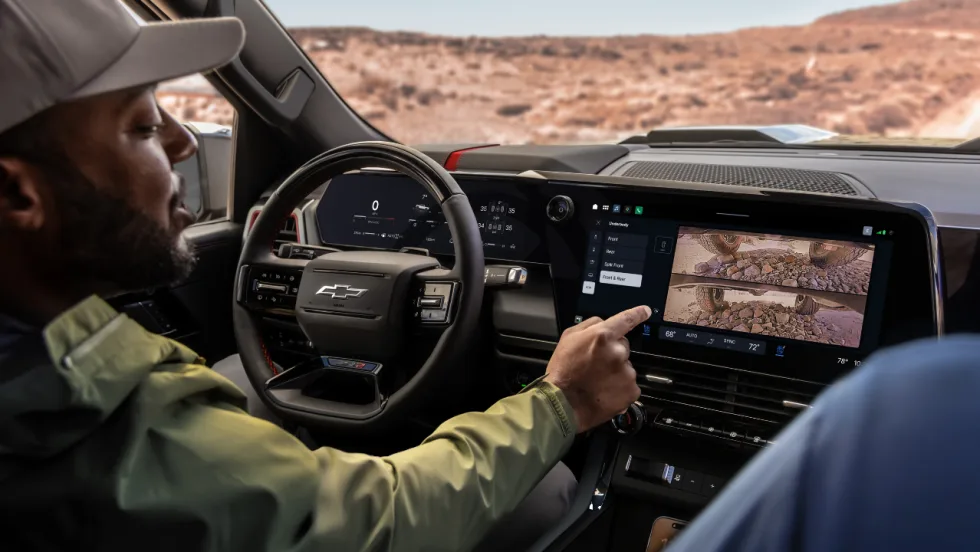
GM Brings New Truck Focused Interface to 2027 Silverado and Sierra
GM's new pickup interface puts trailering data, camera views, vehicle controls, and smartphone integration closer to the driver in the 2027 Silverado and Sierra.
Read More →
Samsara Driver Perks Expands Rewards Beyond the Long Haul Driver
Samsara’s new driver rewards program was built with a broader professional driver in mind, including employees who split their day between driving, job sites, service calls, and other work.
Read More →
AI Service Advisor Aims to Cut Fleet Repair Downtime
Fleetio said its AI Service Advisor can help fleets cut repair downtime by an average of 2.5 hours per repair while reducing manual maintenance work.
Read More →
Verra Mobility Launches AI-Driven Title & Registration Solution
Verra Mobility has launched a new AI-driven Title & Registration platform to help fleets move vehicles from acquisition to the road the same day while reducing compliance risk.
Read More →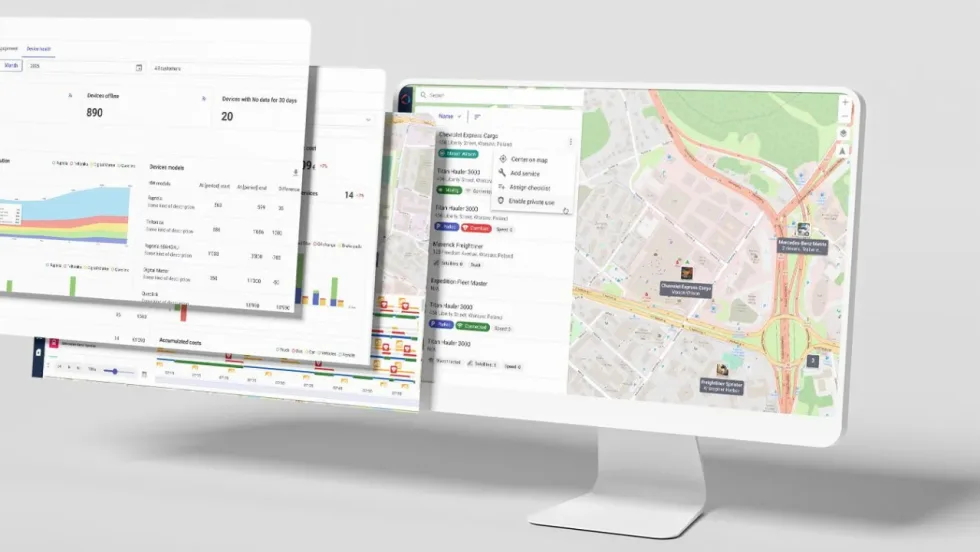
Wialon Unlocks OEM Data to Give Fleet Owners Data Ownership & Operational Clarity
Wialon has introduced hardware-free OEM integration as the EU Data Act accelerates the shift in vehicle data access across the fleet industry in many countries.
Read More →
Teletrac Navman Promotes New CEO from Within
Teletrac Navman’s next CEO, Ricardo Buranello, has served as the company’s chief financial and operating officer. He brings deep financial and operational expertise, a strong strategic orientation, and an intimate knowledge of the business to his new role.
Read More →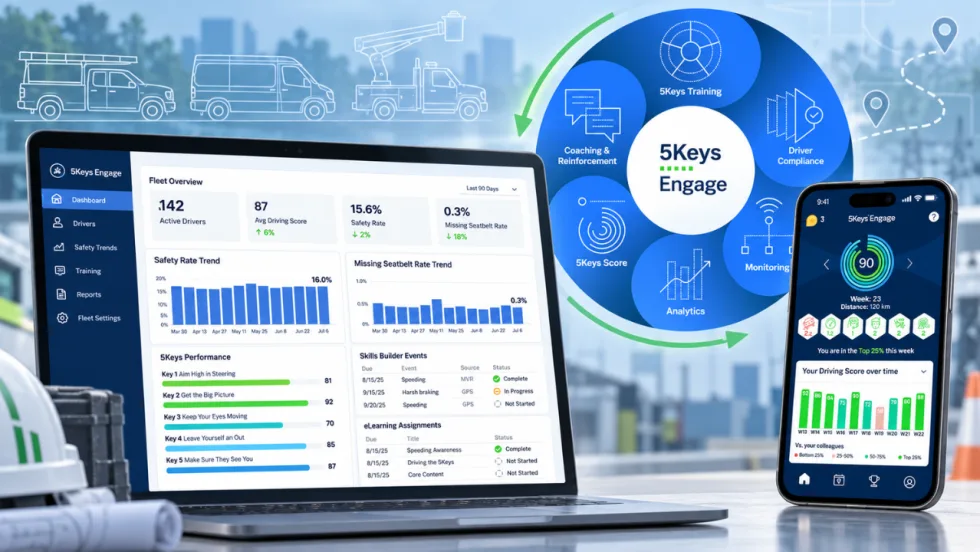
Smith System Wants Work Truck Fleets to Look Beyond the Driver Alert
Smith System’s new Driver Risk Management program is built to help mixed work truck fleets turn telematics alerts and observations into specific behaviors, coaching actions, and measurable follow-up.
Read More →
Ford Pro Software Updates: August 26
Check out the latest Ford Pro software updates, including Google Maps integration, Remote Vehicle Alarm integration, Motor Pool for easier management of shared pool vehicles, and more.
Read More →
Where AI Is Actually Saving Fleet Managers Time
AI is moving past the buzzword stage and into the daily fleet workflow. Fleetio’s Brianna Perry Lang breaks down where fleets are seeing real time savings, from maintenance and data entry to repair decisions, safety, and compliance
Read More →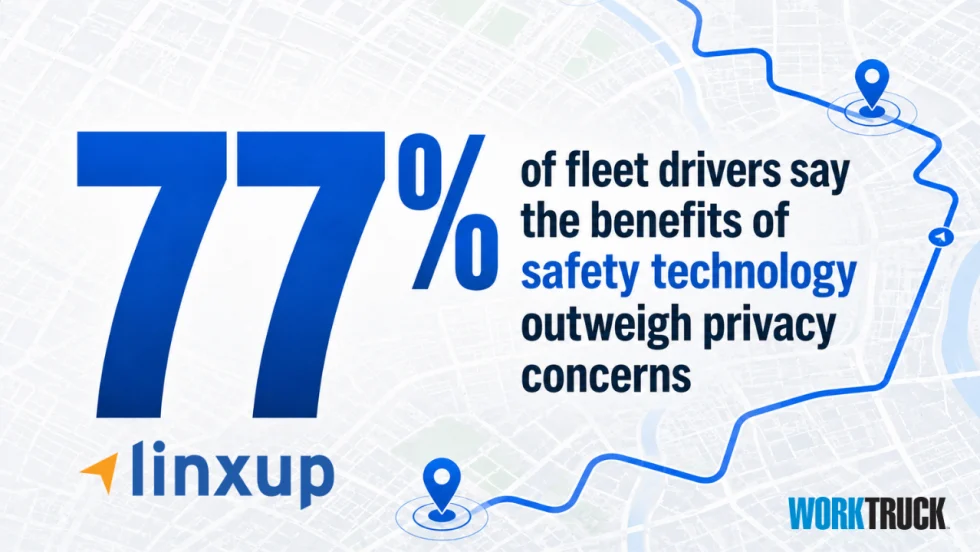
Are Work Truck Drivers Warming Up to Dash Cams and GPS Tracking?
A new survey finds field-service drivers may be more comfortable with dash cams and GPS tracking than fleet managers think, especially when the technology helps protect them after a crash.
Read More →