




Geotab's New AI Connector Could Help Fleets Cut Maintenance Admin and Reduce Downtime
Geotab's new AI connector brings fleet data into ChatGPT and other platforms, helping fleets automate maintenance decisions and reduce downtime.
June 17, 2026

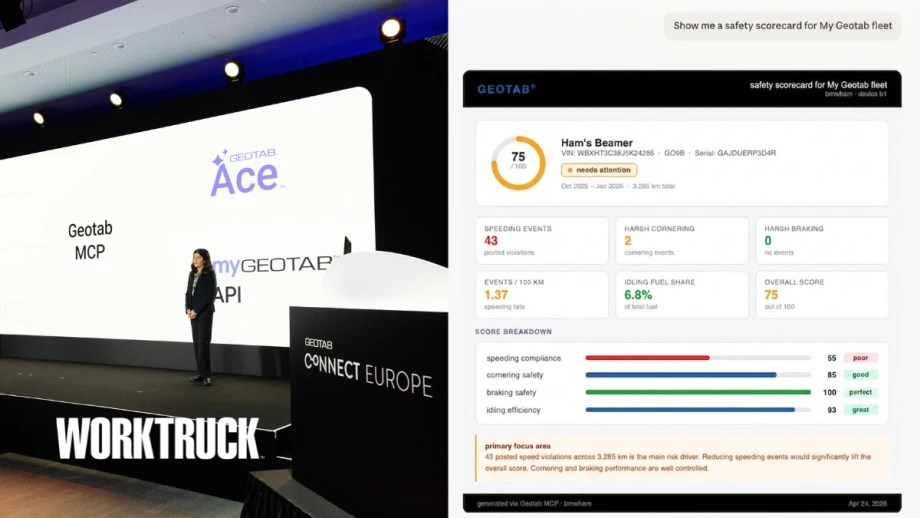
Geotab demonstrates its new MCP Connector, which enables fleet managers to access live vehicle data through AI platforms such as ChatGPT and Claude, helping automate maintenance workflows, reporting, and fleet decision-making.
Credit:
Geotab | Work Truck
4 min to read
Geotab is bringing fleet data directly into artificial intelligence platforms with the launch of its new Model Context Protocol (MCP) Connector, a tool designed to help fleet professionals access vehicle intelligence, automate workflows, and take action without leaving the AI environments they already use.
Announced June 17, the connector enables secure access to live MyGeotab data within approved AI platforms such as ChatGPT, Claude, Microsoft Copilot, and other MCP-compatible tools. Rather than moving between telematics dashboards, maintenance systems, spreadsheets, and reporting platforms, fleet managers can ask questions in natural language and receive answers based on real-time operational data.
The launch represents a significant step in Geotab's broader artificial intelligence strategy. The company says the MCP Connector moves beyond simply making fleet data available. It allows users to execute multi-step workflows, create alerts, schedule maintenance, generate reports, and even build applications without leaving their preferred AI platform.
Maintenance Prioritization Could Be One of AI's Biggest Fleet Impacts
While AI discussions often focus on reporting and analytics, Geotab believes one of the most immediate opportunities for work truck fleets lies in maintenance management and prioritization.
According to Mike Branch, vice president of data and analytics at Geotab, fleet managers today spend significant time gathering information before they can even begin making maintenance decisions.
"One area is maintenance management and prioritization," Branch said. "Today, fleet managers often spend hours pulling information from different systems, reviewing fault codes, checking vehicle history, assessing utilization, and determining which vehicles need attention first. It's a process that requires both data gathering and decision-making."
For many fleets, maintenance information is spread across multiple software platforms, requiring managers to manually compare fault codes, service records, utilization data, and operating conditions to determine which assets should be serviced first. The process becomes even more challenging for fleets operating hundreds or thousands of vehicles across multiple locations.
Branch said AI connected directly to trusted fleet data could dramatically reduce that workload.
"As AI becomes connected to trusted operational fleet data, much of that manual work can be automated," he said. "Instead of reviewing dozens of reports, a fleet manager could simply ask, or have AI automatically determine, which vehicles are at the highest risk of unplanned downtime in the next 30 days, why they're at risk, and what actions should be taken."
Beyond identifying problems, AI systems could help fleets act on recommendations.
"AI can identify patterns, prioritize recommendations, and even initiate workflows such as scheduling maintenance or creating service alerts across multiple systems," Branch said.
The ultimate objective is not to replace fleet managers, but to help them spend less time collecting information and more time making decisions.
"The goal is to reduce the administrative burden on fleet managers so they can spend more time making strategic decisions and less time collecting information," he said.
Branch added that connecting systems together has traditionally required complex integration projects.
"In the past, creating new workflows between systems sometimes required complex integration work, and AI connections through MCP are streamlining that, making execution much easier," he said.
Turning Fleet Data Into Actionable Intelligence
For fleet-dependent organizations, AI is only as effective as the operational data supporting it. Reliable AI insights require accurate, timely, and relevant information about engine health, vehicle utilization, driver behavior, maintenance needs, fuel consumption, routing efficiency, and safety performance.
Geotab brings a substantial data foundation to that challenge. The company processes approximately 37 trillion data points annually from more than 6 million connected vehicles operating across 160 countries.
"High-quality data and information are essential for AI solutions to have a measurable impact on business operations," Branch said in the company's announcement. "Geotab has one of the world's largest and cleanest fleet datasets, built over more than 25 years."
According to Geotab, the scale and quality of its fleet data provide the context AI systems need to generate useful recommendations rather than generic responses.
Open Standards Offer More Flexibility
Unlike proprietary AI solutions that require customers to operate within a single ecosystem, the Geotab MCP Connector is built on the open Model Context Protocol standard.
That approach allows fleets to connect their operational data to the AI platforms they already support while maintaining existing privacy, security, and governance policies.
"Our customers are looking for ways to bring trusted fleet intelligence into the workflows they already use, and not just to answer questions, but to get things done," Branch said in the release. "MCP gives them that flexibility while allowing them to maintain control over their data, AI strategy, and operational processes."
Early users are already reporting measurable benefits.
"By integrating the Geotab MCP connector with Claude, we transformed complex fleet data into real-time, actionable intelligence, replacing weeks of manual analysis with instant, high-depth reporting," said Jon Hanvey, director of tractor maintenance at Central Transport.
As fleets continue searching for ways to improve uptime, reduce administrative workload, and maximize maintenance resources, AI systems connected directly to operational fleet data could become an increasingly important part of fleet management.
More Technology

GM Brings New Truck Focused Interface to 2027 Silverado and Sierra
GM's new pickup interface puts trailering data, camera views, vehicle controls, and smartphone integration closer to the driver in the 2027 Silverado and Sierra.
Read More →
Samsara Driver Perks Expands Rewards Beyond the Long Haul Driver
Samsara’s new driver rewards program was built with a broader professional driver in mind, including employees who split their day between driving, job sites, service calls, and other work.
Read More →
AI Service Advisor Aims to Cut Fleet Repair Downtime
Fleetio said its AI Service Advisor can help fleets cut repair downtime by an average of 2.5 hours per repair while reducing manual maintenance work.
Read More →
Verra Mobility Launches AI-Driven Title & Registration Solution
Verra Mobility has launched a new AI-driven Title & Registration platform to help fleets move vehicles from acquisition to the road the same day while reducing compliance risk.
Read More →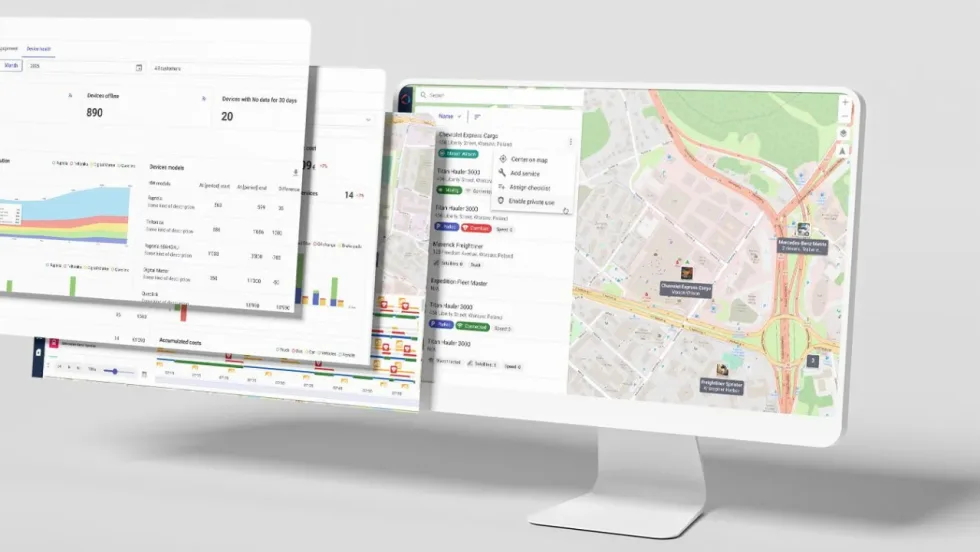
Wialon Unlocks OEM Data to Give Fleet Owners Data Ownership & Operational Clarity
Wialon has introduced hardware-free OEM integration as the EU Data Act accelerates the shift in vehicle data access across the fleet industry in many countries.
Read More →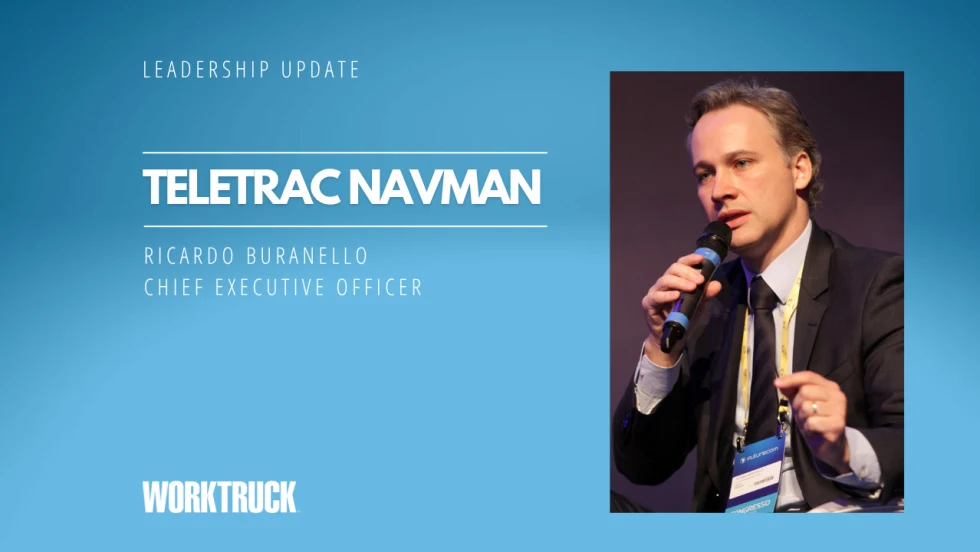
Teletrac Navman Promotes New CEO from Within
Teletrac Navman’s next CEO, Ricardo Buranello, has served as the company’s chief financial and operating officer. He brings deep financial and operational expertise, a strong strategic orientation, and an intimate knowledge of the business to his new role.
Read More →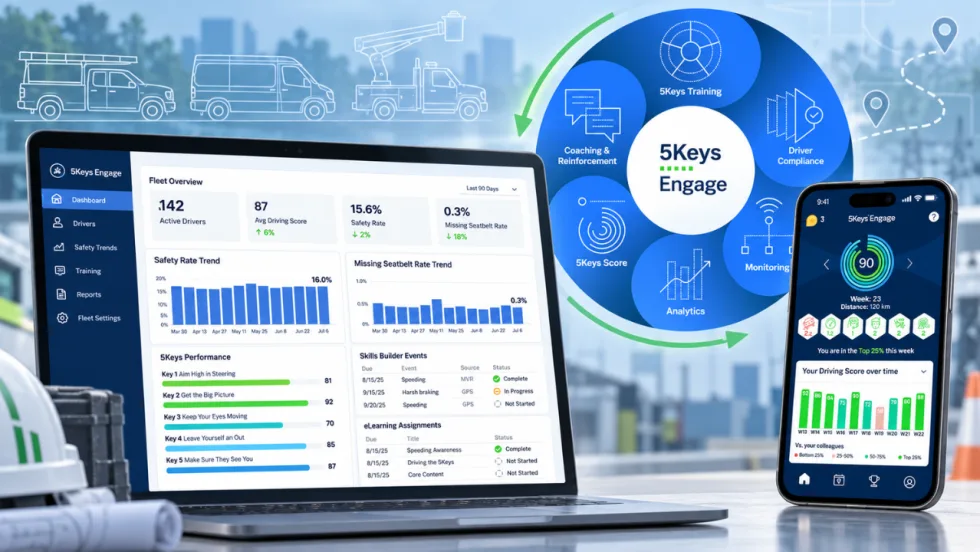
Smith System Wants Work Truck Fleets to Look Beyond the Driver Alert
Smith System’s new Driver Risk Management program is built to help mixed work truck fleets turn telematics alerts and observations into specific behaviors, coaching actions, and measurable follow-up.
Read More →
Ford Pro Software Updates: August 26
Check out the latest Ford Pro software updates, including Google Maps integration, Remote Vehicle Alarm integration, Motor Pool for easier management of shared pool vehicles, and more.
Read More →
Where AI Is Actually Saving Fleet Managers Time
AI is moving past the buzzword stage and into the daily fleet workflow. Fleetio’s Brianna Perry Lang breaks down where fleets are seeing real time savings, from maintenance and data entry to repair decisions, safety, and compliance
Read More →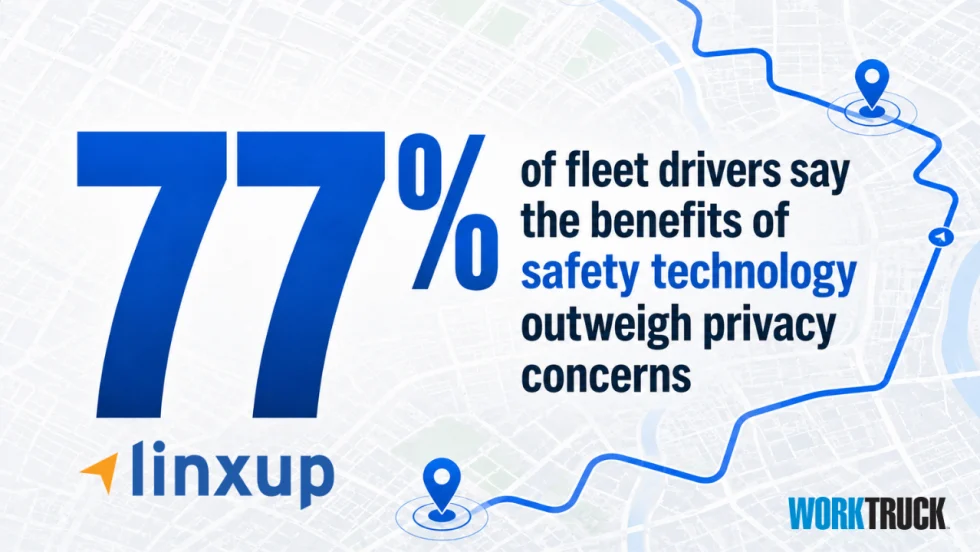
Are Work Truck Drivers Warming Up to Dash Cams and GPS Tracking?
A new survey finds field-service drivers may be more comfortable with dash cams and GPS tracking than fleet managers think, especially when the technology helps protect them after a crash.
Read More →