





The accolades just keep coming. Work Truck’s readers acknowledged the Transit's value to their operations, voting it the inaugural “Commercial Van of the Year” in 2024.
The Ford Transit: A Revolution for Commercial Fleets
From the evolution of a trusted European nameplate to a revolution in North American vehicle manufacturing and fleet operations, Ford Transit’s 10th anniversary has been decades in the making.
May 1, 2024
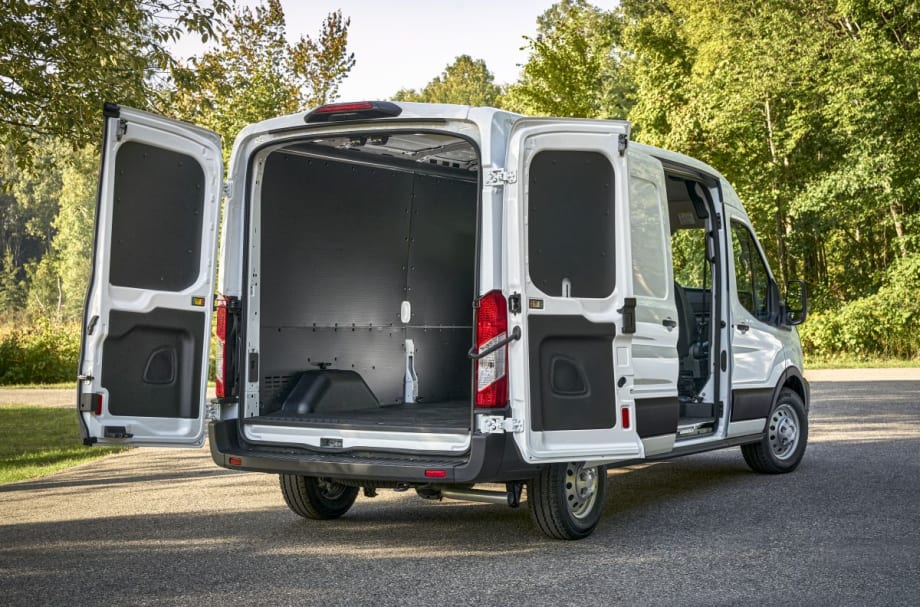
Since beginning production in the U.S. in April 2014, more than 1.2 million Ford Transit vans have been assembled at the Kansas City Assembly Plant in Claycomo, Missouri.
Photo: Ford Pro
6 min to read
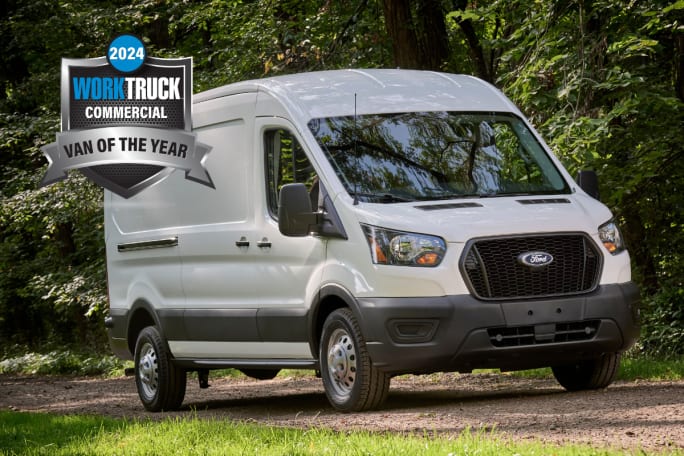
Work Truck's readers voted the Ford Transit the inaugural "Commercial Van of the Year" in 2024.
Photo: Ford Pro | Work Truck
Discover the ongoing revolution of the Ford Transit—a vehicle that has transformed North American fleets since its U.S. launch, combining European innovation with American needs. While it may feel “new” to North American fleets, the Ford Transit has been a staple in the commercial vehicle space for decades. Initially launched in Europe in 1965, the product has undergone various design iterations over time, with the current version in the U.S. market being an evolution of the European model Transit.
But what drove the development of the Ford Transit in the U.S. marketplace a decade ago?
Since its introduction to the U.S. market in 2014, the Ford Transit has undergone significant changes, adapting its European heritage to meet local demands. According to Ford Pro's Chief Transit Engineer, Ray Eyles, the motivation was spurred by a simple need: addressing the challenges and trends of the U.S. market with a lightweight and flexible van with high global commonality.
“The U.S. product design evolved from the existing European Transit, tailored a bit to the North American market, especially with gasoline and auto trans powertrains, including 3.5L Ecoboost. It’s been a long evolution. We’ve been investing for decades in Transit, keeping it current. It is a weight and space-efficient unibody vehicle,” Eyles explained.
Among the modifications, the unibody design significantly reduced the vehicle’s weight, and Ford added a new low-roof variant to meet North American needs.
As noted, it wasn’t just an evolution of a trusted product but a revolution for the market and the business. The Transit brought its Euro-style roof heights to the U.S. market, which drastically changed ergonomics for trade professionals, especially the high-roof variant.
The Transit revolution didn’t stop at simply bringing a popular European van to the U.S. It created a domino effect of revolutions, starting with an internal revolution connected to Ford’s vehicle durability testing.
Traditionally, humans test-drive new vehicles through a variety of tests.
“But the Transit durability cycle was too extreme for human drivers. Ford developed the robot driving system to test the extreme loads and driving cycles because of Transit,” Eyles explained.
Ford also revolutionized the upfit industry and how fleet vehicles are transported to their final stop.
“Upfitters established operations near our Kansas City plant to be adjacent to our facilities. They worked to integrate with us to allow for dedicated ship-thru capabilities,” Eyles added.
Today, fleets can order a vehicle, and Ford builds it and sends it directly to the upfitter, who sends the completed vehicle back to Ford for final delivery. And with many upfitters located in proximity, order-to-delivery times are positively impacted.
The revolution didn’t stop there. Transporting the larger, taller vans required changing railcars to accommodate the higher-roof models.
“We worked with the railcar industry to develop railcars with moving floors. Because of the moveable floors in the rail cars, we have a full capacity to fit our low-, medium-, and high-roof models. These are dedicated rail cars just for Ford; no other OEMs can use them,” Eyles explained.
There was also a revolution connected to fleet customers. They were able to start rethinking their business and their locations. The van's higher-roof options allow more capabilities to work onsite than ever, while the low-roof models allow access to underground garages and height-restricted locations.
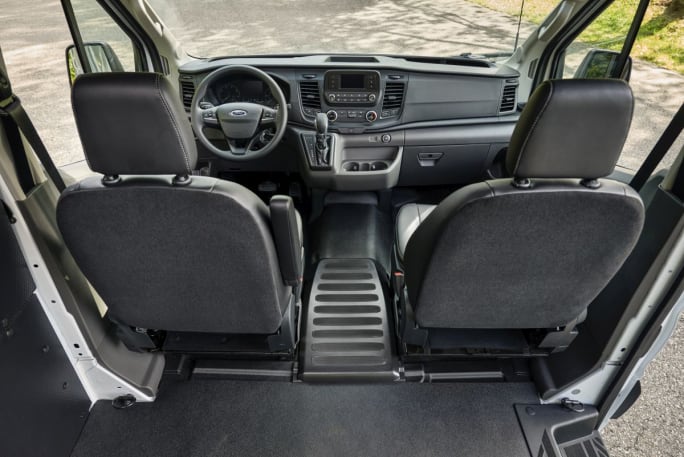
The Ford Transit is a weight-efficient unibody vehicle with a wide range of body derivatives to support various customer needs and fleet vocations.
Photo: Ford Pro
Small Vehicle Updates for Big Results
The revolution behind the Ford Transit led to product evolution and stability for its fleet customers over the last 10 years. While many things change, much of the Transit has stayed the same.
“Upfitters and customers don’t want a vehicle to be continuously changing. It’s not a fashion-driven segment where people are buying the appearance. They want a functional commercial vehicle that’s stable. They want us to evolve the powertrain, vehicle technologies, and improve the vehicle's versatility to get work done so they can be productive and reduce their total cost of ownership,” Eyles explained.
With productivity and TCO in mind, one significant evolution for Ford Transit in 2019 was productivity-driven: adding all-wheel drive for fleets to better travel in all weather and road conditions. Another was tech-driven, adding advanced driver assistance systems (ADAS), such as pre-collision warning and lane-keeping assist programs.
Keeping the momentum moving, Ford launched the all-electric E-Transit in 2022 and an enhanced-range E-Transit at NTEA this year, which will help facilitate even more commercial use cases.
Ford is the first to note that electrifying fleet operations will not happen overnight. Only a handful of small fleets can transition 100% of their vehicles to electric powertrains without a major hit on their downtime and balance sheet.
However, a green future is looking more electric. E-Switch from Ford Pro makes it easier for commercial fleets to find the right time and mix to make a sustainable future happen for their operations. Ford Pro software tools like E-Telematics and charging software help optimize the electric vehicle experience and performance with remote access and control to the vehicle and charge events.
Electric vehicle sales continue to increase despite the slower rate than anticipated, as early commercial adopters have made their purchases and are now going through the pilot phases to create best practices to scale quickly.
“Customers are realizing that going electric is good for business and are turning to E-Transit and F-150 Lightning to get the job done”, said Elizabeth Kraft, Ford Pro North American communications manager. “And 40% of commercial F-150 Lightning customers are repeat buyers for the 2024 model year. We are seeing rising adoption with state and local government as municipalities take advantage of federal incentives like Direct Pay.”
The latest evolution? New for the 2024 model year, Ford Pro enhances range capability on E-Transit, offering an overall estimated range of 159 miles on low-roof cargo van models with 89 kWh of usable energy, which supports work covering longer distances and provides more capability to unlock electric solutions for new use cases, like refrigerated delivery. The additional range over the previous model is an increase of 26% on low-roof and a 32% increase on high-roof models.
Why the Ford Transit Makes Sense for Commercial Fleets
Explore how the Ford Transit addresses the diverse needs of commercial fleets with its advanced features and cost-saving benefits. Since beginning production in the U.S. in April 2014, more than 1.2 million Ford Transit vans have been assembled at the Kansas City Assembly Plant in Claycomo, Missouri.
The Ford Transit is a weight-efficient unibody vehicle with a wide range of body derivatives to support various customer needs and fleet vocations. Customers can choose between high-, medium-, and low-roof models and cargo, cutaway, chassis cab, and passenger variants.
For those looking at the electric powertrain, the upfitability, products, and options will be the same, with some minor adjustments to drill locations.
Transit is a popular vehicle in various industries. It holds a 54% share in the utility services industry, a 47% share in food distribution, and a 40% share in the construction industry. The Ford Transit is known for its dependability, as 99% of the vans purchased in the last decade are still on the road today.
Ford Pro offers a suite of integrated products and services that work seamlessly to help commercial customers of any size potentially reduce their total cost of ownership.
To ensure their commercial customers don't lose time in service bays, Ford takes service to the street. With a fleet of 3,100 Mobile Service units, Ford has the largest Mobile Service fleet of any full-line automaker in the U.S. In 2023, Ford responded to more than 950,000 mobile service repair orders.
Subscribe to Our Newsletter
More Vehicle Insights
GMC Sierra 1500 Fleet Guide Specs Capability and 2027 Model-Year Updates
The next-generation 2027 GMC Sierra 1500 brings new V-8 engines, more standard safety technology, updated trailering tools, and a work-focused Pro trim. Here’s what fleets need to know.
Read More →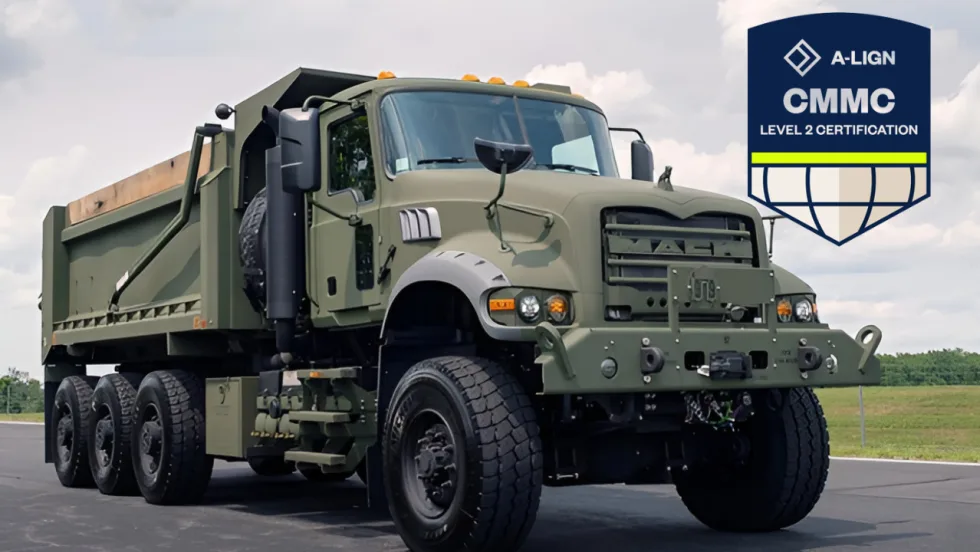
Mack Defense Achieves Cybersecurity Maturity Model Certification Level 2
After an assessment conducted by an authorized Certified Third-Party Assessment Organization (C3PAO), Mack Defense has achieved Cybersecurity Maturity Model Certification (CMMC) Level 2.
Read More →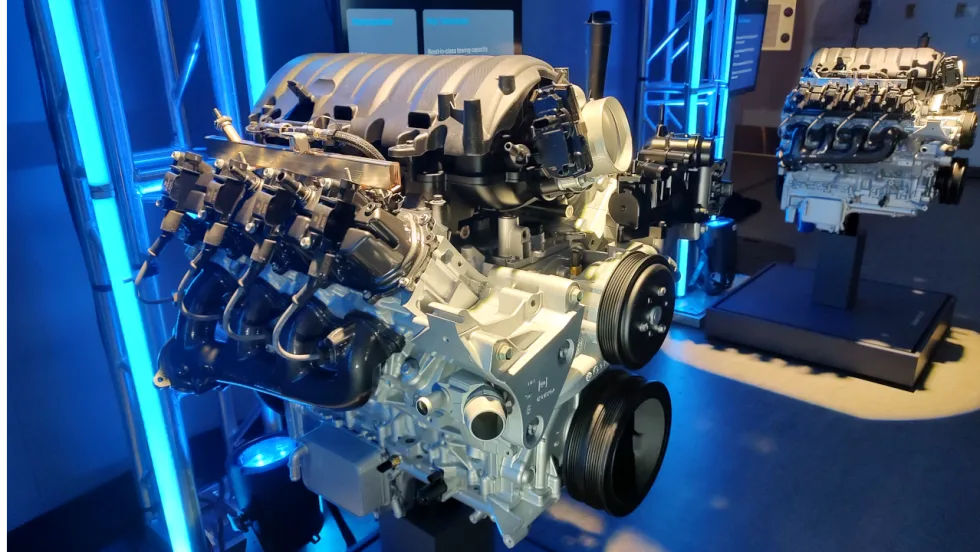
GM Unveils New Sixth-Generation Small Block Engines for 2027 Light-Duty Pickups
General Motors unveiled two new small-block engines, backed by extensive real-world validation and more than 70 years of small-block V8 manufacturing experience, as part of the engine portfolio for the 2027 Chevrolet Silverado 1500 and GMC Sierra 1500.
Read More →
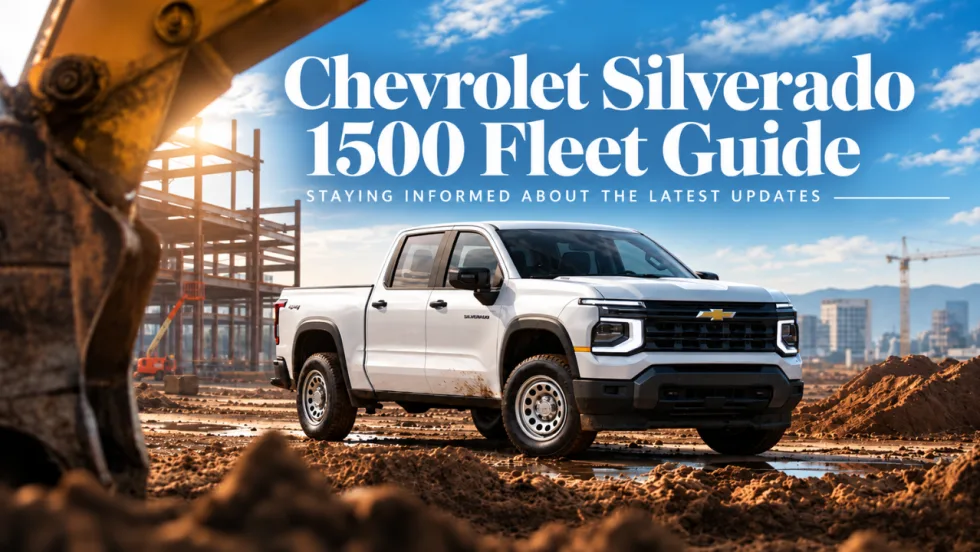
Chevrolet Silverado 1500 Fleet Guide Specs Capability and 2027 Model-Year Updates
The next-generation 2027 Chevrolet Silverado 1500 brings new V-8 engines, updated technology, expanded safety features, and a fleet-focused Work Truck. Here’s what commercial fleets need to know so far.
Read More →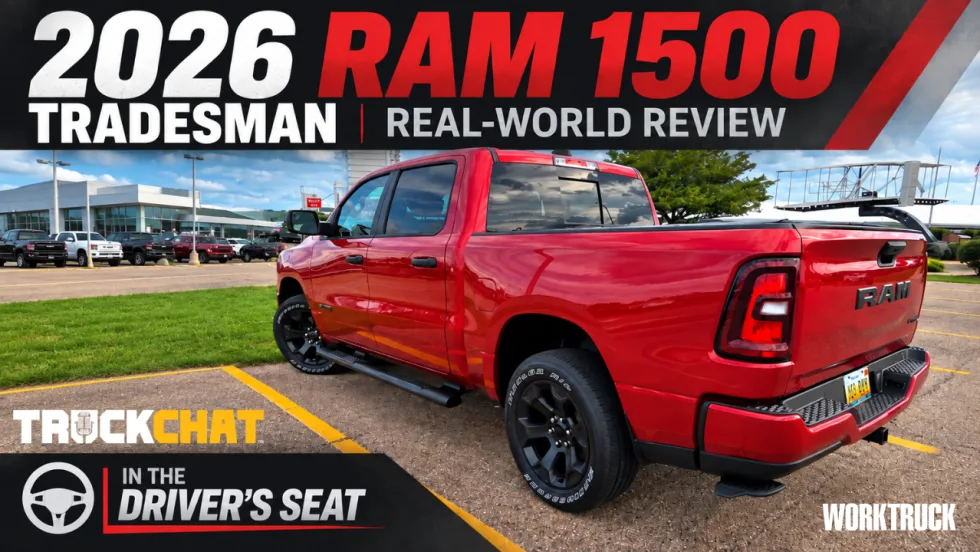
2026 Ram 1500 Tradesman Put to a Real-World Fleet Test
A few days behind the wheel of a 2026 Ram 1500 Tradesman turned into a test of visibility, parking, work-ready features, and even severe-weather driving.
Read More →
Isuzu N-Series Gas Fleet Guide: Specs, Capability and 2027 Model-Year Updates
Explore Isuzu Truck North America’s N-Series Gas fleet specs, engine performance, GVWR and payload capability, configurations, chassis dimensions, work-focused features, and 2027 model-year information.
Read More →
GM Brings New Truck Focused Interface to 2027 Silverado and Sierra
GM's new pickup interface puts trailering data, camera views, vehicle controls, and smartphone integration closer to the driver in the 2027 Silverado and Sierra.
Read More →
Ram ProMaster City Fleet Guide Specs Cargo Capacity and 2027 Updates
Work Truck’s Ram ProMaster City Fleet Guide tracks the latest specifications, cargo capability, configurations, fleet technology, pricing, and model-year updates for Ram’s mid-size commercial van.
Read More →
Ford F-150 Fleet Guide Specs Capability and 2026 Model-Year Updates
Explore 2026 Ford F-150 fleet specs, engines, towing and payload capability, configurations, work features, technology, and model-year updates.
Read More →
TCI Now Sells & Supports Battle Motors’ Vocational Trucks
Midwest truck dealer Truck Centers, Inc. (TCI) has expanded its transportation solutions with sales and service support for Battle Motors’ heavy-duty vocational trucks at locations in locations in Indiana, Illinois, and Missouri
Read More →