





Your Fleet Is Also Human: Helping Drivers and Technicians During Disasters
Technicians Are Doing More Than Turning Wrenches
Technicians do far more than repair vehicles. Six professionals reveal the problem-solving, pressure, and pride behind keeping fleets moving.
July 15, 2026
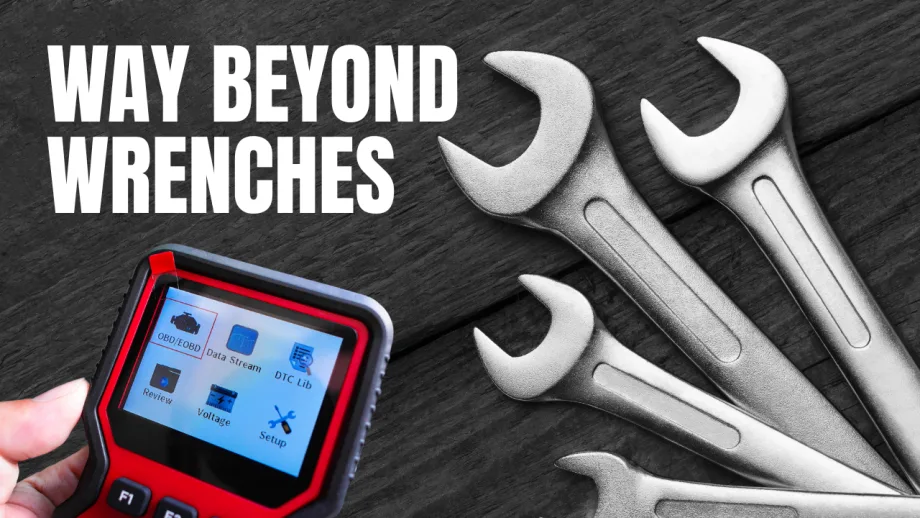
Today’s technicians rely on advanced diagnostics, critical thinking, and constant training as much as traditional tools to keep increasingly complex vehicles on the road.
Credit:
Work Truck
7 min to read
Most people have a pretty simple picture of what a fleet technician does: A vehicle comes into the shop, the technician finds the problem, replaces a part, tightens a few things, and sends it back out on the road. Easy enough, right?
Not even close. After listening to six technicians talk honestly about their work for a recent Shades of Fleet Technicians’ Table conversation, one thing stood out: The repair itself is often only one piece of the job.
Technicians are investigators, planners, safety professionals, customer service representatives, technology specialists, and occasionally miracle workers, expected to solve a problem that occurs only when turning left up a specific driveway at exactly the wrong speed. And yes, apparently the vehicle will stop making the noise the moment it arrives at the shop. Naturally.
Here is what I took away from these conversations:
A Good Day Is About More Than Finishing the Work
A good day for a technician is not necessarily an easy one. It is a day when the diagnosis makes sense, the right parts are available, the equipment is where it is supposed to be, and the repair actually solves the problem. It is leaving the vehicle in better condition than they found it, and knowing the customer can safely get back to work.
Sometimes, a good day simply means being able to leave work at work.
A tough day can start with a broken bolt, a diagnostic program that refuses to connect, or a part that was promised on Monday but does not arrive until Wednesday. For mobile technicians, the challenges might include traffic, weather, missing equipment, or arriving at a customer location only to find the vehicle is not there.
Then there are the jobs that fight back at every step. Nothing comes apart correctly. The original diagnosis leads to another problem. A repair takes longer than the labor estimate allowed. By the end of the day, the technician is not just physically tired. Their brain is done. And that mental load is one of the biggest parts of the job that people outside the shop rarely see.
The Job Is Part Repair and Part Investigation
A diagnostic code does not always provide the answer; frankly, it often offers barely a clue. I know I've pulled my reader out to see a string of codes, none of which make any sense in connection to one another or with a clear solution.
Technicians have to understand how multiple systems work together, review wiring diagrams, interpret fault codes, inspect prior repairs, and determine whether a problem is mechanical, electrical, environmental, or related to vehicle operation.
They are looking for the detail that does not belong. A new-looking component, evidence of bodywork, or damage hidden beneath the vehicle. Maybe a strange smell that could point toward rodents chewing through a wiring harness. Several unrelated fault codes that may actually share one root cause.
That is not just "parts swapping." It is critical thinking and requires judgment. Technicians make safety-related decisions constantly, including decisions about whether a vehicle is truly ready to return to service. Fleets may never know about the breakdown, incident, or injury that did not happen because a technician caught something early.
Avoided disasters do not show up neatly on a productivity report, but they are part of the technician’s value.
Technology Has Not Made the Job Simple
Vehicles now provide technicians with more information than ever, but, as with diagnostic codes, that does not mean they provide clear answers. Modern trucks contain multiple computers and interconnected systems controlling the engine, transmission, brakes, body functions, telematics, emissions equipment, and more. One issue can trigger fault codes across several systems, leaving the technician to determine which code points to the actual cause and which ones are simply along for the ride.
Every new model year can bring different software, components, electrical systems, engines, and diagnostic procedures. Electric vehicles add high-voltage systems, heavier equipment, new safety risks, and sometimes the need for entirely new shop infrastructure. The tools are more advanced, but so are the problems.
At the same time, expectations have climbed. Customers want new vehicles to operate perfectly. Fleets have fewer spare units, drivers face schedules and hours-of-service limits, and everyone who calls seems to need the vehicle back yesterday.
But the best technician still has to slow down enough to make the correct repair. Getting a truck out quickly matters, but not if it's back in the shop the next day. Getting it out safely and keeping it from coming back is far more valuable.
Parts and Logistics Can Stop a Repair Cold
A technician can diagnose the problem correctly, have the skills to complete the work, and still be unable to finish the job. Think about it: The wrong part arrives, or one piece of a three-part repair is missing. An estimated delivery date may be moved, or specialized tools may not be available. Maybe a technical engineer has to be consulted before the repair can continue.
For mobile technicians, that logistical responsibility can be even greater. They may be scheduling appointments, securing purchase approval, ordering parts, maintaining inventory, traveling to the customer, and completing repairs without the parts department or shop support available at a fixed facility.
When the repair is delayed, the customer only sees a vehicle that is still down, but the technician sees the dozen things that still have to line up before the first tool can ever even come out.
Recruiting Technicians Is Only the Beginning
The industry spends a lot of time talking about recruiting technicians, but one thing I heard loud and clear was that we should be spending just as much time talking about what happens after they walk through the door. Technicians need training that keeps pace with the equipment they are expected to maintain. They need access to the right tools, software, information, and experienced people who are willing to help.
They also need to feel like professionals whose work is respected. Mentorship came up repeatedly throughout the conversation. New technicians should be able to ask questions without feeling embarrassed or worrying that someone’s ego will get in the way. A minor repair can become a catastrophic and expensive failure when someone is afraid to admit they do not know the next step.
"Technician" is not the end of a career path. For many people, it is the beginning. That support cannot disappear once the position is filled. Retention comes from continued education, career development, appreciation, fair pay, strong leadership, and a workplace where technicians can see a future for themselves. That future might include becoming a senior technician, shop foreman, fleet manager, manufacturer representative, technical specialist, or business owner.
The Real Career Pitch Is Better Than the Polished One
We do not need to pretend this is an easy career to make it appealing. New technicians will get dirty. They will work in the heat, cold, rain, and occasionally in conditions that make them question every career decision that led to that moment. On top of that, they may not make top dollar immediately. They start with basic work and take on greater responsibilities as their skills grow. They will invest in tools that will take time to pay off, with many lost (or stolen) before that ever happens.
But... They will also learn something new almost every day. They will build skills that transfer far beyond a single vehicle, shop, or employer. They will experience the satisfaction of diagnosing something no one else could solve, completing a difficult repair, and watching that vehicle drive away.
Sure, technicians have frustrating days. But they will also have days when a customer asks for them by name because they trust the quality of their work. That is the real pitch.
Give Technicians the Credit and Support They Have Earned
The vehicles may be getting smarter, but they still require skilled people who know what the data means, recognize when it is misleading, and understand what to check next. Technicians keep fleets operating through changing technology, limited parts availability, unpredictable repairs, tight turnaround expectations, and a job that can be demanding both physically and mentally.
They are not simply fixing equipment. They are protecting your uptime. They are protecting your drivers, preventing breakdowns, managing risk, solving problems, and keeping businesses moving. Often, with far less visibility than the work deserves.
So, the next time a repair takes longer than expected, it may be worth looking beyond the clock. There is probably a lot more happening behind the scenes than most of us realize. And for those who manage and work with technicians, be sure to give them the hard-earned, well-deserved thank-you they probably haven't heard in a while.
Enjoy this conversation? We've got more where that came from on our Shades of Fleet series, where we give the mic to the voices that don't often get heard.
Quick Answers
Technicians engage in problem-solving and play a crucial role in maintaining and optimizing fleet operations, ensuring vehicles are reliable and efficient.
*Summarized by AI
Subscribe to Our Newsletter
More Blog Posts
Short Drivers Need to Be Part of the Work Truck Spec, Too
The average truck driver may be around 5'9" for men and 5'4" for women, but fleets aren't spec'ing trucks for averages. Here's what shorter drivers need fleets to consider, from seat height and visibility to 360 cameras, seat belts, and cab access.
Read More →
Does Your Fleet Policy Cover In-Vehicle Gaming?
As in-vehicle gaming, streaming, and connected entertainment expand, fleet policies may need an update. Here’s what fleet managers should be thinking about now.
Read More →
You Can't Tariff an Aluminum Smelter Into Existence
The U.S. wants to rebuild domestic aluminum production, but work truck manufacturers still need material today. What happens to costs and supply in the meantime?
Read More →
Can America Replace Canadian Truck Production Without Hurting U.S. Fleets?
U.S. tariffs are targeting Canadian truck production, but Ford and GM show why moving that manufacturing south isn’t so simple. After 60 years of building one North American supply chain, what could fleets lose by pulling it apart?
Read More →
The Fleet Skills We Keep Missing on Veterans’ Resumes
What if some of the strongest candidates are already out there, but we are overlooking them because their experience is written in a language our industry does not always recognize?
Read More →
WWCD? What Would Coach Do?
A personal reflection on Ed "Coach" Bobit, the mentor who shaped my career, and why I still ask myself one question 12 years later: WWCD?
Read More →
What the Fleet Industry Still Gets Wrong About Talent
What can the fleet industry learn from the women helping shape its future? A look at talent, leadership, sponsorship, and why new perspectives drive progress.
Read More →
AI Isn’t Killing Content, but Lazy Expertise Is
Thought leadership loses value when AI does the thinking. Here’s why authentic industry voices still matter most.
Read More →
Do I Need a U.S. DOT Number?
Whether you operate a small fleet of light-, medium-, or heavy-duty units, or are merely the owner of one truck wanting to ensure you adhere to the law, knowing if you can need a U.S. DOT number can be confusing.
Read More →
Is Retirement in Fleet Now More Like ‘Rewiring’?
Fleet professionals rarely retire for good. They return as advisors, mentors, and consultants, keeping hard-won experience in the industry.
Read More →