





New to Fleet? Learn from the Legends! Watch this series for wisdom passed on from decades of experience in fleet management!
What New Fleet Voices Need From the Rest of Us
The fleet learning curve hits fast. Here’s how new pros push through the overwhelm, find their voice, and start thriving in the work.
March 5, 2026
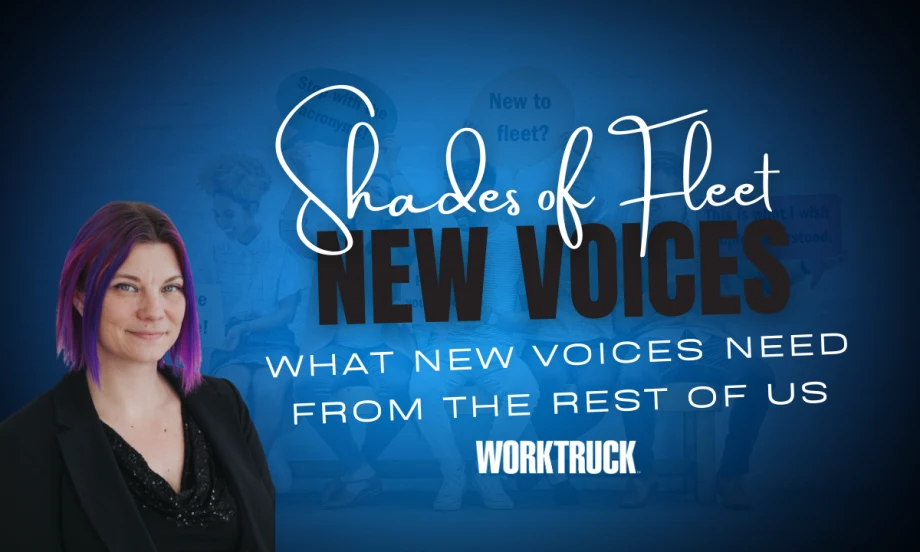
Shades of Fleet New Voices explores what it really feels like to be new in fleet and what emerging professionals need from the industry to succeed.
Credit: Work Truck
10 min to read
If you’re new to fleet, welcome. You made a great choice. Also… I’m sorry in advance about the acronyms.
Because here’s the thing: you can walk into this industry sharp, capable, and fully employed adult, and still feel like you showed up to class on the day everyone else is taking the final.
You can be smart, experienced, and totally capable and still feel like you just walked into a room where everyone else already speaks a different language.
And the part I want to underline with a highlighter the size of a pickup truck is this: that feeling doesn’t mean you’re behind. It means you’ve entered one of the most layered, high-stakes, always-moving corners of business.
The wildest part is that feeling is actually normal. Fleet is one of those industries where the learning curve shows up fast. And it shows up fast because fleet touches everything. Safety. Uptime. Risk. Customer experience. Budgets. Compliance. Driver support. And yes, the vehicles. But the vehicles are often the easiest part to see, not the easiest part to solve.
Think of this as a little field guide, whether you’re brand new or you’re a fleet veteran who wants to be the kind of person new talent actually sticks around for.
Fleet is Not a Line Item
Let’s start with the biggest misconception, because it’s the one that causes the most disconnect between fleet teams and, pretty much, everyone else.
From the outside, fleet can look like a cost center. Vehicles cost money. Fuel costs money. Maintenance costs money. Insurance costs money. And the easiest mistake for an outsider to make is to stop the story there.
“I think industry outsiders view fleet as nothing more than a business expense. But I've learned that managing fleet has a very strategic place within an organization, because ultimately companies rely on vehicles to generate revenue,” said Stephanie Woeste, VP of Marketing for Mike Albert Fleet Solutions.
That one line is the heart of it. Fleet isn’t “the trucks.” Fleet is how work shows up. Fleet is how service gets delivered. Fleet is how revenue moves from plan to reality.
“So when you're new to fleet, you quickly realize it's not just about managing the metal, it's about managing up time and risk to generate the revenue. The vehicles are just the visible part. The real work is making sure the vehicles keep the business moving,” Woeste added.
And once you see it that way, it changes how you talk about the work. It changes how you fight for the budget. It changes how you explain decisions to leadership. It changes the way you build partnerships across the organization.
Now zoom in on the day-to-day reality. Even if you understand fleet is strategic, you still have to learn the actual landscape, and it’s a big one.
“The tech stack is very broad. The types of vehicles and fleets can vary. The regulations seem to be getting more complicated by the day,” said Heather Engen, Chief Customer Officer at Netradyne. “And every vertical has its unique nuances that need to be addressed.”
And then comes the part every new person says out loud at least once, usually after their third meeting of the day:
“Like any industry, the acronyms seem to be endless. So sometimes I just need people to remember that I need them to just please spell things out,” Engen Added. “I find that many of my colleagues and the customers that I work with have spent their entire careers in fleet and transportation, and everything seems second nature to them.”
If you’re a leader reading this, that right there is a retention strategy. Spell it out, slow down, and give some context. You don’t lose credibility by being clear; you gain it!
The Moment Everything Shifts
Almost everyone who’s new to fleet can point to a moment where something shifted. Not because the work got easy. But because they could suddenly see themselves in it.
“A moment I realized I actually belong here was actually my first week on the job,” said Will Dartnall, Chief Sales Officer for Mike Albert Fleet Solutions.
He explained the team had its big annual summit, where everyone got together. They celebrated wins, shared best practices, and set the vision for the future. Meeting the people on the team and learning more about the company and the industry “reinforced my career change and made me believe I found a great place and I found an awesome industry,” Dartnall noted.
In this case, it wasn’t a big technical win. It was exposure. It was being in the room where the broader machine becomes visible and realizing how much brainpower and coordination go into “keeping vehicles on the road.”
Other people felt it click when they pushed through that early stage where everything feels like an uphill battle.
“At the beginning, it felt like a constant uphill battle… There were moments where it would have been easy to just walk away. But I stayed on it, and I adapted and didn’t give up,” said Dwayne Patterson, National Account Executive for uShip Logistics.
Then comes the win. The one that’s less about the deal itself and more about proof. Proof that you can learn this world and operate in it.
“When I finally closed that first deal, it was incredibly fulfilling. That moment gave me the confidence to say, I can do this,” Patterson added.
And for some, belonging shows up when other people start treating you like you belong. Not in a ceremonial way. In a “we trust you with real opinions” way.
“I realized that I was in the right place when senior leaders started trusting me enough to ask my opinion because they saw me as a subject matter expert,” Woeste noted. “How I accomplished that was by understanding our products and our customers’ business. That's what helped me earn their trust.”
This is also why fleet is such a growth industry for people who enjoy learning. The work pulls you forward, and you earn your place by staying curious and staying in the fight.
How New People Actually Get Good at Fleet
One thing I loved about these answers is that nobody tried to pretend they walked in knowing everything. The common thread wasn’t “I’m a genius.” It was “I have a process.”
“One of the approaches I take in any new job or any new industry is to listen first,” Engen said.
Listening sounds soft until you realize it’s the fastest way to learn an industry that’s built on nuance. Not everything is written down. Not everything is obvious and not everything is the same from fleet to fleet.
“Coming into any new role or company or industry really requires you to listen and learn before you can truly understand how to apply your own knowledge, experiences, and perspective,” she added. “And the secondary piece to that is really never make assumptions.”
And because fleet is full of variables, persistence matters. A lot.
“Never give up. In this industry, you hear a lot of no's. Not right now or maybe later. If you stop there, you'll never see success,” Patterson pushed.
You could call that a sales lesson. You could call it a career lesson. Either way, it’s real. Then there’s the fleet version of grit, which is basically “I will Google this, call three people, and dig through a manual, but I will solve it.”
“I grew up with the mentality from my father to always figure it out,” said Sam Adamsky, Parts Specialist for American Fleet Services. “It forced me to think outside of the box and find a solution. No matter what. Whether it is finding the exact part, finding a use for something, finding some kind of way to accomplish what needs to be done, and being efficient about it.”
And honestly, that mindset is why fleet people can walk into chaos and somehow make it operational by lunch.
“I guess I'd probably compare it to a Rubik's Cube. You find one solution, and then you flip it over, and then you have new things to be able to solve,” Dartnall said.
If you’ve ever solved one problem and immediately created two new ones in the process, congrats. You’re fluent in fleet.
Speaking up When You’re the New Person
Let’s talk about the part nobody loves admitting: it can be intimidating to contribute when you’re surrounded by people who have been doing this longer than you’ve had your current email address.
Walking into a room full of people with decades of fleet experience can be intimidating when you're one of the newer voices in the room. So how do you push through that without faking confidence you don’t feel yet?
You ask questions. A lot of them.
“I'm not a person who's afraid to ask questions,” Engen said. “I ask a lot of questions. I also have a lot of ideas. So really, I’ve just relied on the process. I ask questions, try to listen and understand the answers, and then share my ideas to create a collaborative environment. And I’m not a person who feels like I need to have all the answers.”
And sometimes you find your voice through community, through people who remind you that being new doesn’t disqualify you from contributing. One such community is the Black Fleet Network.
“Being part of that community helped me gain confidence, find my voice, and feel comfortable contributing even when I'm the newest person in the room,” Patterson said. “Finding that network helped me push through and feel comfortable contributing.”
That’s a big deal. Fleet is a relationship industry. Your network isn’t extra. It’s how you learn faster, contribute sooner, and stick around longer.
The Future is Coming Fast and New Voices are Ready
Once you get past the initial learning curve, you start to see the bigger picture. This industry is evolving quickly, and new professionals are entering at a moment where data and tech are shifting what “good” looks like.
“What excites me most is just how rapidly this industry is evolving and how central safety and operational excellence have become,” Engen said.
AI came up as a major theme, but not in a buzzword way. In a real-world impact way.
“We are truly using AI for good. We're using AI in a way that helps have a measurable impact on people and the communities where they live,” Engen added. “We're seeing how AI can transform how we predict and prevent risk, how we can support drivers in real time, and really how we can enable fleet managers to make decisions with clarity and data and information so quickly.”
And the data conversation isn’t going away. It’s expanding.
“The opportunity to have data, if you accept the opportunity, is vast. And turning that data into insights is really interesting and can help people compel their business,” Dartnall said.
If you’re in fleet leadership, this is a signal. The next wave is hungry for smarter tools, clearer insights, and operations that respect the complexity of the work.
And despite all the tech talk, the most grounded excitement is still about purpose. The reason this work matters.
“It’s a really gratifying feeling… helping them keep their vehicles on the road so that they can assist people and assist cities,” Adamsky said. “It can be very stressful with something new thrown at me every day, but it gives me the opportunity to learn about so many things.”
The Bigger Takeaway? You Belong
If you take anything from this piece, I hope you take this: Being new doesn't mean you don't belong. Completely the opposite, actually. It means you're learning an industry that's bigger than most people realize, with work that actually matters.
If you’re new, keep asking. Keep listening. Keep showing up. You’re not behind. You’re in the part where your brain is building the map.
If you’ve been in fleet for a while, consider this your reminder that the best teams make learning feel normal, not embarrassing. Sometimes the most impactful thing you can do is translate, explain, and give someone space to get good.
What to Watch Next
If this conversation hit home, watch the full episode of Shades of Fleet New Voices embedded above.
If this helped, hit like and subscribe for more episodes of TruckChat, including Shades of Fleet, featuring real conversations from across the fleet industry.
And coming up next, we spotlighted Black voices in fleet. It’s an important conversation, and it digs into real visibility in fleet and what that actually means.
Subscribe to Our Newsletter
More Blog Posts

Can America Replace Canadian Truck Production Without Hurting U.S. Fleets?
U.S. tariffs are targeting Canadian truck production, but Ford and GM show why moving that manufacturing south isn’t so simple. After 60 years of building one North American supply chain, what could fleets lose by pulling it apart?
Read More →
The Fleet Skills We Keep Missing on Veterans’ Resumes
What if some of the strongest candidates are already out there, but we are overlooking them because their experience is written in a language our industry does not always recognize?
Read More →
Technicians Are Doing More Than Turning Wrenches
Technicians do far more than repair vehicles. Six professionals reveal the problem-solving, pressure, and pride behind keeping fleets moving.
Read More →
WWCD? What Would Coach Do?
A personal reflection on Ed "Coach" Bobit, the mentor who shaped my career, and why I still ask myself one question 12 years later: WWCD?
Read More →
What the Fleet Industry Still Gets Wrong About Talent
What can the fleet industry learn from the women helping shape its future? A look at talent, leadership, sponsorship, and why new perspectives drive progress.
Read More →
AI Isn’t Killing Content, but Lazy Expertise Is
Thought leadership loses value when AI does the thinking. Here’s why authentic industry voices still matter most.
Read More →
Do I Need a U.S. DOT Number?
Whether you operate a small fleet of light-, medium-, or heavy-duty units, or are merely the owner of one truck wanting to ensure you adhere to the law, knowing if you can need a U.S. DOT number can be confusing.
Read More →
Is Retirement in Fleet Now More Like ‘Rewiring’?
Fleet professionals rarely retire for good. They return as advisors, mentors, and consultants, keeping hard-won experience in the industry.
Read More →
What Does Visibility in Fleet Really Look Like?
Advocacy changes things. Visible trust changes things. Structure changes things. Access changes things. A willingness to share connections, rooms, and opportunities, and a belief in someone before it is convenient, changes things.
Read More →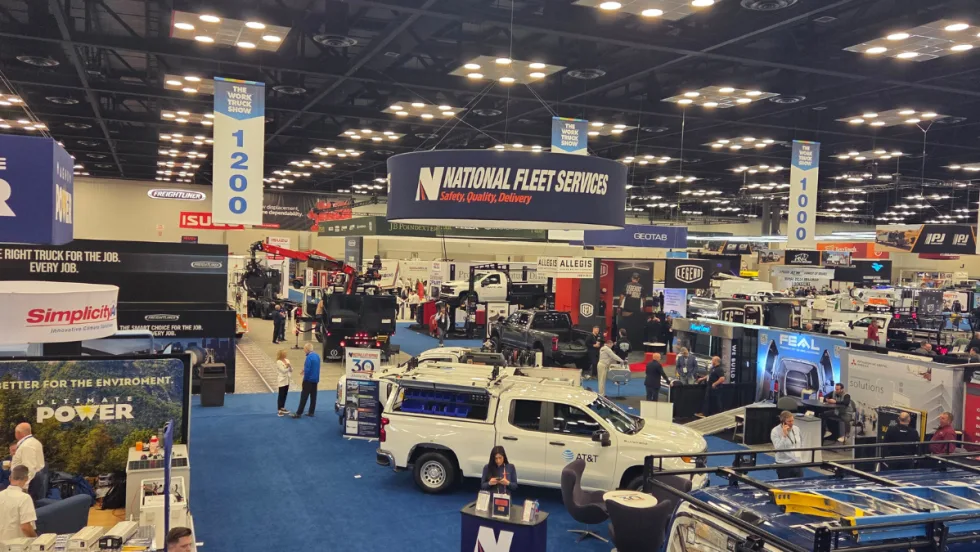
Work Truck Week 2026 Shows an Industry Focused on Practical Progress
Taken together, these themes show an industry that is not chasing a single technological solution. Instead, it is building a broader toolkit designed to support the diverse and demanding jobs fleets perform every day.
Read More →