




Work Truck Week 2026 Shows an Industry Focused on Practical Progress
Taken together, these themes show an industry that is not chasing a single technological solution. Instead, it is building a broader toolkit designed to support the diverse and demanding jobs fleets perform every day.

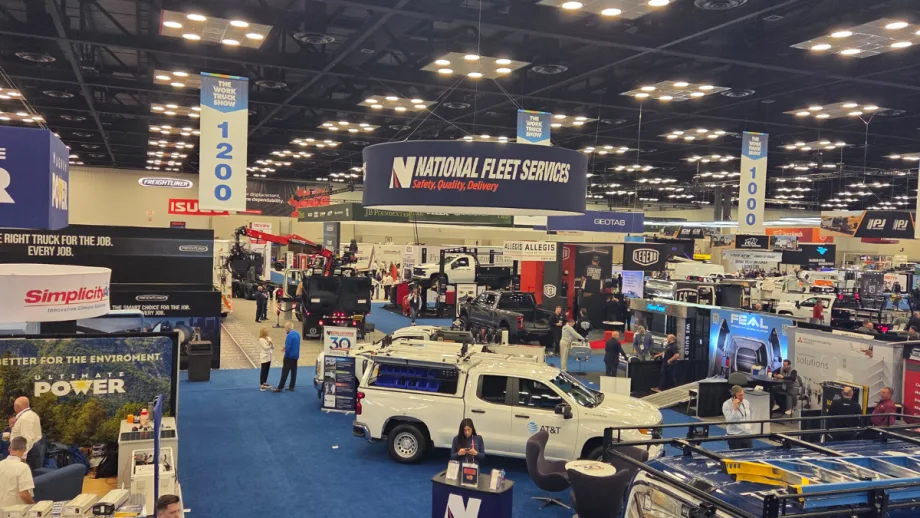
Attendees walk the expansive Work Truck Week 2026 show floor in Indianapolis where manufacturers, upfitters, and technology providers debuted new vehicles, tools, and fleet solutions.
Credit: Lauren Fletcher
Every year Work Truck Week in Indianapolis feels like a family reunion. Only, the good kind. You know, the one people actually want to attend.
Manufacturers, upfitters, fleet managers, and suppliers all come together to see what’s new, talk shop, and get a sense of where the industry is headed next. After spending a few days walking the show floor and listening to the conversations happening across the event, one thing became clear.
The work truck industry is moving forward, but it’s doing it in a much more practical way. Less hype and more real solutions.
There was also a noticeable sense of optimism across the show floor. Many of the manufacturers and suppliers I spoke with said purchasing activity has picked up and that fleets appear ready to continue investing in vehicles and equipment. Of course, the global economy has a way of changing the outlook quickly, but at least for now, many companies said they’re seeing positive momentum heading into the rest of the year.
This year’s announcements and product debuts pointed to a few clear trends shaping the next chapter of the work truck industry.
First, the conversation around electrification is evolving. Electric vehicles remain part of the future, but fleets are increasingly exploring a broader mix of solutions, including hybrids, propane autogas, and more efficient internal combustion engines.
Second, manufacturers are focusing on right-sized vehicles. Compact vans and smaller purpose-built work trucks are gaining attention as fleets look for vehicles that match real-world job requirements rather than defaulting to larger platforms.
Third, customization is becoming the new standard. Fleets want the ability to configure vehicles and upfits for their specific operations rather than purchasing large option packages.
And finally, the industry is embracing a growing ecosystem of software, data, and AI tools designed to help fleets operate more efficiently.
In many ways, the shift is reflected in one of the event’s own announcements. Beginning in 2027, the long-running Green Truck Summit will become the Future Truck Summit, signaling that the conversation around work trucks now extends far beyond alternative fuels.
Taken together, these themes show an industry that is not chasing a single technological solution. Instead, it is building a broader toolkit designed to support the diverse and demanding jobs fleets perform every day.
Trend 1: The EV Conversation is Evolving
Just a few years ago, many conversations at Work Truck Week centered around one big idea: Electrification. Electric vehicles are still very much part of the discussion, but the tone this year felt noticeably different.
Instead of “everything is going EV,” the conversation has shifted toward flexibility and real-world applications.
A good example came from Harbinger, which unveiled its HC Series Cab platform with both battery-electric and plug-in hybrid powertrain options. The hybrid version includes a gasoline range extender that can extend the truck’s range to about 500 miles, depending on the configuration.
That type of approach reflects what many fleets are asking for today: options.
Electrification may work well for certain duty cycles, but fleets still need solutions that support long routes, unpredictable workloads, and infrastructure limitations.
Electrification is becoming part of the toolbox, not the entire toolbox.
Trend 2: Alternative Fuels Remain Part of the Equation
Electrification may get most of the headlines, but Work Truck Week also showed that other alternative fuels continue to play a role in the industry’s future.
Freightliner Custom Chassis Corp. announced a collaboration with ROUSH Power Systems to develop and integrate a next-generation 6.6L gasoline engine for commercial chassis platforms such as walk-in vans and shuttle buses. The partnership highlights continued investment in internal combustion technologies capable of meeting evolving emissions and performance requirements.
ROUSH has long been a major developer of propane autogas technology for commercial fleets, and propane systems continue to appear across the show floor each year.
For many fleets, propane offers a practical option that can lower emissions while maintaining familiar fueling practices, long range, and quick refueling times.
The takeaway is that fleets aren’t looking for a single solution. They’re evaluating multiple paths forward depending on duty cycle, infrastructure, and operational needs.
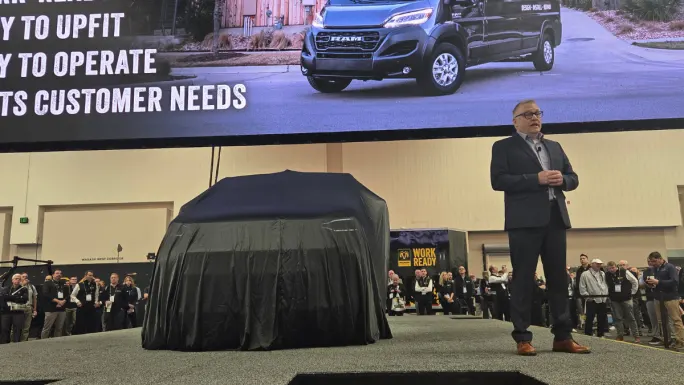
Ram reveals the next-generation ProMaster City during Work Truck Week 2026 in Indianapolis, highlighting renewed interest in compact commercial vans designed for urban fleets and right-sized jobsite applications.
Credit: Lauren Fletcher
Trend 3: Right-Sized Vehicles are Gaining Attention
Another trend that stood out this year was renewed interest in smaller, purpose-built work vehicles.
Ram’s unveiling of the 2027 ProMaster City signals that the market for compact commercial vans remains strong. The platform returns to the lineup after leaving the U.S. market a few years ago and targets urban fleets that need cargo capacity without the footprint of a full-size van.
But compact vehicles weren’t limited to vans.
Acela Truck Company debuted its Dispatcher 4x4 work truck built on a modified Jeep Gladiator platform, designed for environments where maneuverability is just as important as payload.
Across the show floor, the idea of right-sizing vehicles came up repeatedly. Fleets are looking for trucks that match their actual job requirements rather than defaulting to the largest platform available.
Smaller vehicles can mean easier navigation in cities, better access to tight job sites, and lower operating costs.
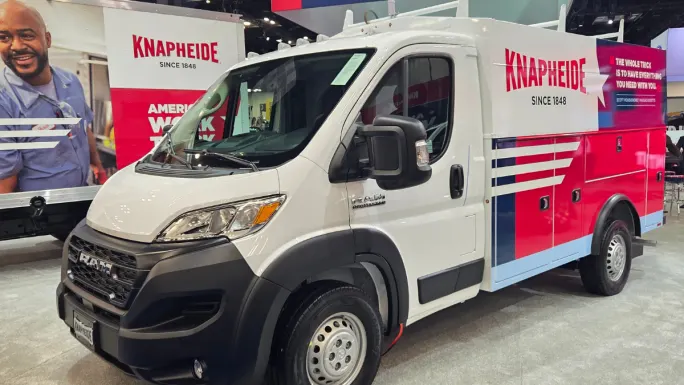
A Ram ProMaster outfitted with a Knapheide service body on display at Work Truck Week 2026, showcasing the continued importance of upfit customization for vocational fleets.
Credit: Lauren Fletcher
Trend 4: Fleets Want Customization, Not Packages
Customization was another recurring theme throughout the week.
For years, fleets often had to purchase full option packages just to get one feature they actually needed. Several manufacturers are now moving toward more flexible configuration options, allowing fleets to select specific features without buying an entire bundle.
Upfitters are taking a similar approach.
Sortimo showcased modular vehicle organization systems designed to simplify configuring vans and trucks for specific trades. Adrian introduced new pickup-based cargo solutions that allow fleets to transform standard pickups into organized mobile workstations with configurable storage systems.
The underlying message is clear. Fleets want vehicles tailored to their work rather than one-size-fits-all builds.
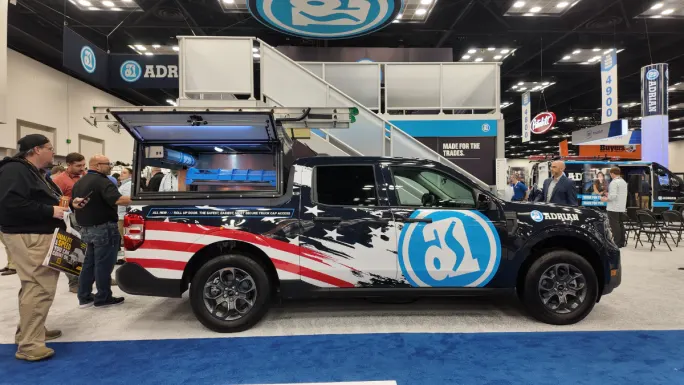
Adrian showcases a pickup-based cargo solution at Work Truck Week 2026, reflecting the growing role of pickups as highly configurable mobile work platforms.
Credit: Lauren Fletcher
Trend 5: Software is Becoming Just as Important as Hardware
One of the most noticeable shifts at Work Truck Week this year wasn’t about trucks at all. It was about software. Several companies introduced tools designed to help fleets manage vehicles, data, and operations more efficiently.
Work Truck Solutions debuted a CRM platform built specifically for commercial vehicle sales teams, recognizing that fleet transactions often involve multiple vehicles, upfits, and decision-makers.
Fleetio introduced an AI-powered Service Advisor designed to help fleet managers review repair orders faster and prioritize maintenance decisions. Ford Pro also unveiled a conversational AI assistant within its telematics platform, enabling fleet managers to analyze operational data and identify opportunities to improve efficiency.
Modern fleets are generating more data than ever before. The companies helping fleets turn that data into actionable insights are becoming increasingly important partners.
Trend 6: The Future of Work Trucks is Bigger Than 'Green'
Perhaps one of the most telling announcements of the week didn’t involve a vehicle at all. Beginning in 2027, the long-running Green Truck Summit will officially become the Future Truck Summit.
When the summit first launched in 2009, the conversation focused largely on hybrid vehicles and alternative fuels. Today, the technology landscape shaping work trucks has expanded significantly.
Electrification remains part of that discussion, but it now sits alongside connected-vehicle technology, telematics platforms, artificial intelligence, advanced driver-assist systems, power-management solutions, lightweight materials, and data-driven fleet-management tools.
In other words, the future of work trucks is no longer defined by a single technology. It’s defined by how all of these technologies work together to improve safety, efficiency, and productivity for fleets.
Progress Also Comes from Refining What Already Works
Not every innovation on display involved entirely new vehicles. Some of the most meaningful improvements focused on refining existing systems.
ZF introduced its 8-speed PowerLine transmission on the Freightliner M2 106 Plus, paired with the Cummins B6.7 Octane engine. Improvements like this may not grab headlines the same way new truck platforms do, but they can deliver meaningful gains in drivability, fuel efficiency, and total cost of ownership.
For fleets operating hundreds or thousands of vehicles, incremental improvements like these can add up quickly.
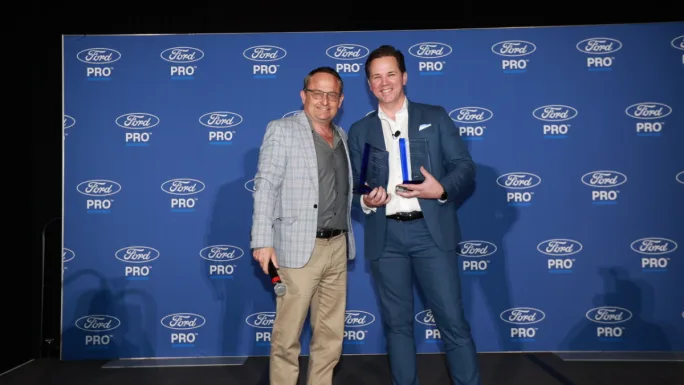
The Work Truck Commercial Van of the Year and Medium-Duty Truck of the Year awards were presented to Ford, recognizing innovation in the commercial vehicle industry.
Credit: Ford Pro
Recognition from the People Who Rely on These Trucks & Vans Every Day
While much of Work Truck Week focuses on what’s coming next, the event also provides an opportunity to recognize the vehicles and equipment that are already making an impact in the field.
Each year, our awards program highlights the trucks, vans, and upfit solutions that stand out for the fleets and professionals who rely on them every day.
This year marked the 18th year of our Medium-Duty Truck of the Year awards, which recognize the trucks that deliver the performance, capability, and reliability fleets depend on across a wide range of vocational applications.
We also continued our Commercial Van of the Year and Upfit Package of the Year (sponsored by LEGEND) awards programs, both now in their third year, celebrating innovations that improve how fleets operate and how technicians and tradespeople get their work done.
What makes these awards especially meaningful is the perspective behind them.
These vehicles aren’t being evaluated in a vacuum. They’re judged by the needs of the people who actually operate, configure, and depend on them to do their jobs every day. In an industry built around productivity and real-world performance, that kind of recognition matters.
Because at the end of the day, the success of any new technology, vehicle platform, or upfit solution ultimately comes down to one question: Does it help the people using it get their work done better?
Work Truck Week continues to be the place where those answers begin to take shape.
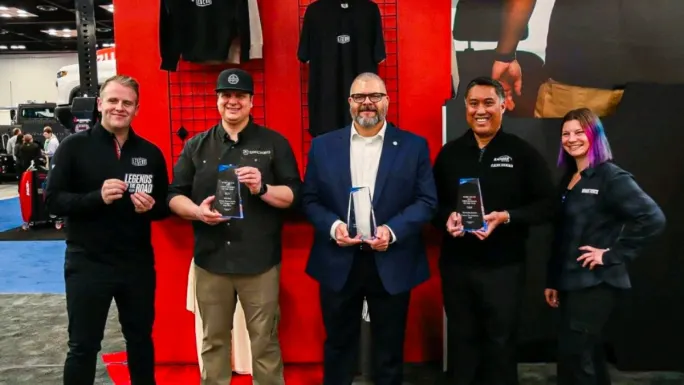
The Upfit Package of the Year awards, presented by Work Truck and sponsored by LEGEND, were announced at Work Truck Week 2026.
Credit: LEGEND
A Reminder of What the Industry Builds Every Day
Work Truck Week is ultimately about more than new vehicles and technologies. It’s about the industries these trucks support.
Utilities, construction crews, service technicians, municipalities, and countless other trades rely on work trucks to keep their operations running every day.
Knapheide’s launch of its “America’s Work Truck” campaign highlighted that reality, emphasizing the role these vehicles play in supporting skilled trades and essential services across the country.
And in many ways, that message captured the spirit of the event itself. While technology continues to evolve, the mission of the work truck industry remains the same.
Building tools that help people do their jobs. Will we see you in Indianapolis in 2027?
More Blog Posts

Can America Replace Canadian Truck Production Without Hurting U.S. Fleets?
U.S. tariffs are targeting Canadian truck production, but Ford and GM show why moving that manufacturing south isn’t so simple. After 60 years of building one North American supply chain, what could fleets lose by pulling it apart?
Read More →
The Fleet Skills We Keep Missing on Veterans’ Resumes
What if some of the strongest candidates are already out there, but we are overlooking them because their experience is written in a language our industry does not always recognize?
Read More →
Technicians Are Doing More Than Turning Wrenches
Technicians do far more than repair vehicles. Six professionals reveal the problem-solving, pressure, and pride behind keeping fleets moving.
Read More →
WWCD? What Would Coach Do?
A personal reflection on Ed "Coach" Bobit, the mentor who shaped my career, and why I still ask myself one question 12 years later: WWCD?
Read More →
What the Fleet Industry Still Gets Wrong About Talent
What can the fleet industry learn from the women helping shape its future? A look at talent, leadership, sponsorship, and why new perspectives drive progress.
Read More →
AI Isn’t Killing Content, but Lazy Expertise Is
Thought leadership loses value when AI does the thinking. Here’s why authentic industry voices still matter most.
Read More →
Do I Need a U.S. DOT Number?
Whether you operate a small fleet of light-, medium-, or heavy-duty units, or are merely the owner of one truck wanting to ensure you adhere to the law, knowing if you can need a U.S. DOT number can be confusing.
Read More →
Is Retirement in Fleet Now More Like ‘Rewiring’?
Fleet professionals rarely retire for good. They return as advisors, mentors, and consultants, keeping hard-won experience in the industry.
Read More →
What Does Visibility in Fleet Really Look Like?
Advocacy changes things. Visible trust changes things. Structure changes things. Access changes things. A willingness to share connections, rooms, and opportunities, and a belief in someone before it is convenient, changes things.
Read More →
What New Fleet Voices Need From the Rest of Us
The fleet learning curve hits fast. Here’s how new pros push through the overwhelm, find their voice, and start thriving in the work.
Read More →