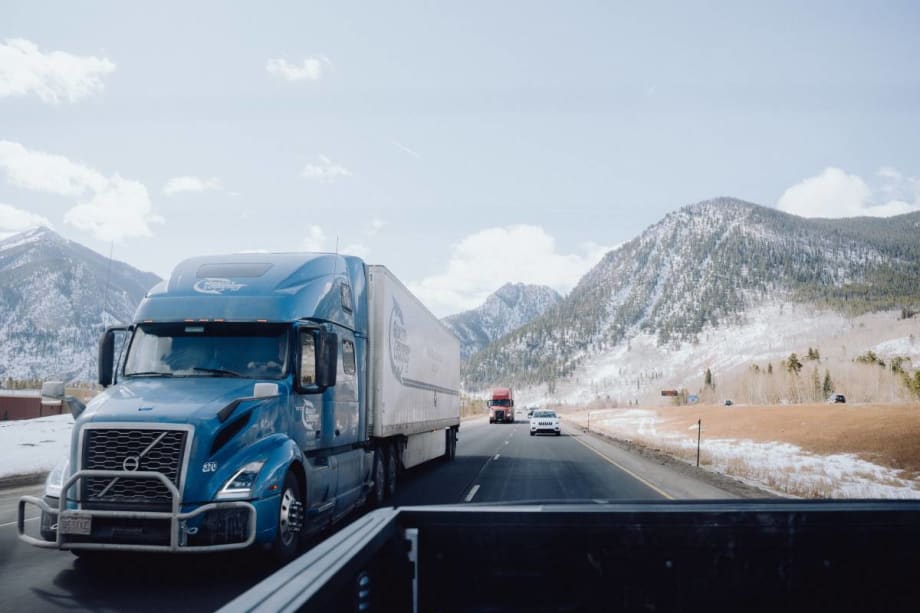
Think about the last thing you ate today. There’s a very good chance that trucking played a major role in getting that item (or its individual ingredients) into your hands. Trucks deliver about 72.5% of all U.S. freight by weight, and in 2020 alone, they transported 10.23 billion tons of freight.
Not only does trucking help feed people; it helps feed the U.S. economy. Trucking represented 80.4% of America’s freight bill in 2020, which amounted to about $732.3 billion in gross freight revenues. Commercial trucking also paid $48.6 billion in federal and state highway user taxes in 2019.
It’s clear trucking plays a key role in our nation’s supply chain. So, when the trucking supply chain breaks down, it can make a wide variety of industries lose massive amounts of dollars and time, while also causing chaos for consumers, drivers, and fleet managers alike. The American Trucking Association estimates if a national emergency happened that resulted in a ban on truck traffic, significant food shortages—especially for perishable food—would occur in as little as three days. Meanwhile, patient care within the stoppage zone would be immediately jeopardized, and service station fuel supplies would start to run dry in one to two days.
Consumers and the economy alike are dependent on the trucking supply chain—and on truck drivers, by extension. In light of that, ensuring drivers have the best technology possible in their vehicles to help them do their jobs better and keep the trucking supply chain running strong is vital.
Identifying Threats to the Trucking Supply Chain
Some of the biggest threats to the trucking supply chain revolve around drivers’ satisfaction. A trucking supply chain can’t function very well without drivers, and given the ongoing truck driver shortage, the trucking industry is expected to need 1 million new drivers over the next nine years.
Drivers have also recently gone on strike to protest certain conditions: vehicles have gathered on the Peace Bridge that connects Buffalo, New York, with Port Erie, Ontario, and a group called the People’s Convoy is planning a convoy from Los Angeles to Washington, D.C.
It’s too early to tell what effects these demonstrations could have on the U.S. economy, but history shows us it could get expensive. Back in 2012, an eight-day strike of clerical workers at the ports of Los Angeles and Long Beach, California, cost the movement of about $650 million worth of goods that idled each day of the strike.
Bad weather and natural disasters are also major threats to the trucking supply chain. Consider the February 2021 winter storms in Texas, which caused a major fuel shortage in the state. During the beginning of the storms, Texas data centers running on generator power began going through their fuel reserves but expected local fuel providers to continue delivering fuel during the storm. Instead, truck fleets were shut down, and road and highway closures made transporting fuel throughout Texas impossible to accomplish. Even pumping fuel on the trucks was impossible because pumps and valves were frozen. In a state known for its oil production, trucking issues during the winter storm single handedly caused the fuel supply chain to collapse for a week.
Natural disasters can have even bigger national supply chain implications depending on how they affect trucking, especially if they hit in a strategic area. While Hurricane Harvey mostly struck Houston and its surrounding area in 2017, Houston is a notable freight and transportation hub. With 14 oil refineries shut down, gas prices increased, which hurt the trucking industry’s ability to maintain its bottom line with low gas prices. Altogether, Harvey affected 10% of the U.S. trucking industry, with the number of total freight loads falling by 10% directly after it hit.
Preventing and Mitigating Disaster to Keep America Up and Running
How can we keep trucks up and running to prevent catastrophe to the trucking supply chain? Unfortunately, we can’t control the weather. But there are a few preventative measures within our power we can take to avoid interruptions to trucking—and to our economy, by extension.
Implement Video Telematics: Video telematics and accident protection help drivers in a few ways. Bad weather makes roadside failures all too easy, but a telematics system tracks a vehicle’s maintenance history and sends automated maintenance alerts, reducing roadside breakdowns and making sure vehicles are in optimal conditions to navigate challenging roads. Telematics also offer real-time feedback as needed in the case of an emergency such as a natural disaster and can help owners save on repair costs.
Furthermore, video telematics and accident protection also help protect drivers and businesses from wrongful lawsuits. Staged accidents are on the rise among scammers because of the large verdict awards they produce—the American Transportation Research Institute (ATRI) found the size of crash-related verdict awards grew at a rate of 51.7% per year between 2010 and 2018. Implementing video telematics and accident protection can help drivers rest easy knowing they’re protected from scammers trying to make a quick buck (or rather, a quick million bucks), all while keeping goods moving.
Optimize Fleet Tech to the Fullest: Fleets can also prevent and mitigate disaster by customizing their systems with asset tracking devices, sensors, and harnesses. In addition to smart, consistent tracking of trailers and assets, asset trackers also allow maintenance scheduling for an entire fleet to increase uptime and ensure trucks are up and running without any surprises. Integrated cellular gateways within asset trackers maintain a 4G connection and keep that line of communication open in case of an interruption or disaster. Asset trackers also offer truckers proof of service and protect cargo in case of a trailer change.
It's important for fleet professionals to leverage technology within fleet management to improve connectivity, streamline fleet maintenance and safety, and to minimize wrongful litigation attempts. Technology isn’t a cure-all— after all, it can’t prevent floods, ice storms, or other natural disasters. But technology can absolutely help with preparing for these disasters in advance.
Last but certainly not least, we need to keep our drivers happy to help the trucking supply chain stay healthy. If trucking is the backbone of the American economy, then drivers are the lifeblood flowing through it. Trucking is a glorious profession, but it’s far from easy, and our drivers can use all the help we can provide to help them succeed. By outfitting our drivers with the technology they need, we can get one step closer to having plenty of drivers on the road to deliver the billions of goods businesses and consumers depend on every day.