





Keep Reading: CBD Oils May Result in DOT-Testing Violation
A Four-Sentence Description of Reasonable Suspicion Training
DOT’s reasonable suspicion training rules leave room for interpretation. Here’s how fleets handle training, documentation, and supervisor judgment.
March 3, 2026

Supervisors participate in DOT reasonable suspicion training, focusing on what the regulations require and where employers must fill in the gaps.
Photo: J.J. Keller | Work Truck
4 min to read
The requirements for DOT reasonable suspicion training consist of just four sentences and 86 words.
This high-level explanation in 49 CFR 382.603 leaves much to the discretion of employers and training providers regarding a supervisor’s training.
Who Must Complete DOT Reasonable Suspicion Supervisor Training
DOT supervisor reasonable suspicion training applies to motor carriers that operate commercial motor vehicles requiring commercial driver’s licenses (CDLs). As a part of the motor carrier’s DOT testing program under Part 382, it must ensure that those designated to supervise drivers receive the required training.
Some motor carriers designate other company employees as driver supervisors to observe and request this specific test type. This practice helps ensure coverage of all shifts and locations and provides backups in the event a primary supervisor is unavailable (e.g., on vacation). Examples include using warehouse or shop supervisors or someone from human resources as a secondary resource.
What are the Required Topics for DOT Supervisor Reasonable Suspicion Training?
The regulations require driver supervisors to take:
60 minutes of training on controlled substance use, and
Another 60 minutes on alcohol misuse.
The curriculum must cover physical, behavioral, speech, and performance indicators of possible alcohol and drug use.
The term “controlled substance” used in 382.603 refers to those substances in 40.82 that are tested for in the DOT drug panel. Using this meaning, the drug portion of training should address the physical and behavioral signs of using marijuana, cocaine, amphetamines, opioids, and PCP.
Once trained, supervisors should be better able (and more confident) to determine whether testing under 382.607 is warranted. The training is a one-time occurrence.
Documentation and Delivery Gaps in DOT Reasonable Suspicion Training Rules
The regulations don’t address the training medium. As a result, it’s the carrier’s choice. For example, the curriculum can be presented in a classroom, online, through videos, in written materials, or any combination of those methods.
In addition, there’s no mention of how to document completed training, or provide proof of content or the two-hour duration. Many carriers retain training certificates, syllabuses, receipts for training performed through providers, and purchased training curriculum (handbooks, videos, etc.).

DOT reasonable suspicion supervisor training reviews key requirements like timing, documentation, and observation standards before a test can be requested.
Photo: J.J. Keller | Work Truck
How 49 CFR 382.307 Defines Reasonable Suspicion Testing Observations
Since 382.603 references 382.307 (reasonable suspicion tests), it’s logical that the course should include information on the test type. Fortunately, 382.307 has a little more to work with (625 words), unlike 382.603. It states that the trained supervisor’s determination for drug and/or alcohol testing must be based on specific, contemporaneous, and articulable observations of the driver's appearance, behavior, speech, or body odor. For drugs, they add observations of chronic and withdrawal effects of drugs.
This additional information is invaluable during training. Supervisors must be able to identify specific observations happening in front of them in the moment (contemporaneous) that they can describe (articulable) to justify the drug or alcohol testing request.
This same rule also discusses the timelines. Alcohol testing should be performed within two hours of the observation, but no later than eight hours. And the supervisor who requests the test must create a written record of the event within 24 hours of the observations or before the results of the drug or alcohol tests are released, whichever is earlier.
Best Practice Topics for DOT Reasonable Suspicion Supervisor Training
The DOT-required elements of supervisor training are procedural. However, there is the human side. The regulations don’t provide guidance on the relational aspect of the supervisor-driver relationship.
Some best practice topics often included in supervisor training include:
Discretion (and respect) during confrontations;
Appropriate language when approaching a driver, including:
Sticking to and restating just the facts,
Using objective terms, and
Showing concern for the driver;
How to respond to a defensive driver; and
Identifying possible medical issues or a handicap that may resemble impairment.
Supervisors Must Be Trained Before Requesting Reasonable Suspicion Tests
Supervisors who request reasonable suspicion tests must be trained. The two-hour training helps them identify drug or alcohol use, but the regulations leave much of the content up to the trainer.
If you want to go deeper on compliance, drug and alcohol testing, driver qualification, or other DOT regulatory topics straight from a subject-matter pro, check out more on Work Truck. We've been digging into the rules and practical tips that help fleets stay compliant for years, and you’ll find more useful reads on everything from DOT recordkeeping to audit readiness and real-world safety insights.
Topics:Safety
Subscribe to Our Newsletter
More Safety
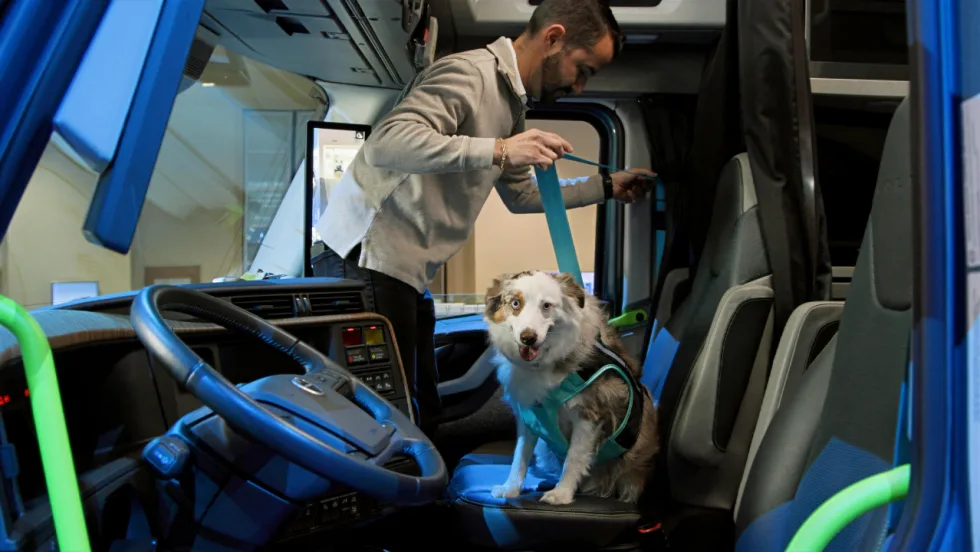
Volvo Trucks Releases New Safety Recommendations for Traveling with Pets
One of the most important recommendations for professional drivers traveling with pets is to ensure pets are properly restrained while the truck is moving. Other tips are available in the new guide from Volvo Trucks North America and Center for Pet Safety.
Read More →
API Issues Refueling Safety Guidelines
The American Petroleum Institute offers a list of safe vehicle refueling guidelines, including ways to avoid potential problems with static electricity discharges in fall, winter, and early spring.
Read More →
Winter Fleet Prep: Expert Tips to Keep Vehicles Running Smoothly
Cold weather can expose weak batteries, tires, fuel systems, and maintenance gaps fast. Use this winter fleet checklist to prepare trucks and drivers before temperatures drop.
Read More →
When a Work Truck Breaks Down, the Job Can Stop, Too
A work truck breakdown can stop more than the vehicle. Discover how payloads, jobsites, and specialty equipment change the roadside response.
Read More →
What Stronger Long-Term Fleet Service Partnerships Actually Require
Fleet service partnerships rarely fall apart all at once. Learn the three warning signs that trust is eroding and what fleets and providers can do before downtime, frustration, and lost revenue follow.
Read More →
Applause & TRUCE Software Partner to Improve Driver Safety Through AI-Powered Telematics & Employee Performance Management
Applause has integrated TRUCE driving metrics directly into its employee-first performance and safety platform that transforms mobile devices into AI-powered telematics.
Read More →
How Detroit Assurance with Active Brake Assist Works
Do you want to see what it is like to experience Detroit Assurance’s Active Brake Assist? In this video, Work Truck will put you in the cab to see how it all works and then hear more details from DTNA’s Mike Young.
Read More →
Get Left of Loss: A 5-Step Workplace Violence Prevention Framework for Fleet Operators
Violence risks do not stop at the driver’s door. Learn five practical steps fleets can take to spot threats early and protect workers before loss occurs.
Read More →
Sponsored•July 17, 2026
How Better Visibility Cut Speeding Violations by 48%
Fleet leaders don't need more data, they need clearer visibility into what the data is saying. This case study explores how one utility replaced speeding-event counts with a single metric — miles driven in violation — to strengthen safety and significantly reduce speeding violations.
Read More →
13 Safe Driving Tips for Commercial Vehicle Drivers
Make sure you are spending time on the road safely with these important tips.
Read More →