



Learn More: First Work Truck Advisory Board Meeting Tackles EVs, Management, and More
Second Editorial Advisory Board Meeting Focuses on Survival, Growth
The group met to discuss vehicle ordering troubles, idling mitigation, and company expansions.

Lexi Tucker・Former Senior Editor
The group met to discuss vehicle ordering troubles, idling mitigation, and company expansions.
Photo: Canva
5 min to read
The second quarterly Work Truckeditorial Advisory Board meeting was held on April 6, 2022, during which the group touched base on some of the progress on efforts from the last board meeting.
Current projects in the works include a piece on maintenance efforts related to the resale of trucks and what fleet managers need to focus on; how to sell and promote yourself, especially during mergers and acquisitions; and a now completed article on a roadmap for fleet electrification.
The publication is also looking at doing similar pieces for other fuels and already has another on biodiesel.
“We're trying to present a fuel agnostic point of view and help all readers find ways to transition to alternative fuels in general. We're going to continue to produce articles on ‘roadmaps,’ as well as looking at roadblocks. We understand we can give everybody a list of all of the things they can do to try to transition, but if we don't talk about the challenges connected to that, it's not really a full picture,” Lauren Fletcher, executive editor of Work Truck, stated.
Wins and Struggles
The next part of the meeting focused on triumphs and challenges various board members have had since the last meeting.
Brian Thompson Jr., general manager of transportation for DTG Recycle
DTG has been busy with completing four acquisitions and is in the process of closing another with two more right behind it. This will almost double the size of its fleet. The business will evolve from a fleet of about 250 trucks to almost 500 trucks in the next three months.
“The biggest snag has been coming into these companies having them not be up to standard with the DOT. That, and obtaining parts has been a challenge,” he said.
Thompson is also in discussions with Bridgestone about its new onboard TPMS system called IntelliTire that links with Geotab.
“It’ll provide a live feed for when tires go low. If they are sitting at night and a tire goes low, it dispatches straight out to our entire company, so it’ll cut costs on downtime.”
Pete Silva, independent consultant and retired fleet executive
Silva has been keeping busy with environmental work with the Environmental Defense Fund (EDF). He spoke about an exciting new tool from EDF that will be announced shortly to help fleets electrify.
“I think when we're talking about fleet electrification, we are possibly making the unfair assumption most fleets have already got their start; they know a little bit, have some resources, and maybe already have an electric truck or two. But for those who haven't gotten started, there’s a lot of information involved and a whole lot of steps. They might not have the grant writers and/or the resources,” Fletcher of Work Truck replied.
Bob Adamsky, corporate fleet manager for Area Wide Protective (AWP)
Adamsky noted two primary challenges. One is OEMs moving ordering windows up dramatically. This is hard for fleets, especially ones that are growing rapidly.
“We're hearing how soon some of these windows are going to open up. How soon will they close? Is it going to be allocation-based or open orders?” he said.
Fletcher noted many companies saw stagnation during the height of the pandemic, but now things are changing fast.
“I'm now seeing growth is happening exponentially and you are all trying to guess what your needs are going to be next year,” she stated.
The other challenge is getting creative on fuel savings through idle reduction. The business is working with Derive Systems, an automotive technology company, to help and is also putting a massive idle effort in place not just based on percentage of runtime.
Adamsky said it’s important to pay attention to the impact of idling on your repair and maintenance.
“It can be tough when you’re seeing a delay in parts like motors, transmission, and other hard parts along those lines. We are seeing OEMs back away and push back on warranties because of extended idle,” he said.
Sandy Martin, corporate fleet manager for Ram Tool Supply
Ram Tool Supply was purchased by White Cap construction on December 1, 2021, and has grown from 46 locations to 446 locations in the US and Canada.
“We've been busy looking at policies, making sure branches are familiar and complying with policies. We are also working with manufacturers to make sure we have the correct ECM parameters for idle reduction. Educating our drivers on completing regens when they're driving, and working with manufacturers on getting active and force regens when we complete PMs to make sure we're cleaning those DPS as often as possible has been a big help,” she said.
Robert Auer, fleet manager for UPS
Auer named parts and oil shortages as his biggest challenge. The vehicles in his fleet have a five-minute timer to help cut back on idling.
Amy McAdams, CAFM, fleet manager for Farmer Brothers
With the recent spike in fuel prices, McAdams has been focused on communicating more with those out in the field on ways to improve fuel economy and ensure drivers aren’t using super unleaded gas in the fleet’s trucks. She’s also reminded drivers to try to reduce idling both when at a customer site and when loading in the morning.
A challenge she’s facing is finding enough Transit vans.
Matt Betz, expert fleet optimization for DTE
Idle mitigation was a hot topic for Betz as well. DTE’s bucket trucks have a job site energy management system (JEMS, an Altec product). In essence, it works like a giant battery pack for a truck. This enables the vehicle to drive under diesel power to a job site. Then, the driver can shut off the engine, turn on the JEMS unit, and work off of battery power for a full eight-hour shift. The bucket can go up and down, AC can be running in the cab, and communications equipment will work. If the power does start to run out during the day, the engine will automatically turn on. This way, a worker can be up in the bucket working on a power line, and if the battery’s running low, the vehicle senses that and automatically turns the engine on and charges the batteries.
He also talked about an interesting facet of fleet safety. Rather than focusing on equipment, what about focusing on behavior-based driver training?
“How do you get the driver to do what you want them to do? How do you get them to drive safely? It's something I haven't heard discussed much. You hear people talking about all the different options they put on their vehicles like cameras and GPS, but I haven't seen anybody do much about the driver themselves,” he noted.
More Operations
Sponsored•October 14, 2026
A buyer's guide to fleet management software in 2027
Buying fleet management software in 2027 means looking beyond features and price. As fleet operations, technology and expectations evolve, this guide explores what today’s fleet professionals should consider when choosing a system that can deliver value now and adapt to what comes next.
Read More →
How to Build a Lasting Fleet Career by Staying Curious and Connected
Tina Kourakos never planned on a career in fleet. More than 30 years later, she says curiosity, strong relationships, and a willingness to keep learning helped turn an unexpected assignment into a career spanning fleet management and OEM leadership.
Read More →
Think You Know Trucks? Take Our 19-Question Fleet Trivia Challenge
From chicken lights to diesel engines and trucking history, test your knowledge with 19 questions from the 2026 Work Truck Exchange and Heavy Duty Trucking Exchange.
Read More →From Our Partners
Basic Tracking vs Next Generation Fleet Technology
Sponsored by AT&T Business
5 Facts Every Fleet Manager Should Know About Embedded Telematics
Sponsored by Stellantis/Mobilisights
How AI Video Telematics Boosts Driver Safety and Helps to Avoid Unnecessary Costs
Sponsored by Verizon Connect
Charting the 8 Bottom-Line Benefits of Workforce Optimization
Sponsored by Verizon Connect

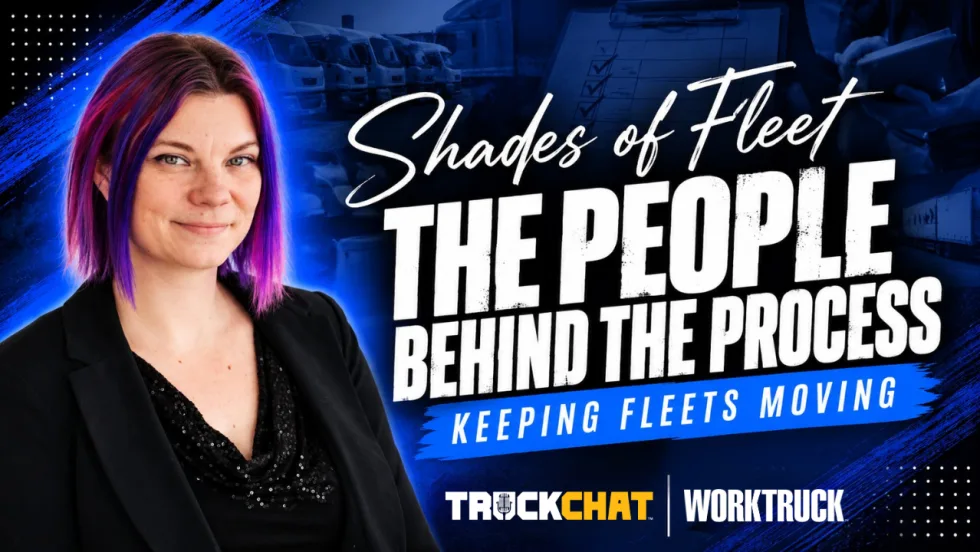
Where’s My Truck: Inside the Fleet Logistics Work Nobody Sees
Shades of Fleet video thumbnail featuring Lauren Fletcher beside the text “The People Behind the Process, Keeping Fleets Moving,” with fleet vehicles and logistics imagery in the background.
Read More →
Work Truck Seeks Fleet and Industry Insights on 2026 Trends and 2027 Forecasts
Work Truck is seeking insights from fleet leaders and industry partners on the trends that shaped 2026 and what commercial fleets should prepare for in 2027. Participate today!
Read More →
It's 10 p.m... Do You Know Who Has Access to Your Fleet?
Preventing cargo theft requires investment in technology, operational processes, and employee training. In an industry with tight margins, it can be difficult to justify investments whose value is measured by incidents that might never occur.
Read More →
GeoFencing Adds to Your Truck Security Arsenal
Geofencing is a familiar fleet tool today, but its early adoption marked a major shift in vehicle tracking, route monitoring, and the debate over employee privacy.
Read More →
Truckers’ Strike Rumors, New GM Engines, and Hidden Idling Costs Lead This Week’s News
Truckers’ strike rumors, GM’s new 2027 engines, hidden idling costs, racing lessons, IRP rules, and more headline this week’s Truck Chat Weekly Cheat Sheet.
Read More →
Shades of Fleet Wants to Hear From You About Building a Culture of Care
Fleet leaders, we want to hear from you. Share how empathy, trust, and creating space for people can strengthen your team, improve performance, and support retention.
Read More →
What Racing Can Teach Work Truck Fleets About the Work Nobody Sees
Race car driver and mechanical engineer Isaac Johnson shares practical lessons on preparation, relationships, setbacks, and building teams that perform when it counts.
Read More →