





What Does Ford's Project T3 Stand for? Trust the Truck!
Ford Accelerates Electrification with Emphasis on Vans and Pickup Trucks
In its fully electric portfolio, Ford plans to introduce an all-new commercial van that will begin production in 2026 in Ohio, closely followed in 2027 by two new pickup trucks.
August 21, 2024
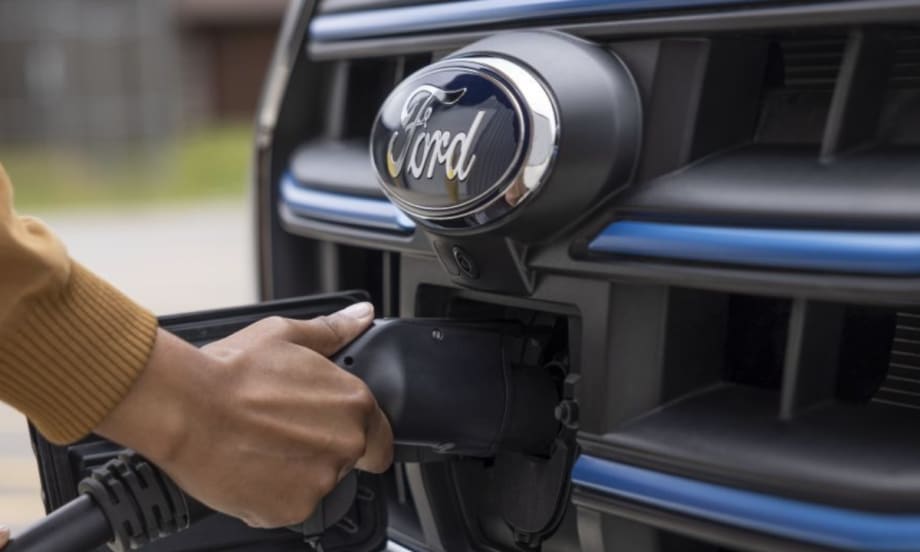
In its lineup of fully electric vehicles, Ford will prioritize launching a technologically advanced commercial van in 2026, followed by two advanced pickup trucks in 2027, and other cost-effective vehicles in the future.
Photo: Ford
7 min to read
Ford Motor Company is implementing new measures to establish a profitable, efficient, and expanding electric vehicle business, offering more options for customers with lower CO2 emissions.
The plan involves adapting the company's North America vehicle lineup to include a variety of electrification choices aimed at accelerating customer adoption, such as more affordable prices and longer ranges.
In its lineup of fully electric vehicles, Ford will prioritize launching a technologically advanced commercial van in 2026, followed by two advanced pickup trucks in 2027, and other cost-effective vehicles in the future. Ford is also adjusting its U.S. battery sourcing plan to lower costs, maximize capacity utilization, and support current and future electric vehicle production.
Ford President and CEO, Jim Farley, stated, "We are dedicated to innovating in America, creating jobs, and introducing new electric and hybrid vehicles that significantly reduce CO2 emissions. We have gained valuable insights as the No. 2 U.S. electric vehicle brand into what customers want and value, and what it takes to compete globally with cost-efficient design. We have devised a plan that provides our customers with a wide range of choices and leverages our strengths."
The electric vehicle market is rapidly evolving, with Chinese competitors capitalizing on cost advantages, vertical integration, low-cost engineering, advanced battery technology, and digital experiences to expand their global market share.
Additionally, today's electric vehicle consumers are focused on cost savings on fuel and maintenance, as well as the convenience of home charging. With a multitude of new electric vehicle options entering the market and increasing compliance requirements, pricing pressures have intensified.
These factors highlight the importance of a globally competitive cost structure while being selective about customer and product segments to ensure profitable growth and capital efficiency.
"We are committed to building a competitive and profitable business to create long-term value," said John Lawler, Ford vice chair and chief financial officer. "To address pricing and margin pressures, we have decided to adjust our product and technology roadmap and industrial footprint to achieve a positive EBIT within the first 12 months of launching all new models."
In addition to revising the pace of product launches and realigning battery sourcing, Ford plans to utilize hybrid technologies for its upcoming three-row SUVs.
Consequently, the company will incur a non-cash charge of about $400 million for the write-down of specific product-specific manufacturing assets for the previously planned all-electric three-row SUVs, which will no longer be produced. These actions may also lead to additional expenses and cash expenditures of up to $1.5 billion, which will be reflected in the quarter in which they occur as a special item.
Lawler emphasized that accelerating the mix of battery production in the U.S., qualifying for the Advanced Manufacturing Tax Credit, is crucial for improving profitability. Additionally, owing to the variety of propulsion options and increasing demand for hybrids, Ford's annual capital expenditures dedicated to pure electric vehicles will decrease from about 40% to 30%.
Growing the Range of Ford Electric Commercial Cehicles
The launch of Ford’s next generation of electric vehicles will start with a commercial van that will be built at Ford’s Ohio Assembly Plant from 2026 onwards.
Currently, Ford has a strong presence in commercial electric vehicles, with the E-Transit leading the way as America’s top-selling electric van for businesses of all sizes. Commercial customers are making a quicker shift to electric vehicles as they appreciate the overall cost savings and productivity gains that come with using electric vehicles. They see vehicles, software, and charging solutions as tools, and they want the best tools for the job and for their bottom line, whether it's an E-Transit or an F-150 Lightning Pro.
Low-Cost, Highly Efficient Electric Vehicle Platform
In 2022, Ford established a skunkworks team in California focused on changing the company’s approach to next-generation vehicle development and bending the cost curve on electric vehicles. The team takes a systems-integration approach across design, engineering, supply chain, and manufacturing to fundamentally rethink the full vehicle.
They managed to reduce cost and complexity. The approach will go deeper into the supply chain and benchmark cost against the best competitors in the world.
“We recruited the most technically skilled and creative professionals from inside and outside Ford to drive a radical change in how we develop an electric vehicle,” Farley said. “The work of this highly talented team has evolved into a critical enabler of our electric vehicle strategy. These electric vehicles will be lower cost and not compromised in any way.”
The first affordable vehicle off this new platform will be a mid-sized electric pickup launching in 2027 that is expected to cater to customers who want more for their money – more range, more utility, more usability.
With a globally competitive electric vehicle cost structure, the platform is designed with minimal complexity to scale quickly by underpinning multiple vehicle styles – for both retail and commercial customers. It is designed to deliver personalized digital experiences that are expandable, always updating and building on Ford’s best features, like BlueCruise and Ford Pro Telematics. This will increase the installed base for software and services – improving Ford’s mix of sticky, profitable revenue over time.
Ford's Project T3 Sets New Standards in Electric Truck Innovation
Ford's upcoming electric truck will continue the company's long history of truck leadership, following the success of the F-150 Lightning, which is the best-selling electric truck in the U.S.
Ford has decided to adjust the launch timing of its innovative electric truck, known as "Project T3," to the second half of 2027. Incorporating feedback from F-150 Lightning customers, the new truck will feature cutting-edge capabilities not previously seen in any Ford truck, including enhanced bi-directional charging and advanced aerodynamics. The truck will be manufactured at the Tennessee Electric Vehicle Center in BlueOval City.
By rescheduling the launch, Ford aims to leverage cost-effective battery technology and other cost efficiencies as the market evolves.
Creating More Fleet Electrification Choices
Due to the high cost of batteries, using pure electric vehicles for commercial applications and larger vehicles remains challenging. As a solution, Ford will develop a new family of electrified three-row SUVs. These SUVs will incorporate hybrid technologies designed to provide enhanced efficiency, performance benefits, and reduced emissions compared to traditional gas vehicles.
Additionally, the next-generation F-Series Super Duty pickup will offer a variety of propulsion options, drawing on Ford’s success with hybrid truck sales with the F-150 and Maverick. Ford aims to future-proof its lineup of pickup trucks by offering hybrid, electric, and other electrified propulsion options, allowing customers and businesses to choose based on their specific needs.
Achieving Cost Reductions Through Smart Capacity Utilization and Localization
Ford realigned battery sourcing to support both electric vehicle and other emerging electrified vehicle applications to unlock cost reductions, improve capital efficiency, and qualify for Inflation Reduction Act production and consumer tax credits.
“An affordable electric vehicle starts with an affordable battery,” Farley said. “If you are not competitive on battery cost, you are not competitive.”
Ford and LG Energy Solutions are targeting to move some Mustang Mach-E battery production from Poland to Holland, Michigan, in 2025 to qualify for Inflation Reduction Act benefits.
The BlueOval SK joint venture’s Kentucky 1 plant will manufacture cells for the current E-Transit with enhanced range and F-150 Lightning beginning mid-2025, delivering significant cost improvements coming online earlier than planned.
BlueOval SK at BlueOval City in Tennessee will produce cells starting in late 2025 for Ford’s new electric commercial van to be built at Ford’s Ohio Assembly Plant. Those same cells will be sourced to later power the next-generation electric truck to be assembled at BlueOval City and future emerging technology electrified vehicles. This common cell strategy gives Ford significant sourcing flexibility for manufacturing across multiple segments and electrified platforms as the market continues to evolve.
Lithium iron phosphate (LFP) battery production is on track to begin in 2026 at BlueOval Battery Park Michigan – America’s first automaker-backed LFP battery plant – qualifying for Inflation Reduction Act benefits and giving Ford one of the lowest-cost battery cells in North America.
Ford will provide an update on its electrification, technology, profitability and capital requirements in the first half of 2025.
More Green Fleet

Fleet Forward Conference Introduces One-Day Passes for 2026
New one-day registration gives fleet professionals the flexibility to attend Tuesday, Wednesday, or Thursday, with passes available for $199 through Sept. 18.
Read More →
CALSTART Rebrands as Catalyst Mobility, Will Combine with Forth in 2027
CALSTART has rebranded as Catalyst Mobility and will combine with Forth at the start of 2027. The new organization said it is poised to become one of the world's largest, strongest, and most impactful clean transportation nonprofits.
Read More →
Electric Truck and Charging Programs to Boost Sustainability at NY & NJ Ports
Together, the Port Authority of New York and New Jersey and CALSTART will electrify drayage and terminal operations serving the East Coast’s busiest container port. A pair of incentive programs totaling $45 million has launched to accelerate adoption of zero-emission drayage trucks and terminal tractors.
Read More →
Xos Hub Surpasses One Gigawatt-Hour of Energy Delivered in the Field
A single Xos Hub has surpassed one gigawatt-hour of energy across more than 33,600 charging sessions in the field, demonstrating performance that supports Xos' expansion across new products and markets.
Read More →
Carrier Transicold Launches All-Electric Vector 8200 TRU for Diesel-Free On-Site Cold Storage
Carrier Transicold’s first engineless multi-temperature TRU helps fresh- and frozen-food fleets add supplemental cold storage capacity during seasonal peaks.
Read More →
Narro Trucks Introduces Electric Utility Vehicle
Narro Trucks officially launched its operations on Aug. 20 and hosted a ride and drive to showcase its electric truck, which will be produced in Virginia.
Read More →
Samsung SDI Takes Full Control of GM Battery JV as Indiana Plant Pivots to Energy Storage
Samsung SDI is taking full control of its Indiana battery plant with GM, marking a major shift from the EV-focused joint venture Charged Fleet first covered in 2023.
Read More →
NWSA Taps CALSTART to Administer Zero-Emission Drayage Assistance Program
CALSTART will provide free technical assistance services to drayage fleets serving the Ports of Seattle and Tacoma and looking to transition to cleaner technologies and help decarbonize freight hubs.
Read More →
EV Fleet Reality Check: What Operators Wish They Knew Before Electrifying Their Work Vans
Electric work truck upfits bring new compatibility questions. Learn how parts availability, OEM guidance, power demands, and route planning can affect fleet performance.
Read More →
Peterbilt Expands Sourcewell Partnership with Electric Vehicle Lineup
Peterbilt Motors Company’s cooperative purchasing agreement with Sourcewell and its Canadian partner, Canoe Procurement Group, now includes including Peterbilt's battery-electric vehicle lineup.
Read More →