





Going Green: Choosing the Right Alt-Fuel Vehicle for Your Fleet’s Location
$400M in Financing for Renewable Natural Gas Infrastructure
Financing from Stonepeak will provide Clean Energy with capital for new renewable natural gas production facilities, as well as the expansion, and more.
December 15, 2023

Clean Energy Fuels and Stonepeak enter a six-year agreement.
Photo: Clean Energy Fuels/Stonepeak/Work Truck
2 min to read
Clean Energy Fuels entered a six-year $300 million senior secured term loan with Stonepeak, an alternative investment firm specializing in infrastructure and real assets.
The credit agreement also provides a two-year delayed draw term loan commitment of an additional $100 million.
In addition to repaying existing loans, the financing from Stonepeak will provide Clean Energy with capital for new renewable natural gas (RNG) production facilities, as well as the expansion of the company’s fueling infrastructure targeting the heavy-duty truck market.
Clean Energy currently provides RNG to hundreds of fleets every day in the form of compressed natural gas (CNG) and liquified natural gas (LNG), which enables them to decarbonize their large vehicles easily and affordably.
“We see RNG as a practical and affordable energy solution for the transportation sector, with tailwinds supporting increasing adoptability. This, combined with its ability to curb fugitive methane emissions, makes it a critical part of decarbonization infrastructure, in our view,” said Michael Bricker, Senior Managing Director at Stonepeak.
Driving Towards a Greener Future
Clean Energy is presently establishing a collection of renewable natural gas (RNG) production facilities at various dairies nationwide.
The initial venture involves the production of RNG in Texas, which is then distributed to the transportation market in Oregon through the state's low-carbon fuels program.
Several other facilities are nearing completion in their development stages. Simultaneously, the company is enhancing its RNG fueling infrastructure, presently encompassing more than 600 stations throughout North America.
Sustainable Trucking on the Horizon
This expansion aligns with Cummins's ongoing testing of a new, larger natural gas engine designed for heavy-duty trucks.
Collaborating with major companies such as Walmart, Werner, Knight Swift, and UPS, these fleets are experiencing heightened fuel efficiency, increased torque, and power compared to previous models.
Importantly, this innovation results in a substantial reduction in greenhouse gas (GHG) and nitrogen oxide (NOx) emissions compared to traditional diesel engines. The industry is eagerly anticipating the commercial launch of the Cummins X15N engine in 2024.
Mitigating Environmental Impact
RNG, a biogenic fuel derived entirely from organic waste at facilities like dairy farms, is crucial in mitigating environmental impact.
Agriculture contributes to over 10% of U.S. GHG emissions, while the transportation sector accounts for an additional 28%, according to the U.S. Environmental Protection Agency.
The capture of methane from farm waste serves to decrease these emissions significantly. When utilized as a transportation fuel, RNG derived from captured methane leads to a substantial reduction in GHG emissions on a lifecycle basis compared to diesel.
This environmentally friendly characteristic enables RNG to attain a negative carbon-intensity score from the California Air Resources Board, acknowledging the emission reduction both at the source and during vehicle operation.
More Fuel

The Smart Way to Build a Mixed-Energy Fleet Isn’t About Picking a Side
Mixed-energy fleets aren’t about picking a winning fuel. Sarah Booth of WEX explains how vehicle data, duty cycles, charging strategy, and real-world costs can help fleets choose the right energy source for each job.
Read More →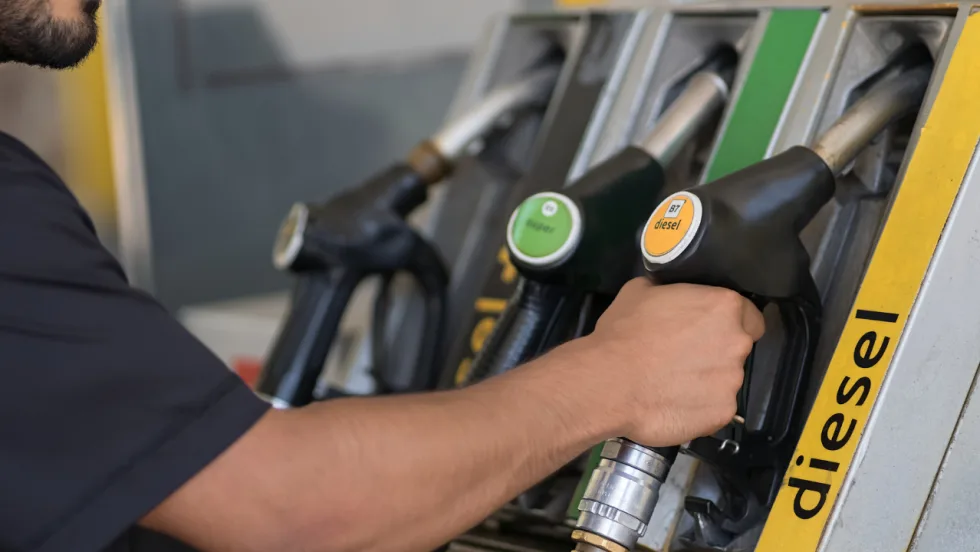
Ignoring This Dashboard Warning Could Cost Your Fleet Thousands in Fuel
New research suggests neglected diesel aftertreatment systems could waste up to $30 in fuel per vehicle each day. Here's why vocational fleets should pay attention.
Read More →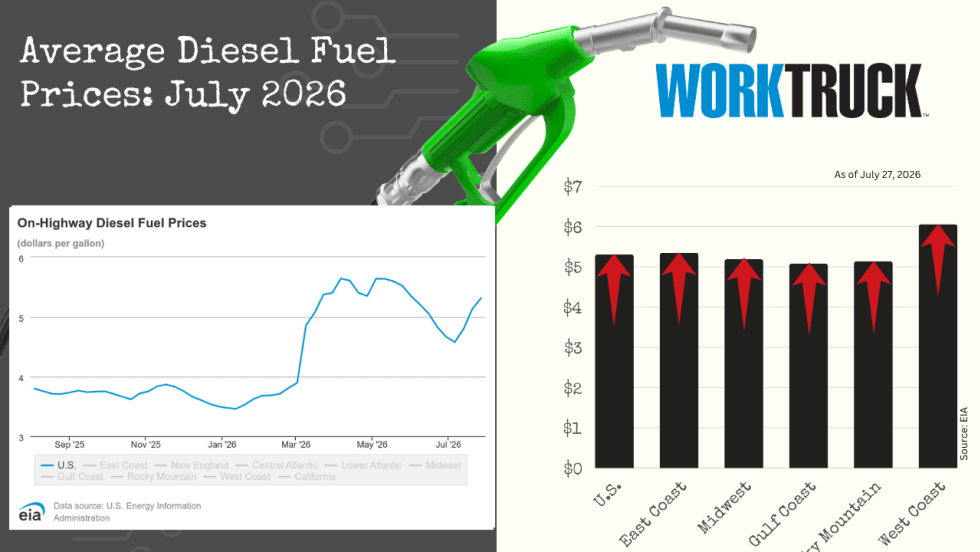
July Diesel Trends Update
The average price of a gallon of diesel increased again this week, and the EIA reported a new national average of $5.31 at the start of the week.
Read More →
WEX Brings Standard Fleet's Connected Vehicle Platform to Fleet Customers
This week’s product launch with Standard Fleet’s connected vehicle platform reflects WEX Venture Capital's strategy of turning startup innovation into customer solutions. Standard Fleet is now available to WEX fleet customers.
Read More →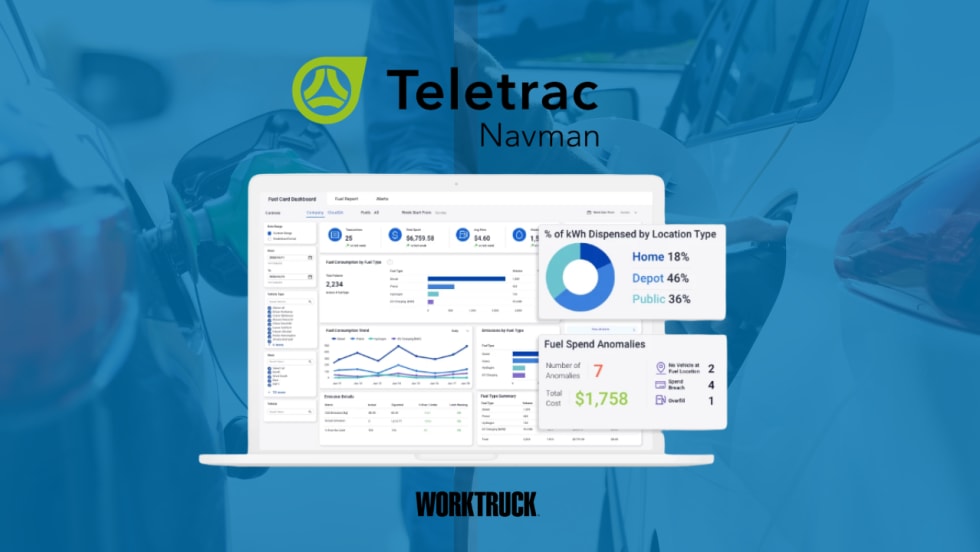
Teletrac Navman Adds Mixed-Energy Fleet Tools to TN360
The new Energy Hub combines fuel transactions, EV charging data, vehicle range, and energy costs in one dashboard for fleets operating multiple vehicle and energy types.
Read More →
WEX DriverDash adds CITGO, Expands Nationwide Access for Fleets
The DriverDash mobile payment app, by WEX, has been integrated into the CITGO merchant network, which means WEX has expanded its U.S. station footprint with the addition of approximately 4,000 CITGO locations.
Read More →
Mixed Energy Fleet Tips for Balancing EVs, Gas and Diesel Vehicles
Mixed energy fleets are becoming the new normal. Learn how fleet managers are balancing EVs, gas and diesel vehicles while controlling costs and planning for the future.
Read More →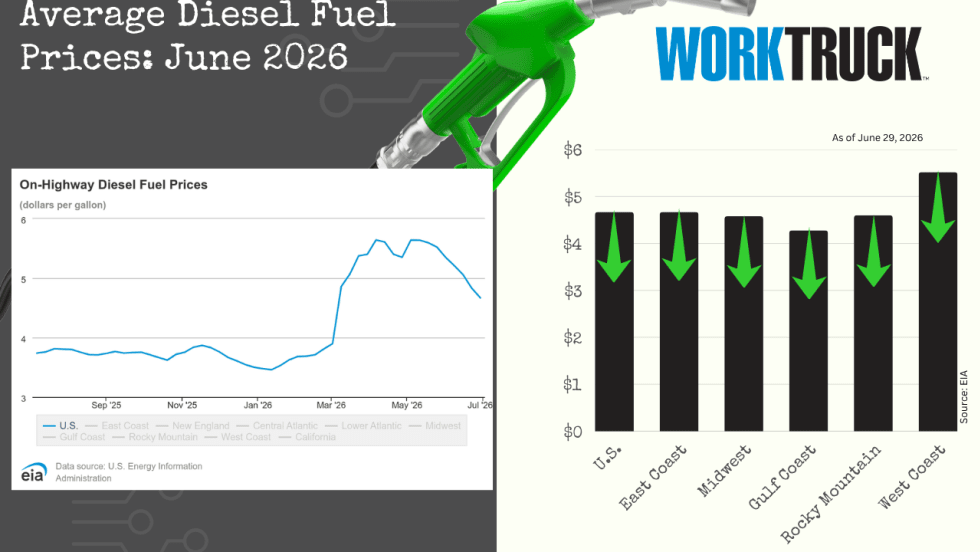
June Diesel Trends Update
The national average price of a gallon of diesel has dropped again, this week by more than 16 cents. All five regions reported lower average prices, ranging from almost 13 cents to more than 28 cents cheaper than a week ago.
Read More →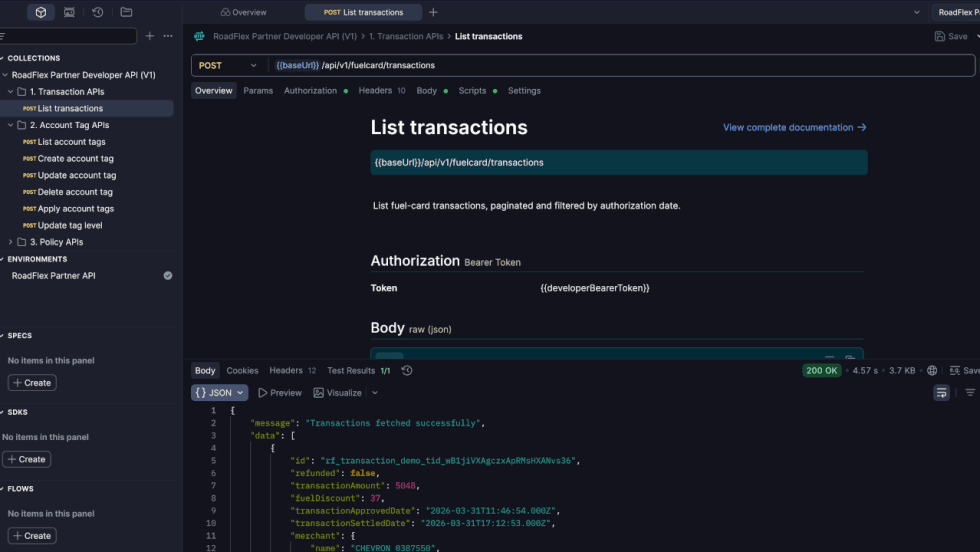
RoadFlex Launches RoadFlex Direct Open API Platform
RoadFlex Direct connects fuel cards, controls, and data to the telematics and fleet management systems fleets already run, from Geotab and Samsara to Fleetio and RTA, with no separate dashboard or double data entry.
Read More →
The Key to Fuel Efficiency Sits in the Cab
Learn how driver behavior, telematics, coaching, and fuel data can help fleets improve fuel efficiency, lower costs, and reduce emissions.
Read More →