




Where Propane Autogas Fits in Today's Fleet Fuel Strategy
Learn more from PERC's Joel Stutheit, as he explains why propane autogas remains a practical alternative for fleets seeking to reduce emissions without sacrificing operational flexibility.

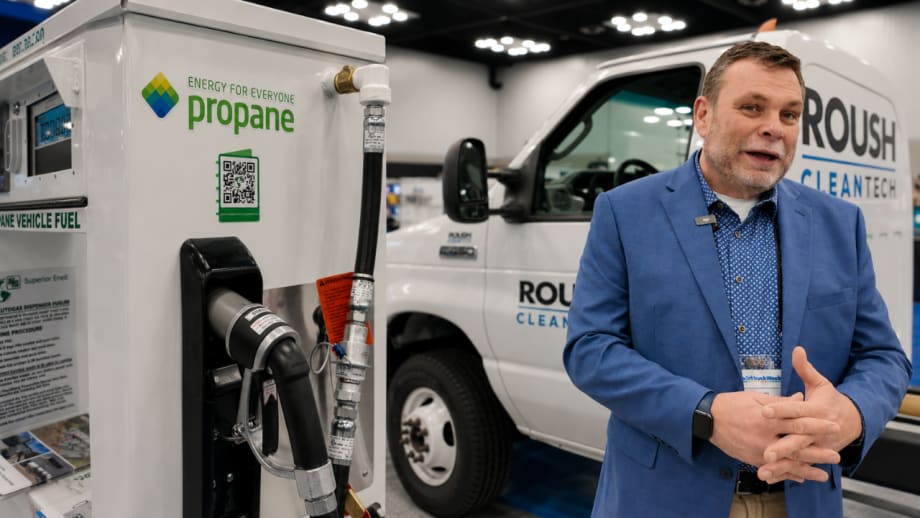
Propane autogas technology takes center stage as PERC's Joel Stutheit discusses how the fuel can support commercial vehicle fleets looking for practical alternatives to gasoline and diesel.
Work Truck
Fleet managers today are facing pressure from multiple directions. They are being asked to manage operating costs, reduce emissions, and prepare for the future while still keeping vehicles on the road and budgets under control. At the same time, fuel price volatility has made cost predictability an increasingly important consideration as fleets evaluate long-term energy strategies.
For many fleets, propane autogas is proving to be a viable option. Joel Stutheit, Senior Manager of Autogas Business Development for the Propane Education & Research Council (PERC), noted that propane autogas often fills a gap between traditional fuels and electrification.
"Between EV and diesel, propane autogas is a nice niche that fits in the middle and helps fleets lower emissions," Stutheit said. "Beyond fuel savings, fleets also see benefits in total cost of ownership. That's where propane really stands out."
Rather than focusing solely on fuel prices or vehicle acquisition costs, Stutheit encourages fleets to take a broader view when evaluating alternative fuel options.
Start With the Fleet's Real-World Needs
According to Stutheit, the first question isn't whether a fuel is new or innovative. It's whether it actually works for the operation.
"They should be looking at the long-term solution for their fleet," he said. "What is going to fit best in their fleet?"
Fleet managers should evaluate factors such as vehicle range requirements, daily routes, and overall duty cycles before deciding which fuel technology makes the most sense.
"Fleets should look at vehicle range requirements and the duty cycle the vehicle will operate in. Those are two important factors to consider," Stutheit said. "With propane autogas, there's a strong niche in the Class 3 through 7 market where fleets can really benefit."
For fleets operating medium-duty vehicles, particularly those that return to a central location each day, propane autogas can provide a practical balance between emissions reduction and operational simplicity.
Infrastructure May Be Easier Than Fleets Expect
One common concern surrounding alternative fuels is infrastructure. Stutheit noted that propane autogas' infrastructure model is often more flexible than fleets realize.
"When a fleet adopts propane autogas, one of the first steps is finding a marketer or propane retailer that specializes in autogas," he said. "That partnership can play a big role in helping fleets successfully adopt the fuel."
Many propane autogas providers offer infrastructure solutions that can reduce upfront investment.
"Many fleets have a few options," Stutheit said. "They can lease infrastructure through a fuel contract, often at low or no upfront cost, or they can choose to purchase the infrastructure themselves."
Perhaps more importantly, that infrastructure can grow alongside the fleet.
"The great thing about propane infrastructure is that it's scalable," Stutheit said. "A fleet might start with only a few vehicles and a smaller fueling setup. As that fleet grows, the infrastructure can grow with it by working with its propane retailer."
Emissions Benefits Without Major Operational Changes
For fleets facing sustainability targets, propane autogas offers an opportunity to reduce emissions without completely overhauling their operation.
"Another advantage of propane autogas is that fleets can make immediate progress toward their sustainability goals because of how clean the fuel is," Stutheit said.
He noted that propane's low-emissions profile has long made it suitable for applications where air quality is especially important.
"Because propane autogas is such a clean fuel, its exhaust emissions are very different from diesel or gasoline," Stutheit said. "That's one reason it has long been used in indoor applications like forklifts, where diesel and gasoline face greater restrictions."
According to Stutheit, the ability to pair emissions reductions with accessible fueling infrastructure is one of propane's biggest advantages for fleets looking to make progress now rather than years down the road.
In fact, Stutheit noted that propane autogas can help fleets pursue sustainability goals without the lengthy infrastructure timelines that often accompany other alternative fuel technologies.
Cost Stability Remains a Key Selling Point
While sustainability goals often drive alternative fuel conversations, operating costs remain a major factor in fleet decision-making. Stutheit pointed to the pricing stability of propane autogas as one of the fuel's strongest advantages.
"Propane autogas pricing is very stable," he said. "You typically don't see the seasonal price spikes that can occur with other fuels."
Because propane is primarily produced in North America, fleets using propane autogas may be less exposed to global market factors that influence diesel and gasoline prices. That added predictability can help fleets forecast operating expenses and support longer-term budgeting.
That predictability can make budgeting easier and help fleets forecast operating expenses more accurately.
"Because fuel costs remain relatively flat and predictable, propane autogas can make budgeting easier for fleets," Stutheit said. "It also gives them an opportunity to see a quicker return on investment when adopting autogas vehicles."
A Proven Option for Return-to-Base Fleets
While propane autogas may not be the right fit for every operation, Stutheit shared that the technology has already demonstrated success across a variety of fleet applications.
"Propane autogas is a great fit for many fleets today," he said. "It's widely used throughout the United States, with more than 60,000 vehicles operating across school bus, paratransit, and corporate fleet applications."
The strongest use cases tend to share similar operating characteristics.
"For return-to-base fleets with high-mileage vehicles and significant fuel consumption, propane autogas can be a great way to reduce operating costs," Stutheit said.
As fleets continue to evaluate how to balance emissions goals, operational requirements, and long-term costs, propane autogas remains an option that offers a familiar fueling experience while delivering measurable environmental and economic benefits.
Quick Answers
Propane autogas is considered practical because it allows fleets to reduce emissions while maintaining operational flexibility, making it a versatile choice for various fleet needs.
*Summarized by AI
More Green Fleet
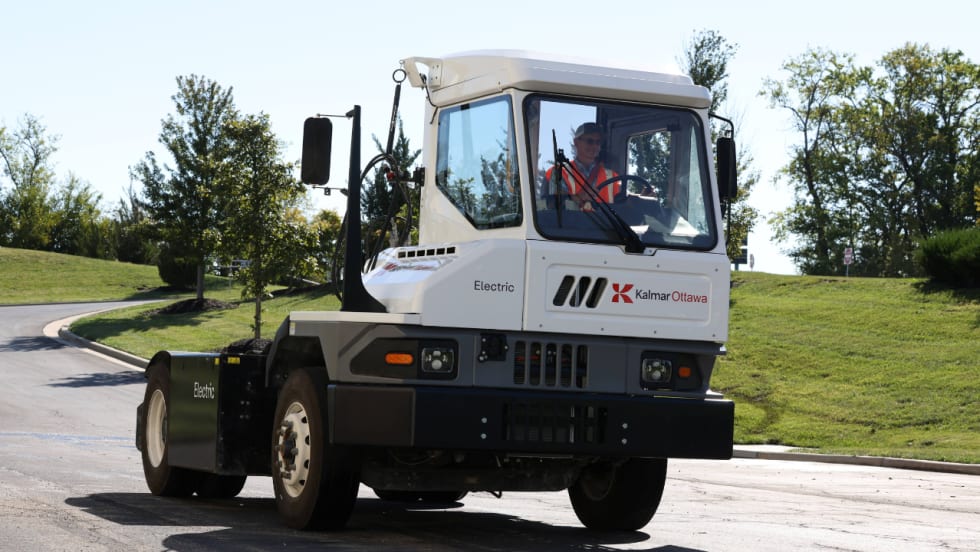
WTC Group Expands Sustainable Operations with Kalmar Ottawa T2 EV Fleet
Commercial adoption of the Kalmar Ottawa T2 EV terminal tractor continues to grow as customers add the zero-emission yard tractor to their fleets. WTC Group has placed an order for a Kalmar Ottawa T2 EV.
Read More →
Schneider Electric Simplifies Commercial EV Charging with New Charge Pro for the U.S.
Schneider Electric’s updated Charge Pro Level 2 chargers deliver reliable, flexible charging for multi-unit dwellings, fleets and workplaces, as well as public and destination charging locations such as hotels and retail centers.
Read More →
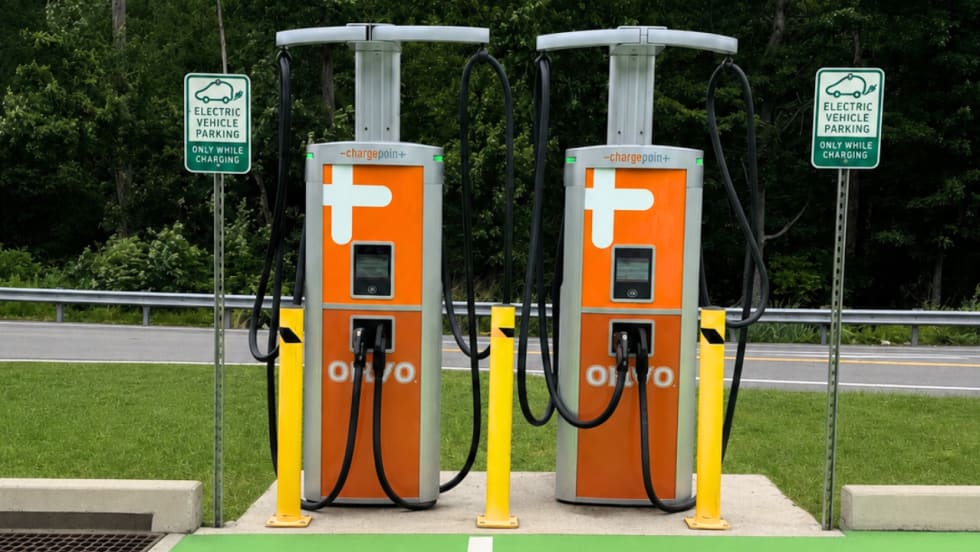
ChargePoint and Onvo Expand Highway Fast Charging Across the Northeastern U.S.
ChargePoint is working with Onvo, a locally owned travel plaza brand headquartered in Pennsylvania, to install ultra-fast EV charging stations at locations in the Northeastern U.S.
Read More →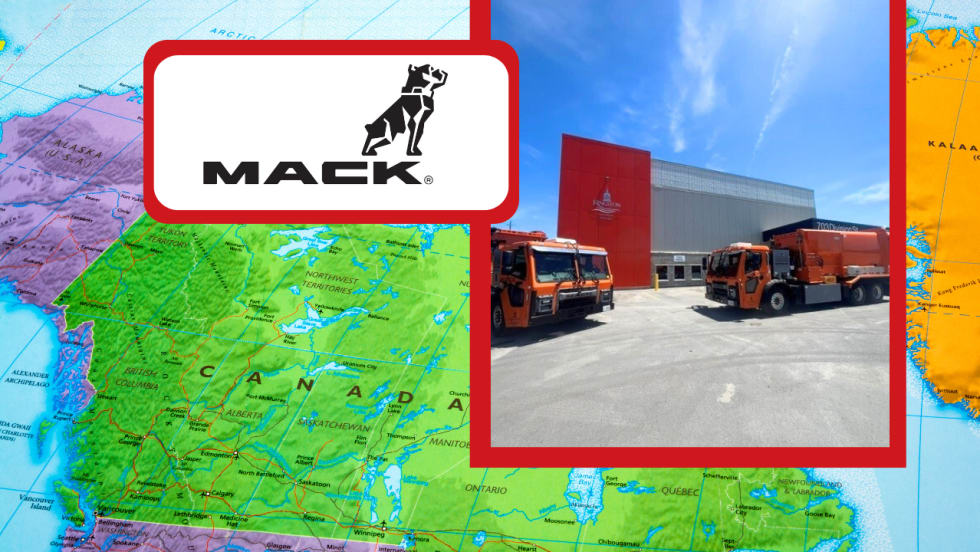
The City of Kingston Celebrates Purchase of 2 Mack LR Electric Refuse Trucks
The City of Kingston, Ontario, Canada, a municipality with a vision of being “Canada’s Most Sustainable City,” recently showcased two Mack LR Electric refuse trucks following their successful deployment in 2025.
Read More →
Fuel Management's Next Evolution Centers on Connected Fleet Technology
Learn how fleets are integrating fueling, telematics, tank monitoring, EV charging, and data systems to improve efficiency and visibility.
Read More →
Landi Technologies Achieves CARB Certification of Ford 7.3L RNG/CNG Platform
Landi Technologies has gained CARB certification of its Ford 7.3L Renewable Natural Gas (RNG) and Compressed Natural Gas (CNG) platform for the Ford E-450, F-450/550/600, F-650/750, and F-53/59 platforms.
Read More →
Turning Connected Vehicle Data Into Decisions That Matter
Fleet leaders have more data than ever, but turning that data into clear, actionable decisions remains a challenge. This white paper shows how leading organizations are using connected vehicle data to improve safety, reduce costs, and optimize fleet performance. Learn how to turn insight into action across your fleet.
Read More →
Are You Tracking Your Fleet's True Total Cost of Ownership?
Bobit Business Media surveyed 190 fleet professionals and found that while most fleets are tracking costs, fragmented systems and data gaps are keeping true TCO visibility out of reach. With rising pressure to control spend in an increasingly volatile environment, the gap between what fleets think they know and what the data actually shows is wider than you might expect. See how your peers are managing costs today and where the industry still has room to improve.
Read More →
Epic Charging Acquires Bluedot Technologies
Epic Charging has acquired Bluedot Technologies, expanding EV fleet charging access to more than 80% of U.S. public charging networks.
Read More →