




All About Propane Autogas
With the various fuel and technology options available for work trucks, how do you make the right choice for your business? Propane autogas is one of those clean-operating, low-carbon fuels that you hear about in today’s fleets.
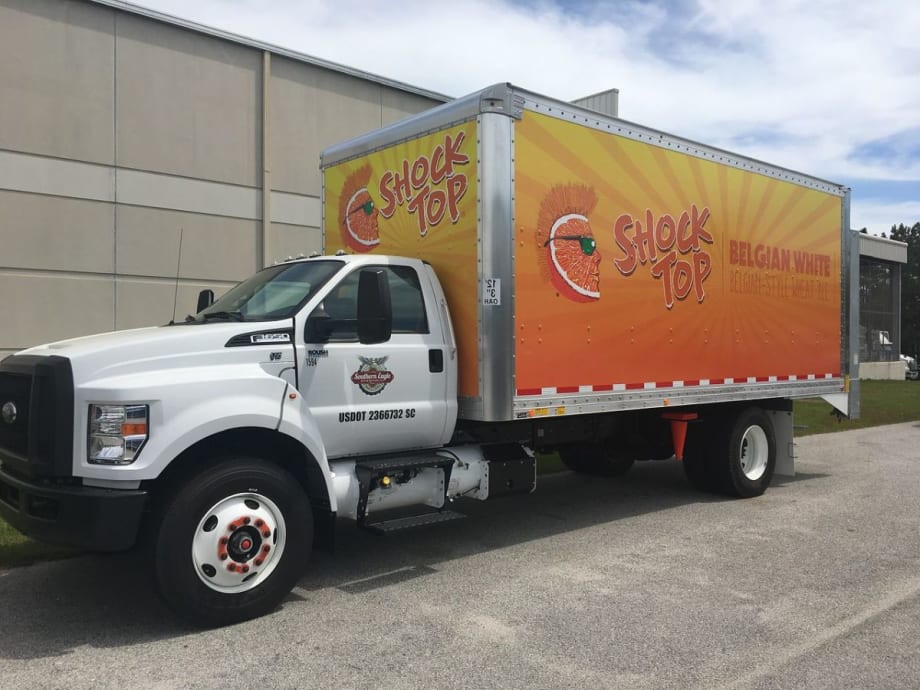
Southern Eagle Distributing, one of the oldest continual Anheuser-Busch distributorships in the United States, purchased propane autogas trucks to deliver beverages in Charleston, S.C.
Photo: ROUSH CleanTech
The alternative-fuels terrain can be tough to navigate. With the various fuel and technology options available for work trucks, how do you make the right choice for your business? Propane autogas is one of those clean-operating, low-carbon fuels that you hear about in today’s fleets.
Don’t know much about propane autogas? Here’s a primer.
What is Propane Autogas?
Propane autogas is the internationally recognized term for propane when used in on-road engines. More than 90% of the nation’s supply comes from the United States and an additional 7% from Canada.
As an approved alternative fuel under the Clean Air Act, propane autogas is a nontoxic, non-carcinogenic and non-corrosive fuel. There are more than 27 million propane-powered vehicles worldwide.
Drive the Latest Technology
Work trucks fueled by propane autogas don’t look any different on the outside than ones fueled by diesel or gasoline. It’s what’s on the inside that makes a difference.
Propane autogas vehicles be dedicated (meaning they operate only on propane) or they may be bi-fuel (meaning two fuel sources are stored onboard and the driver can switch between the fuels).
With modern systems, propane remains in a liquid state until it gets to the cylinder. This removes the cold-start issues associated with vapor technology propane systems of the past. Today’s dedicated propane autogas fuel systems start immediately in weather as cold as negative -40 degrees Fahrenheit.
The Propane Education & Research Council keeps a list of certified manufacturers of propane vehicles at propane.com/for-my-business/fleet-vehicles.
Save Money with Propane Autogas
Historically, propane autogas costs about 40% less than gasoline and 50% less than diesel per gallon, and reduces maintenance costs due to its clean-burning properties. Propane autogas vehicles eliminate the need for additional fluids or filters; exhaust after-treatment or diesel emissions fluids; particulate trap systems; turbochargers or intercoolers. Filter packages cost about 60% less for propane autogas vehicles than diesel vehicles.
Comparing total cost of ownership between various vehicles also helps fleet managers make a more informed decision. The higher the annual miles driven and the lower the vehicle’s fuel efficiency, the more likely propane autogas will provide a quick return on investment. A savings calculator from the Propane Education & Research can help you measure the cost per mile. Enter specific transportation data requirements at propane.com/on-road-fleets/calculator/.
Companies that deploy propane autogas vehicles may be eligible for federal and state funding. The Energy Department’s Alternative Fuels and Advanced Vehicles Data Center provides information and resources at www.afdc.energy.gov/laws/.
Reduce Harmful Emissions
Vehicles that run on propane autogas emit fewer greenhouse gases, smog-producing hydrocarbons and particulate emissions than conventional fuels. Propane autogas is naturally much lower in nitrogen oxides than diesel and gasoline. These emissions are federally regulated due to their negative impact on human health and the environment.
With propane autogas trucks, drivers aren’t exposed to the harmful particulate matter in diesel exhaust, which is known to aggravate asthma and is identified as a carcinogen by the World Health Organization.
All engines of any fuel type must be certified to the Environmental Protection Agency’s standard. But propane engines go beyond that certification because of their clean operation. For instance, the ROUSH CleanTech propane engine is 90% cleaner than the EPA’s strictest emissions standard.
Renewable propane, developed from non-fossil fuels like animal fats, vegetable oils and wood byproducts, is a growing resource to reduce emissions even further. Using renewable propane will bring the vehicle’s emissions to near zero.
Propane Fueling Options
Because many company’s vehicles return to a central point at the end of each day, an onsite propane station can easily take care of your fueling needs. Depending on storage necessity, longevity and available space, there are underground storage tanks for longer-term use or aboveground skids that can be replaced or removed. Look for a local fuel supplier to install low or no-cost propane infrastructure. These propane providers specialize in helping fleets choose the right fueling option based on the fleet size, routes, budget and facility space. You can find a list of all propane providers at propane.com/about-propane/how-to-choose-a-propane-supplier.
According to the Alternative Fuels Data Center, the upfront cost of propane infrastructure is very affordable. In fact, propane autogas fueling infrastructure costs less than any other fueling station — conventional or alternative. Fleet owners may only be responsible for installing permanent equipment like a concrete pad or electricity line for the fuel station. The other costs (that could include paying for a tank, pump and dispensing equipment) may be picked up or offered at low cost to a fleet when it signs a fueling contract with a propane provider.
Another option, known as “wet-hosing” or “mobile fueling,” is to contract with a propane supplier to perform onsite propane autogas fueling services. The propane supplier comes to your location and fuels from their bobtail truck. And for fleets with limited space, public stations can be the solution. There are already thousands of propane stations across the U.S. To find stations near you, visit the Alternative Fuels Data Center.
Drivers can avoid spills with this alternative fuel. Unlike gasoline or diesel, propane autogas is part of a closed-loop system, meaning the fuel is never exposed to air and won’t spill. Plus, at 10 to 12 gallons per minute, fueling is quick and a similar rate to diesel.
Whether replacing one truck or dozens, look to clean, economical and domestically produced alternatives like propane autogas technology for the future of your fleet.
About the Author: Todd Mouw is president of ROUSH CleanTech, an industry leader of advanced clean transportation technology. Mouw has more than two decades of experience in the automotive and high-tech industries. As former president of the NTEA Green Truck Association, Mouw helped set standards in the green trucking industry.
More Green Fleet

Fleet Forward Conference Introduces One-Day Passes for 2026
New one-day registration gives fleet professionals the flexibility to attend Tuesday, Wednesday, or Thursday, with passes available for $199 through Sept. 18.
Read More →
CALSTART Rebrands as Catalyst Mobility, Will Combine with Forth in 2027
CALSTART has rebranded as Catalyst Mobility and will combine with Forth at the start of 2027. The new organization said it is poised to become one of the world's largest, strongest, and most impactful clean transportation nonprofits.
Read More →
Electric Truck and Charging Programs to Boost Sustainability at NY & NJ Ports
Together, the Port Authority of New York and New Jersey and CALSTART will electrify drayage and terminal operations serving the East Coast’s busiest container port. A pair of incentive programs totaling $45 million has launched to accelerate adoption of zero-emission drayage trucks and terminal tractors.
Read More →
Xos Hub Surpasses One Gigawatt-Hour of Energy Delivered in the Field
A single Xos Hub has surpassed one gigawatt-hour of energy across more than 33,600 charging sessions in the field, demonstrating performance that supports Xos' expansion across new products and markets.
Read More →
Carrier Transicold Launches All-Electric Vector 8200 TRU for Diesel-Free On-Site Cold Storage
Carrier Transicold’s first engineless multi-temperature TRU helps fresh- and frozen-food fleets add supplemental cold storage capacity during seasonal peaks.
Read More →
Narro Trucks Introduces Electric Utility Vehicle
Narro Trucks officially launched its operations on Aug. 20 and hosted a ride and drive to showcase its electric truck, which will be produced in Virginia.
Read More →
Samsung SDI Takes Full Control of GM Battery JV as Indiana Plant Pivots to Energy Storage
Samsung SDI is taking full control of its Indiana battery plant with GM, marking a major shift from the EV-focused joint venture Charged Fleet first covered in 2023.
Read More →
NWSA Taps CALSTART to Administer Zero-Emission Drayage Assistance Program
CALSTART will provide free technical assistance services to drayage fleets serving the Ports of Seattle and Tacoma and looking to transition to cleaner technologies and help decarbonize freight hubs.
Read More →
EV Fleet Reality Check: What Operators Wish They Knew Before Electrifying Their Work Vans
Electric work truck upfits bring new compatibility questions. Learn how parts availability, OEM guidance, power demands, and route planning can affect fleet performance.
Read More →
Peterbilt Expands Sourcewell Partnership with Electric Vehicle Lineup
Peterbilt Motors Company’s cooperative purchasing agreement with Sourcewell and its Canadian partner, Canoe Procurement Group, now includes including Peterbilt's battery-electric vehicle lineup.
Read More →