




Related: Digging into Work Truck Fleet Costs
Getting Control of Fleet Operating Costs
Maintaining a fleet is an expensive endeavor. Understanding the TCO for fleet assets is the first step to controlling operating costs.
by Rachael Plant, Fleetio
December 15, 2022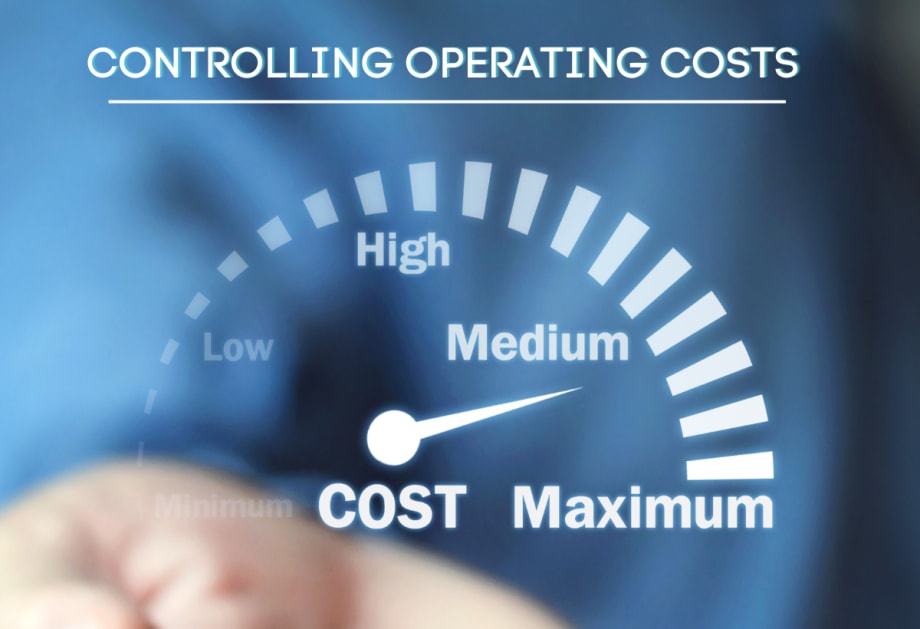
Fleets using FMS and other fleet solutions can help save a fleet time and money.
Photo: Work Truck
4 min to read
When it comes to controlling operating costs, understanding the total cost of ownership (TCO) for fleet assets is the first step.
Fleets can compare operating costs against usage metrics to determine what assets cost the most — yet are tanking in productivity — so stakeholders can make data-driven decisions around lifecycle improvement, asset replacement, and procurement.
Calculating Asset TCO
It’s no secret that maintaining a fleet is an expensive endeavor. While maintenance and fuel make up most of the operating costs, it’s essential to also factor in asset TCO to help identify sources of inflated costs.
TCO is the sum of an asset’s capital, maintenance, depreciation, fuel consumption, licensing, and administration costs. Without knowing the TCO for assets, you may miss out on opportunities to:
Correct costly issues.
Improve asset lifecycles.
Optimize replacement cycles.
Asset procurement isn’t cheap. It’s often hard to justify the purchase of new vehicles and other assets to stakeholders. Add to that the extensive lead times for new vehicle acquisitions, and it’s easy to understand why many fleets focus more time, money, and effort on extending the useful life of their assets.
TCO is critical in understanding the cost of your assets so you can make informed financial decisions and improve operations to help control expenses.
Applying Usage Data
Understanding what vehicles are costing the fleet concerning their productivity — or usage — can help you identify when and where to allocate funds, whether creating a process to extend current asset lifecycles or deciding it’s time to replace assets that have outlived their profitability.
Fleets can compare asset usage to TCO to better understand what’s driving up costs. You can get a high-level overview of asset usage by tracking daily mileage, whether with paper inspections, telematics, or fleet management software (FMS).
If you’re seeing wild fluctuations in use — maybe a vehicle is sitting at the depot, unused, for no discernible reason, or perhaps a vehicle is clocking more miles than normal — it could indicate an imbalance in overall fleet utilization.
Utilization imbalance can cause increased wear on overused vehicles and reduce the ROI of underused assets.
Thanks to automatic data collection and aggregation, Fleets using FMS and other fleet solutions can quickly and easily break down asset usage on a granular level, including:
Asset assignment and duration.
Usage percentage.
Status history.
Service costs.
Having instant access to this data allows managers to home in on imbalances in fleet utilization that could be driving up expenses, such as inflated service costs for overused vehicles.
Usage-related data includes ignition start and cutoff, mileage/meter hours clocked, and true and operational idle time. While some of this information can be gathered manually or recorded through asset inspections, solutions such as telematics devices automatically track usage data straight from the assets for more reliable, real-time data.
Issues like unnecessary idling can lead to increased service spend and lower resale value. Tracking vehicle idle time and discerning between true and operational idle time can help determine where unnecessary idling can be cut down to improve an asset’s useful lifecycle.
If your fleet vehicles utilize power take-off (PTO), tracking that usage can help navigate true and operational idle time.
Furthermore, tracking PTO usage gives you the usage data (hours run) of the equipment it powers so you can adjust preventive maintenance schedules and monitor for discrepancies, further helping control operational costs.
Regarding fuel expenses, tracking and monitoring fuel consumption can help determine which vehicles are running up the bill and why. Increased fuel spend can occur due to:
Driver behavior issues.
Vehicle age.
Mechanical issues.
If you’re looking at your hour meter or odometer reading reports and the associated fuel consumption for the asset in question is too high or too low, there may be an issue.
Improving Cost Control with Software
While fleets can gather high-level usage data and calculate TCO manually, the process is time-consuming and frustrating. Additionally, manual data entry is more prone to human error than automated data collection and can lead to an accumulation of obsolete data.
Integrated FMS provides data consolidation of crucial fleet management metrics and aggregates raw data, whether manually input or automatically gathered through integrations or application programming interfaces (APIs), to generate robust reports you wouldn’t be able to get if your data was siloed.
Using integrated FMS, fleets can quickly and easily compare usage data against asset TCO to determine whether a vehicle is being used optimally or if there is an opportunity for improvement.
About the Author: Rachael Plant is a content marketing specialist for Fleetio, a fleet management software company that helps organizations track, analyze, and improve their fleet operations. This article was authored and edited according to WT editorial standards and style. Opinions expressed may not reflect that of WT.
Subscribe to Our Newsletter
More Operations
Family Ties Inside the Fleet Families Building Careers Across Generations
Three fleet families share what it really takes to work together, learn across generations, and keep business from following them home.
Read More →
Shades of Fleet Call for Voices: Fleet's Hidden Heroes
Fleet’s hidden heroes are often the ones keeping everything moving behind the scenes. September’s Shades of Fleet is looking for dispatchers, coordinators, parts specialists, and other support pros to share their stories.
Read More →
Truck Centers, Inc. Celebrates National Truck Driver Appreciation Week with $1,000 Fuel Card Giveaways
During National Truck Driver Appreciation Week, Truck Centers, Inc. is offering customers a chance to fuel up for free. Customers at all Truck Centers locations can enter to win one of four $1,000 fuel cards from Sept. 14 - 18.
Read More →
Fleet Guides, AI Time-Savers, Truck Tariffs & Fuel Strategy Lead the News
This week’s Truck Chat Cheat Sheet covers new fleet vehicle guides, practical AI use cases, U.S.-Canada truck production, mixed-energy strategy, and more.
Read More →
What Fleet Employers Are Missing When Hiring Veterans
What if some of the strongest candidates for fleet are already out there, but their experience is written in a language our industry does not always recognize?
Read More →
Automotive Fleet Opens 2026 Personal Use Survey for Commercial Fleet Managers
Less than two weeks left! Commercial and corporate fleet managers are invited to share how their organizations handle company vehicle personal-use policies, charges, and driver eligibility.
Read More →
What Resilient Fleets Do Differently When Conditions Change
Fleet resilience is about more than reacting to disruption. Lauren Fletcher talks with AP Fleet’s Alex Coveney about flexibility, planning, scaling, and what helps fleets adapt when business conditions shift.
Read More →
If We Want the Next Generation in Automotive, We Have to Give Them a Reason to Care
The automotive industry talks constantly about its workforce shortage. But before we can recruit the next generation, we may need to do a better job giving kids a reason to care about automotive in the first place.
Read More →
Ram ProMaster City Under $40K, Truck Tariffs, and AI Maintenance Lead the News
A sub-$40K commercial van, tariff questions, AI-powered maintenance, and a new EV production strategy headline this week’s Truck Chat Cheat Sheet.
Read More →
Bob Adamsky Shares the Fleet Lessons You Usually Learn the Hard Way
After more than 30 years in fleet, Arrow International’s Bob Adamsky has learned that the job is about far more than vehicles. He shares the lessons he wishes every fleet manager could learn a little earlier.
Read More →